Malocclusion Treatment: How It Works, Results and What to Expect

Malocclusion describes teeth or jaws that do not meet in an ideal bite position. Treatment can improve chewing, speech, tooth wear, oral hygiene and appearance, depending on the individual problem.
Key Takeaways
- Malocclusion describes teeth or jaws that do not meet in an ideal bite position.
- Treatment can improve chewing, speech, tooth wear, oral hygiene and appearance, depending on the individual problem.
- Braces and clear aligners are common for tooth-position problems; skeletal jaw differences may require orthodontics combined with surgery.
- Early assessment in childhood can identify developing bite problems, but effective treatment is also available for many adults.
- Untreated malocclusion may contribute to uneven tooth wear, gum problems, bite discomfort or difficulty cleaning teeth, although effects vary.
Malocclusion treatment is tailored to the type and severity of a bite problem and may involve braces, clear aligners, dental restorations, tooth removal, or corrective jaw surgery. A dental or orthodontic assessment helps determine the safest approach, expected timeline, and likely functional and cosmetic results.
Malocclusion Treatment: How It Works
Malocclusion treatment corrects an uneven bite by gradually moving teeth, changing tooth shape or position, or, when necessary, repositioning the jaws. The aim is not simply straighter-looking teeth. A well-planned treatment can help the teeth meet more comfortably, support effective chewing and speech, make cleaning easier, and reduce excessive pressure on particular teeth.
Malocclusion may include crowding, spacing, an overbite, underbite, crossbite, open bite, or teeth that are rotated or displaced. Some bite differences are mainly dental, meaning that the teeth are positioned incorrectly within normally related jaws. Others are skeletal, meaning that the upper and lower jaws have grown differently. Treatment planning depends on this distinction.
Many people begin with an orthodontic assessment. The clinician evaluates the bite, jaw relationship, gum health, facial balance, tooth condition, and any symptoms such as pain, clicking, difficulty chewing, or repeated biting of the cheek. Depending on the findings, care may involve a general dentist, orthodontist, oral and maxillofacial surgeon, periodontist, prosthodontist, or speech professional.
How do dentists fix malocclusion?
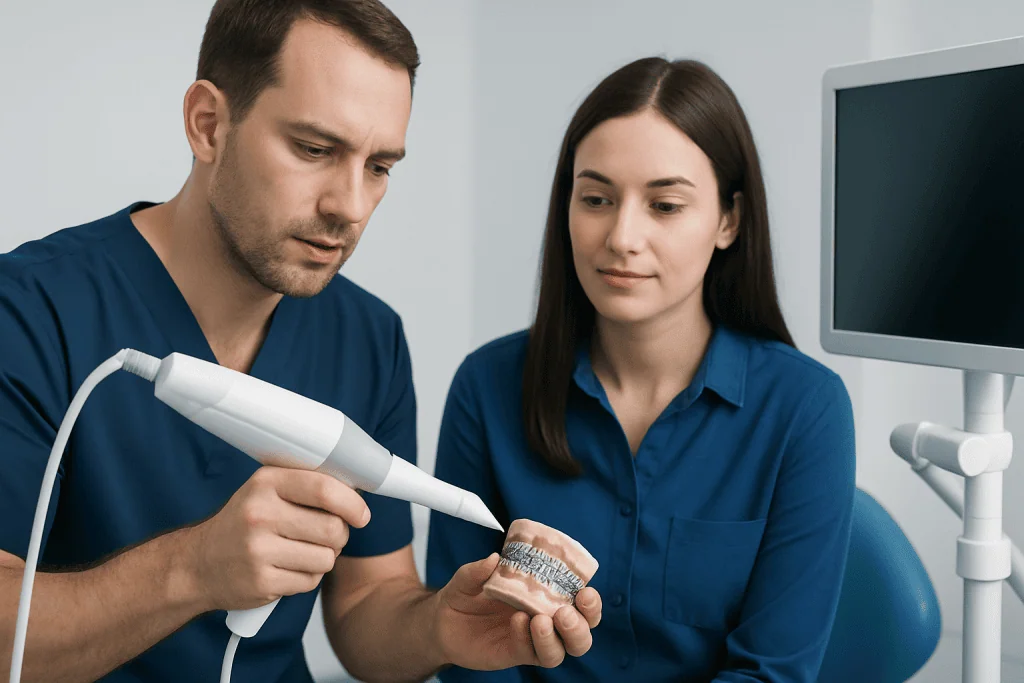
Dentists and orthodontists fix malocclusion by identifying what is causing the bite discrepancy and selecting treatment that addresses it. For mild irregularities, smoothing a small rough edge, replacing a poorly fitting restoration, or restoring a worn tooth may be appropriate. More significant tooth movement is usually managed with orthodontic appliances.
Traditional braces use brackets and wires to apply carefully controlled forces over time. Clear aligners use a sequence of removable trays that are changed as the teeth move. Both approaches can treat many types of crowding, spacing, and bite problems when used as planned. Retainers are commonly needed after active treatment because teeth can gradually shift back toward their previous positions.
Some people need additional steps before or alongside orthodontics. These may include treatment for gum disease, removal of selected teeth when crowding is severe, space maintenance for children, dental restorations, or management of habits such as thumb sucking. When jaw size or position is the main issue in a fully grown patient, orthodontics alone may not produce a stable functional bite. In that situation, corrective jaw surgery may be considered together with orthodontic treatment.
- Dental malocclusion: often treated with braces or aligners.
- Tooth-size or tooth-shape concerns: may benefit from restorations in addition to orthodontics.
- Skeletal malocclusion: may require combined orthodontic and surgical planning after growth is complete.
Candidacy and the Treatment Planning Process

People of many ages may be candidates for malocclusion treatment. Children may benefit from early review when a bite problem is noticed, particularly if there is a crossbite, significant protrusion of front teeth, persistent thumb sucking, early loss of baby teeth, or difficulty biting and chewing. In selected cases, treatment during growth can guide developing teeth or jaw growth. However, not every child needs early orthodontic treatment; some problems are best monitored until more permanent teeth have erupted.
Adults can also receive successful orthodontic care. Before treatment, the teeth and gums should be healthy enough to tolerate tooth movement. Cavities, active gum disease, untreated infection, and poor oral hygiene generally need attention first. Adults with crowns, bridges, implants, or substantial tooth wear may need a coordinated plan, as some restorations cannot move like natural teeth and implants do not move with orthodontic forces.
An assessment commonly includes a clinical examination, dental photographs, impressions or digital scans, and X-rays when indicated. These records help the care team evaluate roots, bone support, unerupted teeth, jaw relationships, and other factors that cannot be assessed by appearance alone. The clinician should explain realistic goals, alternatives, expected duration, need for retention, and any possible need for surgery or restorative care before treatment begins.
Step by Step: What to Expect During Malocclusion Treatment
After diagnosis and planning, the first step is often dental preparation. A person may need professional cleaning, treatment for decay or gum inflammation, or replacement of faulty fillings before orthodontic appliances are fitted. If extractions or other procedures are part of the plan, the timing is coordinated carefully so that healing and tooth movement can proceed safely.
For braces, brackets are bonded to the teeth and connected with wires that are adjusted at planned appointments. For clear aligners, digital planning is used to create a series of trays, and small tooth-colored attachments may sometimes be placed to help guide movement. Aligners need consistent daily wear, except during eating and cleaning, to work as intended. Regular reviews allow the clinician to monitor progress and address problems early.
If orthognathic surgery is recommended, orthodontic treatment usually comes first to place teeth in positions that will fit properly after jaw repositioning. Surgery is performed by an oral and maxillofacial surgeon in a hospital setting, followed by a period of healing and continued orthodontic finishing. This pathway is generally reserved for significant skeletal discrepancies that cannot be adequately corrected with tooth movement alone.
When active movement is complete, retainers help preserve the result. Some retainers are removable, while others are bonded behind the teeth. Retention is an important long-term part of treatment, rather than an optional final step, because natural tooth movement can occur throughout life.
Benefits, Risks and Recovery Timeline
The expected benefits of malocclusion treatment depend on the original bite problem and the chosen method. Treatment may improve the way teeth meet, make chewing more efficient, reduce traumatic contact between teeth, improve access for brushing and flossing, and enhance confidence in a smile. Some people also notice better comfort when biting, although treatment should not be presented as a guaranteed cure for jaw joint symptoms or headaches.
With braces or aligners, temporary pressure or tenderness is common after fitting or adjustments and usually settles within several days. Braces can irritate the lips or cheeks initially, while aligners may affect speech briefly as a person adapts. Good brushing, fluoride use when recommended, and regular dental reviews are important because plaque buildup around appliances can raise the risk of decay, gum inflammation, and white marks on enamel.
Most orthodontic treatment takes many months and sometimes longer, depending on the complexity of movement, growth, appliance use, oral health, and attendance at appointments. Improvement is gradual, and the exact timeline varies. After jaw surgery, swelling, dietary changes, and temporary limitations in normal activities are expected during early recovery; the surgical team gives individualized instructions about eating, hygiene, pain control, and follow-up.
Less common risks include root shortening, relapse after treatment, gum recession in susceptible individuals, damage to appliances, or an unsatisfactory bite if treatment is not followed as planned. Surgical risks include bleeding, infection, altered sensation, and the possibility of further treatment. Discussing these issues with the treating team supports informed, realistic decisions.
What is the prognosis for class 3 malocclusion treatment?
Class 3 malocclusion usually refers to an underbite pattern in which the lower teeth or jaw sit ahead of the upper teeth or jaw. Its prognosis is often good when treatment is matched to the underlying cause, severity, growth stage, and the person’s ability to follow the plan. The goal may be to improve bite function, protect teeth from abnormal wear, and achieve a stable, balanced result rather than to create one identical outcome for every person.
In children who are still growing, an orthodontist may monitor development closely and, in selected cases, use appliances to influence tooth position or jaw growth. Because lower-jaw growth can continue through adolescence, a child’s final result may not be fully predictable until growth is complete. Ongoing review is therefore important.
In adults, a mild dental Class 3 pattern may sometimes be managed with orthodontic tooth movement. A more pronounced skeletal difference may be best treated with combined orthodontics and jaw surgery. Long-term stability is supported by careful planning, healthy gums and teeth, retainers, and regular follow-up. A specialist can explain whether the planned correction is mainly dental compensation or correction of an underlying jaw discrepancy.
Can malocclusion go away on its own? What happens if it is left untreated?
Malocclusion usually does not go away on its own once the permanent teeth and jaw relationship are established. In young children, the bite can change as baby teeth are replaced and the jaws grow, so an early irregularity may improve or evolve. Even so, a dental assessment is useful when there is an obvious crossbite, underbite, open bite, trauma risk to protruding front teeth, or difficulty with eating or speech.
If malocclusion is left untreated, the outcome varies widely. Some people have a mild and stable bite difference that causes few practical problems. Others may experience uneven or accelerated tooth wear, chips, gum irritation, difficulty cleaning crowded teeth, food trapping, biting of the cheeks or tongue, or strain when chewing. A pronounced bite problem can also affect self-confidence or make certain dental restorations more challenging.
Malocclusion is not the only cause of jaw pain, clicking, headaches, or sleep-related breathing concerns. These symptoms need a separate clinical evaluation rather than assuming that bite correction will resolve them. Maintaining routine checkups, good oral hygiene, and timely care for decay or gum disease can protect oral health whether or not orthodontic treatment is chosen.
When to Seek Medical Care
A person should arrange a dental or orthodontic evaluation if their teeth do not meet comfortably, chewing is difficult, teeth are wearing or chipping repeatedly, the jaw appears noticeably uneven, or crowded teeth are difficult to clean. Parents and caregivers should seek advice if a child has persistent sucking habits, an underbite or crossbite, front teeth that protrude significantly, delayed or unusual tooth eruption, or problems biting and speaking.
Prompt dental care is appropriate for severe tooth or jaw pain, facial swelling, fever with a dental problem, a broken tooth causing sharp edges, a sudden change in the bite after an injury, or difficulty opening or closing the mouth. These symptoms may reflect an issue requiring more urgent assessment than routine orthodontic planning.
For international patients, Acibadem International’s multidisciplinary dental, orthodontic, and oral and maxillofacial specialists at JCI-accredited hospitals can assess malocclusion and discuss suitable treatment pathways. The most appropriate plan is based on a complete examination, imaging when needed, oral health status, and the individual’s goals.
Frequently asked questions
What is malocclusion treatment?
Malocclusion treatment is care designed to improve the way the upper and lower teeth meet. Depending on the cause, it may include braces, clear aligners, restorations, tooth removal, retainers, or corrective jaw surgery.
Are braces or clear aligners better for malocclusion?
Neither option is universally better. Braces can be suitable for a wide range of complex movements, while clear aligners may be appropriate for many mild to moderate cases and some complex cases when worn consistently. An orthodontist can recommend the option that best fits the bite problem and daily needs.
How long does malocclusion treatment take?
Treatment time varies according to the type and severity of the bite problem, the appliance used, growth, oral health, and adherence to appointments and instructions. Many orthodontic plans take months to several years, followed by long-term retainer use.
Does malocclusion treatment hurt?
Tooth movement can cause pressure or soreness, especially after braces are adjusted or a new aligner is started. This discomfort is usually temporary and should be manageable with advice from the treating clinician. Severe, persistent, or worsening pain should be reported.
Can adults get treatment for an underbite or crossbite?
Yes. Adults can often be treated with orthodontics, restorative dentistry, or a combination of orthodontics and jaw surgery when the jaw discrepancy is significant. Healthy gums and teeth are important before active orthodontic treatment begins.
Will teeth move again after orthodontic treatment?
Teeth can shift over time, including after successful treatment. Retainers are used to help maintain the corrected position, and the dentist or orthodontist will explain how and when to wear or maintain them. Regular dental reviews help identify changes early.
References
- American Association of Orthodontists
- American Dental Association
- National Institute of Dental and Craniofacial Research
- British Orthodontic Society
- World Health Organization
This article is for general information only and is not a substitute for professional medical advice. Please consult a qualified doctor about your individual situation.
Explore treatments in Turkey — costs, top hospitals & a free quote
JCI-accredited · board-certified surgeons · reply within 24h
Add us as a Preferred Source to see more of our trusted health content across Google Search, AI Overviews and Discover.