Moleskin: An Evidence-Based Guide for Patients

Moleskin helps reduce friction and pressure on vulnerable skin, especially on the feet. It is commonly used to help prevent blisters and to cushion hot spots before they worsen.
Key Takeaways
- Moleskin helps reduce friction and pressure on vulnerable skin, especially on the feet.
- It is commonly used to help prevent blisters and to cushion hot spots before they worsen.
- Moleskin should usually be placed around a blister rather than directly over an open one unless the skin is adequately protected.
- Persistent pain, signs of infection, or wounds in people with diabetes require medical assessment.
- Footwear fit, moisture control, and skin care are as important as the padding itself.
Moleskin is a soft, durable fabric pad with an adhesive backing that helps protect skin from rubbing and pressure. It is most often used on the feet to prevent blisters or to cushion sore areas, and it works best when applied correctly and used alongside well-fitting footwear.
What moleskin is and what it does
Moleskin is a soft, felt-like cotton fabric with a sticky backing that is placed on the skin or inside footwear to reduce rubbing. In everyday use, it is best known as a simple way to help prevent blisters and cushion sore spots on the feet. Many people use it during walking, running, hiking, travel, or when breaking in new shoes.
Its main purpose is mechanical, not medicinal. Moleskin does not treat infection or heal skin on its own. Instead, it creates a protective barrier that decreases friction and redistributes pressure, which can help irritated skin feel more comfortable and may stop a “hot spot” from developing into a blister.
Moleskin is available in sheets, rolls, and pre-cut pads. Some products are plain and flat, while others are thicker and designed to create a ring or “donut” shape around a tender area. This design can be especially helpful when the goal is to keep pressure off a blister or painful spot rather than pressing directly on it.
When moleskin is helpful
Moleskin is most often used for areas exposed to repeated rubbing. Common examples include the heel, sides of the toes, ball of the foot, and areas where straps or seams touch the skin. It can also be used in footwear to reduce irritation from a rough spot inside a shoe.
It tends to work best early, when a person notices warmth, tenderness, or mild redness before the skin breaks. Applying protection at this stage may help prevent a full blister from forming. It may also provide comfort over callused areas or mild pressure points caused by shoe fit or long periods of walking.
Common situations where moleskin may help include:
- Long walks, hikes, or runs
- New or stiff shoes
- Dress shoes worn for extended periods
- Sports with repetitive foot movement
- Travel days with prolonged standing or walking
- Minor pressure areas from orthotics or insoles
If foot pain is frequent or the skin repeatedly breaks down, the issue may be more than simple friction. In those cases, evaluation for underlying problems such as foot structure changes, gait issues, corns, calluses, or skin disease may be useful, including assessment for conditions such as diabetic foot risk in appropriate patients.
How to use moleskin safely
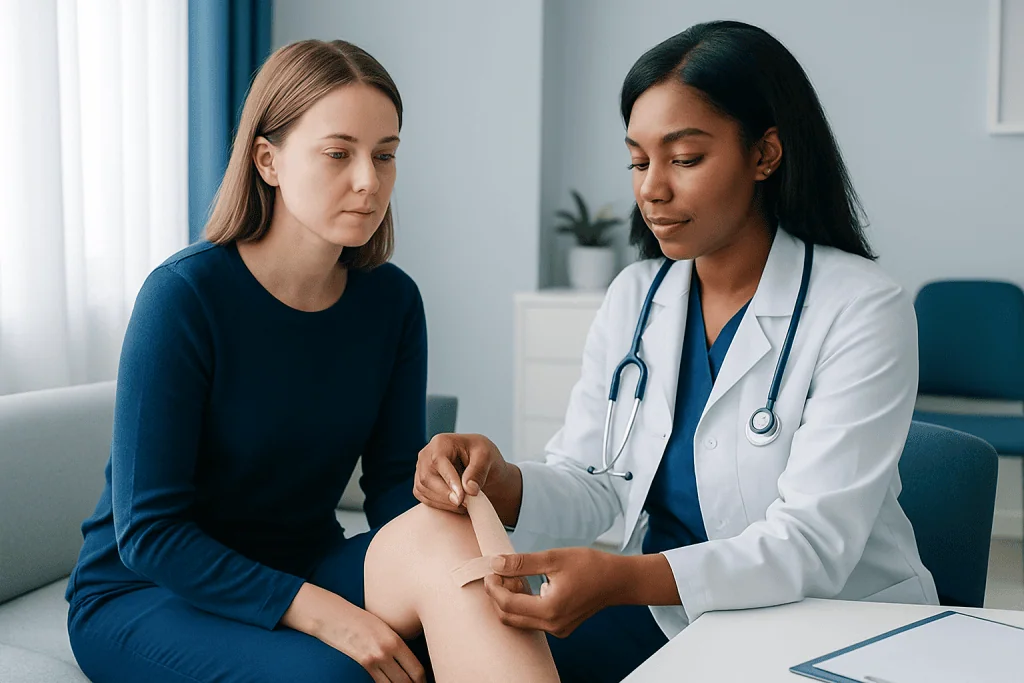
The skin should be clean and dry before application. Oils, sweat, or lotion can make the adhesive less secure. The piece should be cut to fit the area, with smooth edges to reduce peeling. For a hot spot or sore place, a person can place the moleskin directly over intact skin if the goal is to reduce rubbing.
If a blister has already formed, many clinicians and first-aid guides recommend cutting the moleskin into a donut shape so the tender blister sits in the center opening. This helps keep pressure off the blister roof. If the blister is open, it is usually best to protect the wound with a suitable dressing first, then place cushioning around or over it only if advised by a clinician and if it can be done cleanly without sticking to raw skin.
Moleskin should not be applied to infected, heavily draining, or deeply broken skin without medical guidance. The area should be checked regularly, especially after exercise or a long day of walking. If the padding becomes wet, dirty, loose, or painful, it should be changed.
For people with recurring blisters, moleskin is only one part of prevention. Attention to proper shoe fit, sock material, moisture control, and pressure distribution may be just as important. In some cases, custom advice from a podiatry, dermatology, or orthopedics team may help, and wider assessment may include orthopedic rehabilitation if gait or mechanics contribute to repeated friction.
Blisters, friction, and why they happen
A blister usually develops when repeated rubbing separates the upper layers of skin, allowing fluid to collect. Heat, sweat, and pressure make this more likely. That is why blisters are common during exercise, in hot weather, or when shoes fit poorly.
The skin is more vulnerable when it is damp or when there is constant movement in one area. Socks that trap moisture, shoes that slide at the heel, or seams that press on the toes can all create enough friction to irritate the skin over time. Even a short period of intense rubbing can be enough if the pressure is focused.
Moleskin helps by lowering the friction and spreading pressure more evenly. However, if the underlying cause remains, the problem may continue. A person who repeatedly gets blisters in the same place may benefit from shoe adjustments, moisture-wicking socks, blister-prevention lubricants used appropriately, or evaluation for structural foot concerns.
Sometimes what appears to be a friction problem may actually involve another skin condition. For example, rashes, fungal infections, or painful thickened skin can mimic or worsen irritation. If there is uncertainty about the cause, a clinician may look for related issues such as athlete’s foot or other dermatologic conditions.
Limits of moleskin and when it may not be the right choice
Although moleskin is useful, it is not suitable for every skin problem. It does not disinfect wounds, treat fungal infections, correct foot deformities, or replace proper wound care. If the skin is significantly damaged, or if the area is swollen, very red, or producing pus, using padding alone may delay needed care.
Some people also react to adhesives. If moleskin causes itching, rash, increased redness, or skin stripping when removed, it may be better to stop using it and try another barrier or dressing recommended by a clinician. Fragile skin, especially in older adults, may need gentler products.
Extra caution is important for people with diabetes, poor circulation, peripheral neuropathy, immune suppression, or a history of foot ulcers. In these situations, even a small blister can become more serious because pain may be reduced, healing may be slower, and infection risk may be higher. These patients should not assume all foot irritation is minor.
When pressure areas are recurrent, specialists may assess footwear and biomechanics and recommend options beyond simple padding, such as insoles, dressings, or structured off-loading. Depending on the cause, support may include physical therapy and rehabilitation to address walking pattern, mobility, or load distribution.
Prevention and self-care beyond padding
The best use of moleskin is often preventive. Applying it at the first sign of rubbing can be more effective than waiting until a blister is fully formed. Still, prevention works best when combined with practical foot care habits.
Helpful self-care measures include choosing shoes with enough toe room, avoiding shoes that slip at the heel, and gradually breaking in new footwear. Socks should fit well and help manage moisture. After long activity, feet should be checked for hot spots, redness, or damp areas so problems can be addressed early.
- Keep feet clean and dry
- Change damp socks promptly
- Trim moleskin to fit without wrinkling
- Use cushioning before long walks or sports if a trouble spot is known
- Inspect the inside of shoes for seams, debris, or rough areas
- Do not ignore repeated blisters in the same location
Some people with thickened skin, corns, or recurring calluses may need more targeted care. If pressure buildup is related to foot shape or joint alignment, a clinician may advise protective dressings, shoe modifications, or evaluation through services such as orthopedics when appropriate.
When to seek medical care
Medical care is appropriate if a blister or sore area becomes increasingly painful, red, warm, swollen, or starts draining pus. Fever, red streaking, foul odor, or skin that is not healing are also warning signs. These features can suggest infection and should not be managed with padding alone.
A person should also seek medical advice if walking becomes difficult, if pain is severe, or if the same area keeps breaking down despite changing shoes and using protection. Recurrent friction can signal an underlying problem with foot structure, skin disease, or activity-related mechanics that deserves attention.
People with diabetes, peripheral neuropathy, poor circulation, or weakened immunity should contact a clinician promptly for any foot blister, crack, or ulcer. Early assessment helps reduce the risk of complications. At the appropriate stage, specialists may evaluate wound care needs and broader skin or circulation issues.
Near the end of the care pathway, patients who need specialist evaluation may benefit from a multidisciplinary approach. Acibadem International’s multidisciplinary specialists and JCI-accredited hospitals diagnose and treat foot, skin, and mobility-related conditions for international patients.
Frequently asked questions
What is moleskin used for?
Moleskin is mainly used to reduce friction and pressure on the skin. It is especially common for preventing blisters on the feet and cushioning sore spots caused by shoes or prolonged walking.
Can moleskin go directly on a blister?
If the blister is intact, many people use moleskin around it in a donut shape so pressure is taken off the tender area. If the blister is open, it is usually better to protect the wound first with an appropriate dressing and seek medical advice if there is pain, drainage, or concern about infection.
How long should moleskin stay on?
It can stay in place as long as it remains clean, dry, comfortable, and securely attached. It should be changed if it becomes wet, dirty, loose, or starts to irritate the skin.
Is moleskin the same as a bandage?
No. Moleskin is mainly a cushioning and friction-reducing material, while a bandage is typically used to cover and protect a wound. Some people use both together when a blister needs protection and off-loading.
Can people with diabetes use moleskin?
People with diabetes should be cautious with any foot injury or pressure point. Even a small blister can become serious, so it is best to speak with a healthcare professional before self-treating foot wounds or persistent sore spots.
What should be done if moleskin does not help?
If pain continues, blisters keep returning, or the skin becomes red, swollen, or broken, medical evaluation is a good next step. A clinician can check for shoe-fit problems, gait issues, skin conditions, infection, or circulation concerns.
References
- American Academy of Dermatology
- American Podiatric Medical Association
- Mayo Clinic
- National Health Service
- Centers for Disease Control and Prevention
This article is for general information only and is not a substitute for professional medical advice. Please consult a qualified doctor about your individual situation.
Explore treatments in Turkey — costs, top hospitals & a free quote
JCI-accredited · board-certified surgeons · reply within 24h
Add us as a Preferred Source to see more of our trusted health content across Google Search, AI Overviews and Discover.