Mouth Swab Drug Test: An Evidence-Based Guide for Patients
A mouth swab drug test looks for drugs or their metabolites in saliva, mainly reflecting recent use. It is commonly used because it is quick, simple, and does not require blood or urine collection.
Key Takeaways
- A mouth swab drug test looks for drugs or their metabolites in saliva, mainly reflecting recent use.
- It is commonly used because it is quick, simple, and does not require blood or urine collection.
- Detection windows are usually shorter than urine tests and vary by drug, dose, and individual factors.
- A positive screening result may need confirmation with a more specific laboratory method.
- Foods, mouthwash, and oral health issues can affect collection quality, but proper testing procedures reduce errors.
- Patients should discuss all prescription and over-the-counter medicines before testing when possible.
A mouth swab drug test is a saliva-based screening method used to detect recent exposure to certain drugs. It is fast, noninvasive, and useful in many settings, but results depend on timing, the substance involved, and confirmatory laboratory testing.
Overview: what a mouth swab drug test shows
A mouth swab drug test, also called a saliva or oral fluid drug test, checks a sample collected from inside the cheek or along the gums for the presence of certain drugs or their breakdown products. In practical terms, it is mainly a test for recent exposure rather than long-term history. Many substances are detectable within a short time after use, often from the same day up to a few days, depending on the drug and the testing method.
This type of test is widely used because collection is simple, quick, and noninvasive. It may be used in workplaces, roadside screening, medical settings, pain management, addiction treatment programs, and some legal or athletic contexts. Unlike urine collection, the sample is usually obtained under direct observation, which can reduce sample mix-ups or tampering.
It is important to understand what the result does and does not mean. A screening test can suggest that a substance may be present, but it does not always show exactly when a person used a drug, how much was used, or whether a person is impaired at that moment. If the result has medical, legal, or employment consequences, a laboratory confirmation test is often the next step.
How the test is performed and what to expect
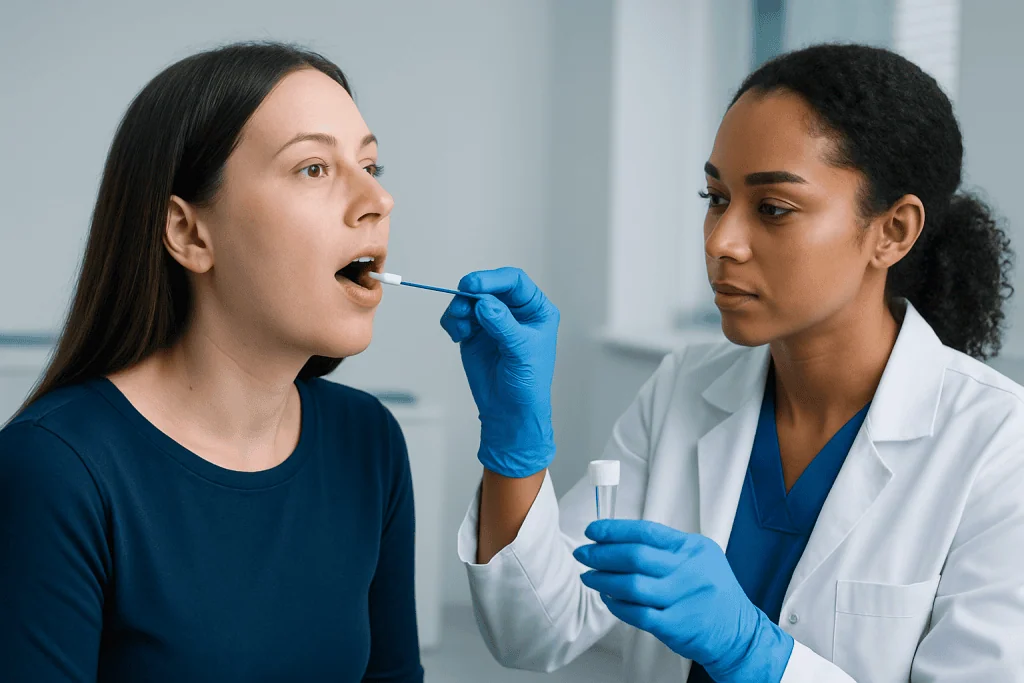
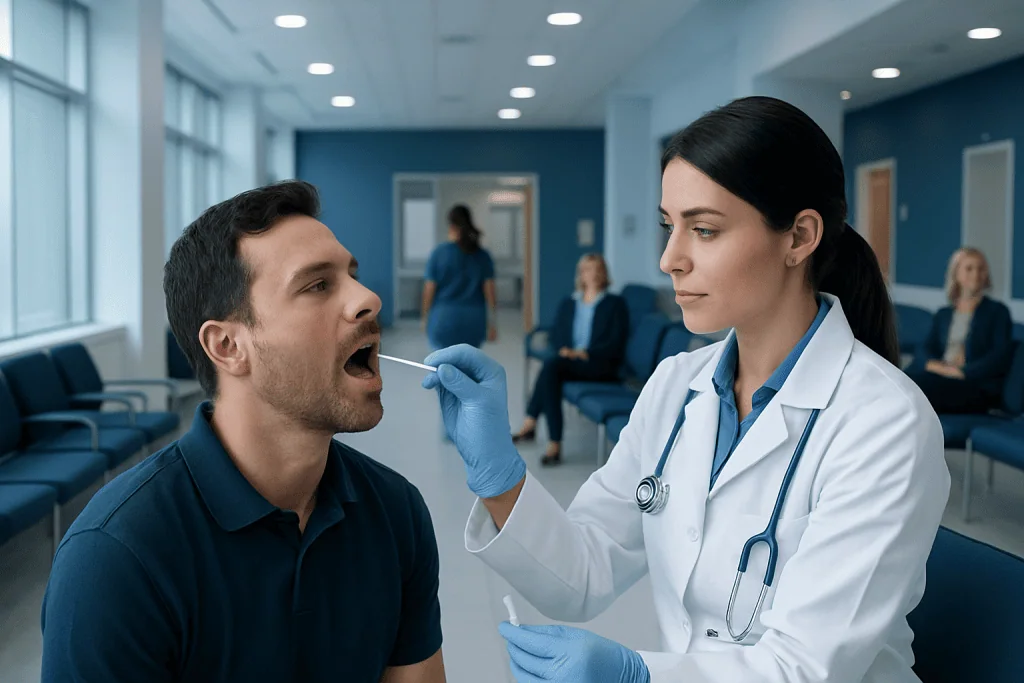
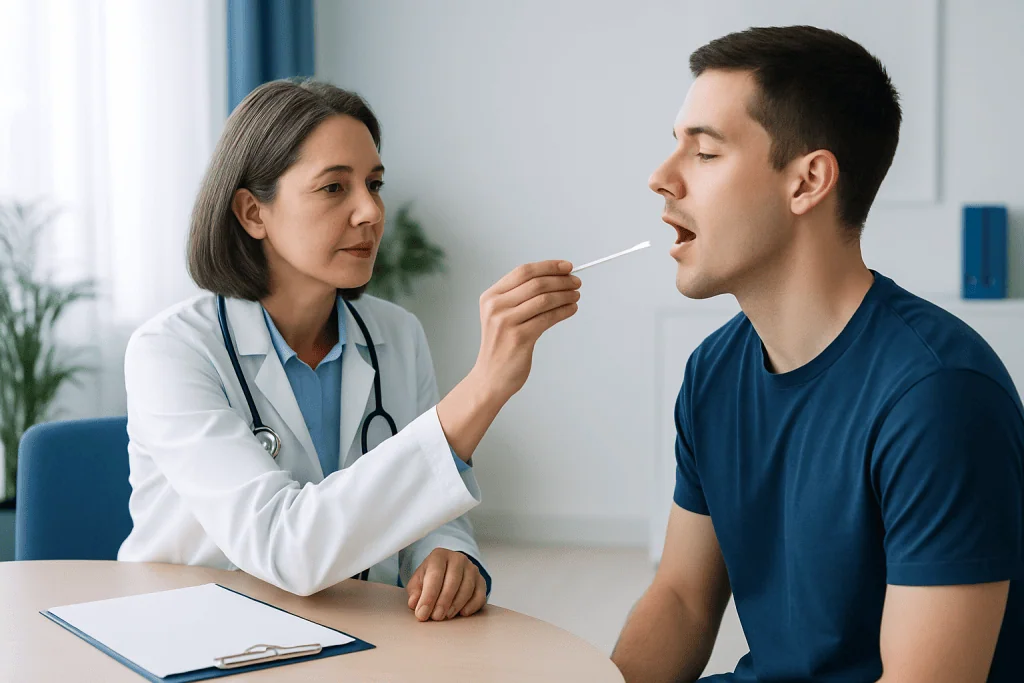
During a mouth swab drug test, a healthcare worker or trained staff member places a small absorbent swab inside the mouth, usually between the cheek and gum, or under the tongue. The swab stays in place briefly to collect oral fluid. The sample may then be tested immediately with a rapid device or sent to a laboratory for more detailed analysis.
Preparation instructions can vary. Some facilities ask patients not to eat, drink, smoke, chew gum, or use oral hygiene products for a short period before collection because these can dilute the sample or affect the quality of the collection. Following the instructions closely helps reduce the chance of an invalid or inconclusive result.
Most people find the process comfortable and much easier than a blood test. There is no needle, and the collection usually takes only a few minutes. If the test is ordered in a medical setting, patients may also be asked about prescription medicines, over-the-counter products, herbal supplements, or recent dental work, since these details can help interpret the result correctly.
What substances can be detected and for how long
A mouth swab drug test may screen for several common substances, depending on the panel used. These often include cannabis, cocaine, amphetamines or methamphetamines, opioids, and sometimes benzodiazepines, alcohol, or other drugs. Not every test checks for every substance, so the panel matters as much as the collection method.
Compared with urine tests, oral fluid testing usually has a shorter detection window. In general, it is better at identifying recent use, often within hours to one or two days, although some substances may be detectable a bit longer. Detection time depends on many factors, including the specific drug, the dose, how often it is used, metabolism, hydration, saliva production, and the sensitivity of the test.
Drug class also makes a difference. Some substances can remain in saliva because of direct contamination of the mouth after smoking, vaping, swallowing, or snorting. Others are detected because they move from the bloodstream into oral fluid. For this reason, a test result should always be interpreted in context rather than as a complete picture of a person’s health or behavior.
- Shorter detection window than many urine tests
- Useful for identifying recent exposure
- Panel contents vary by test kit and laboratory
- Result interpretation depends on the substance and timing
Accuracy, false positives, and confirmatory testing
A mouth swab drug test can be accurate when it is collected and processed correctly, but no screening test is perfect. Rapid tests are designed to identify samples that may contain a drug above a certain cutoff level. They are helpful for screening, yet they can sometimes produce false-positive or false-negative results.
False positives are uncommon but possible. Cross-reactivity with some medications or substances can occasionally affect screening results, which is why confirmatory testing is important when the outcome matters. More specific laboratory methods, such as gas chromatography-mass spectrometry or liquid chromatography-tandem mass spectrometry, are used to verify the result and identify the substance more reliably.
False negatives can also occur, especially if testing takes place outside the main detection window, if the drug is present below the cutoff, or if the sample is poor in quality. Dry mouth, recent food or drink intake, and not enough saliva on the swab can contribute to an invalid or less reliable sample. Patients should not try to interpret a screening result on their own; a qualified clinician or testing professional can explain what it means.
In medical care, drug testing is only one part of the assessment. If a person is being evaluated for substance use disorder, intoxication, withdrawal, chronic pain treatment, or medication safety, clinicians may also use history, examination, and sometimes additional laboratory testing. In this broader context, related conditions such as drug addiction or alcohol addiction are diagnosed through clinical evaluation, not by a single swab result alone.
Factors that can influence results
Several everyday factors may influence a mouth swab drug test, mainly by affecting the sample rather than changing the body’s actual drug exposure. Eating or drinking just before the test can dilute oral fluid or leave residue in the mouth. Mouthwash, breath sprays, and some oral products may also interfere with collection if used immediately beforehand.
Oral health can matter as well. Dry mouth can make collection harder, while bleeding gums or recent dental procedures may complicate interpretation in some cases. Smoking or vaping shortly before the test may increase the chance of detecting certain substances in the mouth because of local contamination, especially soon after use.
Prescription and nonprescription medicines are another important consideration. Patients should tell the testing team about all medicines they use, including pain relievers, cold remedies, attention-deficit medications, sedatives, and supplements. This does not mean the result will automatically be positive, but it helps the laboratory and clinician decide whether confirmatory testing or closer review is needed.
People with questions about repeated positive results, medication safety, or symptoms related to substance use may need a more complete evaluation. Depending on the clinical picture, care can include laboratory assessment, counseling, or check-up and diagnostics to identify the underlying issue and guide next steps.
How clinicians use the results
In healthcare, a mouth swab drug test is not just about finding a positive or negative result. Clinicians use it to support specific decisions, such as monitoring adherence to a treatment agreement, assessing possible intoxication, reviewing substance exposure before a procedure, or evaluating symptoms that could be linked to medication or drug use.
The meaning of the result depends on the setting. In emergency care, a result may help narrow the list of possible causes of confusion, drowsiness, chest symptoms, or unusual behavior, but it does not replace a full medical assessment. In outpatient care, it may be one piece of a plan for safe prescribing, follow-up, or referral to support services.
When there are ongoing concerns about dependency, relapse, or coexisting mental health symptoms, doctors may recommend a broader approach. This can include counseling, psychiatric evaluation, and structured treatment programs such as addiction treatment. The goal is not simply to document exposure, but to improve safety, function, and long-term health.
If the person has severe symptoms, signs of overdose, or withdrawal, immediate medical care is more important than the test itself. In those situations, treatment is guided first by the patient’s condition. Testing may still be used, but it is secondary to stabilizing breathing, circulation, mental status, and comfort.
Prevention, self-care, and practical advice before testing
If a mouth swab drug test is planned, the most useful step is to follow the collection instructions exactly. Patients should avoid trying home methods to change the result, since these are unreliable and can lead to an invalid sample. It is better to be open about prescribed medicines and to ask what the test is screening for.
People who are using medication as directed should keep an up-to-date list of prescriptions and, if possible, the name of the prescribing doctor or pharmacy. This can help if a screening result needs confirmation or review. If there is concern about misuse of opioids, sedatives, stimulants, or alcohol, early discussion with a healthcare professional is safer than waiting for a crisis.
For general health, reducing or avoiding nonmedical drug use lowers the risk of injury, overdose, impaired driving, interactions with medicines, and chronic health problems. Support may involve a primary care doctor, a mental health professional, or a specialist service. In complex cases, multidisciplinary teams at Acibadem International’s JCI-accredited hospitals diagnose and treat patients from around the world, including those who need coordinated medical and behavioral care.
When to seek medical care
A person should seek urgent medical care if there are signs of overdose or severe reaction, such as trouble breathing, blue lips, chest pain, seizures, collapse, severe agitation, confusion, or inability to wake up. These symptoms need immediate attention, whether or not a drug test has been done.
Medical advice is also important for repeated positive tests that do not make sense, concerns about withdrawal, or symptoms that may be related to substance use or medication interactions. Examples include persistent sleepiness, mood changes, palpitations, tremor, severe anxiety, fainting, or unexpected changes in behavior.
For non-urgent concerns, a doctor can review medications, order confirmatory testing, and discuss whether additional evaluation is needed. In some situations, related care may include psychiatric assessment if mental health symptoms, stress, or substance use are affecting daily life.
Frequently asked questions
How long does a mouth swab drug test detect drugs?
A mouth swab drug test usually detects recent drug use, often within hours to one or two days, although this varies by substance and test method. Some drugs may be detectable for a shorter or slightly longer period depending on dose, frequency of use, and individual factors.
Can food or drink affect a mouth swab drug test?
Yes. Eating, drinking, smoking, or using mouthwash shortly before collection can affect the quality of the saliva sample. That is why many testing sites ask people to avoid these activities for a short time before the test.
Is a mouth swab drug test as accurate as a urine test?
It serves a different purpose rather than being simply better or worse. A mouth swab drug test is often more useful for detecting recent exposure, while urine testing may detect some substances for longer. If a screening result is important, confirmatory laboratory testing improves accuracy.
Can prescription medicines cause a positive result?
Some medicines may affect a screening result, especially on rapid tests that use broad drug classes. Patients should report all prescription, over-the-counter, and herbal products so the result can be interpreted correctly and confirmed if needed.
Does a positive mouth swab drug test mean a person is impaired?
Not necessarily. A positive test shows that a substance or its metabolite may be present in oral fluid, but it does not prove current impairment. Clinical assessment, timing, symptoms, and sometimes additional testing are needed to judge impairment.
What happens if the result is positive?
In many settings, the next step is a confirmatory laboratory test using a more specific method. In medical care, the clinician will also review symptoms, medications, and the reason the test was ordered before making decisions.
References
- Substance Abuse and Mental Health Services Administration
- National Institute on Drug Abuse
- Centers for Disease Control and Prevention
- U.S. Food and Drug Administration
- Mayo Clinic
This article is for general information only and is not a substitute for professional medical advice. Please consult a qualified doctor about your individual situation.
Explore treatments in Turkey — costs, top hospitals & a free quote
JCI-accredited · board-certified surgeons · reply within 24h
Add us as a Preferred Source to see more of our trusted health content across Google Search, AI Overviews and Discover.

More from the Health Library

Cry It Out Method: What Patients Need to Know
Ischemia definition: Symptoms, Causes, and Treatment — Complete Patient Guide
Fast metabolism: A Complete Medical Guide for Patients
Ramen: What Patients Need to Know
Celiac Trunk: An Evidence-Based Guide for Patients