Muscle Building — Explained by Medical Evidence, Not Myths

Progressively challenging muscles through resistance training is the central driver of muscle growth. Protein, overall energy intake, carbohydrate, hydration and micronutrients all support training adaptation.
Key Takeaways
- Progressively challenging muscles through resistance training is the central driver of muscle growth.
- Protein, overall energy intake, carbohydrate, hydration and micronutrients all support training adaptation.
- Muscles grow during recovery, making sleep, rest days and sensible training progression important.
- Beginners, older adults and people returning after inactivity can all build strength and muscle safely with an appropriate plan.
- Pain, sudden weakness, persistent fatigue or unexplained muscle loss should be assessed by a healthcare professional.
Muscle building is the gradual increase in muscle size and strength that occurs when resistance exercise is paired with sufficient food intake, protein and recovery. It is a long-term biological adaptation rather than a quick result of a single workout, supplement or diet.
Muscle Building: What It Means
Muscle building, also called muscle hypertrophy, is the process by which skeletal muscles gradually become larger and usually stronger in response to repeated physical demands. It occurs most reliably when a person performs resistance exercise that challenges a muscle, provides the body with adequate nutrition, and allows time for recovery. Meaningful changes take weeks to months, and the pace differs according to training history, age, genetics, health, sleep and food intake.
During resistance exercise, muscles experience mechanical tension and small, temporary disruptions to their usual structure. The body responds by repairing and reinforcing the tissue. Over time, muscle protein synthesis can exceed muscle protein breakdown, leading to adaptation. This process is not limited to bodybuilding; it can support everyday function, mobility, bone health, metabolic health and independence across the lifespan.
Muscle size and strength are related but are not identical. A person may become considerably stronger through improvements in skill, coordination and nervous-system adaptation before visible size changes occur. Conversely, appearance alone is not a complete measure of health. A realistic plan focuses on gradual progress in strength, function, energy and wellbeing rather than rapid physical transformation.
The Training Signal: Resistance Exercise and Progression
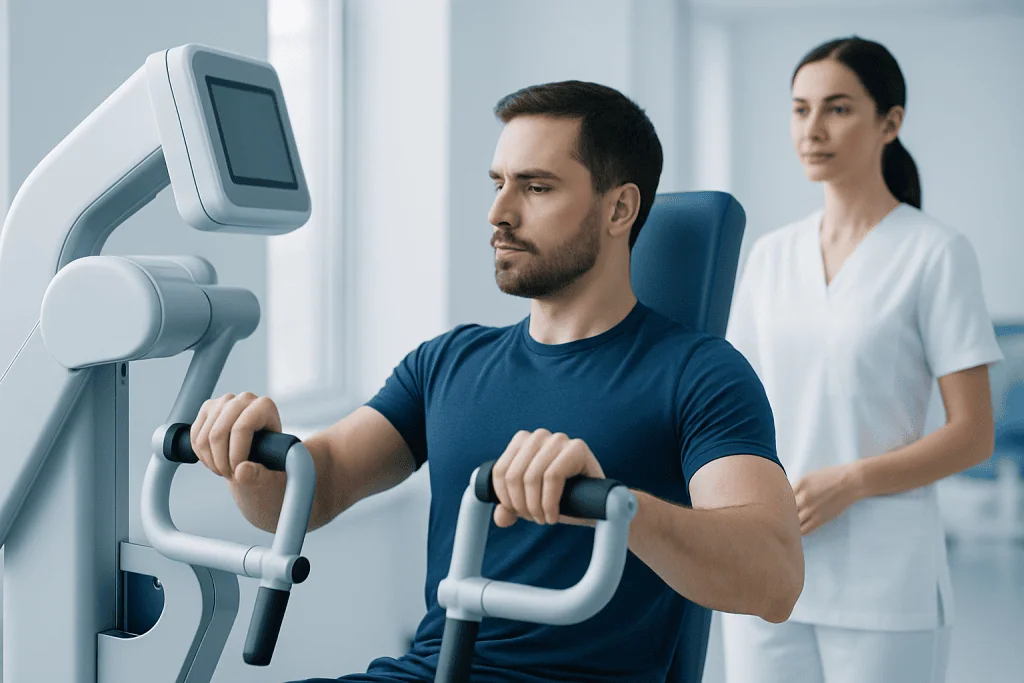
Resistance training is the best-supported form of exercise for muscle building. It includes free weights, resistance machines, cables, elastic bands and body-weight movements. Exercises such as squats, presses, rows, pulls, lunges and hip-hinge movements can train multiple muscle groups, while more targeted movements may help address specific goals or weak areas.
The key principle is progressive overload: over time, the muscles need a reason to adapt. This may mean gradually increasing resistance, repetitions, sets, training frequency, range of motion or exercise difficulty. Progress does not need to occur at every workout. Small, sustainable changes, supported by good technique, are generally safer and more effective than frequent large jumps in weight.
Training close enough to fatigue to make the final repetitions challenging is often useful, but every set does not need to be performed to complete muscular failure. Good form should remain the priority. Many adults can begin with full-body resistance training two or more days per week, allowing recovery between sessions that train the same muscles. A qualified exercise professional can help tailor technique and load for people who are new to training, recovering from injury or living with a medical condition.
Consistency matters more than an overly complicated program. A plan that includes movements a person can perform safely, enjoys enough to repeat, and can fit into daily life is more likely to produce lasting results. Keeping a simple record of exercises, resistance and repetitions can make gradual progress easier to identify.
Nutrition for Muscle Growth

Training provides the stimulus, while nutrition provides energy and building materials for adaptation. Protein is particularly important because it supplies amino acids used in muscle protein synthesis. Protein-rich foods can include dairy products, eggs, fish, poultry, lean meat, soy foods, beans, lentils, peas, nuts and seeds. People following vegetarian or vegan diets can build muscle, but may benefit from planning varied protein sources across the day.
Total food intake also matters. When someone is consistently eating too little energy for their activity level, muscle gain may be slower and recovery may be poorer. However, a large calorie surplus is not required for everyone and can result in unwanted fat gain. People aiming to change body composition may benefit from individualized guidance, especially if they have obesity, diabetes, digestive disease, kidney disease or a history of disordered eating.
Carbohydrates help fuel demanding training and replenish muscle glycogen, while dietary fats support overall health and hormone production. Fruits, vegetables, whole grains and other minimally processed foods provide fiber, vitamins and minerals that contribute to general health and recovery. Hydration is also important, particularly in hot environments or during prolonged exercise.
Timing can be practical rather than rigid. Distributing protein-containing meals and snacks through the day may help a person meet their needs, and eating after training can be convenient. There is no evidence that a narrow post-workout “anabolic window” is necessary for most people if overall nutrition is adequate. A registered dietitian can provide individualized advice when nutrition needs are complex.
Recovery, Sleep and the Role of Hormones
Muscles do not grow only while exercising. Recovery between training sessions allows the body to repair tissue and adapt to the training stimulus. Repeatedly training hard without adequate recovery can lead to declining performance, persistent soreness, poor sleep, irritability or increased injury risk. Rest days do not mean doing nothing; gentle walking, mobility work and other low-intensity activity may be appropriate for many people.
Sleep supports physical and mental recovery. Adults should aim for sufficient, regular sleep according to their individual needs. Poor or inconsistent sleep can reduce exercise quality, affect appetite and make it harder to maintain a training routine. Stress management is also relevant, as high ongoing stress can interfere with sleep, recovery and healthy eating habits.
Hormones influence muscle maintenance and growth, but healthy adults do not usually need hormone testing simply because progress is gradual. Testosterone, estrogen, thyroid hormones, insulin and growth-related pathways all have roles in body composition and muscle function. The use of anabolic steroids or other non-prescribed performance-enhancing drugs can cause serious cardiovascular, liver, hormonal, fertility and mental health effects. These substances should not be considered a safe shortcut to muscle gain.
Recovery needs vary. Older adults, beginners and people returning after illness may need slower progression or more time between demanding sessions. Persistent fatigue is not a sign that training is working better; it is a reason to review workout volume, food intake, sleep, stress and possible medical contributors.
Muscle Building Across Different Life Stages
People can improve strength and build muscle at many ages. Beginners often see early improvements because the body becomes more efficient at performing new movements. Individuals who have trained previously may regain some lost muscle and strength more readily than they gained it initially, although this still requires consistent training and recovery.
Muscle mass naturally tends to decline with aging, especially when activity levels are low. Resistance exercise, balanced nutrition and adequate protein can help preserve muscle function and support balance, mobility and independence. For older adults, exercise selection should consider joint health, balance, medications and any existing medical conditions. Supervised programs may be especially helpful after a fall, surgery or prolonged inactivity.
Women can build muscle effectively with resistance training. Concerns that ordinary strength training will inevitably create an excessively muscular appearance are not supported by physiology; visible changes depend on many factors, including training volume, diet and genetics. Resistance training can also contribute to bone health, which is particularly relevant around and after menopause.
Children and adolescents can participate in appropriately supervised resistance training with attention to technique, gradual progression and age-appropriate goals. For young athletes, adequate food intake and rest are essential. Parents or caregivers should seek medical or qualified coaching advice if a young person has pain, a chronic condition, unexplained fatigue or concerns about growth and nutrition.
Common Myths and Safe Use of Supplements
A common myth is that soreness is required for muscle growth. Delayed-onset muscle soreness can occur after unfamiliar or demanding activity, but it is not a reliable measure of workout quality. Severe soreness may instead make it difficult to train consistently. Another misconception is that heavier weights are the only way to gain muscle. Different resistance levels can be effective when exercises are performed with sufficient effort, sound technique and progressive challenge.
Supplements are not essential for muscle building. Protein powders can be a convenient food option for people who struggle to meet protein needs through meals, but they are not inherently superior to protein-rich foods. Creatine monohydrate has evidence for improving performance in repeated high-intensity exercise and may support gains from resistance training for some adults. Even so, it is sensible to discuss supplements with a clinician or dietitian when there is kidney disease, pregnancy, breastfeeding, medication use or another health concern.
Products marketed as testosterone boosters, fat burners or rapid muscle builders may contain poorly studied ingredients, undisclosed substances or stimulants. “Natural” does not automatically mean safe. Choosing food-first strategies, avoiding products that promise dramatic results, and checking supplements through reputable quality-assurance programs can reduce risk.
Alcohol excess, smoking and restrictive dieting can also work against training goals by affecting recovery, appetite, sleep or overall health. Building muscle is most sustainable when it is part of a broader routine that supports cardiovascular health, mental wellbeing and regular movement.
When to Seek Medical Care
Medical advice is appropriate before starting a new exercise program for people with known heart disease, uncontrolled high blood pressure, significant lung disease, diabetes complications, severe joint problems or other conditions that may affect safe activity. A clinician can help determine suitable exercise intensity and whether referral to physiotherapy, rehabilitation or a supervised exercise program is useful.
Prompt assessment is important for chest pain, fainting, severe shortness of breath, palpitations with exercise, sudden swelling, a suspected muscle tear, or severe pain that prevents normal movement. New weakness, numbness, dark-colored urine after extreme exertion, or muscle pain accompanied by fever also needs timely medical evaluation.
Unintentional muscle loss, ongoing weakness, declining balance, unexplained weight loss or fatigue may have causes beyond deconditioning, including nutritional, hormonal, neurological or inflammatory conditions. A doctor can review symptoms, medications, diet, activity and appropriate tests. Acibadem International’s multidisciplinary specialists and JCI-accredited hospitals assess muscle-related health concerns and support international patients with individualized care.
Frequently asked questions
How long does muscle building take?
Strength can improve within several weeks, especially in beginners, because the nervous system becomes more efficient at using muscles. Visible muscle growth generally takes longer and is influenced by training consistency, nutrition, sleep, age, genetics and starting fitness. Tracking performance over months is usually more useful than judging progress week by week.
Can muscle be built without a gym?
Yes. Body-weight exercises, resistance bands, household equipment and outdoor fitness equipment can provide useful resistance. The important factor is making the movement challenging enough and gradually increasing the difficulty as strength improves.
Is protein powder necessary for muscle building?
No. Most people can meet protein needs through ordinary foods such as dairy, eggs, fish, meat, soy, legumes and grains. Protein powder may be convenient, but it should complement a balanced eating pattern rather than replace it.
Should a person exercise every day to build muscle?
Not necessarily. Muscles need time to recover after challenging resistance exercise, particularly when the same muscle groups are trained. Light activity can be done on many days, while structured resistance sessions should be planned around recovery and individual tolerance.
Does resistance training make women bulky?
Resistance training can increase strength and muscle mass in women, but substantial visible size changes require time, specific training and nutritional conditions. For most people, strength training supports function, confidence, bone health and body composition without an unwanted dramatic change in appearance.
What should someone do if they stop gaining strength or muscle?
A plateau may be addressed by reviewing exercise technique, training progression, total workout volume, sleep, stress and food intake. It can also help to vary exercises or use a planned period of lighter training. Persistent fatigue, weakness or unexplained muscle loss should be discussed with a healthcare professional.
References
- World Health Organization
- American College of Sports Medicine
- National Institute on Aging
- International Society of Sports Nutrition
- U.S. Department of Health and Human Services
This article is for general information only and is not a substitute for professional medical advice. Please consult a qualified doctor about your individual situation.
Explore treatments in Turkey — costs, top hospitals & a free quote
JCI-accredited · board-certified surgeons · reply within 24h
Add us as a Preferred Source to see more of our trusted health content across Google Search, AI Overviews and Discover.
Check your numbers in seconds
BMI, calories, due date, blood pressure and 30+ more clinical calculators — free, instant, doctor-reviewed ranges.

More from the Health Library



Related Specialists

Prof. Dr. Atakan Yeşil
Internal Medicine
Prof. Dr. Ahmet Kaya Bilge
Cardiology
Dr. M. Ecem Albayrak
Gynecology & Obstetrics
Dr. R.Şirin Atlığ
Physical Medicine & Rehabilitation