Narcolepsy With Cataplexy: Early Clues Patients Often Miss

Narcolepsy with cataplexy commonly causes excessive daytime sleepiness and brief episodes of sudden muscle weakness triggered by emotions. Early symptoms are often mistaken for stress, poor sleep habits, depression, or simple tiredness.
Key Takeaways
- Narcolepsy with cataplexy commonly causes excessive daytime sleepiness and brief episodes of sudden muscle weakness triggered by emotions.
- Early symptoms are often mistaken for stress, poor sleep habits, depression, or simple tiredness.
- Diagnosis usually involves a careful sleep history, sleep studies, and specialized testing by a sleep specialist.
- Treatment often combines lifestyle strategies with medications tailored to daytime sleepiness and cataplexy.
- Seeking medical advice is important when sleepiness affects work, school, driving, or safety.
Narcolepsy with cataplexy is a chronic neurological sleep-wake disorder that often begins with subtle symptoms patients may dismiss for years. Recognizing the early clues can lead to proper testing, treatment, and better day-to-day functioning.
Overview
Narcolepsy with cataplexy is a long-term neurological disorder that affects how the brain regulates sleep and wakefulness. People with this condition may feel overwhelming sleepiness during the day, even after a full night in bed. They can also experience cataplexy, which is a sudden, brief loss of muscle tone often triggered by strong emotions such as laughter, excitement, surprise, or anger.
In many cases, symptoms begin gradually and are easy to overlook. A person may think they are simply exhausted, overworked, or not sleeping well enough. Because of this, narcolepsy with cataplexy is often diagnosed later than it should be. Understanding the pattern of symptoms can help patients and families recognize that something more specific is going on.
This condition is different from ordinary tiredness. The sleepiness is usually persistent, difficult to resist, and may interfere with school, work, conversations, meals, or even driving. While narcolepsy is chronic, effective treatment and daily strategies can help many people manage symptoms and maintain a good quality of life.
Early Clues Patients Often Miss
One of the earliest and most common signs is excessive daytime sleepiness. This is more than feeling a little low on energy in the afternoon. People may struggle to stay awake during meetings, classes, reading, television watching, or quiet moments. Some may take frequent naps that bring only temporary relief.
Cataplexy can also be subtle at first. Instead of a dramatic collapse, early episodes may look like the jaw dropping during laughter, the head briefly nodding, the knees feeling weak, or speech becoming slurred for a few seconds. Because consciousness is usually preserved, a person may remember the episode clearly but not realize it has a medical name.
Other early clues can include vivid dream-like experiences when falling asleep or waking up, temporary inability to move at sleep onset or on awakening, and disrupted nighttime sleep. These symptoms are sometimes mistaken for anxiety, nightmares, or stress. Some people also notice automatic behaviors, such as continuing a simple task while half asleep and later having little memory of it.
- Repeated irresistible sleep attacks during the day
- Brief muscle weakness triggered by emotions
- Refreshing but short daytime naps
- Sleep paralysis or vivid hallucination-like experiences around sleep
- Broken nighttime sleep despite strong daytime sleepiness
Symptoms and How They May Affect Daily Life

The main symptoms of narcolepsy with cataplexy are excessive daytime sleepiness and cataplexy, but the condition can affect many parts of daily life. Sleepiness may reduce concentration, memory, reaction time, and performance at work or school. People may feel frustrated when others misunderstand their symptoms as laziness, lack of motivation, or poor discipline.
Cataplexy varies from person to person. Some episodes are mild and involve only facial muscles or a brief sense of weakness. Others may cause buckling of the knees or a fall. Episodes usually last seconds to a few minutes and often happen during positive emotions such as laughter, although stress or surprise can trigger them too.
Nighttime sleep may be fragmented, with frequent awakenings, vivid dreams, or restless sleep. This can make daytime sleepiness even worse. Some individuals also gain weight, experience mood changes, or develop anxiety related to social situations if they worry that laughter or excitement may trigger cataplexy. Because symptoms overlap with other sleep disorders, expert evaluation is important.
Causes and Risk Factors
Narcolepsy with cataplexy is strongly linked to a loss of brain cells that produce hypocretin, also called orexin. This brain chemical helps regulate wakefulness and muscle tone. When hypocretin levels are low, the boundaries between wakefulness and rapid eye movement (REM) sleep can become unstable, leading to daytime sleepiness, cataplexy, sleep paralysis, and vivid dreams around sleep.
The exact reason this cell loss happens is not always fully clear, but research suggests that immune-related mechanisms may play a role in many cases. Genetic susceptibility may also contribute, though narcolepsy is usually not directly inherited in a simple pattern. Having a family member with narcolepsy can slightly increase risk, but most people with the condition do not have a close relative with it.
Symptoms often begin in childhood, adolescence, or young adulthood, although diagnosis may happen much later. Because many conditions can cause tiredness, healthcare professionals also consider other explanations such as insufficient sleep, obstructive sleep apnea, medication effects, depression, or circadian rhythm disorders. Identifying the true cause is important because treatment approaches differ.
How Narcolepsy With Cataplexy Is Diagnosed
Diagnosis starts with a detailed medical and sleep history. A doctor will ask about daytime sleepiness, cataplexy triggers, nighttime sleep, dream experiences, medications, work schedules, and safety concerns such as falling asleep while driving. It can be helpful for patients or family members to keep a sleep diary and write down examples of cataplexy episodes before the appointment.
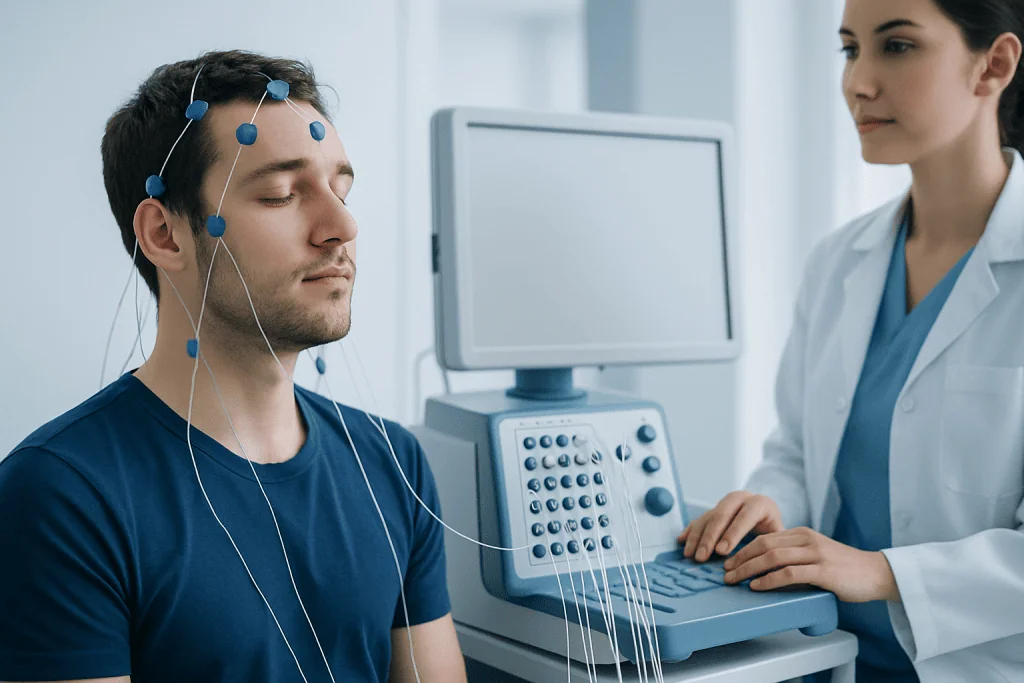
Sleep specialists often use overnight testing called polysomnography to look at brain waves, breathing, oxygen levels, movements, and sleep stages. This is commonly followed by a multiple sleep latency test the next day, which measures how quickly a person falls asleep during scheduled naps and whether REM sleep appears unusually early. These tests help distinguish narcolepsy from other causes of sleepiness.
In selected cases, doctors may also use actigraphy, blood tests to rule out contributing conditions, or cerebrospinal fluid testing for hypocretin levels. The diagnosis should be made by a qualified clinician because symptoms can overlap with insomnia, sleep deprivation, and other neurological or psychiatric conditions. Accurate diagnosis is the foundation for safe and effective treatment.
Treatment Options
Treatment is individualized and usually combines medication with practical lifestyle strategies. Medicines may be used to improve daytime alertness, reduce cataplexy, and manage related symptoms such as disturbed nighttime sleep. The choice of treatment depends on age, symptom pattern, medical history, daily responsibilities, and possible side effects, so ongoing follow-up is important.
Scheduled naps can be helpful for some people, especially when planned at times of greatest sleepiness. Good sleep habits, a regular sleep-wake schedule, and attention to safety are also central parts of care. For example, a person may need to adjust work routines, avoid driving when sleepy, and discuss accommodations at school or work.
Because diagnosis and management may require specialized evaluation, some patients benefit from comprehensive sleep study testing and a broader review in a neurology assessment or sleep medicine program. In complex cases, multidisciplinary care helps address emotional wellbeing, education, and long-term symptom monitoring.
Prevention, Self-care, and Living Well
There is no known way to prevent narcolepsy with cataplexy from developing, but many self-care steps can reduce its impact. Keeping a consistent sleep schedule, protecting enough nighttime sleep, and taking planned short naps may improve alertness. Avoiding alcohol or other substances that worsen sleepiness can also help.
Patients often do better when family, teachers, employers, and close friends understand the condition. Education can reduce stigma and make it easier to arrange practical support, such as flexible break times or a safe space for a short nap. Carrying a list of symptoms and treatments may also be useful, especially if cataplexy has led others to misinterpret episodes.
Safety should remain a priority. People should speak with their doctor about driving, operating machinery, swimming alone, working at heights, or other situations where sudden sleepiness or weakness could be dangerous. Near the end of the care journey, some international patients may seek evaluation at centers such as Acibadem International, where multidisciplinary specialists in JCI-accredited hospitals diagnose and treat sleep-wake disorders.
When to See a Doctor
A person should see a doctor if daytime sleepiness is frequent, overwhelming, or affecting school, work, memory, mood, or safety. Medical advice is especially important if sleepiness occurs while driving, during conversations, or in other situations where staying awake should normally be easy. Persistent symptoms deserve evaluation rather than being dismissed as a busy lifestyle.
Prompt assessment is also recommended if brief episodes of weakness happen with laughter, excitement, or other emotions. Even mild cataplexy can be an important clue. If a person experiences falls, injury, sleep paralysis, vivid dream-like experiences around sleep, or severely disrupted nighttime sleep, a sleep specialist can help clarify the cause.
Early diagnosis can make a meaningful difference. It helps patients understand what they are experiencing, reduce uncertainty, and begin treatment that supports safer and more predictable daily life. When symptoms are recognized early, people are often better able to manage school, work, relationships, and overall wellbeing.
Frequently asked questions
What is the difference between narcolepsy and narcolepsy with cataplexy?
Narcolepsy is a sleep-wake disorder marked mainly by excessive daytime sleepiness. Narcolepsy with cataplexy includes that sleepiness plus episodes of sudden muscle weakness triggered by emotions. Cataplexy is an important clue that helps doctors classify the condition more precisely.
Can cataplexy happen without losing consciousness?
Yes. During cataplexy, people usually remain conscious and aware of what is happening. The main problem is a temporary loss of muscle tone, which may affect the face, jaw, neck, knees, or the whole body.
Is narcolepsy with cataplexy caused by poor sleep habits?
No, although poor sleep can make symptoms feel worse. Narcolepsy with cataplexy is a neurological condition involving abnormal regulation of sleep and wakefulness. A healthy sleep routine is still important because it can support treatment and reduce symptom burden.
At what age does narcolepsy with cataplexy usually start?
Symptoms often begin in childhood, adolescence, or early adulthood, but the condition can be recognized later. Some people live with symptoms for years before receiving a diagnosis. Early recognition matters because treatment can improve functioning and safety.
How is narcolepsy with cataplexy confirmed?
Doctors usually confirm it through a careful symptom history and specialized sleep testing. This commonly includes an overnight sleep study followed by a multiple sleep latency test the next day. In selected cases, additional tests may be used to support the diagnosis.
Can narcolepsy with cataplexy be treated successfully?
It cannot usually be cured, but it can often be managed well. Many people improve with a combination of medications, planned naps, regular sleep habits, and practical lifestyle adjustments. Follow-up with a qualified sleep specialist helps tailor treatment over time.
References
- American Academy of Sleep Medicine
- National Institute of Neurological Disorders and Stroke
- National Heart, Lung, and Blood Institute
- National Health Service
- Mayo Clinic
This article is for general information only and is not a substitute for professional medical advice. Please consult a qualified doctor about your individual situation.
Narcolepsy in Turkey — costs, top hospitals & a free quote
JCI-accredited · board-certified surgeons · reply within 24h
Add us as a Preferred Source to see more of our trusted health content across Google Search, AI Overviews and Discover.

More from the Health Library



Related Specialists

Dr. Ateş Önal
Anesthesiology
Dr. Mahmut Özyilmaz
Aesthetic Plastic & Reconstructive Surgery
Dt. Müge Tiralı Türkkan
Oral & Dental Health
Prof. Dr. A. Sibel Erdamar Çetin
Gastrointestinal Oncology Unit Clinical Service