Navel Stone: A Complete Medical Overview

A navel stone, also called an omphalolith, forms when debris builds up and hardens inside the belly button. Many navel stones cause no symptoms at first, but some lead to odor, discharge, pain, or local inflammation.
Key Takeaways
- A navel stone, also called an omphalolith, forms when debris builds up and hardens inside the belly button.
- Many navel stones cause no symptoms at first, but some lead to odor, discharge, pain, or local inflammation.
- Doctors usually diagnose a navel stone with a simple physical examination.
- Treatment often involves gentle removal and cleaning; surgery is rarely needed unless there is another underlying problem.
- Regular hygiene and checking a deep belly button can help reduce the chance of recurrence.
A navel stone is a hardened collection of skin cells, natural oils, lint, and other debris trapped in the belly button. It is usually benign, but it can cause discomfort, discharge, odor, or infection if it irritates the skin or remains in place.
Overview
A navel stone is a firm mass that forms inside the belly button when dead skin cells, sebum (the skin’s natural oil), lint, sweat, and other debris collect and gradually harden. The medical term for this is omphalolith. Although the name may sound concerning, a navel stone is usually a localized hygiene-related buildup rather than a dangerous disease.
Some people notice a dark plug, a small lump, or an unusual smell from the umbilicus. Others do not realize it is present until irritation, redness, or discharge develops. Because the belly button can be deep or difficult to clean, debris may remain in place for a long time and become compacted.
A navel stone can resemble other causes of a belly button lump or discharge, so it is important not to assume every change is harmless. Conditions such as skin infection, cysts, or inflammation may need medical assessment. In some cases, symptoms overlap with navel infection, especially if the area becomes moist, tender, or inflamed.
Symptoms and What It Looks Like

A navel stone often appears as a dark brown, black, or gray compact mass inside the belly button. Its color comes from oxidation of keratin and oils, much like the dark surface of a blackhead. The stone may be small and barely visible or larger and more firmly lodged in a deep umbilicus.
Not everyone has symptoms. When symptoms occur, they may include a bad odor, mild discomfort, itching, pressure, tenderness, redness, or a feeling of fullness in the belly button. If the skin around the stone becomes irritated, there may be discharge or slight bleeding after touching or cleaning the area.
Sometimes the main concern is cosmetic, especially if the stone is visible. In other cases, local inflammation develops because the trapped material keeps rubbing against the skin. If there is increasing pain, swelling, pus, fever, or spreading redness, a doctor should check for infection or another cause rather than assuming it is only a navel stone.
- Dark plug or lump in the belly button
- Unpleasant odor
- Redness or tenderness
- Discharge or moisture
- Occasional bleeding after irritation
Causes and Risk Factors
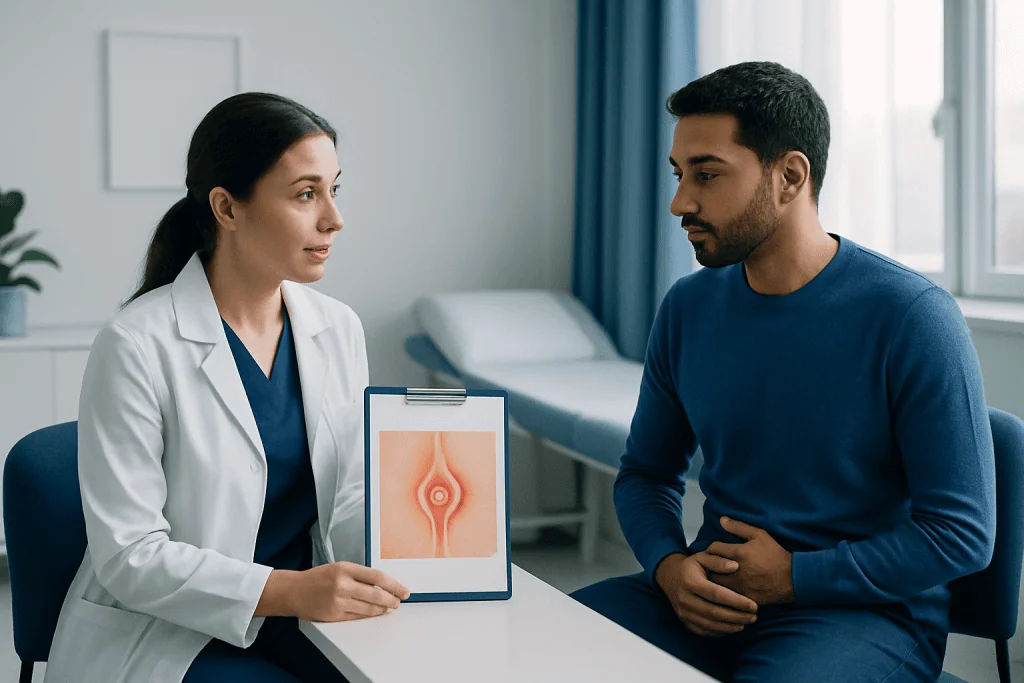
Navel stones form when material becomes trapped in the umbilicus and is not removed over time. The main components are usually keratin from shed skin cells and sebum from the skin’s oil glands. Lint, soap residue, sweat, and dust can also become part of the buildup. As this material dries and compacts, it hardens into a stone-like mass.
Several factors make this more likely. A deep or narrow belly button can hold debris more easily. Limited mobility, obesity, reduced self-care, heavy body hair, and infrequent washing may contribute. Older adults may be at higher risk because the buildup can develop slowly over many years.
People sometimes mistake a navel stone for poor hygiene alone, but the issue is often more practical than neglectful. Deep skin folds can make the area difficult to inspect and clean. Inflammation, moisture, or repeated friction can then make a harmless buildup more noticeable. In some cases, doctors may also consider other conditions such as a cyst or local skin disorder if the appearance is unusual or recurrent.
How Doctors Diagnose a Navel Stone
Diagnosis is usually straightforward and begins with a medical history and physical examination. A clinician inspects the belly button and may gently separate the skin folds to look for a compact dark mass. In many cases, the appearance is typical enough that no complex testing is needed.
The doctor will also check for signs of inflammation or infection, such as redness, swelling, discharge, warmth, or tenderness. If there is a strong odor or fluid drainage, a sample may occasionally be taken if infection is suspected. The goal is to confirm whether the problem is a simple omphalolith or whether there is another condition affecting the area.
Imaging tests are not usually necessary, but they may be considered if there is uncertainty about a deeper lump, a persistent sinus, or another structural problem. Rarely, doctors evaluate for causes such as cysts, hernias, or congenital remnants. If the area needs closer evaluation, a specialist may recommend diagnostic imaging to clarify the diagnosis.
Treatment Options
The main treatment for a navel stone is careful removal by a healthcare professional. This is often done in the clinic after softening the material with saline, oil, or another appropriate solution. The stone may then be gently lifted out with suitable instruments. This approach helps protect the delicate skin inside the belly button.
After removal, the area is cleaned to clear any remaining debris. If the surrounding skin is irritated or infected, the doctor may recommend additional treatment such as local wound care or medication. Patients should avoid digging into the belly button with sharp objects or forcefully trying to remove the mass at home, since this can injure the skin and increase the risk of infection.
If repeated inflammation has led to an abscess or another complication, further care may be needed. In selected cases, doctors may use general surgery if there is an underlying anatomical issue or another lesion that requires removal, though this is uncommon for a simple navel stone. When skin infection is present, treatment may overlap with care for skin infections.
Most people feel better quickly once the stone is removed and the area is cleaned. Follow-up may be advised if symptoms persist, if the diagnosis is uncertain, or if there are repeated episodes that suggest another underlying problem.
Prevention and Self-care
Prevention focuses on gentle, regular belly button hygiene. Washing the area with mild soap and water during bathing, then drying it well, can help prevent debris from accumulating. People with a deep umbilicus may benefit from checking the area occasionally in a mirror to make sure there is no trapped lint, moisture, or crusting.
It is best to avoid aggressive scrubbing, inserting cotton swabs deeply, or using sharp tools. These can irritate the skin and create tiny injuries. Instead, a soft cloth and careful drying are usually enough. If the area is hard to reach because of body shape, limited mobility, or another medical issue, a doctor or nurse can suggest safer cleaning methods.
People who have had a navel stone before may need to be more consistent with self-care. Breathable clothing, good skin hygiene, and managing excess moisture can all help. If there is recurrent discharge, bleeding, or tenderness despite regular cleaning, the problem may not be a simple stone and should be assessed professionally.
When to Seek Medical Care
A doctor should evaluate the belly button if there is persistent pain, redness, swelling, discharge, foul odor, or bleeding. Medical advice is also important if a dark mass cannot be removed easily, if the area becomes increasingly sensitive, or if the lump seems attached deep inside the skin.
Urgent assessment is appropriate if there is fever, rapidly spreading redness, significant pus, or worsening pain, since these may suggest infection. A person should also seek care if a belly button lump appears suddenly, keeps returning, or is associated with a broader abdominal swelling.
Because several conditions can look similar, a clinician can help distinguish a navel stone from infection, cysts, sinus tracts, or other causes. Near the end of the care pathway, some patients may need support from dermatology, surgery, or imaging specialists. Acibadem International’s multidisciplinary specialists and JCI-accredited hospitals diagnose and treat this condition for international patients when evaluation or removal is needed.
Frequently asked questions
What is a navel stone made of?
A navel stone is usually made of keratin, natural skin oils, lint, dead skin cells, and other trapped debris. Over time, this material becomes compacted and hardens inside the belly button.
Is a navel stone dangerous?
A navel stone is usually not dangerous and is often a benign buildup. However, it can irritate the skin or lead to infection-like symptoms, so medical review is sensible if there is pain, redness, discharge, or odor.
Can a navel stone go away on its own?
A small buildup may loosen with gentle cleaning, but a true hardened navel stone often does not come out easily on its own. If it is firmly lodged, a doctor can remove it more safely and comfortably.
Should a person remove a navel stone at home?
Trying to remove it forcefully at home is not recommended. Digging with tweezers, pins, or other objects can injure the skin, cause bleeding, and increase the risk of infection.
How is a navel stone different from an infection?
A navel stone is a hardened collection of debris, while an infection involves inflammation caused by germs. A stone may sometimes trigger irritation or coexist with infection, which is why redness, pus, warmth, or fever should be medically assessed.
Can a navel stone come back?
Yes, recurrence is possible, especially in people with a deep belly button or repeated debris buildup. Regular gentle cleaning and careful drying can help reduce the chance of it returning.
This article is for general information only and is not a substitute for professional medical advice. Please consult a qualified doctor about your individual situation.
Explore treatments in Turkey — costs, top hospitals & a free quote
JCI-accredited · board-certified surgeons · reply within 24h
Add us as a Preferred Source to see more of our trusted health content across Google Search, AI Overviews and Discover.

More from the Health Library
Uncircumciseddick — Explained by Medical Evidence, Not Myths

Ostomy Bag: What Patients Need to Know

Eczema Shampoo: What Patients Need to Know

Ovarian Follicle: What Patients Need to Know

Acth Hormone: What Patients Need to Know