Nearsightedness Treatment: How It Works, Results and What to Expect
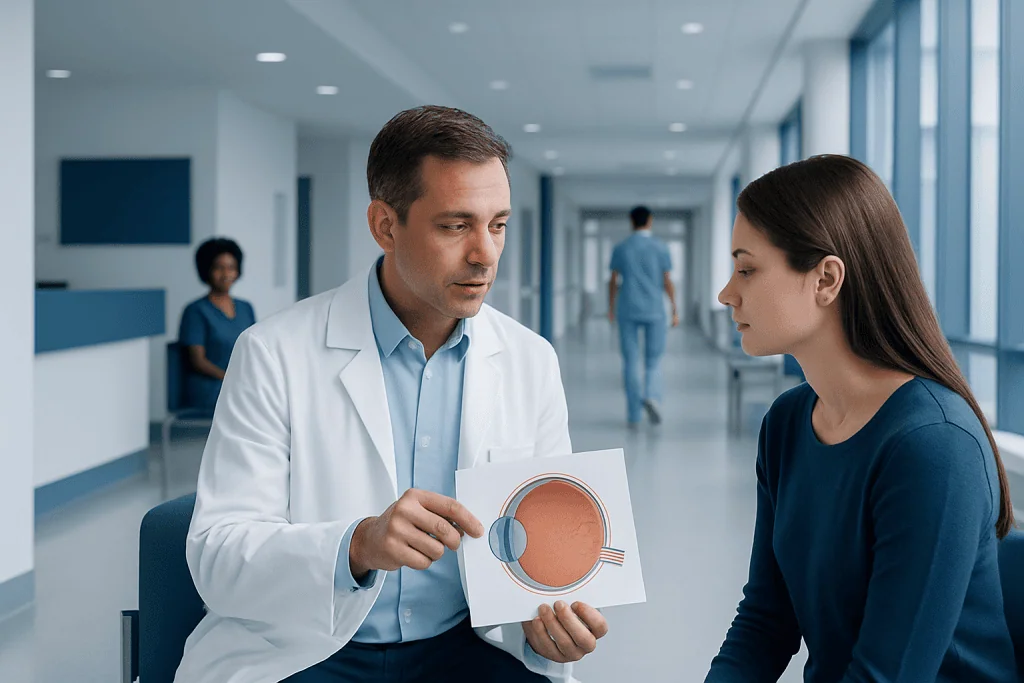
Glasses and contact lenses provide effective vision correction but do not stop the eye from becoming more myopic. Children with progressing myopia may benefit from a personalized myopia-control plan and regular eye monitoring.
Key Takeaways
- Glasses and contact lenses provide effective vision correction but do not stop the eye from becoming more myopic.
- Children with progressing myopia may benefit from a personalized myopia-control plan and regular eye monitoring.
- Laser vision correction and implantable lenses can reduce dependence on glasses or contacts in eligible adults.
- A detailed eye examination is essential before any surgical treatment because corneal shape, prescription stability and eye health affect suitability.
- Sudden vision changes, flashes, many new floaters or a curtain-like shadow need urgent ophthalmic assessment.
Nearsightedness treatment improves distance vision by correcting how light focuses in the eye. Options range from glasses and contact lenses to myopia-control strategies in children and refractive procedures for carefully selected adults.
Nearsightedness Treatment: How It Works
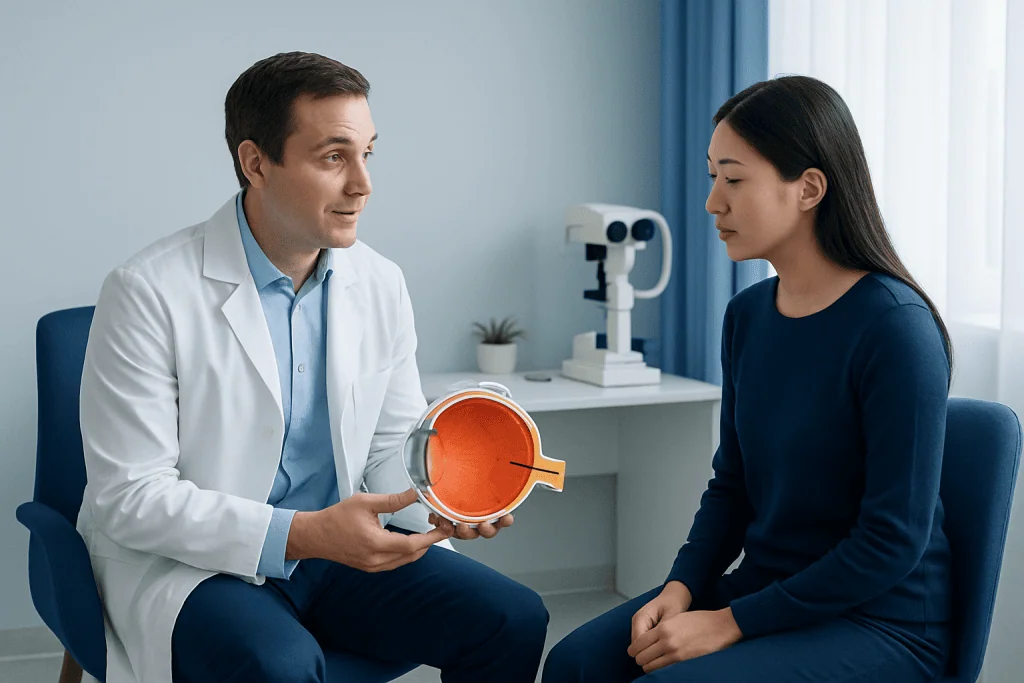
Nearsightedness, also called myopia, is a common refractive error that makes distant objects appear blurred while close vision may remain clear. It usually occurs because the eye is slightly longer than average or the cornea bends light too strongly. As a result, incoming light focuses in front of the retina rather than directly on it.
Nearsightedness treatment works by changing where light focuses. Glasses and contact lenses use concave lenses to move the focus back onto the retina. In suitable adults, refractive surgery reshapes the cornea or places a lens inside the eye to reduce the need for external correction.
The best approach depends on age, prescription, whether the myopia is progressing, corneal measurements, general eye health and personal goals. A complete assessment can also identify related concerns, including retinal detachment, which is more likely in people with high myopia and requires prompt attention if symptoms occur.
Treatment Choices for Children and Adults
For many people, glasses are the simplest and safest way to correct myopia. They can be adjusted as the prescription changes and are appropriate at any age. Contact lenses can offer a wider field of view and may be helpful for sports or certain visual needs, but they require careful cleaning, correct wear and regular professional review to lower the risk of eye infection.
In children and teenagers whose myopia is progressing, the goal may include slowing further progression as well as improving vision. Depending on the individual, an eye specialist may discuss specially designed spectacle lenses, multifocal contact lenses, overnight corneal reshaping lenses known as orthokeratology, or low-dose medicated eye drops. These methods do not reverse existing myopia, and they should be used only with clinician guidance and follow-up.
Adults with stable prescriptions may consider laser eye surgery such as LASIK, PRK or SMILE. Another option for some people with higher prescriptions or corneas that are not suitable for laser reshaping is an implantable collamer lens. Lens-based surgery may be considered in selected older adults, particularly when age-related lens changes are also relevant.
- Glasses: non-invasive, flexible and effective for most prescriptions.
- Contact lenses: convenient for some lifestyles but require excellent hygiene.
- Myopia control: aims to slow progression in appropriately selected children.
- Refractive surgery: may reduce dependence on glasses or contacts in eligible adults.
How Myopia Surgery Works and Who May Be Eligible
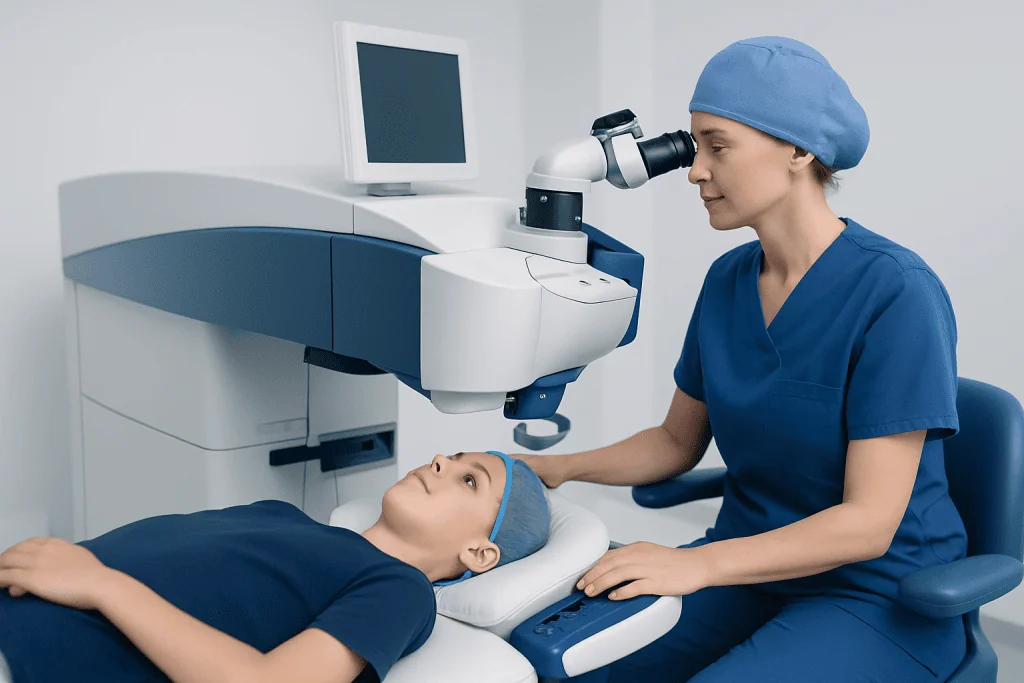
Laser refractive procedures reshape the front surface of the eye, the cornea, using a precisely controlled laser. This changes the eye’s focusing power. LASIK involves creating a thin corneal flap before reshaping underlying tissue; PRK reshapes the surface after removing the outer cell layer; and SMILE removes a small piece of corneal tissue through a small incision. The most appropriate technique varies from person to person.
Implantable collamer lens surgery does not remove corneal tissue. Instead, a flexible prescription lens is placed inside the eye, usually behind the iris and in front of the natural lens. It may be considered when laser treatment is not appropriate because of prescription level, corneal thickness or other anatomical factors.
Potential candidates are usually adults with a stable prescription for a period determined by their ophthalmologist. They need healthy corneas, no uncontrolled eye disease, and realistic expectations about outcomes. Pregnancy, breastfeeding, significant dry eye, active eye inflammation, keratoconus, uncontrolled diabetes and some autoimmune conditions may affect the timing or appropriateness of surgery.
Preoperative testing commonly includes refraction, corneal thickness and topography, tear-film assessment, pupil measurements, retinal examination and sometimes imaging of the front and back of the eye. These tests help the surgical team choose a safe option or advise against surgery when the expected benefit is limited.
What Happens During the Procedure and Recovery
Before refractive surgery, the eye is measured in detail and the treatment plan is confirmed. On the day of the procedure, numbing eye drops are usually used. The patient remains awake, and the eye is kept open with a small instrument. Laser treatment itself is typically brief, although preparation and safety checks take longer.
After LASIK or SMILE, many people notice clearer vision within the first few days, though vision can fluctuate while the eye heals. PRK generally has a slower early recovery because the corneal surface needs time to regrow; a protective contact lens may be used temporarily. Implantable lens surgery has its own recovery schedule and follow-up requirements, including monitoring eye pressure and lens position.
Eye drops, protective measures and scheduled follow-up visits support healing. People are commonly advised to avoid rubbing the eyes, swimming and eye makeup for a period recommended by their surgeon. Driving, screen work, exercise and return to work should be guided by vision quality, comfort and the treating clinician’s instructions.
Results can be very satisfying when patients are appropriately selected, but no procedure can promise perfect vision for every person. Some people may still need glasses for particular tasks, and reading glasses commonly become necessary with age because of presbyopia, even after successful distance-vision correction.
Benefits, Limitations and Risks of Nearsightedness Treatment
The main benefit of treatment is clearer distance vision. Glasses and contacts can provide reliable correction without permanently changing the eye. Myopia-control approaches may help reduce the rate of progression in some children, while surgical options can reduce reliance on glasses or contact lenses for selected adults.
Every option has limitations. Glasses can fog or break, and contact lenses can cause irritation, dryness or infection when worn improperly. Myopia-control treatments need ongoing review because prescriptions may still change. Surgery cannot prevent normal age-related changes in the eye, including presbyopia and cataract development.
Possible surgical side effects include temporary dry eye, glare, halos around lights, light sensitivity, fluctuating vision and undercorrection or overcorrection. Less common but important complications can include infection, corneal healing problems, raised eye pressure after implantable lens surgery, or a need for additional treatment. A careful preoperative assessment and close follow-up reduce risk but cannot remove it entirely.
People with high myopia should continue regular dilated retinal examinations when advised, whether or not they have had vision-correction surgery. Correcting the refractive error does not change the underlying eye length or eliminate risks associated with high myopia.
What Is the Best Age to Treat Myopia?
There is no single best age for every form of myopia treatment. Glasses can be prescribed as soon as a child needs vision correction. When myopia begins or progresses during childhood, early assessment is useful because clinicians can monitor change over time and discuss strategies that may slow progression when appropriate.
Laser vision correction is generally considered only after eye growth and prescription changes have stabilized, which is usually in adulthood. The exact timing depends on repeated prescription measurements, corneal health and other examination findings rather than age alone. An ophthalmologist can advise whether waiting is safer or whether an adult is ready for a surgical evaluation.
For children, time outdoors, regular eye examinations and following the recommended treatment plan are practical parts of care. Parents should not begin medicated drops or specialty contact lens treatment without guidance from a qualified eye-care professional.
How Quickly Does Nearsightedness Get Worse?
Myopia often develops in school-age children and may progress most quickly during the years of active growth. The speed of change differs widely: some children have little change over time, while others need prescription updates more frequently. Family history, age at onset, time spent outdoors and near-work habits may all be relevant.
Progression commonly slows in the late teenage years or early adulthood, but it can continue later for some people. Adults may also notice changes in vision due to dry eye, natural lens changes, diabetes or other eye conditions, so a new or unexpected change should not automatically be assumed to be ordinary myopia progression.
Regular examinations allow the clinician to compare prescriptions and eye measurements over time. For children with progressing myopia, follow-up intervals are individualized. Spending time outdoors is associated with a lower likelihood of developing myopia in children and is generally encouraged as part of a healthy routine, alongside sun protection and balanced screen habits.
Can a Nearsighted Person Have 20/20 Vision?
Yes. A nearsighted person can often achieve 20/20 vision with properly prescribed glasses or contact lenses. Some people may also reach this level of distance vision after refractive surgery, but individual results depend on the prescription, eye anatomy, healing response and any other eye conditions.
Having 20/20 vision describes performance on a standard distance-vision test; it does not necessarily mean every aspect of vision is perfect. Contrast sensitivity, night vision, depth perception, eye comfort and the health of the retina and optic nerve also matter.
After surgery, the aim is usually to reduce dependence on corrective lenses while maintaining good quality vision. The treating ophthalmologist can explain what outcome is realistic for the individual rather than predicting a specific visual result in advance.
How Risky Is Myopia Surgery?
Myopia surgery is generally well established, but it is still eye surgery and carries meaningful risks. Safety depends heavily on appropriate patient selection, accurate measurements, experienced surgical care and careful adherence to aftercare instructions. A person should only proceed after understanding the expected benefits, alternatives and possible complications.
Most side effects after laser surgery, such as dryness and nighttime glare, improve during healing, but they can persist for some people. Rare complications may affect vision and require further treatment. Implantable lens procedures have different potential concerns, including changes in eye pressure, inflammation, cataract formation or lens-related issues, which is why long-term monitoring is important.
A consultation should include discussion of occupation, sports, screen use, night driving, contact lens tolerance and future reading-vision needs. It is appropriate to ask why one procedure is recommended over another, what follow-up is needed, and what options exist if the visual result is not as expected.
When to Seek Medical Care
Routine eye care is important for anyone with myopia, especially children with changing prescriptions and adults with high myopia. A prompt appointment is appropriate for gradually worsening vision, headaches linked with visual tasks, difficulty seeing the board or road signs, increasing contact lens discomfort, or questions about surgical suitability.
Urgent ophthalmic assessment is needed for sudden flashes of light, a shower of new floaters, a shadow or curtain across the vision, sudden marked blurring, eye pain, redness with reduced vision, or an eye injury. These symptoms can have several causes, some of which need timely treatment to protect sight.
Acibadem International’s multidisciplinary specialists and JCI-accredited hospitals can assess refractive errors and discuss appropriate treatment options for international patients. Decisions about myopia management or surgery should always follow a comprehensive eye examination and an individualized conversation with an ophthalmologist.
Frequently asked questions
Is nearsightedness treatment permanent?
Glasses and contact lenses correct vision only while they are worn. Laser surgery and implantable lenses can provide long-lasting refractive correction, but the eyes can still change over time. Age-related need for reading glasses and other eye conditions may develop later.
Can eye exercises cure myopia?
Eye exercises have not been shown to reverse the eye-length changes that cause typical myopia. They may be recommended for certain focusing or eye-coordination problems, but they are not a substitute for evidence-based myopia correction or control. An eye professional can identify the cause of visual symptoms.
Can children have laser surgery for myopia?
Laser refractive surgery is generally not used to treat ordinary childhood myopia because the prescription may still be changing as the eyes grow. Children are usually managed with glasses, contact lenses and, when suitable, myopia-control strategies. Regular monitoring helps guide treatment.
Will myopia return after laser eye surgery?
The corneal reshaping from laser surgery remains, but vision can change if the prescription changes later. Some people may have a small residual prescription or develop a new refractive change over time. This does not necessarily mean the procedure has failed.
Do I need to stop wearing contact lenses before a surgery assessment?
Contact lenses can temporarily alter the shape of the cornea and affect surgical measurements. The clinic will advise when to stop wearing them before testing, and the interval depends on the lens type. It is important to follow these instructions so the assessment is accurate.
Does high myopia need special follow-up?
Yes. High myopia is associated with a higher chance of certain retinal and other eye changes, even if vision is well corrected with glasses, contacts or surgery. An ophthalmologist may recommend regular dilated eye examinations and will explain which symptoms require urgent review.
References
- American Academy of Ophthalmology
- National Eye Institute
- World Health Organization
- International Myopia Institute
- U.S. Food and Drug Administration
This article is for general information only and is not a substitute for professional medical advice. Please consult a qualified doctor about your individual situation.
Explore treatments in Turkey — costs, top hospitals & a free quote
JCI-accredited · board-certified surgeons · reply within 24h
Add us as a Preferred Source to see more of our trusted health content across Google Search, AI Overviews and Discover.