Neuromuscular Disorders: How Nerves and Muscles Stop Working Together

Neuromuscular disorders affect nerves, muscles, or the communication between them. Common symptoms include muscle weakness, fatigue, cramps, numbness, and balance or walking problems.
Key Takeaways
- Neuromuscular disorders affect nerves, muscles, or the communication between them.
- Common symptoms include muscle weakness, fatigue, cramps, numbness, and balance or walking problems.
- Diagnosis often involves a neurological exam, blood tests, imaging, and electrodiagnostic studies such as EMG and nerve conduction tests.
- Treatment depends on the exact condition and may include medications, rehabilitation, respiratory support, and sometimes surgery.
- Prompt medical assessment is important if weakness is progressive, affects breathing or swallowing, or interferes with daily activities.
Neuromuscular disorders are conditions that disrupt the connection between nerves and muscles, making movement weaker, slower, or harder to control. Early evaluation can help clarify the cause, guide treatment, and support daily function and quality of life.
Overview
Neuromuscular disorders are a broad group of conditions that affect the peripheral nerves, the connection between nerves and muscles, or the muscles themselves. In normal movement, the brain sends signals through the spinal cord and peripheral nerves to muscles, which then contract in a coordinated way. When any part of this pathway is affected, muscles may not respond properly, leading to weakness, fatigue, loss of control, or reduced function.
These disorders include many different conditions with different causes and patterns. Some are inherited, while others develop later in life because of autoimmune disease, infection, inflammation, metabolic problems, medication effects, or nerve injury. Examples include peripheral neuropathies, myasthenia gravis, muscular dystrophies, inflammatory muscle diseases, and motor neuron disorders.
Symptoms can begin gradually or appear more suddenly, depending on the underlying problem. Some people notice trouble climbing stairs, lifting objects, or walking long distances. Others first experience numbness, muscle twitching, drooping eyelids, hand weakness, or unusual fatigue after activity. Because these signs can overlap with other conditions, careful medical evaluation is important.
Although some neuromuscular disorders are chronic, many can be treated or managed effectively. The goals are usually to identify the cause, slow progression when possible, relieve symptoms, preserve independence, and support breathing, swallowing, and mobility if needed.
Symptoms of Neuromuscular Disorders
The symptoms of neuromuscular disorders vary widely, but muscle weakness is one of the most common features. Weakness may affect the arms, legs, face, eyes, throat, or breathing muscles. In some conditions, weakness is symmetrical and develops slowly over time. In others, it may fluctuate during the day, worsen with activity, or affect one area more than another.
People may also experience muscle cramps, twitching, stiffness, aching, reduced endurance, or faster-than-expected fatigue. If peripheral nerves are involved, there may be numbness, tingling, burning pain, or loss of sensation in the hands and feet. Balance problems, frequent tripping, difficulty with fine motor tasks, and changes in walking pattern are also common.
When the muscles of the face and throat are affected, symptoms may include drooping eyelids, double vision, slurred speech, difficulty chewing, or trouble swallowing. In more advanced or urgent situations, breathing muscles may weaken, causing shortness of breath, shallow breathing, poor sleep quality, or morning headaches.
- Muscle weakness in the arms, legs, hands, or feet
- Fatigue that worsens with activity
- Numbness, tingling, or burning sensations
- Muscle cramps, twitching, or wasting
- Trouble walking, climbing stairs, or lifting objects
- Drooping eyelids, double vision, or swallowing problems
- Shortness of breath or weak cough in more serious cases
Causes and Risk Factors

Neuromuscular disorders can develop for many reasons. Some arise from inherited genetic changes that affect muscle structure, nerve function, or the communication between nerves and muscles. Others are acquired later in life through autoimmune activity, inflammation, viral illness, toxin exposure, nutritional deficiencies, metabolic disease, or complications of chronic conditions such as diabetes.
Doctors often classify these disorders based on which part of the system is most affected. Peripheral nerve conditions damage the nerves that carry signals to and from the muscles. Neuromuscular junction disorders affect signal transfer between nerve endings and muscle fibers, as seen in myasthenia gravis. Primary muscle disorders, sometimes called myopathies, directly affect muscle tissue. Motor neuron conditions affect the nerve cells that control voluntary movement.
Risk factors depend on the specific diagnosis. A family history may increase the chance of inherited disorders. Autoimmune diseases can raise the risk of inflammatory or junction-related conditions. Diabetes, alcohol misuse, kidney disease, thyroid disorders, certain infections, and some medications may contribute to nerve or muscle damage in susceptible individuals.
In many people, the first concern is not identifying a risk factor but understanding why symptoms have started. Because weakness and sensory changes may also occur with orthopedic, vascular, endocrine, or central nervous system conditions, doctors usually consider a broad range of possibilities before confirming a neuromuscular diagnosis.
How Diagnosis Is Made
Diagnosis begins with a detailed medical history and neurological examination. The doctor asks about the pattern of weakness, how long symptoms have been present, whether they worsen with exertion, and whether there are associated symptoms such as numbness, pain, swallowing difficulty, or breathing changes. Family history, medication use, recent infections, and existing medical conditions are also important.
The physical examination looks at muscle strength, muscle bulk, reflexes, coordination, sensation, gait, and cranial nerve function. These findings help indicate whether the problem is more likely to involve muscles, peripheral nerves, the neuromuscular junction, or motor neurons. Blood tests may check markers of muscle injury, inflammation, autoimmune activity, thyroid function, vitamin levels, or metabolic causes.
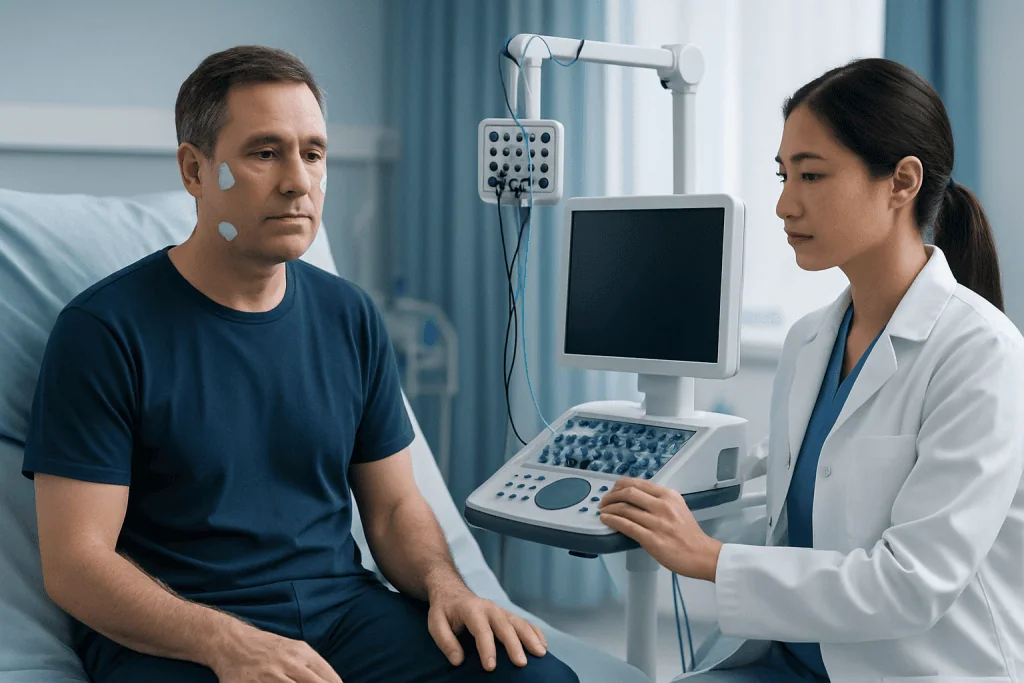
Electrodiagnostic testing is often central to the workup. Electromyography (EMG) and nerve conduction studies measure how muscles and nerves respond to electrical signals, helping doctors distinguish between nerve and muscle disorders. Depending on the clinical picture, imaging such as MRI may be used to assess muscles, the spine, or the brain, and some patients may need genetic testing, a muscle biopsy, or nerve biopsy.
Because many neuromuscular conditions are uncommon and can mimic one another, diagnosis may take time. A structured evaluation by a neurologist, and sometimes a specialized neuromuscular team, can help identify the exact condition and guide appropriate treatment planning.
Treatment Options
Treatment for neuromuscular disorders depends on the underlying cause. Some conditions respond to immunotherapy or other medications that reduce inflammation or modify immune activity. Others are managed with symptom-directed treatment, supportive care, and rehabilitation. Inherited disorders may not always be curable, but treatment can still improve function, comfort, and long-term health.
Rehabilitation is a key part of care for many patients. Physical therapy can help maintain strength, flexibility, mobility, and balance. Occupational therapy supports hand function, energy conservation, and daily tasks such as dressing or bathing. Speech and swallowing therapy may be helpful when facial, throat, or bulbar muscles are involved. In selected situations, physical therapy and rehabilitation programs are tailored to the person’s diagnosis and abilities.
Some people need assistive devices such as braces, canes, walkers, wheelchairs, or breathing support at night. If swallowing is impaired, nutritional guidance and strategies to reduce choking risk may be recommended. When pain, cramping, or spasticity is present, doctors may use medications and non-drug approaches to improve comfort and sleep.
In rare cases, surgery may be considered for complications such as nerve compression, severe contractures, or associated spinal problems. Long-term treatment is often multidisciplinary, involving neurology, rehabilitation medicine, pulmonology, nutrition, and other specialties. Near the end of the care pathway, some international patients seek evaluation at centers such as Acibadem International, where multidisciplinary specialists in JCI-accredited hospitals diagnose and treat neuromuscular conditions.
Prevention and Self-care
Not all neuromuscular disorders can be prevented, especially those caused by inherited genetic factors. However, self-care and general health measures may reduce complications, improve strength and endurance, and support day-to-day function. The most helpful approach depends on the diagnosis, severity of symptoms, and the muscles involved.
People living with neuromuscular disorders are often advised to pace activities and balance exercise with rest. Overexertion can worsen fatigue in some conditions, while complete inactivity can lead to deconditioning. A doctor or therapist can suggest a safe program that includes stretching, low-impact movement, and strength or endurance work when appropriate.
Healthy habits also matter. Good nutrition, adequate hydration, regular sleep, and management of conditions such as diabetes or thyroid disease can support nerve and muscle health. Avoiding alcohol excess and discussing medication side effects with a doctor may reduce preventable nerve or muscle injury. Vaccination and infection prevention may also be important for people whose breathing muscles are weak or whose treatment affects the immune system.
- Follow a personalized therapy and exercise plan
- Use assistive devices if recommended to reduce falls
- Eat a balanced diet and monitor weight and swallowing ability
- Protect sleep quality and address nighttime breathing symptoms
- Report new weakness, falls, or functional decline promptly
When to See a Doctor
Any persistent or unexplained muscle weakness should be assessed by a qualified doctor, especially if it is getting worse over time. Medical evaluation is also important for numbness, tingling, frequent falls, muscle wasting, hand clumsiness, or difficulty with everyday movements such as rising from a chair or climbing stairs.
Urgent care is needed if symptoms affect breathing, swallowing, or the ability to clear secretions with a strong cough. Sudden severe weakness, rapidly progressing paralysis, or new shortness of breath should never be ignored. These symptoms can signal a serious neuromuscular problem that requires prompt treatment and monitoring.
People who already have a known neuromuscular diagnosis should seek review if they notice changing symptoms, weight loss, repeated choking, increasing fatigue, or new sleep-related breathing issues. Regular follow-up helps the medical team adjust treatment, assess progression, and recommend supportive therapies at the right time.
When diagnosis is uncertain or symptoms are complex, referral to a neurology specialist can be especially helpful. Depending on the findings, doctors may also evaluate related conditions such as peripheral neuropathy or other disorders affecting movement and sensation.
Frequently asked questions
What are neuromuscular disorders?
Neuromuscular disorders are conditions that affect the nerves, muscles, or the connection between them. They interfere with normal muscle control and can cause weakness, fatigue, sensory changes, or difficulty with movement.
What is the most common symptom of a neuromuscular disorder?
Muscle weakness is one of the most common symptoms. Depending on the condition, it may affect the legs, arms, face, eyes, swallowing muscles, or breathing muscles, and it may be constant or fluctuate over time.
Are neuromuscular disorders hereditary?
Some neuromuscular disorders are inherited, while others are acquired later in life. A doctor may consider family history and, when appropriate, recommend genetic testing to help clarify the diagnosis.
Can neuromuscular disorders be cured?
Some can be treated effectively, and a few may improve significantly when the underlying cause is addressed. Others are long-term conditions that cannot be cured but can often be managed with medication, rehabilitation, and supportive care.
How are neuromuscular disorders diagnosed?
Diagnosis usually combines a medical history, neurological examination, blood tests, and tests that assess nerve and muscle function. Many patients also need EMG, nerve conduction studies, imaging, or sometimes genetic testing or biopsy.
When is muscle weakness an emergency?
Muscle weakness becomes an emergency if it suddenly worsens or affects breathing, swallowing, or the ability to walk safely. Rapidly progressing weakness or shortness of breath should be assessed urgently by a medical team.
References
- World Health Organization
- National Institute of Neurological Disorders and Stroke
- Muscular Dystrophy Association
- American Academy of Neurology
- National Organization for Rare Disorders
This article is for general information only and is not a substitute for professional medical advice. Please consult a qualified doctor about your individual situation.
Joint and spine care in Turkey — expert assessment & treatment
JCI-accredited · board-certified surgeons · reply within 24h
Add us as a Preferred Source to see more of our trusted health content across Google Search, AI Overviews and Discover.

More from the Health Library



Related Specialists

Dr. Levent Karaman
Inpatient Clinic Physicians Clinical Service
Dr. Cem Kara
Pediatric Surgery
Dr. Atilay Büker
Radiology
Prof. Dr. Yüksel Ersoy
Physical Medicine & Rehabilitation