Occupational Therapy Pediatrics: How It Works, Results and What to Expect

Pediatric occupational therapy focuses on everyday participation, not simply completing exercises. An OT evaluation usually includes caregiver discussion, observation and age-appropriate activities.
Key Takeaways
- Pediatric occupational therapy focuses on everyday participation, not simply completing exercises.
- An OT evaluation usually includes caregiver discussion, observation and age-appropriate activities.
- Therapy goals may address fine-motor skills, sensory processing, self-care, feeding, attention or school routines.
- Children with ADHD may benefit from OT when functional challenges affect daily activities, although OT does not replace medical or behavioral care.
- The length and frequency of therapy depend on the child’s goals, progress and family priorities.
- Caregivers are an important part of treatment because skills are practiced at home, school and in the community.
Occupational therapy pediatrics helps children participate more comfortably and independently in daily activities such as dressing, eating, playing, handwriting and school routines. A pediatric occupational therapist assesses a child’s strengths and challenges, then uses practical, play-based strategies tailored to the child and family.
Occupational Therapy Pediatrics: How It Works
Occupational therapy pediatrics is a form of rehabilitation that helps infants, children and teenagers take part in the everyday activities that matter at their age. In this setting, “occupations” means daily roles and routines: playing, learning, getting dressed, eating, using the toilet, joining family activities and participating at school. The purpose is to improve function, confidence and independence in ways that fit the child’s development and family life.
Pediatric occupational therapists are trained to look at how a child’s motor abilities, sensory responses, attention, communication, emotions, environment and routines may affect participation. Therapy may involve games, movement, crafts, self-care practice, visual supports, adaptive tools or changes to routines. Sessions are designed to be engaging, but each activity is selected to work toward practical goals.
OT is not a single procedure and does not follow one identical schedule for every child. It is a collaborative process that may involve parents or caregivers, teachers, pediatricians and other professionals such as speech-language therapists, physiotherapists, psychologists or developmental specialists. The best plan is based on the child’s individual needs rather than a diagnosis alone.
Who May Benefit From Pediatric Occupational Therapy?
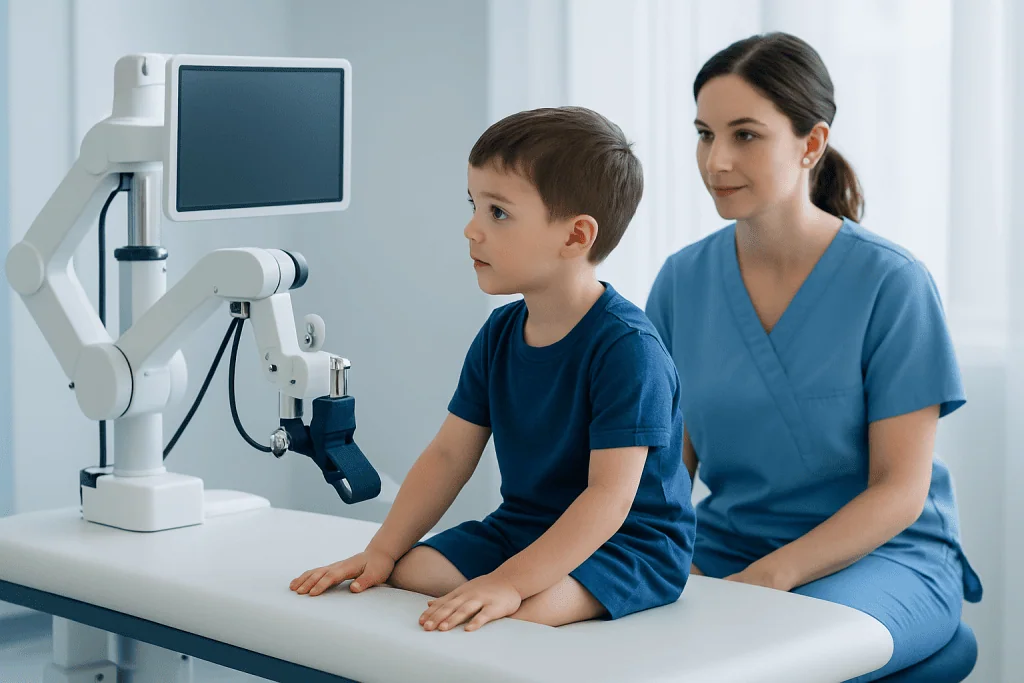
A child may be referred for occupational therapy when everyday tasks are unusually difficult, stressful or time-consuming compared with what is expected for their developmental stage. A referral can come from a pediatrician, school professional or another clinician, but parents may also ask their child’s doctor whether an OT assessment could be helpful.
Common reasons for assessment include difficulties with fine-motor skills, handwriting, using scissors, dressing, fasteners, feeding, sleep routines, play skills, coordination, sensory sensitivities, transitions, organization or participation in school and social activities. OT can also support children recovering from illness, injury or surgery, and children with developmental, neurological or physical conditions.
Children with conditions such as autism spectrum disorder, developmental coordination disorder, cerebral palsy or attention-related differences may have occupational therapy as one part of a broader care plan. A diagnosis is not required for an evaluation. The central question is whether the child is having meaningful difficulty participating in daily life.
- Fine-motor and visual-motor challenges, such as drawing, buttons or utensils
- Sensory responses that interfere with routines, play or learning
- Difficulty with self-care, including bathing, dressing or toileting
- Coordination, planning or balance concerns during movement and play
- Challenges managing school materials, tasks, transitions or routines
What to Expect at a Pediatric OT Evaluation?

A pediatric OT evaluation begins with a detailed conversation about the child’s health history, development, daily routines, strengths, interests and the concerns that prompted the visit. Caregivers may be asked about pregnancy and birth history, milestones, sleep, feeding, behavior, school participation and previous assessments or therapies. Bringing relevant medical, school or developmental records can be useful.
The therapist then observes the child through age-appropriate activities. This may include play, drawing, building, movement, use of utensils, dressing tasks or structured activities that assess fine-motor skills, coordination, visual-motor integration, attention and problem-solving. The therapist also considers how the child responds to sounds, touch, movement, visual information and changes in routine when these are relevant concerns.
Standardized assessment tools or caregiver questionnaires may be used, depending on the child’s age and goals. The evaluation is generally designed to feel supportive and child-friendly rather than like a test. The therapist discusses findings with the family, identifies meaningful goals and recommends whether therapy, home strategies, school accommodations, further assessment or referral to another professional may be appropriate.
Pediatric OT Step by Step: Assessment, Goals and Sessions
After assessment, the therapist and family agree on goals that are specific and relevant to daily life. For example, goals may focus on independently putting on shoes, tolerating toothbrushing, using classroom materials, improving mealtime participation or following a morning routine with less support. Meaningful goals help families and clinicians measure progress over time.
During sessions, the therapist uses activities matched to the child’s developmental level and preferences. A child working on hand skills may use drawing, building, puzzles or food preparation. A child with self-care goals may practice dressing steps, utensil use or organization strategies. For sensory or regulation concerns, the therapist may help the family identify supportive routines, environmental adjustments and coping tools that can be used safely at home or school.
Caregiver involvement is central. The therapist may demonstrate techniques, suggest ways to adapt tasks and provide a simple home practice plan. Regular communication with school staff can also help a child use the same strategies across settings. The program is reviewed periodically and adjusted as the child develops, goals are met or priorities change.
Do Kids With ADHD Benefit From OT?
Some children with attention-deficit/hyperactivity disorder (ADHD) can benefit from occupational therapy, particularly when attention, impulsivity, motor coordination, sensory preferences, handwriting, organization or emotional regulation are affecting everyday participation. OT may help a child develop practical strategies for completing routines, organizing materials, using movement breaks appropriately and managing tasks that require sustained effort.
Occupational therapy does not treat every feature of ADHD and is not a replacement for a comprehensive ADHD assessment or care plan. Depending on the child’s needs, effective support may also include parent education, school-based measures, behavioral interventions, psychological care and medication prescribed and monitored by a qualified clinician.
The most useful OT goals are functional and observable. For example, therapy may focus on getting ready for school with fewer reminders, remaining engaged with a classroom task using agreed supports, improving legibility or using a planner successfully. Families should discuss concerns with a pediatrician or developmental specialist to ensure that the child’s care is coordinated.
How Long Does a Child Typically Need an OT?
There is no fixed duration for pediatric occupational therapy. Some children need a short period of targeted support around one practical goal, while others benefit from longer-term therapy because their needs change as developmental demands increase. The frequency of sessions also varies according to the child’s goals, functional impact, opportunities to practice and progress.
Progress is usually reviewed at planned intervals. The therapist may compare current skills with the original goals, gather caregiver and teacher feedback, and decide whether to continue, adjust, reduce or pause therapy. A child may be discharged when goals have been met, when caregivers feel confident using strategies independently or when another type of support is more appropriate.
Home and school practice can make an important difference, but it should be realistic and should not place excessive pressure on the child or family. A therapist can help identify small, repeatable opportunities to practice skills naturally during normal routines. Families should feel comfortable asking how progress will be measured and when the plan will be reviewed.
Benefits, Limits and Possible Challenges
The potential benefits of pediatric OT include greater independence, easier participation in routines, improved confidence and reduced frustration around meaningful tasks. When therapy is connected to the child’s real environments, it may also help caregivers and teachers understand which supports make activities more accessible. Improvements may be gradual, and success can look different for each child.
OT is generally low risk and is adapted to the child’s tolerance and needs. However, a child may feel tired, frustrated or hesitant when practicing difficult activities or adjusting to new routines. Sensory activities should be individualized and supervised by a qualified professional, especially when a child has medical, balance, pain or safety concerns.
Not every challenge is best addressed through OT alone. For example, concerns involving loss of skills, persistent pain, weakness, significant feeding difficulties, hearing or vision problems, severe anxiety or major changes in behavior may need evaluation by a pediatrician and other specialists. Clear communication between providers helps ensure that therapy remains appropriate and goal-directed.
Is Occupational Therapy Worth It for Kids?
Occupational therapy can be worthwhile when it addresses a child’s specific difficulties with daily participation and uses goals that matter to the child and family. Rather than asking whether OT is right for every child, it is more helpful to ask whether a child has functional challenges that are limiting comfort, independence, learning, play or family routines.
Families can make an informed decision by discussing the expected goals, how progress will be tracked, what activities can be practiced at home and how often the plan will be reassessed. It is reasonable to ask whether school supports, medical assessment, speech therapy, physiotherapy, psychological care or other services should be considered alongside OT.
At Acibadem International, multidisciplinary specialists in JCI-accredited hospitals can assess developmental and functional concerns and coordinate pediatric rehabilitation for international patients when needed. A qualified clinician can help families decide whether occupational therapy fits the child’s overall care plan.
When to Seek Medical Care
Parents and caregivers should arrange a pediatric assessment if they are concerned that a child is not developing expected skills, is struggling substantially with daily tasks, or is becoming increasingly distressed by routine activities. Early discussion can help identify whether occupational therapy, another service or simple practical support may be useful.
Prompt medical advice is important if a child loses previously acquired skills, develops new weakness, severe clumsiness, persistent pain, unexplained falls, difficulty swallowing, major changes in feeding, sudden changes in behavior or marked fatigue. These symptoms may have causes that need medical evaluation before or alongside therapy.
For non-urgent concerns, families can begin with the child’s pediatrician, who can review development, hearing, vision, growth and general health and advise on referrals. If therapy is recommended, selecting goals together and reviewing progress regularly can help ensure the support remains meaningful.
Frequently asked questions
What age can a child start occupational therapy?
Children can be assessed for occupational therapy from infancy through adolescence. The appropriate age depends on the concern, such as feeding, play, movement, self-care or school participation. An evaluation can help determine whether OT is needed and which goals are realistic for the child’s developmental stage.
What does pediatric occupational therapy help with?
Pediatric OT can help with everyday activities including dressing, feeding, handwriting, play, using school tools, organization and transitions. It may also address sensory responses, fine-motor skills, coordination and strategies for managing routines. The focus is on improving participation in activities that matter to the child and family.
What should parents bring to an OT evaluation?
Parents may bring medical records, school reports, previous assessments and a list of their main concerns and goals. It can also help to note examples of situations that are difficult, such as mealtimes, dressing, homework or transitions. Comfortable clothing and any frequently used adaptive items may be useful depending on the reason for the visit.
Do kids with ADHD benefit from OT?
Some children with ADHD benefit when functional challenges affect organization, handwriting, routines, regulation or school participation. OT can provide practical strategies and environmental supports, but it does not replace a full ADHD care plan. Pediatric, behavioral and school-based support may also be important.
How quickly will a child show results from OT?
The pace of change varies with the child’s needs, goals, therapy frequency and opportunities to practice skills during daily routines. Some families notice small practical changes early, while other goals take longer. Therapists should review progress regularly and discuss whether the plan needs adjustment.
Can occupational therapy be provided at school and at home?
Occupational therapy may be provided in clinics, schools, homes or community settings depending on local services and the child’s needs. Skills are often easier to apply when strategies are practiced in the environments where challenges occur. Caregiver and teacher participation can support consistency across routines.
References
- American Occupational Therapy Association
- American Academy of Pediatrics
- Centers for Disease Control and Prevention
- National Institute of Mental Health
- World Health Organization
This article is for general information only and is not a substitute for professional medical advice. Please consult a qualified doctor about your individual situation.
Explore treatments in Turkey — costs, top hospitals & a free quote
JCI-accredited · board-certified surgeons · reply within 24h
Add us as a Preferred Source to see more of our trusted health content across Google Search, AI Overviews and Discover.