Oral Chlamydia: A Complete Medical Overview

Oral chlamydia refers to a chlamydia infection in the throat caused by Chlamydia trachomatis. Many people with oral chlamydia have no symptoms, so testing may be needed after exposure.
Key Takeaways
- Oral chlamydia refers to a chlamydia infection in the throat caused by Chlamydia trachomatis.
- Many people with oral chlamydia have no symptoms, so testing may be needed after exposure.
- Diagnosis usually involves a throat swab and, when appropriate, testing other sites such as the genitals or rectum.
- Antibiotics can treat oral chlamydia, but a clinician should guide treatment and follow-up.
- Safer sex practices and partner notification help reduce reinfection and further spread.
Oral chlamydia is a chlamydia infection affecting the throat, usually acquired through oral sexual contact. It often causes no symptoms, but when present, it may lead to throat discomfort and requires medical testing for diagnosis and antibiotic treatment.
Overview: what oral chlamydia is
Oral chlamydia is a bacterial infection of the throat caused by Chlamydia trachomatis. It is usually acquired through oral sexual contact with an infected partner. Although chlamydia is more commonly discussed as a genital infection, it can also affect the throat, rectum, and eyes.
A key point is that oral chlamydia often causes no obvious symptoms. Because of this, a person may carry and pass on the infection without realizing it. When symptoms do occur, they can be mild and may resemble common throat irritation, which is why self-diagnosis is not reliable.
Another important distinction is that a sore throat does not automatically mean oral chlamydia. Viral infections, allergies, acid reflux, and many other sexually transmitted infections can also affect the throat. A proper medical evaluation is the best way to confirm the cause and decide whether testing is needed.
Symptoms and how it may feel
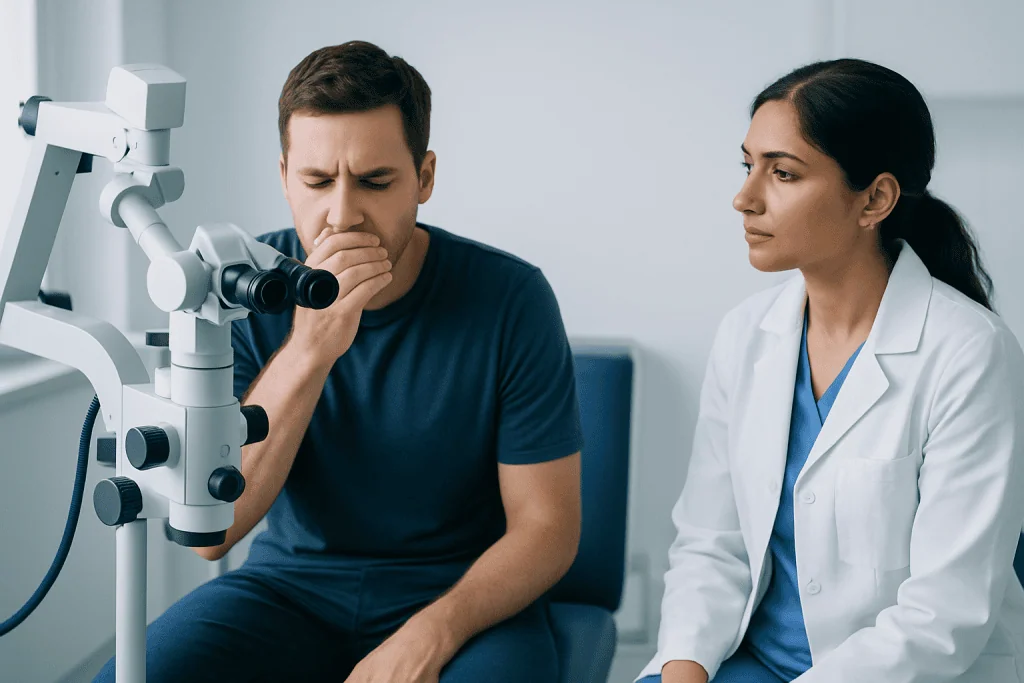
Many people with oral chlamydia do not notice any symptoms at all. This silent pattern is one reason why screening after a possible exposure can be important, even if a person feels well. In some cases, the infection is found only when a clinician tests the throat as part of a broader sexually transmitted infection evaluation.
When symptoms are present, they are usually non-specific. A person may notice a sore throat, throat irritation, pain when swallowing, mild redness, or a feeling of swollen glands in the neck. These symptoms can overlap with more common illnesses such as viral pharyngitis, so they are not enough on their own to diagnose chlamydia in the throat.
Oral chlamydia may also occur alongside genital or rectal chlamydia, which can cause different symptoms such as burning with urination, unusual discharge, pelvic discomfort, rectal pain, or rectal discharge. For that reason, clinicians often consider the full exposure history and may recommend evaluation for related infections, including chlamydia and other sexually transmitted conditions.
- Sore throat or throat discomfort
- Pain or discomfort with swallowing
- Redness in the throat
- Swollen or tender neck glands
- No symptoms at all
How oral chlamydia spreads and risk factors

Oral chlamydia most often spreads through oral sex involving contact with infected genital secretions. It may be transmitted during oral contact with the penis, vagina, or rectum of a partner who has chlamydia. The risk can be higher when barrier protection is not used or when a person has multiple partners.
Having one sexually transmitted infection can sometimes increase the chance of having another. This does not mean every sore throat after oral sex is an STI, but it does mean clinicians may recommend broader testing when exposure has occurred. Depending on symptoms and history, they may also evaluate for gonorrhea, since throat infections with different bacteria can feel very similar.
Risk factors include recent unprotected oral sex, a partner with known chlamydia, a past history of sexually transmitted infections, or new or multiple sexual partners. Younger sexually active adults may also be advised to have routine sexual health screening based on public health guidance. Open communication with a healthcare professional helps decide whether throat testing is appropriate.
Diagnosis: why testing matters
Oral chlamydia cannot be confirmed by symptoms alone. Diagnosis usually requires a throat swab tested with a sensitive laboratory method, commonly a nucleic acid amplification test. A clinician decides which sites to test based on a person’s symptoms and sexual exposure history, because throat-only testing may miss infection at other body sites.
Testing may also include genital or rectal samples if there has been vaginal, anal, or other sexual contact. In some settings, urine testing is also used, but a urine sample does not diagnose throat infection by itself. This site-specific approach matters because treatment and follow-up are guided by where infection is found.
A doctor may also look for other causes of throat symptoms, especially if fever, marked swelling, white patches, or more severe pain are present. Depending on the situation, assessment might include a physical examination, throat swab, and tests for other infections. Laboratory confirmation is especially useful when symptoms are mild or absent but exposure is a concern.
Treatment and follow-up
Oral chlamydia is treated with antibiotics prescribed by a qualified clinician. The exact medicine and duration depend on current medical guidance, a person’s overall health, pregnancy status, allergies, and whether other infections are suspected or confirmed. It is important to take the medication exactly as directed and not to stop early without medical advice.
Because reinfection is possible, treatment often includes guidance about sexual partners. Partners may need evaluation and treatment as well, even if they feel completely well. A clinician will usually advise avoiding sexual contact until treatment is completed and it is considered safe to resume, helping reduce transmission and recurrence.
Follow-up can vary. In some cases, repeat testing may be recommended, especially if symptoms continue, there is concern about reinfection, or public health recommendations indicate retesting after treatment. When broader sexual health care is needed, clinicians may recommend additional services such as STD screening or consultation in infectious diseases to ensure complete care.
Prevention and self-care
The most effective way to lower the risk of oral chlamydia is to reduce exposure. Using barrier methods such as condoms or dental dams during oral sex can help decrease transmission. Regular sexual health checkups are also useful for people with new partners, multiple partners, or a recent STI exposure.
Good self-care also includes honest partner communication and avoiding sexual activity when either partner has symptoms that could suggest an infection until medical advice is obtained. Alcohol or social situations can sometimes make it harder to use protection consistently, so having a plan in advance may help.
Self-care does not mean self-treating with leftover antibiotics or trying to diagnose the condition from internet searches alone. A throat infection can have many causes, and the correct treatment depends on an accurate diagnosis. If symptoms persist or recur, a healthcare professional can assess whether further testing is needed, including possible microbiology laboratory evaluation as part of diagnosis.
When to seek medical care
A person should seek medical care if they have had oral sexual contact with someone known to have chlamydia, if they develop throat symptoms after a possible exposure, or if a partner tells them they may have been exposed to an STI. Medical advice is also appropriate when symptoms do not improve, return after treatment, or are accompanied by genital or rectal symptoms.
More prompt assessment is important if there is severe throat pain, difficulty swallowing, breathing difficulty, fever, significant neck swelling, or signs of dehydration. These symptoms can have causes other than oral chlamydia and may require urgent attention. A clinician can determine whether testing for sexually transmitted infections, strep throat, viral illness, or other conditions is needed.
For international patients who need evaluation, Acibadem International’s multidisciplinary specialists and JCI-accredited hospitals provide diagnosis and treatment for sexually transmitted infections and related concerns. Professional assessment helps ensure that testing covers the right body sites and that treatment and partner management are handled appropriately.
Frequently asked questions
Can oral chlamydia go away on its own?
Some infections may not cause symptoms, but that does not mean they have resolved safely or that they cannot be passed to others. A healthcare professional should diagnose and treat oral chlamydia with appropriate antibiotics rather than waiting to see if it clears.
What does oral chlamydia look like in the throat?
There is no single appearance that confirms oral chlamydia. The throat may look normal or show mild redness, which is why visual inspection alone is not enough for diagnosis.
Is a sore throat after oral sex always oral chlamydia?
No. A sore throat after oral sex can have many causes, including viral infections, irritation, allergies, acid reflux, or other sexually transmitted infections. Testing is the only reliable way to know whether chlamydia is present.
How is oral chlamydia tested?
Testing usually involves a throat swab analyzed in a laboratory. Depending on sexual history and symptoms, a clinician may also recommend genital, rectal, or urine testing to look for infection at other sites.
Can you kiss someone and get oral chlamydia?
Oral chlamydia is mainly associated with oral sexual contact rather than casual kissing. While many people worry about transmission through kissing alone, current medical guidance focuses on exposure to infected genital or rectal secretions as the main route.
Do partners need treatment if one person has oral chlamydia?
Often, yes. Because chlamydia can be asymptomatic, partners may carry the infection without knowing it, so medical evaluation and possible treatment are usually advised to reduce reinfection and further spread.
This article is for general information only and is not a substitute for professional medical advice. Please consult a qualified doctor about your individual situation.
Explore treatments in Turkey — costs, top hospitals & a free quote
JCI-accredited · board-certified surgeons · reply within 24h
Add us as a Preferred Source to see more of our trusted health content across Google Search, AI Overviews and Discover.

More from the Health Library

Adderall Xr: An Evidence-Based Guide for Patients

Male Kegel Workouts: Procedure, Recovery and Results

Liposuction Scars: A Complete Medical Overview

Local Anesthesia: An Evidence-Based Guide for Patients

Vastus Lateralis: A Complete Medical Overview