Patella Injury: An Evidence-Based Guide for Patients

The patella, or kneecap, protects the front of the knee and helps the thigh muscles straighten the leg. Patella injuries can include bruising, fracture, dislocation, cartilage injury, and damage to the patellar tendon or supporting ligaments.
Key Takeaways
- The patella, or kneecap, protects the front of the knee and helps the thigh muscles straighten the leg.
- Patella injuries can include bruising, fracture, dislocation, cartilage injury, and damage to the patellar tendon or supporting ligaments.
- An inability to actively straighten the knee may indicate a more serious injury and needs urgent medical evaluation.
- Many stable injuries improve with protection, guided rehabilitation and gradual return to activity, while displaced fractures or recurrent instability may need surgery.
- Recovery plans should be individualized to restore movement, strength, balance and confidence in the knee.
A patella injury involves damage to the kneecap or the tissues that support it, ranging from a painful bruise or tendon strain to a fracture or dislocation. Prompt assessment is important when a person cannot bear weight, straighten the knee, or has significant swelling or deformity after an injury.
What Is a Patella Injury?
A patella injury is damage involving the patella, commonly called the kneecap, or the structures attached to and around it. The patella is a small bone at the front of the knee. It sits within the quadriceps tendon and connects to the shinbone through the patellar tendon, helping the powerful thigh muscles straighten the leg.
Injuries can happen after a direct blow, a fall onto the knee, a twisting event, or a forceful contraction of the thigh muscles. The term may describe a bruise, crack or break in the bone, a kneecap that moves out of its usual track, or injury to the tendon, cartilage, and stabilizing ligaments.
The expected care depends on the exact diagnosis. A mild soft-tissue injury may settle with temporary activity changes and rehabilitation, whereas a displaced fracture, torn tendon, or knee that remains dislocated requires urgent orthopedic assessment.
Common Types and Symptoms
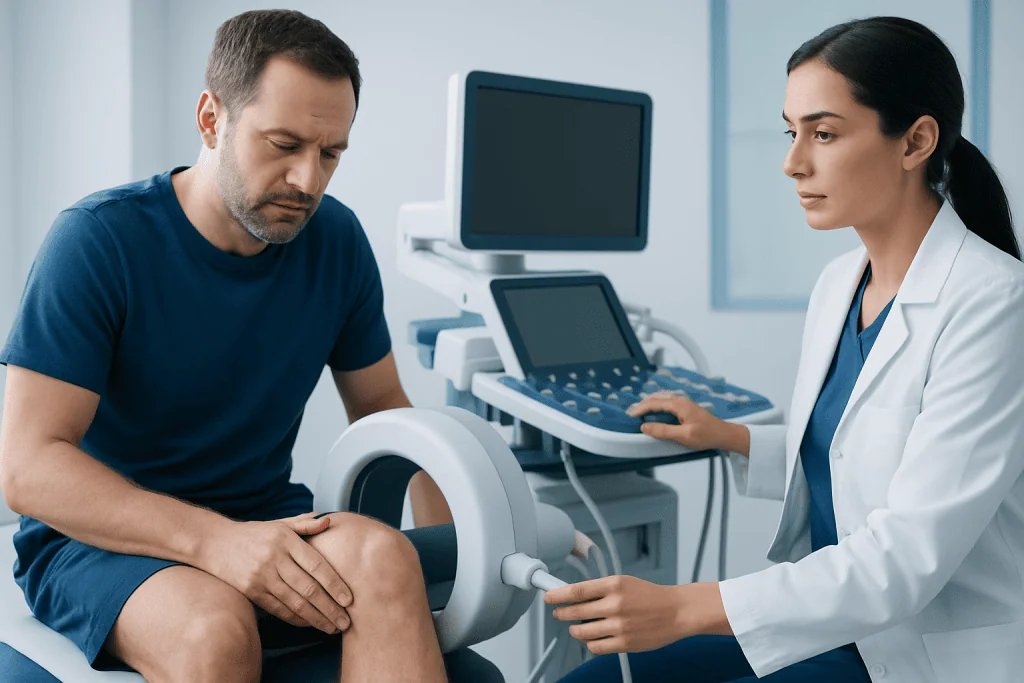
Symptoms vary with the cause and severity of the patella injury. Pain at the front of the knee is common, particularly when bending the knee, climbing stairs, squatting, kneeling, or getting up from a chair. Swelling, tenderness, bruising, stiffness, and difficulty walking may also occur.
A patellar fracture may follow a fall or direct impact. It can cause marked pain, swelling, and trouble straightening or lifting the leg. Some fractures are stable, meaning the bone pieces remain well aligned, while others are displaced and may disrupt the knee’s ability to extend.
Patellar dislocation occurs when the kneecap shifts out of its normal groove, usually toward the outside of the knee. A person may notice an obvious change in shape, sudden severe pain, swelling, and a feeling that the knee has given way. Even after the kneecap returns to position, injury to cartilage or supporting tissues can remain.
- Bruise or contusion: local pain and discoloration after a direct impact.
- Patellar fracture: a break in the kneecap, ranging from a small crack to separated fragments.
- Patellar dislocation or subluxation: complete or partial movement of the kneecap from its groove.
- Patellar tendon injury: pain below the kneecap and possible inability to straighten the knee after a major tear.
How Patella Injuries Happen and Who Is at Risk

Direct trauma is a frequent cause of patella injury. Examples include falling directly onto a bent knee, a collision during sport, or impact in a road traffic accident. Fractures can also occur when the quadriceps muscle contracts suddenly and forcefully, particularly if the knee is bending at the same time.
Dislocation and instability are more often related to a twist, change of direction, awkward landing, or a blow to the inside of the knee. Some people have anatomical features that may make the kneecap less stable, such as a shallow groove in the thigh bone, differences in limb alignment, generalized joint flexibility, or muscle imbalance around the hip and knee.
Previous patellar dislocation raises the likelihood of another episode. Participation in pivoting sports, reduced thigh strength after an earlier knee injury, and a rapid increase in training load can also contribute. These factors do not mean an injury is inevitable; they help clinicians guide prevention and rehabilitation.
Assessment and Diagnosis
A clinician usually begins by asking how the injury occurred, where the pain is felt, whether there was a popping sensation, and whether the knee has felt unstable. The examination may assess swelling, tenderness, alignment, movement, ability to bear weight, and whether the person can actively straighten the knee.
X-rays are commonly used after significant trauma to look for a patellar fracture and assess alignment. They may also show whether the kneecap is positioned normally. If there is concern about cartilage, ligaments, tendons, or other internal knee structures, magnetic resonance imaging (MRI) may be recommended.
Early diagnosis is especially important when there is a suspected fracture, tendon rupture, persistent dislocation, or a large collection of blood in the joint. These conditions may need timely treatment to protect knee function and reduce the risk of ongoing stiffness or instability.
Treatment Options and Rehabilitation
Treatment is based on the injury pattern, knee stability, activity needs, and overall health. For a bruise, minor stable fracture, or uncomplicated soft-tissue injury, care may include rest from aggravating activity, ice wrapped in cloth for short periods, elevation, and pain relief recommended by a healthcare professional. A brace, splint, crutches, or another walking aid may be used temporarily to protect the knee.
A kneecap that remains dislocated needs urgent medical reduction by a trained clinician. It should not be forced back into place at home. After reduction, care often includes short-term protection followed by a structured rehabilitation program to restore knee motion and strengthen the quadriceps, hip, and core muscles.
Some fractures can be managed without surgery when the fragments are well aligned and the extensor mechanism is intact. Surgery may be considered for displaced fractures, open fractures, certain cartilage injuries, major tendon tears, or recurrent patellar instability that does not improve with appropriate nonsurgical care. Knee surgery planning is individualized and guided by imaging, examination findings, and the person’s functional goals.
Rehabilitation is an essential part of recovery whether or not surgery is needed. A physiotherapist may guide safe progression from swelling control and gentle movement to walking, strengthening, balance training, and activity-specific exercises. Returning to running, jumping, or pivoting sport should be gradual and based on symptoms, strength, movement control, and clinician advice.
Supporting Recovery and Reducing Future Risk
During recovery, the knee should be protected according to the treating clinician’s instructions. Avoiding activities that increase pain, swelling, catching, or a sense of giving way can help prevent aggravation. It is usually helpful to keep the rest of the body active in safe ways, but the appropriate level of activity varies by injury.
Prescribed exercises should be performed consistently and progressed gradually. Strengthening the quadriceps and muscles around the hip can improve knee control, while flexibility and balance work may support comfortable movement. Technique coaching, suitable footwear, and a gradual increase in sport or exercise intensity can be useful for people returning to higher-demand activities.
Do not return to contact sport, jumping activities, or heavy knee loading simply because pain has improved. A knee may need more time to regain strength and coordination. Persistent swelling, locking, instability, or pain during rehabilitation should be discussed with the care team.
Acibadem International’s multidisciplinary specialists and JCI-accredited hospitals assess and treat knee injuries for international patients, including orthopedic evaluation and rehabilitation planning when appropriate.
When to Seek Medical Care
Urgent medical care is appropriate after a knee injury if the knee looks deformed, the kneecap appears out of place, or the person cannot stand or take steps. Immediate assessment is also important when it is not possible to actively straighten the knee or lift the straight leg, as this can occur with a significant fracture or tendon injury.
A clinician should assess substantial swelling, rapidly increasing bruising, severe pain, numbness, a cold or pale foot, an open wound near the knee, or symptoms after a high-energy accident. These signs do not always mean there is a serious complication, but they should not be managed by waiting at home.
For less severe symptoms, arrange a medical review if knee pain or swelling does not improve, the knee repeatedly gives way, movement remains limited, or there is concern about a previous dislocation. A qualified clinician can determine whether imaging, bracing, physiotherapy, or referral to an orthopedic specialist is needed.
Frequently asked questions
Can a patella injury heal without surgery?
Many patella injuries heal without surgery, particularly bruises, soft-tissue injuries, stable fractures, and first-time dislocations without major associated damage. Treatment may involve temporary protection, symptom management and a guided exercise program. Surgery is more likely when there is a displaced fracture, major tendon tear, open injury, or persistent instability.
How long does recovery from a patella injury take?
Recovery time depends on the injury type, severity, treatment and rehabilitation progress. A mild injury may improve over several weeks, while fractures, dislocations and surgical repairs can require several months of structured recovery. A clinician can give a more individualized estimate after examination and imaging.
Can someone walk with a patellar fracture?
Some people with a stable patellar fracture may still be able to walk, although it can be painful and should not be used to rule out a fracture. Others cannot bear weight or cannot straighten the knee. Any suspected fracture after trauma should be assessed promptly.
What should a person do if the kneecap dislocates?
The person should seek urgent medical care, especially if the kneecap remains out of position, the knee is visibly deformed, or there is numbness or severe pain. They should avoid trying to force the kneecap back themselves. The knee should be kept as still and supported as possible until professional assessment is available.
Why does the knee feel unstable after a patellar dislocation?
A dislocation can stretch or tear tissues that normally guide the kneecap in its groove. Swelling, pain, reduced quadriceps strength and altered movement patterns can also make the knee feel less secure. Rehabilitation aims to restore strength, control and confidence while identifying people who may need further orthopedic evaluation.
When is it safe to return to sport after a patella injury?
Return to sport should be based on recovery of knee movement, strength, balance and sport-specific control rather than time alone. The person should be able to perform relevant activities without significant pain, swelling or giving way. Clearance from a treating clinician or physiotherapist is particularly important after a fracture, dislocation, tendon injury or surgery.
References
- American Academy of Orthopaedic Surgeons
- OrthoInfo
- National Institute of Arthritis and Musculoskeletal and Skin Diseases
- Mayo Clinic
- National Health Service
This article is for general information only and is not a substitute for professional medical advice. Please consult a qualified doctor about your individual situation.
Joint and spine care in Turkey — expert assessment & treatment
JCI-accredited · board-certified surgeons · reply within 24h
Add us as a Preferred Source to see more of our trusted health content across Google Search, AI Overviews and Discover.

More from the Health Library

Cortisol Face: An Evidence-Based Guide for Patients

Inflamed Gallbladder: What Patients Need to Know
Blood Patch: What Patients Need to Know

Gel Memory Foam Mattress: An Evidence-Based Guide for Patients

Tantrum: What Patients Need to Know