Peyronie’s Disease: Early Signs, Risk Factors, and How It Is Treated

Peyronie's disease is caused by fibrous scar tissue, called plaque, that forms in the penis. Common early signs include a new bend, a firm lump, pain with erections, or loss of length or girth.
Key Takeaways
- Peyronie's disease is caused by fibrous scar tissue, called plaque, that forms in the penis.
- Common early signs include a new bend, a firm lump, pain with erections, or loss of length or girth.
- Some men have mild symptoms that stabilize, while others develop bothersome curvature or erectile dysfunction.
- Diagnosis is usually based on medical history and examination, sometimes with imaging to assess plaque and blood flow.
- Treatment is individualized and may include monitoring, medicines, injections, traction devices, or surgery.
- Prompt medical evaluation is helpful if penile curvature appears suddenly, worsens, or interferes with sexual activity.
Peyronie's disease is a condition in which scar tissue forms inside the penis, sometimes causing a bend, shortening, pain, or difficulty with erections. Many cases can be evaluated with a physical exam, and treatment may range from observation and medicines to procedures or surgery depending on symptoms and how much the condition affects sexual function.
What Peyronie's Disease Is
Peyronie’s disease is a disorder in which fibrous scar tissue develops inside the penis. This scar tissue, often called plaque, is not the same as the fatty plaque seen in blood vessels. Because the scar does not stretch normally during an erection, it can pull the penis to one side, causing curvature, narrowing, indentation, or shortening.
The condition may develop gradually or become noticeable after pain, a lump, or a change in shape during erection. Some people have only mild bending and little discomfort, while others find that the change makes intercourse difficult or affects confidence and emotional well-being. Symptoms can occur with or without erectile dysfunction.
Peyronie’s disease is not a sexually transmitted infection and is not cancer. In many cases, the exact reason the scar forms is unclear, but it is thought to involve abnormal healing after repeated minor injury or strain to penile tissue. A specialist in urology can help confirm the diagnosis and discuss the most suitable next steps.
Early Signs and Common Symptoms
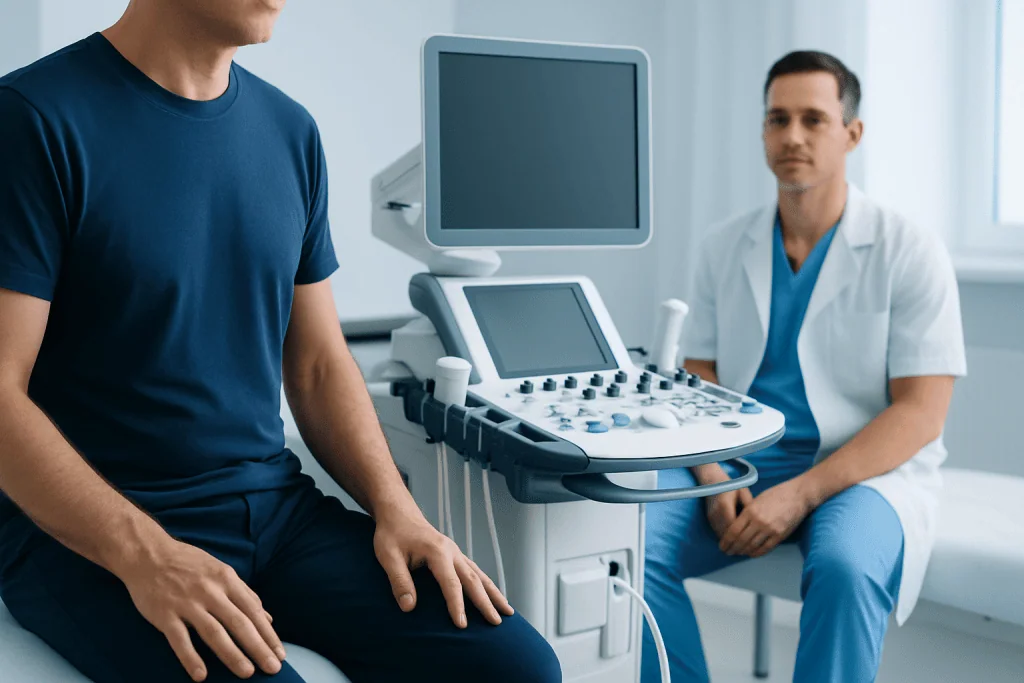
Early signs of Peyronie’s disease can be subtle. A man may first notice tenderness, a small firm area under the skin of the penis, or pain during erections. Over time, the shape of the erect penis may change, sometimes with a new curve upward, downward, or to one side.
Symptoms vary from person to person, but common features include:
- a palpable lump or hardened band in the penis
- curvature or twisting during erection
- pain with erection, especially in earlier stages
- loss of length or reduced girth
- an hourglass shape or indentation
- difficulty getting or keeping an erection
Peyronie’s disease is often described as having an active phase and a stable phase. During the active phase, pain and shape changes may still be evolving. In the stable phase, pain often improves, but curvature or shortening may remain. Knowing which phase a person is in can help guide treatment decisions.
Symptoms may also affect mental health and relationships. Anxiety about appearance, fear of pain, and reduced sexual confidence are common and valid concerns. Addressing these effects is an important part of care, not a secondary issue.
Why It Happens and Who Is at Risk

The precise cause of Peyronie’s disease is not always identifiable. Specialists believe that repeated minor trauma to the erect penis, such as bending during sexual activity or sports, may trigger bleeding and inflammation in susceptible tissue. In some men, healing appears to become disorganized, leading to a dense scar rather than flexible tissue.
Several factors may increase risk. Age is one of them, because tissue elasticity changes over time. A personal or family tendency toward scar-forming disorders may also play a role. Some men with Peyronie’s disease have Dupuytren’s contracture, a hand condition that causes thickening of the tissue in the palm.
Other risk factors may include:
- middle or older age
- connective tissue disorders
- certain forms of erectile dysfunction that make bending injury more likely
- diabetes or vascular disease that affect tissue healing
- smoking, which can impair blood flow and repair mechanisms
- previous pelvic or prostate surgery in some cases
Having a risk factor does not mean Peyronie’s disease will definitely occur. Likewise, some men develop it without any clear injury or medical history. Because the condition overlaps with erection difficulties, a doctor may also assess for erectile dysfunction and related vascular or metabolic issues.
How Doctors Diagnose Peyronie's Disease
Diagnosis usually begins with a detailed history. The doctor will ask when the symptoms started, whether the curve is changing, whether pain is present, and how erections and sexual activity have been affected. Clear information about the direction and degree of bending helps determine whether the condition is still active or has likely stabilized.
A physical examination can often identify plaques or areas of thickening. Because Peyronie’s disease is most noticeable during erection, a specialist may ask the patient to bring photographs of the erect penis taken safely at home from different angles. In some clinics, medication is used to create an erection during the examination so the curve and any indentation can be measured directly.
Ultrasound is sometimes used to evaluate plaque, detect calcification, and assess blood flow. This can be especially useful if surgery or injection therapy is being considered, or if erectile dysfunction is also present. Depending on symptoms, the evaluation may include discussion of non-surgical support such as penile prosthesis treatment when severe erectile problems coexist with significant curvature.
Many men delay care because of embarrassment, but early evaluation can be helpful. A correct diagnosis can distinguish Peyronie’s disease from congenital curvature, skin problems, or temporary discomfort after injury, and it can open a conversation about realistic treatment goals.
Treatment Options and How They Are Chosen
Treatment depends on how severe the symptoms are, whether the disease is still changing, and whether sexual function is affected. If curvature is mild, pain is limited, and intercourse is still possible, careful monitoring may be appropriate. Some men experience improvement in pain over time even if the shape change does not fully reverse.
Non-surgical treatment may include oral medicines for symptom management in selected cases, penile traction therapy, or vacuum-based approaches under medical guidance. In properly selected patients, injections placed directly into the plaque may help reduce curvature by weakening scar tissue. These decisions should be individualized, because not every therapy works equally well for every plaque shape or disease stage.
When Peyronie’s disease significantly interferes with intercourse or quality of life, procedural treatment may be considered. Surgical options can correct curvature, shorten the longer side of the penis to create straighter alignment, or remove/incise plaque with grafting in selected cases. Men who also have severe erection problems may benefit from andrology care and, in some cases, a penile implant can address both rigidity and curvature.
The most appropriate plan is based on goals that matter to the patient: reducing pain, improving straightness, restoring sexual function, or addressing distress about the change. At experienced centers, treatment planning may involve both urology and sexual medicine specialists, and options such as urology treatment can be discussed in a structured, stepwise way.
Living With Peyronie's Disease: Self-care and Prevention
There is no guaranteed way to prevent Peyronie’s disease, but steps that support vascular health and reduce injury risk may be helpful. Managing diabetes, avoiding smoking, treating erection difficulties early, and using adequate lubrication during sexual activity can all support healthier tissue function. If an erection is unstable, addressing that problem may reduce the chance of bending trauma.
Self-care also includes avoiding unproven products marketed online. Supplements, creams, or devices can be costly and may delay effective care. It is safer to discuss any treatment idea with a qualified doctor, especially if pain, rapid curvature, or erection problems are present.
Emotional well-being matters as much as physical symptoms. Peyronie’s disease can affect self-image, intimacy, and communication with a partner. Open discussion and, when needed, counseling or sex therapy may help couples adjust while treatment is being planned.
For international patients who need specialist assessment, Acibadem International’s multidisciplinary teams in JCI-accredited hospitals diagnose and treat Peyronie’s disease with individualized planning based on symptoms, sexual function, and overall health.
When to Seek Medical Care
Medical care should be sought if a new penile curve appears, a firm lump is felt, erections become painful, or intercourse becomes difficult. Evaluation is also important if the penis seems shorter, develops an indentation, or erections become less reliable. These changes are not something a person should feel they have to manage alone.
Prompt assessment is especially useful when symptoms are changing quickly, because treatment choices may differ between the active and stable phases of the disease. Early advice can also help avoid unnecessary worry and identify whether another condition is contributing to pain or erection problems.
Urgent medical attention is needed after a sudden injury with a popping sensation, immediate swelling, bruising, or rapid loss of erection, as these can be signs of a penile fracture rather than Peyronie’s disease. Severe distress, persistent sexual dysfunction, or relationship strain are also valid reasons to ask for professional support.
Frequently asked questions
Can Peyronie's disease go away on its own?
Pain may improve over time, especially after the active phase settles. However, the curvature or shortening often does not fully disappear without treatment. A doctor can help monitor whether the condition is stable and whether treatment is likely to help.
Is Peyronie's disease painful?
It can be. Pain is more common in the earlier, active phase and is often most noticeable during erections. Many men find that pain lessens later, even if the bend remains.
Does Peyronie's disease cause erectile dysfunction?
It can contribute to erectile dysfunction in some men. The scar tissue may affect the way the penis expands, and anxiety or reduced confidence can also play a role. Treating both the curvature and erection problems is often important for overall improvement.
How is Peyronie's disease diagnosed?
Diagnosis is usually based on a medical history and physical examination by a urology specialist. The doctor may ask about pain, changes in shape, and sexual function, and may use photographs or ultrasound to assess the plaque and curvature more accurately.
When is surgery considered for Peyronie's disease?
Surgery is usually considered when the disease has stabilized and the curvature significantly interferes with sexual activity or quality of life. The exact operation depends on the degree of bending, penile length, plaque features, and whether erectile dysfunction is also present.
Is Peyronie's disease a sexually transmitted infection or cancer?
No. Peyronie's disease is not an infection and it is not cancer. It is a scarring condition that affects the tissue inside the penis.
References
- American Urological Association
- European Association of Urology
- National Institute of Diabetes and Digestive and Kidney Diseases
- Mayo Clinic
- Urology Care Foundation
This article is for general information only and is not a substitute for professional medical advice. Please consult a qualified doctor about your individual situation.
Explore treatments in Turkey — costs, top hospitals & a free quote
JCI-accredited · board-certified surgeons · reply within 24h
Add us as a Preferred Source to see more of our trusted health content across Google Search, AI Overviews and Discover.

More from the Health Library



Related Specialists

Dt. Melih Yıldız
Oral & Dental Health
Dr. Jülide Çeldir Emre
Pulmonology
Assoc. Prof. Dr. Burcu Bulum Akbulut
Pediatric Nephrology
Prof. Dr. Reyhan Çeliker
Physical Medicine & Rehabilitation