Pictures of Staph Infection: Early Signs, Risk Factors, and How It Is Treated

Staph infections often appear as red, painful, swollen bumps, boils, pustules, or crusted skin sores. Photos can be useful for awareness, but they cannot confirm whether a skin problem is caused by staph, MRSA, or another condition.
Key Takeaways
- Staph infections often appear as red, painful, swollen bumps, boils, pustules, or crusted skin sores.
- Photos can be useful for awareness, but they cannot confirm whether a skin problem is caused by staph, MRSA, or another condition.
- Risk rises with skin breaks, close contact, shared personal items, sports, recent surgery, and weakened immunity.
- Treatment depends on severity and may include wound care, drainage, and antibiotics when appropriate.
- Urgent medical care is important for rapidly spreading redness, fever, severe pain, facial swelling, or signs of deep infection.
Pictures of staph infection can help people recognize common patterns such as red, tender bumps, boils, crusted sores, or areas of warmth and swelling. Still, many rashes and skin infections can look alike, so diagnosis and treatment should be guided by a qualified clinician.
Overview: what pictures of staph infection can and cannot show
Pictures of staph infection usually show skin changes caused by Staphylococcus bacteria, most commonly Staphylococcus aureus. In photos, these infections may look like small pus-filled bumps, boils, areas of redness and swelling, honey-colored crusts, or tender skin lesions that seem similar to pimples or insect bites. Some cases stay limited to the skin, while others spread into deeper tissue.
Images can be helpful for learning the general appearance of a staph infection, especially early signs such as a warm, painful bump that enlarges over time. However, pictures alone are not enough to make a diagnosis. Conditions such as folliculitis, eczema with infection, impetigo, fungal infections, shingles, insect bites, and cellulitis can look similar.
Staph bacteria can also cause methicillin-resistant Staphylococcus aureus, commonly called MRSA. MRSA skin infections may look no different from other staph infections in a picture. The key difference is in the bacteria’s antibiotic resistance pattern, which affects treatment choices rather than appearance alone.
How staph infection may look in pictures
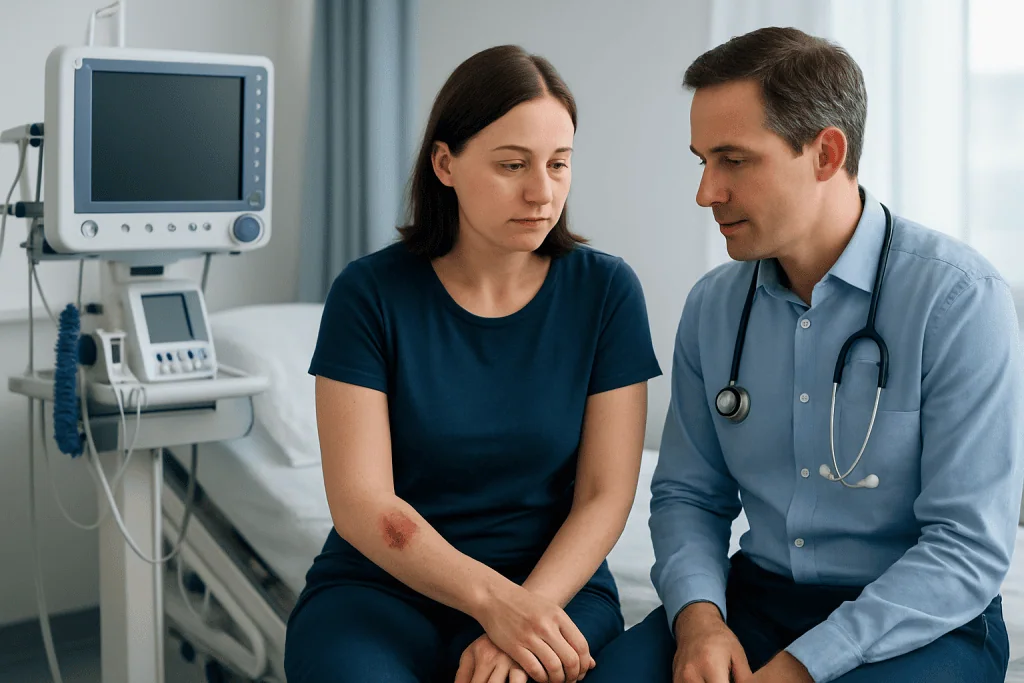
There is no single “classic” image of a staph infection. Instead, photos tend to show a range of skin findings depending on where the infection starts, how deep it is, and whether pus has formed. A mild case may begin around a hair follicle, while a more advanced infection may form an abscess or spread into nearby skin.
Common appearances seen in pictures include:
- Red, swollen, tender bumps that resemble pimples
- Pustules or clusters of pus-filled spots
- Boils that become larger, softer in the center, and painful
- Abscesses with a pocket of pus under the skin
- Crusting or oozing sores, especially in superficial infections
- Warm, spreading redness around a wound, cut, or shaving area
In children, staph can sometimes cause blisters or crusted patches. Around surgical incisions or medical devices, signs in pictures may include redness, drainage, swelling, or a wound that is slow to heal. On darker skin tones, redness may appear more subtle and the area may look deeper brown, purple, or gray, so warmth, swelling, tenderness, and discharge become especially important clues.
Early signs and symptoms to notice
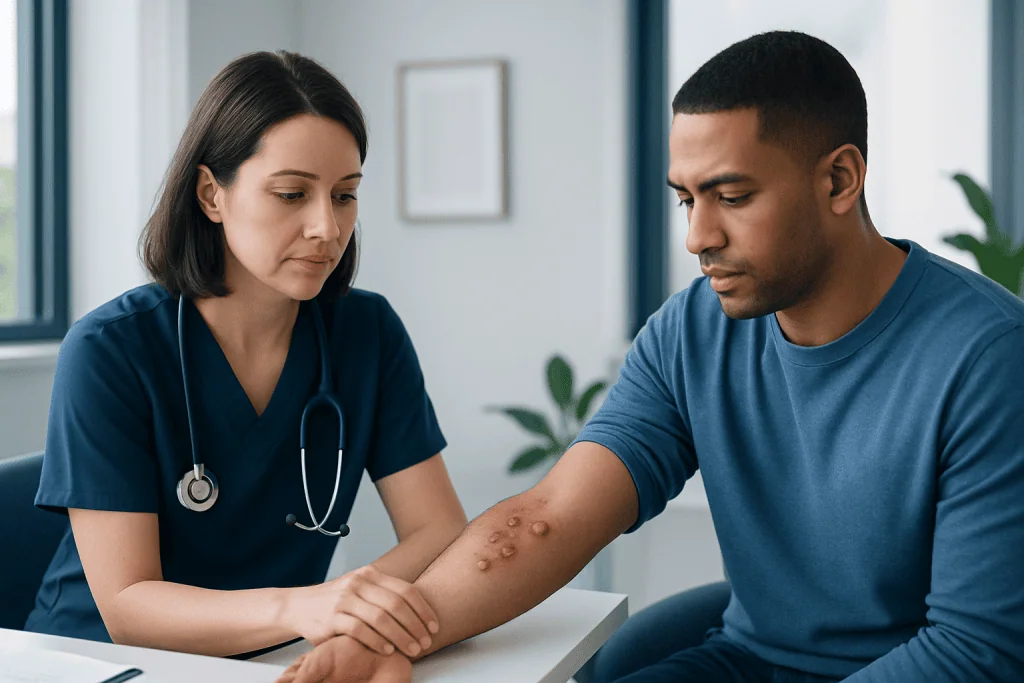
Early staph skin infection often starts in a small area. A person may first notice tenderness, warmth, or swelling before the skin changes become obvious. The spot may feel firmer than the surrounding skin, hurt when touched, or seem to enlarge over a day or two.
As the infection progresses, a bump may fill with pus or the redness may spread. Some people describe the lesion as looking like a spider bite, though many presumed “spider bites” are later found to be skin infections. Drainage, crusting, or a bad odor can occur, especially when a lesion opens.
Symptoms that suggest a more significant infection include increasing pain, fever, chills, fatigue, red streaks extending from the area, or swelling that affects movement. In deeper or more serious cases, the skin may become tight, very tender, or visibly fluctuant, meaning it feels as if fluid is trapped underneath.
Causes and risk factors
Staph bacteria commonly live on the skin or in the nose without causing harm. Infection develops when the bacteria enter through a break in the skin, such as a cut, scratch, insect bite, shaving nick, surgical wound, or irritated rash. Friction, sweating, and skin-to-skin contact can also make infection more likely.
Risk factors include close-contact sports, shared towels or razors, crowded living conditions, recent hospitalization, surgery, indwelling catheters, and chronic skin conditions. People with diabetes, weakened immune systems, or poor circulation may be more vulnerable to deeper or recurrent infections. Repeated infections can also occur if bacteria continue to colonize the skin or nose.
Not every painful bump is caused by staph, and not every staph infection is severe. Still, because bacteria such as MRSA can spread in homes, schools, gyms, and healthcare settings, good hygiene and prompt attention to suspicious skin changes are important. If an infection is near a joint, the eyes, or the face, or if it occurs after a medical procedure, medical review is especially important.
How doctors diagnose a staph infection
Doctors diagnose many skin staph infections by examining the area and asking about symptoms, recent skin injury, medical history, and possible exposure risks. The appearance, location, amount of pain, and presence of pus help guide the next steps. A clinician also checks for signs that the infection may have spread more deeply.
If there is drainage or an abscess, a sample may be sent for culture to identify the bacteria and determine which antibiotics may work best. This is particularly helpful in recurrent infections, infections that do not improve, severe cases, or suspected MRSA. Blood tests or imaging are not needed for every skin infection, but they may be used if a doctor is concerned about a deeper abscess or a more widespread illness.
Different diagnoses can overlap visually, so confirmation matters. For example, a doctor may distinguish between a superficial rash and a deeper infection that needs antibiotic treatment or a procedure. When pus has collected under the skin, draining the area can be more important than antibiotics alone.
Treatment options and what recovery may involve
Treatment depends on the size, depth, location, and severity of the infection. Small superficial infections may improve with careful cleansing, warm compresses, and monitoring under a doctor’s guidance. However, many true staph infections need medical assessment because some worsen quickly or need prescription treatment.
If an abscess has formed, the main treatment may be draining the pus in a sterile setting. This should not be attempted at home, as squeezing or puncturing the area can push infection deeper or spread it to others. When antibiotics are needed, the choice depends on the likely bacteria, local resistance patterns, and, if available, culture results. In some cases, treatment may also involve wound care to protect healing tissue and reduce reinfection.
More extensive infections, infections near the eyes, or infections linked to fever or significant swelling may require closer monitoring, imaging, or hospital-based care. Doctors may also evaluate for related conditions such as a skin abscess or deeper soft tissue infection. Near the end of care, some people need advice on hygiene, dressing changes, and how to avoid spreading bacteria at home. Acibadem International’s multidisciplinary specialists and JCI-accredited hospitals diagnose and treat skin and soft tissue infections for international patients.
Prevention and self-care
Prevention focuses on protecting the skin and limiting the spread of bacteria. Hands should be washed regularly, wounds kept clean and covered, and personal items such as towels, razors, clothing, and sports equipment not shared. Showers after exercise and careful skin care after shaving can also help reduce risk.
At home, a suspicious bump should be kept clean and loosely covered until it is evaluated. People should avoid picking, squeezing, or trying to drain it. Laundry that contacts drainage should be washed appropriately, and surfaces that may be contaminated should be cleaned. These steps are especially important if MRSA is a concern.
For people with repeated infections, a doctor may look for contributing factors such as eczema, nasal colonization, poor blood sugar control, or friction from clothing and equipment. Self-care helps, but recurrent or stubborn infections should be discussed with a clinician rather than managed only with over-the-counter products.
When to seek medical care
Medical care is recommended for any skin lesion that is becoming more painful, red, swollen, or warm over a short period of time, especially if pus is present. A doctor should also assess sores that develop after surgery, around a catheter, or in people with diabetes or weakened immunity.
Prompt medical attention is important if there is fever, chills, red streaking, facial involvement, swelling near the eyes, severe pain, a rapidly enlarging lump, or trouble moving the affected area. Emergency care may be needed if a person appears very unwell, confused, short of breath, or has signs of a spreading or deep infection.
Because many skin conditions can look similar in photos, seeking care is often more useful than comparing images online. A clinician can confirm the cause, decide whether drainage or antibiotics are needed, and check for complications such as surgical drainage of a larger abscess when appropriate.
Frequently asked questions
What do pictures of staph infection usually show?
They often show red, swollen, painful bumps, boils, pustules, or crusted sores. Some pictures also show drainage or a spreading area of warm, irritated skin. Appearance varies depending on how deep the infection is.
Can a staph infection look like a pimple or spider bite?
Yes. Early staph infection may resemble a pimple, ingrown hair, or insect bite. If it becomes more painful, larger, warmer, or starts draining pus, medical review is a good idea.
How can someone tell if a skin infection might be MRSA?
MRSA can look the same as other staph skin infections, so appearance alone cannot confirm it. A culture from the wound or drainage may help identify the bacteria and guide treatment. Doctors consider MRSA more strongly in recurrent, severe, or treatment-resistant infections.
Should a person try to drain a suspected staph boil at home?
No. Squeezing or puncturing the area can worsen the infection and increase the risk of spread or scarring. If a boil or abscess needs drainage, it should be done by a clinician using sterile technique.
Do all staph infections need antibiotics?
Not always. Some small, superficial infections may improve with local care, while abscesses often require drainage and may or may not need antibiotics as well. The best approach depends on the size, depth, location, symptoms, and a doctor's assessment.
When should someone be especially concerned about a possible staph infection?
Concern is higher if there is fever, fast-spreading redness, severe pain, facial swelling, eye involvement, or an infection after surgery. People with diabetes, immune suppression, or poor circulation should also seek medical advice early because complications can develop more easily.
References
- Centers for Disease Control and Prevention
- American Academy of Dermatology
- Mayo Clinic
- National Health Service
- Merck Manual Consumer Version
This article is for general information only and is not a substitute for professional medical advice. Please consult a qualified doctor about your individual situation.
Explore treatments in Turkey — costs, top hospitals & a free quote
JCI-accredited · board-certified surgeons · reply within 24h
Add us as a Preferred Source to see more of our trusted health content across Google Search, AI Overviews and Discover.