Pierre Robin Syndrome: Early Signs, Risk Factors, and How It Is Treated

Pierre Robin syndrome usually involves a small lower jaw, a tongue that sits farther back, and often a cleft palate. Early concerns are most often breathing difficulty, noisy breathing, poor feeding, and slow weight gain.
Key Takeaways
- Pierre Robin syndrome usually involves a small lower jaw, a tongue that sits farther back, and often a cleft palate.
- Early concerns are most often breathing difficulty, noisy breathing, poor feeding, and slow weight gain.
- Diagnosis is based on physical examination and may include sleep, airway, feeding, hearing, and genetic assessments.
- Treatment is individualized and can include positioning, special feeding methods, airway support, and surgery when needed.
- Many infants do well with coordinated care from pediatric, ENT, feeding, and craniofacial specialists.
Pierre Robin syndrome is a birth condition, more precisely often called Pierre Robin sequence, in which a baby has a small lower jaw that can cause the tongue to fall backward and sometimes lead to airway or feeding problems. Treatment depends on severity and may range from careful positioning and feeding support to surgery, with many children improving as they grow.
Overview
Pierre Robin syndrome is a congenital condition seen at birth. Many specialists use the term Pierre Robin sequence because one change, usually a very small lower jaw, can lead to other features such as the tongue sitting farther back in the mouth and, in many babies, a cleft palate. These changes can affect breathing, feeding, sleeping, and growth in the first months of life.
The condition can appear on its own or as part of a broader genetic syndrome. Some babies have mild symptoms that improve with monitoring and feeding support, while others need airway treatment or surgery. Because the needs can vary widely, care is usually planned by a team that may include neonatologists, pediatricians, ear, nose and throat specialists, craniofacial surgeons, speech and feeding therapists, and genetic specialists.
A practical way to understand pierre robin syndrome is to focus on function rather than appearance alone. The main medical questions are whether the baby is breathing comfortably, feeding safely, gaining weight, and sleeping well. Early recognition helps doctors choose the right support and prevent complications related to low oxygen levels, aspiration, or poor growth.
Early Signs and Symptoms
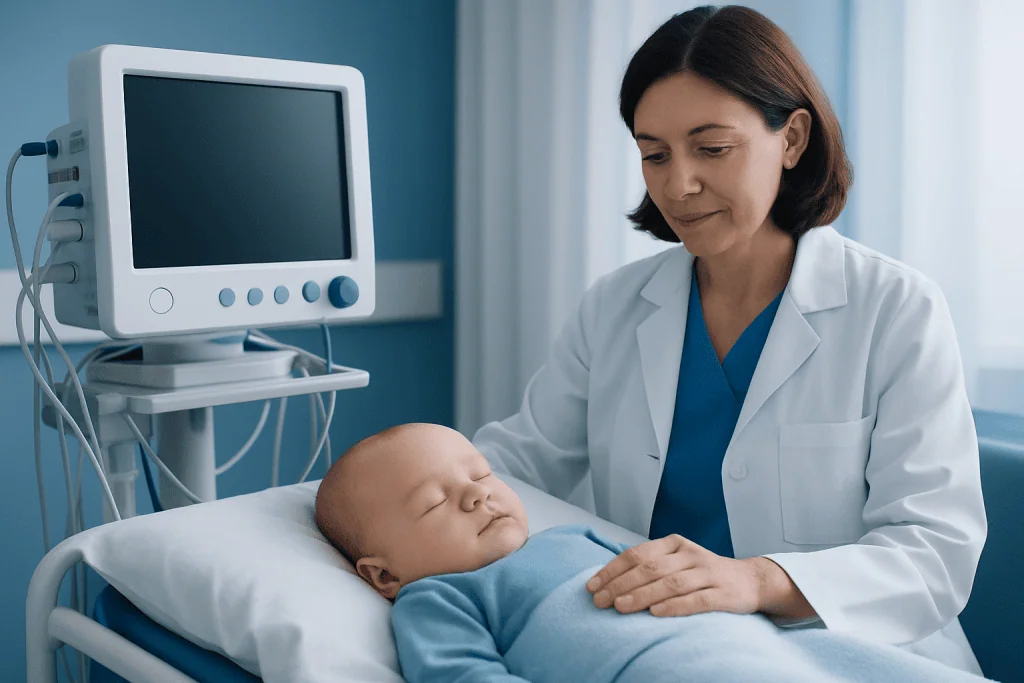
The most recognizable early sign is a small lower jaw, also called micrognathia. Parents and clinicians may also notice that the baby’s tongue seems to fall backward, especially when lying on the back. This can narrow the airway and lead to noisy breathing, pauses in breathing, chest retractions, or a bluish color around the lips during distress.
Feeding difficulties are also common. A baby may have trouble latching, tire easily during feeds, cough or choke, take a very long time to finish a bottle, or seem unable to coordinate sucking, swallowing, and breathing. Slow weight gain can follow if enough milk is not taken in or if feeding requires too much effort.
Many babies with pierre robin syndrome also have a cleft palate, which can further affect feeding and speech development later on. However, symptoms are not the same in every child. Some infants mainly struggle with feeding, while others have more significant breathing or sleep-related airway obstruction. When a cleft palate is present, clinicians may also evaluate for related issues described on the cleft palate page.
- Small lower jaw
- Tongue positioned farther back than usual
- Noisy breathing or snoring-like sounds
- Feeding difficulty or poor latch
- Slow weight gain
- Cleft palate in many cases
Why It Happens and Risk Factors

Pierre Robin syndrome develops before birth, usually because the lower jaw does not grow enough early in fetal development. When the jaw is small, the tongue may remain high and back in the mouth. This can interfere with the normal closing of the palate, which helps explain why a cleft palate is often present.
In some children, pierre robin syndrome occurs by itself with no clear inherited syndrome. In others, it is linked to an underlying genetic condition or chromosomal difference. Examples can include syndromes that affect craniofacial growth, connective tissue, or overall development. For this reason, doctors may recommend a genetics evaluation, especially if there are additional birth differences, heart concerns, limb findings, eye issues, or developmental concerns.
There is usually nothing a parent did to cause this condition. Most cases are not related to routine activities during pregnancy. A family history of craniofacial conditions or known genetic syndromes may increase the chance in some families, but many affected babies are born without any known risk factors beforehand.
How Doctors Diagnose Pierre Robin Syndrome
Diagnosis often begins with a physical examination soon after birth. Doctors look for the typical combination of a small lower jaw, tongue displacement, and signs of airway or feeding difficulty. They also check whether a cleft palate is present, including a cleft that may be harder to see at first glance.
Because the biggest concerns are breathing and feeding, testing is often chosen to answer those specific questions. A baby may need monitoring of oxygen levels, an airway evaluation by an ENT specialist, a sleep study if obstructive events are suspected, or a swallowing and feeding assessment to see whether milk is entering the airway. If there is concern about the upper airway, specialists may perform endoscopic examination, similar to evaluations used in bronchoscopy-based airway assessment when appropriate.
Doctors may also assess hearing, since cleft palate can increase the risk of middle ear problems, and they may recommend imaging or genetics testing in selected cases. The goal is not only to confirm the diagnosis, but also to understand severity, identify associated conditions, and build a treatment plan that matches the child’s immediate needs and long-term development.
Treatment Options and Ongoing Care
Treatment for pierre robin syndrome is individualized. Mild cases may improve with simple measures such as placing the baby in a position that helps keep the airway open, close observation during sleep, and feeding support. Some babies benefit from special bottles or nipples designed for cleft palate or weak suction, along with guidance from a feeding specialist.
If breathing problems are more significant, the medical team may use temporary airway support. In some children, surgery is recommended to relieve obstruction or address associated structural issues. Depending on the child’s anatomy and needs, treatment may involve procedures used in craniofacial surgery or corrective care related to cleft palate surgery. A small number of infants with severe airway blockage may need more advanced interventions.
Nutrition and growth are a major part of care. Babies who cannot safely take enough by mouth may need short-term tube feeding while the airway and feeding plan are stabilized. Follow-up often continues through infancy and childhood to monitor jaw growth, hearing, speech, sleep, dental development, and overall development. Because symptoms often change with growth, regular review helps the team adjust care over time.
At centers with multidisciplinary pediatric and craniofacial expertise, families can receive coordinated evaluation and treatment in one pathway. Acibadem International’s multidisciplinary specialists and JCI-accredited hospitals diagnose and treat pierre robin syndrome for international patients when advanced evaluation or surgical planning is needed.
Prevention, Home Care, and Daily Support
There is no known way to prevent most cases of pierre robin syndrome because it develops during fetal growth and is often not linked to anything avoidable. What families can do is reduce complications through early follow-up, careful feeding routines, and attention to breathing and sleep. Practical home strategies should always match the care plan given by the child’s doctor.
Parents are often taught how to position the baby for safer breathing, how to recognize feeding fatigue, and how to pace feeds so the baby can pause to breathe. Keeping follow-up appointments is important, especially for weight checks, hearing evaluations, and cleft palate planning when needed. Families should avoid trying improvised devices or unproven home techniques that could worsen airway obstruction.
As children grow, many improve because the jaw and airway develop. Even so, support may still be needed for speech, ear health, dental alignment, or sleep. A calm, structured home routine and clear communication with the healthcare team can make day-to-day care more manageable and help parents feel more confident.
When to Seek Medical Care
Medical care should be sought promptly if a newborn has trouble breathing, repeated choking with feeds, poor color, unusual sleepiness, or signs of dehydration such as fewer wet diapers. These symptoms may suggest airway obstruction or feeding difficulty that needs urgent assessment. Even mild symptoms deserve attention if they are persistent.
Parents should also contact a doctor if the baby is not gaining weight well, takes an unusually long time to feed, snores loudly, pauses breathing during sleep, or seems to struggle more when lying flat. Follow-up is especially important after discharge from the hospital, because some airway and feeding problems become more noticeable at home.
Emergency care is needed if the baby turns blue, has severe breathing effort, stops breathing, or cannot feed safely. Families should not hesitate to ask for help if they are unsure whether symptoms are serious. Early review by a pediatrician, neonatologist, ENT specialist, or craniofacial team can prevent complications and provide reassurance.
Frequently asked questions
Is Pierre Robin syndrome the same as Pierre Robin sequence?
These terms are often used interchangeably, but many clinicians prefer “Pierre Robin sequence.” The word sequence reflects how a small lower jaw can lead to the tongue falling backward and sometimes to a cleft palate. Both terms generally refer to the same clinical pattern.
Can a baby with pierre robin syndrome breathe normally?
Some babies breathe well most of the time, while others have airway obstruction, especially during sleep or when lying on their back. The degree of breathing difficulty can vary from mild to severe. This is why early assessment and monitoring are so important.
Does pierre robin syndrome always include a cleft palate?
No, but a cleft palate is common. Some infants have the small jaw and tongue positioning changes without a cleft palate. Doctors assess each child individually because symptoms and anatomy are not identical in every case.
Will my child need surgery?
Not every child needs surgery. Many infants improve with positioning, feeding support, and monitoring, while others need procedures to improve breathing or repair a cleft palate. The decision depends on airway safety, feeding, growth, and the child’s specific anatomy.
Is pierre robin syndrome genetic?
It can be. In some children it occurs on its own, while in others it is part of a genetic syndrome or chromosomal condition. A genetics consultation may be recommended if there are other physical findings or a family history that suggests an underlying cause.
Do children outgrow pierre robin syndrome?
Many children improve as the lower jaw grows and the airway becomes less crowded. Even when breathing improves, follow-up may still be needed for feeding, hearing, speech, dental development, or sleep. Long-term outlook depends on severity and whether another syndrome is present.
References
- National Institute of Dental and Craniofacial Research
- American Academy of Pediatrics
- National Organization for Rare Disorders
- MedlinePlus
- Genetics Home Reference / National Library of Medicine
This article is for general information only and is not a substitute for professional medical advice. Please consult a qualified doctor about your individual situation.
Explore treatments in Turkey — costs, top hospitals & a free quote
JCI-accredited · board-certified surgeons · reply within 24h
Add us as a Preferred Source to see more of our trusted health content across Google Search, AI Overviews and Discover.