Pimple: A Complete Medical Overview
A pimple develops when a pore becomes clogged and inflamed. Hormones, excess oil, friction, cosmetics, and family history can all contribute.
Key Takeaways
- A pimple develops when a pore becomes clogged and inflamed.
- Hormones, excess oil, friction, cosmetics, and family history can all contribute.
- Avoid picking or squeezing pimples because this can worsen inflammation and scarring.
- Many cases improve with gentle skin care and over-the-counter acne treatments.
- Persistent, severe, or scarring pimples should be assessed by a doctor or dermatologist.
A pimple is a common skin lesion that forms when a hair follicle or pore becomes blocked with oil, dead skin cells, and sometimes bacteria. Most pimples are mild and manageable, but frequent, painful, or scarring breakouts may need medical evaluation and treatment.
Overview: What Is a Pimple?
A pimple is a small raised spot on the skin that develops when a pore becomes blocked with oil, dead skin cells, and sometimes bacteria. It is one of the most familiar signs of acne, but a single pimple can also happen on its own. Pimples most often appear on the face, chest, shoulders, and back because these areas have more oil-producing glands.
Although the word “pimple” is often used casually, it describes a real inflammatory process in the skin. Some pimples look like tiny flesh-colored bumps, while others become red, tender, or filled with pus. The appearance depends on how blocked the pore is and how much inflammation has developed around it.
Pimples are especially common during adolescence because hormonal changes can increase oil production. However, they can affect people of any age, including adults. For some, they are occasional and short-lived; for others, they may be part of ongoing acne that needs structured skin care or medical treatment.
How a Pimple Forms and What It Looks Like
Each pimple begins in a hair follicle, which is connected to a sebaceous gland that produces sebum, the skin’s natural oil. When extra oil mixes with dead skin cells, the opening of the pore can become blocked. This blockage creates an environment where the follicle swells and may become inflamed.
If the pore stays closed, it may form a whitehead. If the surface is open and the material inside is exposed to air, it can darken and appear as a blackhead. When inflammation becomes stronger, a red papule or a pus-filled pustule may develop. Deeper inflammation can lead to more painful nodules or cyst-like lesions.
Not every bump on the skin is a pimple. Ingrown hairs, folliculitis, rosacea, eczema, and some allergic reactions can look similar. This is one reason recurrent or unusual breakouts may need a professional diagnosis, especially if they do not improve with standard skin care.
Symptoms and Signs to Notice
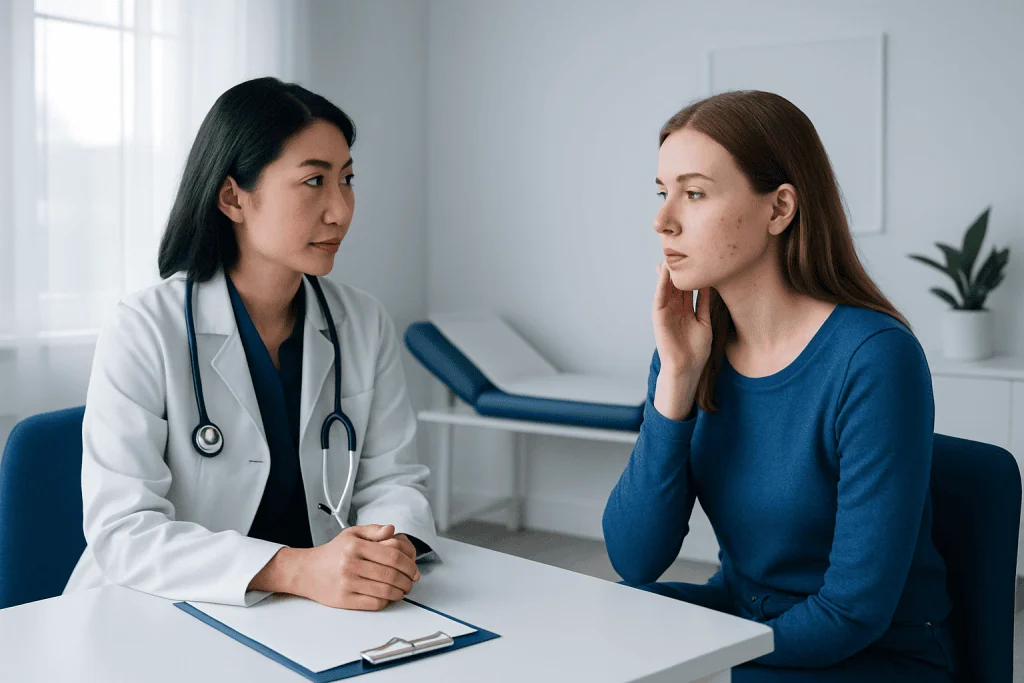
The main sign of a pimple is a visible bump on the skin. It may be skin-colored, red, or white-tipped, and some lesions feel sore or warm to the touch. A single pimple can be minor, but clusters of pimples may suggest acne or another skin condition that deserves closer attention.
People often notice pimples in areas where the skin is oilier, especially the forehead, nose, chin, jawline, chest, and back. Some breakouts happen around the hairline, under head coverings, or where sports equipment or face masks create rubbing and trapped moisture. This mechanical irritation can worsen blocked pores.
Symptoms may include:
- Small raised bumps under or on the skin
- Redness and swelling
- Tenderness or pain
- A white or yellow center filled with pus
- Dark spots or marks left behind after healing
After a pimple improves, the skin may temporarily show post-inflammatory discoloration. In some people, especially if pimples are deep or frequently picked, permanent scarring can develop. Early treatment can reduce this risk.
Causes and Risk Factors
Pimples do not happen because the skin is “dirty.” They usually result from a combination of factors: excess oil production, buildup of dead skin cells, inflammation, and the presence of skin bacteria within blocked pores. Hormonal shifts often play a central role because they can stimulate sebaceous glands to produce more oil.
Common triggers and risk factors include puberty, menstrual cycle changes, pregnancy, stress, family history, oily skin, and use of cosmetics or hair products that clog pores. Friction from helmets, tight collars, backpacks, or frequent touching of the face can also contribute. Some medications may increase the tendency to break out as well.
Diet is an area of ongoing research. For some people, certain patterns such as high-glycemic foods or specific dairy products may be associated with worsening acne, but this is not the same for everyone. It is usually more helpful to look at overall skin habits and medical triggers than to blame a single food for every breakout.
There are also several myths. Chocolate, poor hygiene, and occasional stress alone do not explain every pimple. Scrubbing the skin aggressively can actually irritate it further. Gentle cleansing and consistent, evidence-based care are more effective than harsh home remedies.
Diagnosis and When a Pimple May Be More Than a Minor Blemish
Most people recognize a pimple without testing, and a doctor can usually diagnose it by examining the skin. Diagnosis is based on the type of lesions present, where they occur, how long they have been happening, and whether they are causing pain, marks, or scars. No special test is needed for most routine cases.
If breakouts are severe, sudden, widespread, or unusual in appearance, a doctor may consider other conditions. These can include folliculitis, rosacea, hormone-related disorders, medication side effects, or infections. In adults with persistent acne-like lesions, the pattern and timing of symptoms may offer important clues.
Medical assessment is especially helpful when pimples are leaving scars, affecting self-confidence, or not responding to nonprescription care. A specialist in dermatology evaluation and treatment can determine whether the problem is occasional pimples, a form of acne, or another skin disorder that needs a different approach.
Treatment Options for Pimples
Treatment depends on how often pimples occur, how inflamed they are, and whether they are causing scarring. Mild cases often improve with nonprescription products such as benzoyl peroxide, salicylic acid, or adapalene. These ingredients can help unclog pores, reduce inflammation, and lower the number of acne-causing bacteria on the skin.
Good skin care matters as much as active treatment. Gentle cleansing twice daily, using non-comedogenic moisturizers and sunscreen, and removing makeup before sleep can support healing. It is important to avoid squeezing or picking pimples, since this can push inflammation deeper and increase the chance of scarring or dark marks.
For more persistent or severe breakouts, a doctor may recommend prescription topical treatments, oral medications, or a combination approach. Hormonal therapy may help some patients, and inflammatory acne may require more structured care. In selected cases, procedures such as laser-based skin treatment or other dermatologist-guided therapies may be considered to address acne activity or lingering marks.
If deep lesions have already caused textural changes, options for scar revision may be discussed after active breakouts are brought under control. The best plan is individualized and usually works best when followed consistently for several weeks, since pimples rarely clear overnight.
Prevention and Self-Care
It is not always possible to prevent every pimple, but daily habits can reduce how often they occur. The goal is to support the skin barrier while minimizing clogged pores and irritation. Simple, steady routines tend to work better than frequently changing products.
Helpful self-care steps include:
- Wash the skin gently with a mild cleanser, especially after sweating
- Choose oil-free or non-comedogenic makeup, sunscreen, and moisturizers
- Avoid picking, popping, or scrubbing pimples
- Keep hair products away from the face when possible
- Change pillowcases, towels, and sports gear regularly
- Shower after exercise if sweat and friction trigger breakouts
People who wear masks, helmets, or head coverings for long periods may benefit from reducing friction where possible and using skin-friendly products underneath. If shaving irritates the skin, changing technique or products may help. When breakouts continue despite a careful routine, it is reasonable to seek medical advice rather than using stronger products without guidance.
When to Seek Medical Care
A single pimple usually does not require urgent care, but medical advice is appropriate when breakouts are frequent, painful, deep, or leaving scars. It is also wise to seek help if over-the-counter treatment has been used consistently for several weeks without improvement. Early treatment can reduce discomfort and lower the risk of lasting marks.
A doctor should also evaluate sudden severe breakouts, signs of infection such as spreading redness or significant swelling, or pimples that are accompanied by other symptoms such as irregular periods, excess facial hair, or medication changes. These details may suggest a broader hormonal or medical issue that needs attention.
For international patients who need specialist assessment, Acibadem International’s multidisciplinary teams in JCI-accredited hospitals diagnose and treat skin conditions with individualized care. If a pimple problem is part of persistent acne, coordinated follow-up can help address both active lesions and prevention of scarring.
Frequently asked questions
What is the difference between a pimple and acne?
A pimple is a single skin lesion, while acne is the broader condition that causes repeated pimples, blackheads, whiteheads, and sometimes deeper nodules. In other words, a pimple can be one symptom of acne.
Should a pimple be popped?
It is generally best not to pop a pimple. Squeezing can push inflammation deeper into the skin, increase the risk of infection, and make scarring or dark marks more likely.
How long does a pimple usually last?
A small pimple may improve within a few days, while more inflamed lesions can last one to two weeks or longer. Healing time depends on the depth of inflammation, skin type, and whether the lesion is picked or irritated.
Can adults still get pimples?
Yes. Pimples are common in teenagers, but many adults also experience them because of hormones, stress, skin products, medications, or genetic tendency. Adult breakouts often appear around the jawline and lower face.
Do certain foods cause pimples?
Food does not affect everyone the same way, and no single food explains all breakouts. Some people notice worsening with certain dietary patterns, but skin care habits, hormones, and genetics are often more important overall.
When should someone see a doctor for a pimple problem?
Medical care is a good idea if pimples are painful, recurrent, widespread, or leaving scars, or if they do not improve with over-the-counter products. A doctor can confirm the diagnosis and recommend treatment that matches the severity of the condition.
References
- American Academy of Dermatology
- National Institute of Arthritis and Musculoskeletal and Skin Diseases
- Mayo Clinic
- NHS
- American Academy of Family Physicians
This article is for general information only and is not a substitute for professional medical advice. Please consult a qualified doctor about your individual situation.
Hair transplant in Turkey — costs, graft counts & a free assessment
JCI-accredited · board-certified surgeons · reply within 24h
Add us as a Preferred Source to see more of our trusted health content across Google Search, AI Overviews and Discover.

More from the Health Library


Related Specialists

Prof. Dr. Meltem Vural
Physical Medicine & Rehabilitation
Prof. Dr. Javad Parvizi
Orthopedic Surgery & Traumatology
Dt. Sıdıka Yaşar
Oral & Dental Health
Dr. Pınar Atılkan
Pediatrics