Piriformis Muscle Stretch: A Complete Medical Overview

A piriformis muscle stretch targets a small muscle deep in the buttock that helps rotate and stabilize the hip. It may help some people with buttock tightness or leg symptoms, but it is not the right solution for every cause of pain.
Key Takeaways
- A piriformis muscle stretch targets a small muscle deep in the buttock that helps rotate and stabilize the hip.
- It may help some people with buttock tightness or leg symptoms, but it is not the right solution for every cause of pain.
- Pain radiating down the leg can also come from the lower back, hip joint, or other nerve conditions, so proper assessment matters.
- Stretching should feel mild to moderate, not sharp, worsening, or numbness-producing.
- Persistent, severe, or unexplained symptoms should be evaluated by a qualified doctor or physical therapist.
A piriformis muscle stretch is a gentle movement used to reduce tightness in a small deep hip muscle that can contribute to buttock pain and sometimes sciatic-type symptoms. When performed with good form and combined with a medical evaluation when needed, it can be a useful part of a broader recovery plan.
Overview: What a Piriformis Muscle Stretch Is For
A piriformis muscle stretch is designed to gently lengthen the piriformis, a small muscle located deep in the buttock behind the gluteal muscles. This muscle helps turn the hip outward and supports stability of the pelvis during walking and other daily movements. When it becomes tight, irritated, or overworked, some people feel pain in the buttock, stiffness around the hip, or discomfort that can resemble sciatica.
The stretch itself is not a diagnosis or a cure. Rather, it is one tool that may help when piriformis tightness is part of the problem. A medically sound approach is important because pain in this area can also come from the lower back, sacroiliac joint, hip joint, or nearby tendons and nerves. In some cases, what seems like piriformis-related pain may actually reflect sciatica from lumbar nerve irritation.
Unlike many exercise-focused articles that present one stretch as a universal answer, a complete medical overview considers why symptoms happen, who may benefit, and when stretching should be avoided or modified. The goal is not to force flexibility, but to reduce strain, improve movement, and support recovery in a safe and individualized way.
How the Piriformis Affects the Hip and Sciatic Nerve
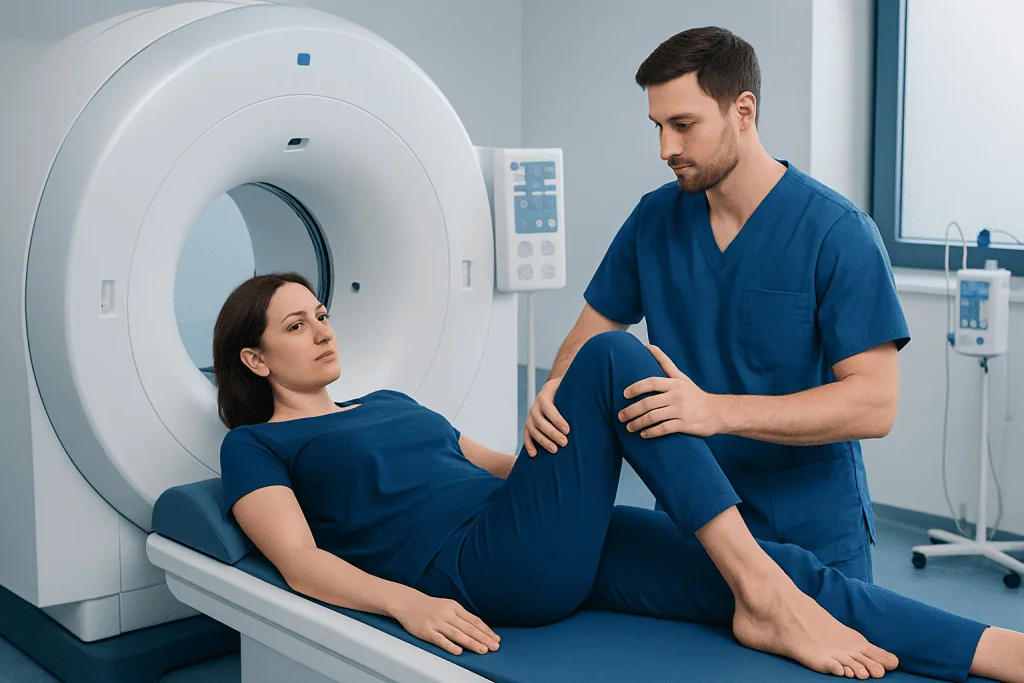
The piriformis begins in the lower spine and sacrum area and attaches to the upper part of the thigh bone. Because of this position, it influences hip rotation and helps keep the hip steady during standing, climbing stairs, and directional changes. Although small, it works closely with the gluteal muscles and other deep hip rotators.
Its relationship to the sciatic nerve is one reason this muscle receives so much attention. The sciatic nerve usually passes underneath the piriformis, though anatomy varies between individuals. If the muscle is irritated or very tight, it may contribute to pressure or irritation around the nerve, leading to pain in the buttock and sometimes tingling or discomfort that extends down the back of the leg.
Still, sciatic-type pain does not automatically mean the piriformis is responsible. Conditions such as a lumbar disc problem, spinal stenosis, or muscle strain can create similar symptoms. This is why persistent or significant symptoms deserve a professional assessment instead of self-diagnosis alone.
Symptoms That May Lead Someone to Try a Piriformis Muscle Stretch

People often look for a piriformis muscle stretch when they have deep buttock tightness, pain after long periods of sitting, or stiffness that seems to worsen with walking uphill, running, or crossing one leg over the other. Some describe a dull ache in the center of the buttock; others notice pain that spreads into the back of the thigh.
Symptoms may be more noticeable after overuse, sudden changes in activity, prolonged driving, or repeated hip rotation. In some cases, tenderness can be felt over the buttock area, and certain positions may trigger discomfort. Standing up after prolonged sitting may temporarily feel difficult.
However, warning signs point away from a simple muscle issue. Numbness, significant weakness, pain below the knee that is severe or progressive, changes in bladder or bowel control, fever, unexplained weight loss, or pain after major trauma all require timely medical evaluation. These features suggest the need to look beyond routine stretching.
Common Causes and Risk Factors
Piriformis-related irritation can develop when the muscle is overloaded, under-conditioned, or compensating for weakness elsewhere. Common contributors include long periods of sitting, increased running or stair climbing, poor movement mechanics, gluteal weakness, and limited hip mobility. Some people experience symptoms after a minor twisting injury or after returning too quickly to exercise following rest.
Biomechanics also matter. Differences in gait, pelvic alignment, leg length, or core control may change how force moves through the hip and buttock. Athletes who perform repeated pivoting or distance training may be more prone to overuse of the deep hip rotators, while office workers may experience symptoms linked to prolonged compression and reduced movement.
Risk also rises when an underlying condition is present. A lumbar spine problem can cause pain that imitates piriformis syndrome, and hip disorders can alter movement in ways that overload the surrounding muscles. In some people, pain around the buttock may overlap with herniated disc symptoms or with joint and tendon problems that need a different treatment plan.
How Doctors Diagnose Piriformis-Related Pain
Diagnosis begins with a careful history and physical examination. A doctor or physical therapist will usually ask where the pain starts, whether it radiates, what movements trigger it, and how long symptoms have been present. They may assess sitting tolerance, walking pattern, hip range of motion, back mobility, muscle strength, and areas of tenderness.
There is no single test that confirms piriformis syndrome in every case. Instead, diagnosis often involves ruling out other causes of buttock and leg pain. The clinician may perform maneuvers that gently reproduce symptoms by stretching or activating the piriformis, while also checking for signs that point to the lumbar spine or hip joint.
Imaging is not always necessary for mild, straightforward cases, but it may be used when symptoms are severe, prolonged, or unclear. Depending on the situation, a doctor may recommend MRI or other studies to evaluate the lower back, hip, or surrounding soft tissues. In selected cases, nerve testing or image-guided injections may help clarify the source of pain.
Treatment Options, Including How to Stretch Safely
Treatment usually starts conservatively. Relative rest, activity modification, heat or ice, and a guided home exercise program are common first steps. A piriformis muscle stretch may help when the muscle is tight, but stretching works best when it is combined with strengthening of the gluteal muscles, core support, and correction of movement patterns that may have contributed to symptoms in the first place.
Common stretch positions include lying on the back and gently drawing one knee toward the opposite shoulder, or making a figure-four position with the ankle crossed over the opposite knee. The movement should be slow and controlled, with a mild pulling sensation in the buttock rather than sharp pain, burning, or increasing numbness. Bouncing, forcing the stretch, or holding the breath is not recommended.
If symptoms continue, supervised physical therapy and rehabilitation may help improve flexibility, muscle balance, gait, and posture. Doctors may also consider short-term pain-relief strategies and, in selected cases, image-guided injections to reduce inflammation around the area. When the diagnosis is uncertain or symptoms suggest a spine source, further evaluation may lead to care pathways more relevant to spine surgery or other specialist treatment, although surgery is not typical for simple piriformis tightness.
The most effective program is individualized. Some people need more stretching, while others improve more with strengthening and nerve-calming strategies. This is why exercises found online should be adapted if they worsen symptoms or do not fit the person’s diagnosis.
Prevention and Self-Care
Preventing recurrence often depends on reducing the strain that led to symptoms. Taking regular breaks from sitting, adjusting workstation setup, warming up before exercise, and progressing activity gradually can all help protect the deep hip muscles. For runners and active adults, training load should increase step by step rather than suddenly.
Self-care is most helpful when it goes beyond stretching alone. Many people benefit from improving hip and core strength, especially in the gluteal muscles, because better support around the pelvis can decrease overuse of the piriformis. Gentle mobility work for the hips and lower back may also improve overall movement quality.
Supportive habits include maintaining comfortable posture during long drives, avoiding prolonged pressure on the painful side, and using exercises prescribed by a clinician when available. If symptoms tend to return, it may be useful to keep a simple record of triggers such as sitting duration, new workouts, or changes in footwear and terrain.
Near the end of a care pathway, some patients need multidisciplinary review to confirm the diagnosis and guide rehabilitation. Acibadem International’s multidisciplinary specialists and JCI-accredited hospitals evaluate and treat musculoskeletal and nerve-related pain for international patients when a more comprehensive assessment is needed.
When to Seek Medical Care
Medical care is advisable if buttock or leg pain lasts more than a few weeks, keeps returning, interferes with sleep, or limits walking, sitting, exercise, or work. Evaluation is also important if home stretching causes symptoms to worsen rather than gradually improve.
Urgent assessment is needed for severe weakness, loss of sensation, changes in bowel or bladder control, fever, unexplained weight loss, or pain after a fall or other significant injury. These symptoms are not typical of simple muscle tightness and may point to a more serious cause.
People with diabetes, cancer, inflammatory conditions, or a history of spine disease should be especially careful about assuming all buttock pain is muscular. A clinician can determine whether a piriformis muscle stretch is appropriate or whether another diagnosis and treatment plan is more likely to help.
Frequently asked questions
What does a piriformis muscle stretch help with?
A piriformis muscle stretch may help reduce tightness in the deep buttock area and improve comfort during sitting, walking, or exercise. It can be useful when the piriformis muscle is contributing to hip stiffness or sciatic-type irritation, but it does not treat every cause of buttock or leg pain.
How should a piriformis stretch feel?
It should feel like a gentle to moderate pull in the buttock or outer hip, not a sharp, stabbing, or burning pain. If the stretch causes increasing numbness, tingling, or symptoms down the leg, it should be stopped and reviewed by a clinician.
Can piriformis tightness cause sciatica?
It can contribute to sciatic-type symptoms in some people because of the piriformis muscle’s close relationship to the sciatic nerve. However, true sciatica often comes from the lower back, so similar symptoms do not always mean the piriformis is the cause.
How often should someone do piriformis stretches?
The right frequency depends on the person, the diagnosis, and symptom severity. Many people start with gentle stretching once or twice daily, but a doctor or physical therapist can provide the safest plan if symptoms are persistent or easily aggravated.
When should someone avoid piriformis stretching?
Stretching should be avoided or paused if it causes worsening pain, new weakness, increasing numbness, or severe leg symptoms. It should also not replace medical evaluation when there are red flags such as trauma, fever, bowel or bladder changes, or unexplained weight loss.
Is stretching enough to treat piriformis syndrome?
Often, no. Many people improve more fully when stretching is combined with strengthening, movement retraining, activity modification, and treatment of any related back or hip problem.
References
- American Academy of Orthopaedic Surgeons
- National Institute of Neurological Disorders and Stroke
- National Institute of Arthritis and Musculoskeletal and Skin Diseases
- American Physical Therapy Association
- Mayo Clinic
This article is for general information only and is not a substitute for professional medical advice. Please consult a qualified doctor about your individual situation.
Explore treatments in Turkey — costs, top hospitals & a free quote
JCI-accredited · board-certified surgeons · reply within 24h
Add us as a Preferred Source to see more of our trusted health content across Google Search, AI Overviews and Discover.