Piriformis Stretch: An Evidence-Based Guide for Patients

A piriformis stretch targets a deep buttock muscle that can irritate the sciatic nerve in some people. The stretch should feel mild to moderate, not sharp, burning, or worsening leg pain.
Key Takeaways
- A piriformis stretch targets a deep buttock muscle that can irritate the sciatic nerve in some people.
- The stretch should feel mild to moderate, not sharp, burning, or worsening leg pain.
- Consistent technique usually matters more than force; gentle daily stretching is often better than pushing too hard.
- Piriformis-related pain can resemble other conditions, so diagnosis matters if symptoms persist.
- Stretching works best when combined with strengthening, activity changes, and guided rehabilitation when needed.
A piriformis stretch is a gentle movement used to lengthen a small muscle deep in the buttock that can contribute to hip stiffness and sciatica-like discomfort. When performed correctly, it may reduce tension, improve mobility, and support recovery alongside a broader plan that addresses posture, activity, and muscle balance.
What is a piriformis stretch and when can it help?
A piriformis stretch is a movement designed to lengthen the piriformis, a small muscle located deep in the buttock near the hip joint. This muscle helps rotate and stabilize the hip. If it becomes tight, overworked, or irritated, it may contribute to buttock pain, hip discomfort, or pain that travels down the back of the leg in a pattern similar to sciatica.
For many people, a piriformis stretch can help reduce muscle tension, improve hip mobility, and make sitting, walking, or exercise more comfortable. It is most often used when symptoms suggest tightness in the deep gluteal area, especially after long periods of sitting, a recent increase in exercise, or repetitive movements such as running.
However, not all buttock or leg pain is caused by the piriformis muscle. Similar symptoms can come from the lower back, sacroiliac joint, hip joint, or nerve compression elsewhere. That is why stretching should be approached as one part of a careful, evidence-based self-care plan rather than a one-size-fits-all solution.
How the piriformis muscle affects hip and leg symptoms
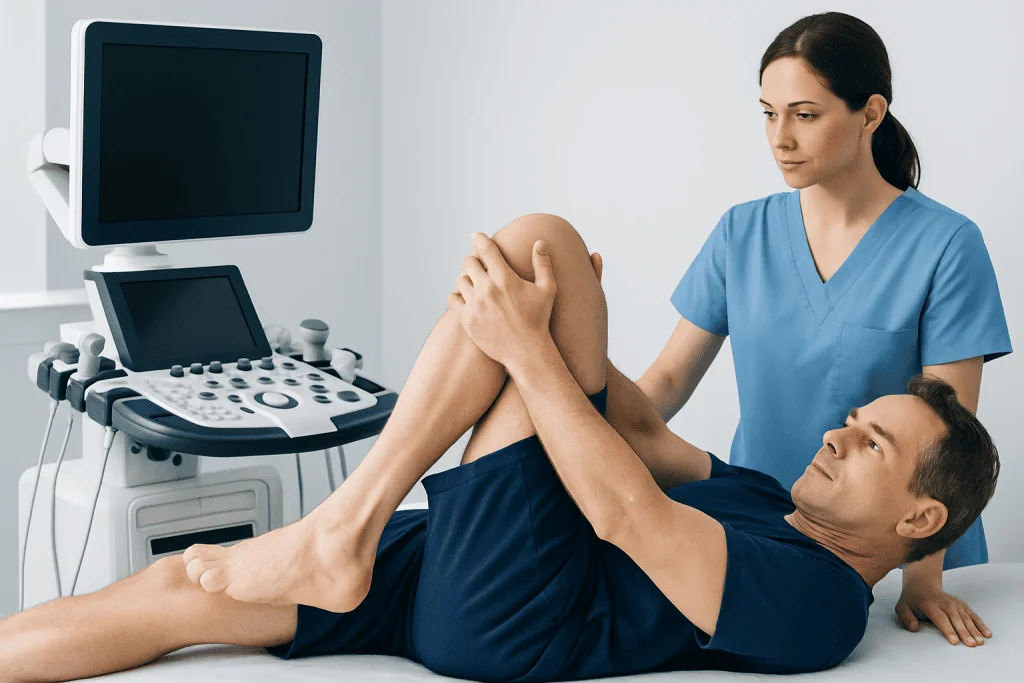
The piriformis runs from the sacrum to the upper part of the femur and lies close to the sciatic nerve. In some people, the nerve passes under the muscle, while in others it may run through or around it. Because of this close relationship, irritation or tightness in the muscle may place pressure on the nerve or make nearby tissues more sensitive.
This mechanism is often discussed in relation to piriformis syndrome, a condition in which deep buttock pain and radiating leg symptoms are thought to be linked to the piriformis muscle. Symptoms may include aching in the buttock, discomfort when climbing stairs, pain after prolonged sitting, or tingling that travels down the leg.
Still, the diagnosis can be challenging because several conditions overlap with piriformis-related pain, including lumbar disc problems and true sciatica. A stretch may be helpful when the problem is muscular, but it may not help and can even aggravate symptoms if the main source of pain is elsewhere. A structured clinical evaluation is important when symptoms are ongoing or severe.
Common signs that stretching may be appropriate

People often look for a piriformis stretch when they feel tightness or pain deep in one buttock, especially after sitting for a long time or after activities that load the hips. Some also notice stiffness when crossing one leg over the other, getting out of a car, or turning in bed. In these situations, a gradual stretch may be worth trying if symptoms are mild and there are no warning signs.
Stretching is more likely to be useful when discomfort feels muscular and improves somewhat with gentle movement. It may also help as part of recovery after overuse of the gluteal and hip rotator muscles. Many rehabilitation plans combine stretching with mobility work, changes in sitting habits, and targeted strengthening.
Signs that a person should be more cautious include severe pain, weakness in the leg, numbness that is persistent or progressive, pain after a fall, fever, unexplained weight loss, or bladder or bowel symptoms. These concerns suggest that medical assessment is needed before beginning self-treatment.
- Deep buttock tightness after sitting
- Discomfort with hip rotation or crossing the legs
- Symptoms that improve with light movement
- No major weakness, trauma, or red-flag symptoms
How to do a piriformis stretch safely
The safest piriformis stretch is usually one performed slowly, with steady breathing and without forcing the hip into pain. A common starting option is the lying figure-four stretch. While lying on the back with both knees bent, one ankle is placed over the opposite knee, creating a figure-four shape. The person then gently draws the supporting thigh toward the chest until a stretch is felt deep in the buttock of the crossed leg.
Another option is a seated piriformis stretch. Sitting upright in a chair, one ankle rests over the opposite knee, and the person leans forward slightly from the hips while keeping the back long. This may be more comfortable for people who find floor exercises difficult. A third option is a supine knee-to-opposite-shoulder variation, where one knee is gently guided toward the opposite shoulder to create a stretch in the outer hip and buttock.
In most cases, the goal is a mild to moderate stretching sensation rather than pain. Jerking, bouncing, or pushing through tingling, sharp pain, or increasing leg symptoms should be avoided. Many clinicians advise holding a comfortable stretch briefly and repeating it, rather than forcing a very intense position. If symptoms worsen during or after the stretch, it should be stopped and reviewed with a qualified professional.
- Move into the stretch gradually
- Keep breathing normally
- Aim for tension, not pain
- Stop if numbness, sharp pain, or radiating symptoms increase
Why stretching alone is not always enough
Although a piriformis stretch can be useful, lasting improvement often depends on addressing the reason the muscle became overloaded in the first place. Common contributors include prolonged sitting, sudden increases in training, poor lumbopelvic control, weakness in the gluteal muscles, reduced hip mobility, and running or walking mechanics that place extra strain on the buttock muscles.
This is why rehabilitation often pairs stretching with strengthening and movement retraining. Exercises for the gluteus medius, core, and hip stabilizers may help reduce stress on the piriformis over time. In some cases, guided physical therapy and rehabilitation can help identify movement patterns, flexibility limits, and strength deficits that self-stretching alone may miss.
People with persistent symptoms may also need evaluation of the spine, pelvis, and hip joint. If pain is not improving, clinicians may look for other causes such as lumbar nerve irritation, tendon disorders, or hip joint disease. This broader view helps ensure the right treatment is chosen and unnecessary stretching is avoided.
Diagnosis and treatment options when symptoms persist
There is no single test that proves the piriformis muscle is the cause of pain. Diagnosis usually depends on a clinical history, physical examination, and exclusion of other conditions. A doctor may ask about the location of pain, activities that trigger symptoms, any back pain, numbness, weakness, recent injuries, and how symptoms respond to rest or movement.
The examination may include checking hip range of motion, tenderness in the buttock, nerve tension signs, strength, reflexes, and lower back movement. When symptoms are persistent or atypical, imaging or other tests may be used to look for problems involving the lumbar spine or hip. In some cases, MRI may help rule out other causes of pain, although it may not directly confirm piriformis-related irritation.
Treatment depends on the underlying diagnosis. Options may include temporary activity modification, anti-inflammatory strategies recommended by a doctor, physical therapy, posture and ergonomic changes, and a home exercise program. For more complex cases, specialists in orthopedics or rehabilitation may guide further treatment. Near the end of the care pathway, Acibadem International’s multidisciplinary specialists and JCI-accredited hospitals also diagnose and treat musculoskeletal and nerve-related pain conditions for international patients.
Prevention and self-care habits that support recovery
Preventing recurrence often starts with reducing prolonged positions. Sitting for hours at a time can increase pressure and shorten muscles around the hip. Short standing or walking breaks, especially during desk work or travel, may help reduce repeated irritation. People who exercise regularly may also benefit from warming up before activity and progressing intensity gradually rather than making sudden training increases.
Self-care should also include strengthening and mobility work beyond the piriformis itself. Better hip mobility, stronger gluteal muscles, and improved trunk control can all support a more balanced pattern of movement. Footwear, running surfaces, cycling position, and workstation setup may also matter depending on the person’s daily routine.
Helpful recovery habits include paying attention to symptom trends rather than expecting instant change. Improvement often comes with steady, low-irritation practice. If a stretch is helpful, it can be continued as part of a broader plan, but if it repeatedly increases pain, it should be changed or replaced under professional guidance.
When to seek medical care
Most mild muscular tightness can be managed conservatively, but medical advice is important when pain is severe, lasts more than a few weeks, or limits walking, work, sleep, or normal daily activities. A clinician can help determine whether the piriformis muscle is really the source of pain or whether another condition needs attention.
Urgent assessment is especially important if symptoms include significant leg weakness, numbness that is worsening, loss of bladder or bowel control, fever, unexplained weight loss, pain after a major injury, or symptoms that do not change with rest or position. These features are not typical of simple muscular tightness and need prompt evaluation.
People who are uncertain about technique, have a history of spinal problems, or develop repeated flares despite stretching may also benefit from formal guidance. A tailored plan is often safer and more effective than repeated trial and error at home.
Frequently asked questions
How often should a piriformis stretch be done?
For many people, gentle daily practice is reasonable if it does not increase symptoms. The stretch should be comfortable and consistent rather than forceful. If pain worsens afterward, the routine should be reduced or reviewed with a clinician.
Should a piriformis stretch hurt?
A piriformis stretch should create a mild to moderate pulling sensation in the buttock or outer hip, not sharp pain. It should not cause increasing tingling, numbness, or pain shooting down the leg. If it does, the stretch should be stopped.
Can a piriformis stretch help sciatica?
It can help some people whose symptoms are related to piriformis tightness or deep gluteal irritation. However, true sciatica often comes from irritation of spinal nerve roots in the lower back. Because these problems can feel similar, persistent symptoms should be assessed properly.
What is the best position for a piriformis stretch?
There is no single best position for everyone. Common options include the lying figure-four stretch, a seated figure-four stretch, and a knee-to-opposite-shoulder variation. The best choice is the one that feels controlled, comfortable, and does not worsen leg symptoms.
How long does it take for piriformis tightness to improve?
Mild muscular tightness may begin to improve over days to a few weeks with gentle stretching and activity changes. More persistent pain often takes longer, especially if weakness, poor mechanics, or another diagnosis is involved. Improvement is usually gradual rather than immediate.
When should someone avoid piriformis stretching?
Stretching should be avoided or delayed if there is severe pain, a recent traumatic injury, worsening numbness, major weakness, or concern for a spinal problem. It may also be inappropriate if a healthcare professional has advised rest from certain movements. In those situations, medical evaluation is the safer next step.
References
- American Academy of Orthopaedic Surgeons
- National Institute of Neurological Disorders and Stroke
- National Institute of Arthritis and Musculoskeletal and Skin Diseases
- American Physical Therapy Association
- Mayo Clinic
This article is for general information only and is not a substitute for professional medical advice. Please consult a qualified doctor about your individual situation.
Joint and spine care in Turkey — expert assessment & treatment
JCI-accredited · board-certified surgeons · reply within 24h
Add us as a Preferred Source to see more of our trusted health content across Google Search, AI Overviews and Discover.

More from the Health Library

Transfeminine — Explained by Medical Evidence, Not Myths

Impaired Fasting Glucose: An Evidence-Based Guide for Patients

Chelated — Explained by Medical Evidence, Not Myths

Menometrorrhagia: A Complete Medical Overview

Cats Claw: An Evidence-Based Guide for Patients