

Plasma Exchange Therapy: How It Works, Results and What to Expect

Plasma exchange filters out and replaces plasma; it does not remove all disease-causing factors permanently. It is used for selected immune-mediated, neurologic, blood and kidney conditions, often alongside other treatments.
Key Takeaways
- Plasma exchange filters out and replaces plasma; it does not remove all disease-causing factors permanently.
- It is used for selected immune-mediated, neurologic, blood and kidney conditions, often alongside other treatments.
- A session commonly takes a few hours, while a full treatment course may involve several sessions over days or weeks.
- Some people improve quickly, but the response and long-term outlook depend mainly on the condition being treated.
- Possible risks include low blood pressure, tingling from low calcium, bleeding, allergic reactions and catheter-related complications.
Plasma exchange therapy, also called therapeutic plasma exchange or plasmapheresis, is a procedure that removes a person’s plasma and replaces it with a suitable fluid. It can rapidly lower harmful antibodies, proteins or toxins in the bloodstream for selected conditions, but its benefit, timing and treatment schedule depend on the underlying diagnosis.
Overview: what plasma exchange therapy does
Plasma exchange therapy is a blood-filtering procedure used when substances circulating in plasma may be contributing to illness. Plasma is the liquid part of blood that carries proteins, antibodies, clotting factors, hormones and other substances. During treatment, blood is removed through a vein or catheter, separated into its components, and the plasma portion is discarded and replaced before the blood cells are returned to the body.
The procedure is also called therapeutic plasma exchange (TPE) or plasmapheresis. It is different from plasma donation, which is performed to collect plasma for use by others. Therapeutic plasma exchange is prescribed to support treatment of a specific medical condition and is carried out by a trained apheresis team under medical supervision.
Plasma exchange can reduce the amount of certain harmful antibodies, abnormal proteins or protein-bound substances quickly. However, the body may continue to produce them. For this reason, the procedure is frequently combined with medicines, disease-specific treatment or surgery when appropriate.
How plasma exchange works step by step
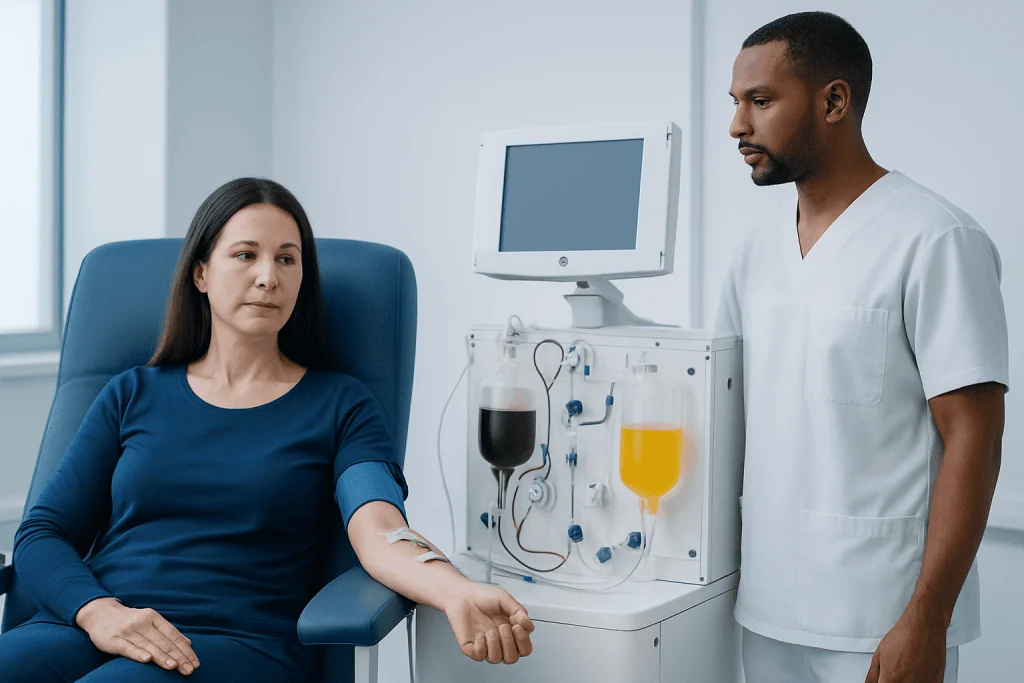
Before treatment, the clinical team reviews the person’s diagnosis, medicines, blood test results, blood pressure and vein access. A doctor also decides what replacement fluid is most appropriate. Albumin solution is commonly used; plasma may be needed in situations where replacement of clotting factors is especially important.
During the procedure, two intravenous lines may be placed in arm veins, or a central venous catheter may be used if veins are difficult to access or repeated treatment is expected. Blood travels through sterile tubing to an apheresis machine. The machine separates plasma from blood cells by centrifugation or filtration, then returns the cells with replacement fluid.
A plasma exchange session commonly lasts about two to four hours, although the exact plasma exchange therapy duration varies with body size, access type, the amount of plasma exchanged and the person’s medical stability. The patient is monitored throughout for pulse, blood pressure and symptoms. They can usually rest, listen to music or read during the session.
Afterward, the lines are removed or the catheter is secured, and staff check for dizziness, bleeding or other concerns. Some people go home the same day, while others receive treatment during a hospital admission because of the condition being managed.
Who may be a candidate for therapeutic plasma exchange

Therapeutic plasma exchange is not a general blood-cleansing treatment. It is considered when there is good clinical evidence that removing plasma components may improve an acute problem, prevent complications or help control disease while other treatments take effect.
Examples include certain autoimmune neurologic disorders, some rapidly progressive kidney diseases, thrombotic thrombocytopenic purpura, hyperviscosity caused by abnormal blood proteins, and selected transplant-related or severe immune conditions. A specialist determines whether plasma exchange is appropriate based on the diagnosis, disease severity, laboratory findings and the expected balance of benefit and risk.
People with Guillain-Barré syndrome or myasthenia gravis may receive plasma exchange in particular clinical circumstances, such as significant weakness or a severe flare. It can also be used in selected cases of multiple sclerosis, although it is not a routine treatment for every relapse or every person with the condition.
Pregnancy, infection, a tendency to bleed, heart or kidney disease, medication use and problems with vascular access do not automatically rule out treatment, but they require individualized planning. The healthcare team will discuss alternatives and whether other therapies should be given before, after or alongside plasma exchange.
Benefits, results and how often treatment is needed
The main benefit of plasma exchange is speed: it can lower circulating antibodies or abnormal proteins faster than treatments that work by gradually changing immune activity. It may help stabilize a serious condition, improve symptoms, or reduce the risk of short-term complications. It does not cure every condition for which it is used.
How long does it take for plasma exchange to work?
Some effects on blood levels occur immediately after a session, but symptom improvement may take hours, days or longer. In conditions where nerve, kidney or organ injury has already occurred, recovery depends on tissue healing as well as removal of harmful substances. A lack of immediate improvement does not always mean the procedure has failed, and doctors assess response using symptoms, examination findings and laboratory tests.
Does therapeutic plasma exchange really work?
Yes, therapeutic plasma exchange is an established treatment for specific evidence-based indications. Its effectiveness is strongest when it is used for the right condition, at the right stage and with the necessary accompanying care. It is not beneficial for every autoimmune, neurologic or blood disorder, so a specialist’s diagnosis and treatment plan are essential.
What is the success rate of plasma exchange?
There is no single success rate for plasma exchange because it treats many different diseases with different causes, severities and outcomes. Response can range from substantial improvement to limited or temporary benefit. A clinician can explain the expected outcome for the individual diagnosis, including whether the goal is rapid symptom control, prevention of complications, support while medicines work or preparation for another treatment.
Plasma exchange how often it is performed also varies. Many acute treatment courses involve several exchanges over days to two weeks, while some chronic conditions may need intermittent courses. The schedule is adjusted according to clinical response, test results, tolerance and other therapies.
Recovery timeline and how people may feel afterward
After a routine outpatient session, many people can leave after a brief observation period, provided they feel well and have a safe way to travel. Mild tiredness is common for the rest of the day. Drinking fluids if permitted, eating a light meal and avoiding strenuous activity until feeling recovered may be helpful.
Do you feel better after plasmapheresis?
Some people notice improvement after one or several treatments, especially if symptoms are linked closely to substances removed from plasma. Others do not feel different immediately, and fatigue, temporary light-headedness or tingling can occur after treatment. The pace of recovery is influenced by the underlying illness, its severity and whether ongoing inflammation or organ damage is present.
Care teams may arrange blood tests between sessions to check blood counts, electrolytes, clotting measures or disease-specific markers. If a central catheter is used, it requires careful dressing care and monitoring until it is removed. The treating team provides individualized instructions for medicines, activity and follow-up appointments.
For complex cases, plasmapheresis treatment is usually coordinated with neurology, hematology, nephrology, intensive care or other relevant specialties. Acibadem International’s multidisciplinary specialists and JCI-accredited hospitals provide diagnosis and treatment planning for international patients who need this type of coordinated care.
Risks and safety considerations
Plasma exchange is generally performed in specialized settings with close monitoring, but it can cause side effects. The most frequent are temporary and manageable, including low blood pressure, nausea, feeling cold, fatigue, bruising at the needle site and tingling around the mouth or in the hands. Tingling or muscle cramps can occur when the anticoagulant used in the circuit lowers calcium levels temporarily.
Less common but more serious complications include allergic reactions to replacement plasma, bleeding due to reduced clotting proteins, irregular heart rhythm, infection or blood clot related to a central catheter, and problems associated with fluid shifts. The team takes precautions such as checking tests, selecting appropriate replacement fluids and providing calcium or other supportive treatment when needed.
Patients should tell staff immediately about chest discomfort, shortness of breath, rash, swelling, severe chills, faintness, new bleeding, intense tingling or muscle spasms during or after the procedure. Reporting symptoms early allows the team to slow, pause or adjust treatment safely.
When to seek medical care
Anyone being considered for plasma exchange should seek prompt medical assessment for symptoms of a potentially serious underlying condition, such as rapidly worsening weakness, difficulty breathing or swallowing, sudden confusion, unusual bruising or bleeding, severe shortness of breath, or a major reduction in urine output. Emergency services should be used when symptoms are severe, sudden or life-threatening.
After plasma exchange, urgent medical advice is needed for fever, redness, pain or drainage around a catheter site; persistent bleeding; widespread rash or swelling; fainting; chest pain; or worsening neurologic symptoms. People should not assume that new symptoms are simply a normal part of recovery.
Follow-up is important even when a person feels better. The treating specialist evaluates whether further plasma exchange is needed and whether treatment should transition to medicines, rehabilitation, monitoring or another disease-specific approach.
Frequently asked questions
Is plasma exchange the same as plasmapheresis?
The terms are often used interchangeably in clinical practice. Plasmapheresis broadly refers to plasma removal, while therapeutic plasma exchange specifically describes removing plasma and replacing it with albumin, plasma or another prescribed fluid.
How long does a plasma exchange session take?
Most sessions take about two to four hours. The exact time depends on the volume exchanged, the machine used, vascular access and the patient’s condition.
How many plasma exchange treatments are usually needed?
There is no standard number for everyone. Some acute conditions are treated with several sessions over a short period, while other conditions may require repeated courses based on symptoms and laboratory findings.
Can plasma exchange cure an autoimmune disease?
Plasma exchange may quickly reduce harmful antibodies in the bloodstream, but it does not usually stop the body from making new antibodies. It is therefore commonly used with medicines or other treatments that address the underlying immune process.
What should a patient do before plasma exchange therapy?
The treatment team will provide personalized instructions about food, fluids and medications. Patients should report all medicines, allergies, bleeding problems, infections and prior reactions to blood products before treatment.
Can someone drive home after plasmapheresis?
Some people feel well enough to travel home after observation, while others feel tired or light-headed. It is sensible to arrange transportation unless the treating team confirms that driving is appropriate.
References
- American Society for Apheresis
- National Institutes of Health
- Mayo Clinic
- Cleveland Clinic
- MedlinePlus
This article is for general information only and is not a substitute for professional medical advice. Please consult a qualified doctor about your individual situation.
Explore treatments in Turkey — costs, top hospitals & a free quote
JCI-accredited · board-certified surgeons · reply within 24h
Add us as a Preferred Source to see more of our trusted health content across Google Search, AI Overviews and Discover.
Check your numbers in seconds
BMI, calories, due date, blood pressure and 30+ more clinical calculators — free, instant, doctor-reviewed ranges.

More from the Health Library



Related Specialists

Prof. Dr. Hakan Turan Çift
Orthopedic Surgery & Traumatology
Dr. Belgin Utku
Pulmonology
Dr. Burak Sercan Erçin (m)
Aesthetic Plastic & Reconstructive Surgery
Prof. Dr. Güngör Boztaş
Gastroenterology