Posterior Communicating Artery: An Evidence-Based Guide for Patients

The posterior communicating arteries are part of the circle of Willis, a network that can help maintain brain blood flow. Most people do not feel their posterior communicating arteries and do not need testing for them.
Key Takeaways
- The posterior communicating arteries are part of the circle of Willis, a network that can help maintain brain blood flow.
- Most people do not feel their posterior communicating arteries and do not need testing for them.
- An aneurysm in this location can sometimes affect the third cranial nerve, causing a drooping eyelid, double vision, or a larger pupil.
- A sudden, severe headache requires urgent medical evaluation because it can be a sign of bleeding around the brain.
- Treatment depends on whether an aneurysm has ruptured, its features, symptoms, and the individual’s overall health.
The posterior communicating artery is a paired blood vessel in the brain that connects circulation at the front and back of the brain. It is usually harmless and important for blood-flow backup, but it is also a common location for a brain aneurysm.
Overview: what is the posterior communicating artery?
The posterior communicating artery is a small blood vessel located on each side of the brain. It connects the internal carotid artery, which supplies the front portion of the brain, to the posterior cerebral artery, which supplies areas toward the back of the brain. Together, these vessels form part of the circle of Willis, a ring-like arterial network at the base of the brain.
Its main role is to provide a possible alternate route for blood flow. If one part of the brain’s circulation is narrowed or blocked, the connections within the circle of Willis may help redirect blood to nearby areas. The size and function of these connections vary naturally between individuals, and many healthy people have an incomplete or asymmetrical circle of Willis.
The artery itself does not usually cause symptoms. It becomes clinically important mainly when a structural change develops nearby, particularly a brain aneurysm, or when it is involved in a stroke-related circulation problem. These conditions require assessment by a qualified medical team.
Why this artery matters in brain circulation
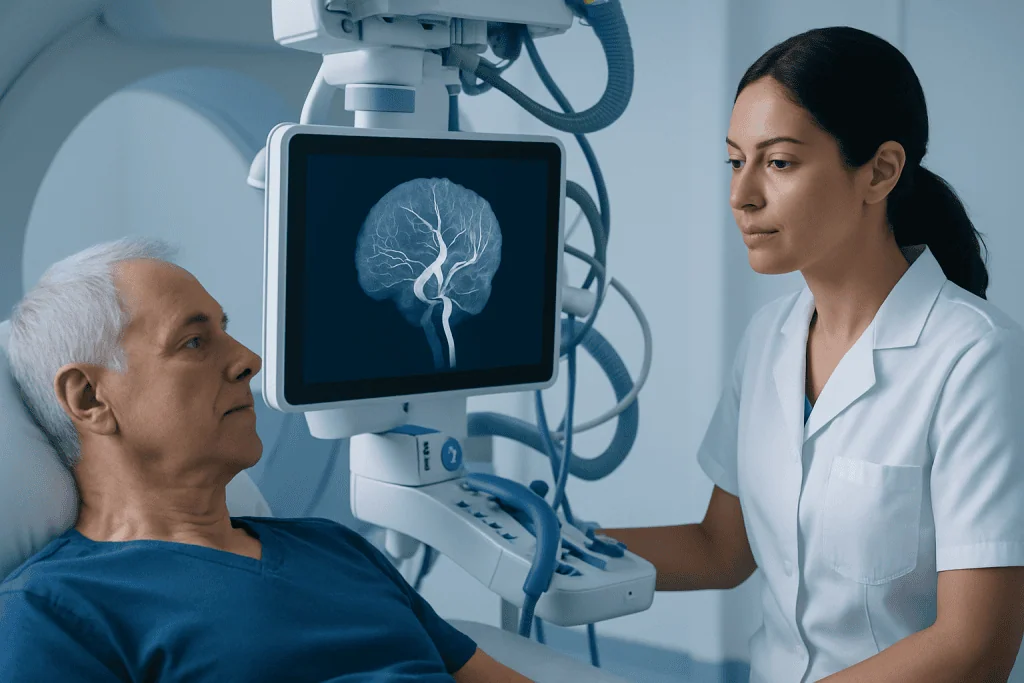
The brain needs a continuous supply of oxygen-rich blood. Two major systems contribute to this supply: the carotid circulation at the front and the vertebrobasilar circulation at the back. The posterior communicating artery provides a connection between these systems, allowing communication between their blood-flow pathways.
This connection may be especially relevant when a major artery gradually narrows. In some people, collateral circulation through the circle of Willis can partly compensate for reduced flow. However, the degree of protection is variable. The artery may be very small, absent on imaging, or unable to provide enough flow in an acute blockage.
A common normal anatomical variation is known as a fetal-type posterior cerebral artery. In this pattern, the posterior cerebral artery receives much of its blood supply from the internal carotid artery through a relatively large posterior communicating artery. This variation is not a disease, but it may be relevant when clinicians interpret scans or plan treatment for vascular conditions.
Posterior communicating artery aneurysms and possible symptoms

An aneurysm is a weakened, bulging area in the wall of an artery. A posterior communicating artery aneurysm often arises at the junction where the artery branches from the internal carotid artery. Many unruptured aneurysms cause no symptoms and are found incidentally during imaging performed for another reason.
When an aneurysm presses on nearby structures, it may affect the third cranial nerve, also called the oculomotor nerve. Possible signs include a new drooping eyelid, double vision, difficulty moving one eye normally, or a pupil that appears larger than the other. These symptoms should be assessed urgently, especially if they begin suddenly.
If an aneurysm ruptures, it can cause bleeding in the space around the brain, called subarachnoid hemorrhage. A sudden, extremely severe headache, often described as reaching maximum intensity quickly, is a key warning sign. Other symptoms may include neck stiffness, vomiting, fainting, confusion, seizures, or weakness. Rupture is a medical emergency and needs immediate hospital care.
Causes and factors linked with aneurysm risk
There is not usually a single identifiable cause of a brain aneurysm. It is thought to develop through a combination of artery-wall vulnerability, blood-flow forces at vessel branches, and health or lifestyle factors that affect blood vessels over time. Aneurysms can occur in people with no known risk factors.
Factors associated with a higher likelihood of aneurysm formation or rupture include smoking, high blood pressure, increasing age, and a close family history of brain aneurysm or subarachnoid hemorrhage. Certain inherited connective-tissue and kidney conditions can also be associated with a higher risk. A clinician may recommend individualized counseling when there is a strong family history.
Having a risk factor does not mean that a person will develop an aneurysm, and finding an aneurysm does not necessarily mean it will rupture. Specialists consider its size, location, shape, changes over time, symptoms, and the person’s medical history when discussing likely risks and next steps.
How doctors evaluate the posterior communicating artery
Doctors may examine the posterior communicating artery with noninvasive imaging such as computed tomography angiography (CTA) or magnetic resonance angiography (MRA). These tests create detailed pictures of blood vessels and can help identify aneurysms, narrowing, or anatomical variations. The choice of test depends on the symptoms, urgency, medical history, and availability.
If a ruptured aneurysm is suspected, urgent non-contrast CT of the head is often used to look for bleeding. Depending on the timing and results, further testing may be needed. Catheter cerebral angiography, in which contrast dye is injected through a thin tube placed in an artery, may provide the most detailed vessel images and can also support treatment planning.
Evaluation also includes a neurological assessment and review of risk factors. For a known unruptured aneurysm, clinicians may recommend observation with planned imaging, consultation with a cerebrovascular specialist, or treatment. The decision is personal and should balance the aneurysm’s features with the benefits and risks of intervention.
Treatment options and follow-up
Not every posterior communicating artery aneurysm needs immediate treatment. Small, stable, unruptured aneurysms without high-risk features may be monitored with follow-up scans. During observation, managing blood pressure, avoiding tobacco, and attending scheduled reviews are important parts of care.
When treatment is recommended, the two main approaches are endovascular treatment and microsurgical clipping. Endovascular procedures are performed through blood vessels, often using coils, stents, or flow-diverting devices to reduce blood entry into the aneurysm. brain aneurysm treatment is selected according to the aneurysm’s shape and location, the person’s health, and the experience of the treating team.
Microsurgical clipping involves an operation to place a small clip across the aneurysm neck and exclude it from circulation. Both approaches can be appropriate in selected circumstances, including emergency care after rupture. Recovery, follow-up imaging, and long-term recommendations differ between patients, so the treating specialists should explain the expected plan clearly.
Supporting vascular health and when to seek medical care
There is no proven home method to prevent every brain aneurysm. However, not smoking, seeking support to stop tobacco use, managing high blood pressure, staying physically active as advised, and following a balanced eating pattern support overall blood-vessel health. People prescribed medicines for blood pressure or other conditions should take them as directed and discuss concerns with their clinician rather than stopping treatment on their own.
Emergency care is needed for a sudden severe headache unlike usual headaches, particularly when it is accompanied by vomiting, neck stiffness, loss of consciousness, confusion, seizures, weakness, difficulty speaking, or visual changes. New eyelid drooping, double vision, unequal pupils, or severe eye pain also warrants urgent assessment because it can indicate pressure on a cranial nerve or another neurological condition.
People with a known aneurysm should contact their care team about new neurological symptoms and keep follow-up appointments. Acibadem International’s multidisciplinary specialists and JCI-accredited hospitals evaluate and treat cerebrovascular conditions for international patients, with care plans based on individual clinical findings.
Frequently asked questions
What does the posterior communicating artery do?
The posterior communicating artery connects blood-flow pathways at the front and back of the brain. It is part of the circle of Willis, which may provide an alternate route for blood in some situations. Its size and contribution to circulation differ naturally from person to person.
Is a posterior communicating artery aneurysm common?
The posterior communicating artery region is a recognized site for intracranial aneurysms. Many aneurysms are discovered incidentally and never cause symptoms. A specialist can explain the significance of an individual finding based on imaging and personal risk factors.
Can a posterior communicating artery aneurysm affect the eye?
Yes. An aneurysm in this area can sometimes press on the third cranial nerve, which controls several eye movements and eyelid elevation. Sudden eyelid drooping, double vision, or a new enlarged pupil needs urgent medical evaluation.
What does a ruptured brain aneurysm feel like?
A ruptured aneurysm often causes a sudden, very severe headache that reaches full intensity rapidly. It may occur with nausea, vomiting, neck stiffness, fainting, confusion, seizures, or neurological weakness. These symptoms require emergency medical care.
How is a posterior communicating artery aneurysm diagnosed?
CTA and MRA are common imaging tests used to view the brain’s arteries. In urgent situations, CT scanning may first check for bleeding, and catheter angiography may be used for more detailed evaluation or treatment planning. The appropriate test depends on the clinical situation.
Can an unruptured posterior communicating artery aneurysm be monitored?
In some cases, yes. A care team may recommend repeat imaging rather than immediate intervention when an aneurysm appears lower risk. Monitoring plans are individualized and should include guidance on risk-factor management and symptoms that require urgent attention.
References
- American Heart Association
- American Stroke Association
- National Institute of Neurological Disorders and Stroke
- Mayo Clinic
- Brain Aneurysm Foundation
This article is for general information only and is not a substitute for professional medical advice. Please consult a qualified doctor about your individual situation.
Explore treatments in Turkey — costs, top hospitals & a free quote
JCI-accredited · board-certified surgeons · reply within 24h
Add us as a Preferred Source to see more of our trusted health content across Google Search, AI Overviews and Discover.
Check your numbers in seconds
BMI, calories, due date, blood pressure and 30+ more clinical calculators — free, instant, doctor-reviewed ranges.

More from the Health Library

Continuous Bladder Irrigation: A Complete Medical Overview

Sweeteners and Sugar Alternatives — Explained by Medical Evidence, Not Myths

Turmeric for Weight Loss: What Patients Need to Know

Hypotonic: An Evidence-Based Guide for Patients

List of Superfoods: An Evidence-Based Guide for Patients