

Posterior Tibial Tendonitis: Early Signs, Risk Factors, and How It Is Treated

Posterior tibial tendonitis commonly causes pain and swelling along the inside of the ankle and foot. The posterior tibial tendon helps support the arch, so ongoing irritation can affect foot shape and walking.
Key Takeaways
- Posterior tibial tendonitis commonly causes pain and swelling along the inside of the ankle and foot.
- The posterior tibial tendon helps support the arch, so ongoing irritation can affect foot shape and walking.
- Risk factors include overuse, flat feet, obesity, diabetes, inflammatory arthritis, and poorly supportive footwear.
- Diagnosis is based on symptoms, examination, and sometimes imaging such as ultrasound, X-ray, or MRI.
- Treatment usually begins with rest, activity changes, supportive shoes, orthotics, physical therapy, and anti-inflammatory measures.
- Medical evaluation is important if pain persists, walking becomes difficult, or the arch appears to be falling.
Posterior tibial tendonitis is irritation of the tendon that helps support the arch and stabilize the foot during walking. Early care often improves pain and function, while delayed treatment can allow the tendon to weaken and contribute to flattening of the foot.
Overview
Posterior tibial tendonitis is inflammation or irritation of the posterior tibial tendon, a strong structure that runs behind the inner ankle and helps support the arch of the foot. When this tendon becomes overloaded, painful, or weakened, a person may notice inner ankle pain, swelling, fatigue in the foot, and difficulty with walking or standing for long periods.
This condition is closely related to posterior tibial tendon dysfunction, a broader term used when the tendon no longer works as well as it should. Tendonitis may be an early stage, while longstanding damage can lead to progressive loss of arch support and an acquired flatfoot deformity. For that reason, early assessment matters even when symptoms seem mild at first.
Posterior tibial tendonitis is especially relevant in adults who are active, spend long hours standing, or have foot mechanics that put extra strain on the arch. Unlike a simple muscle ache, this problem affects a tendon with an important stabilizing role. Prompt treatment can reduce inflammation, protect the tendon, and help prevent long-term changes in foot alignment.
Early Signs and Symptoms
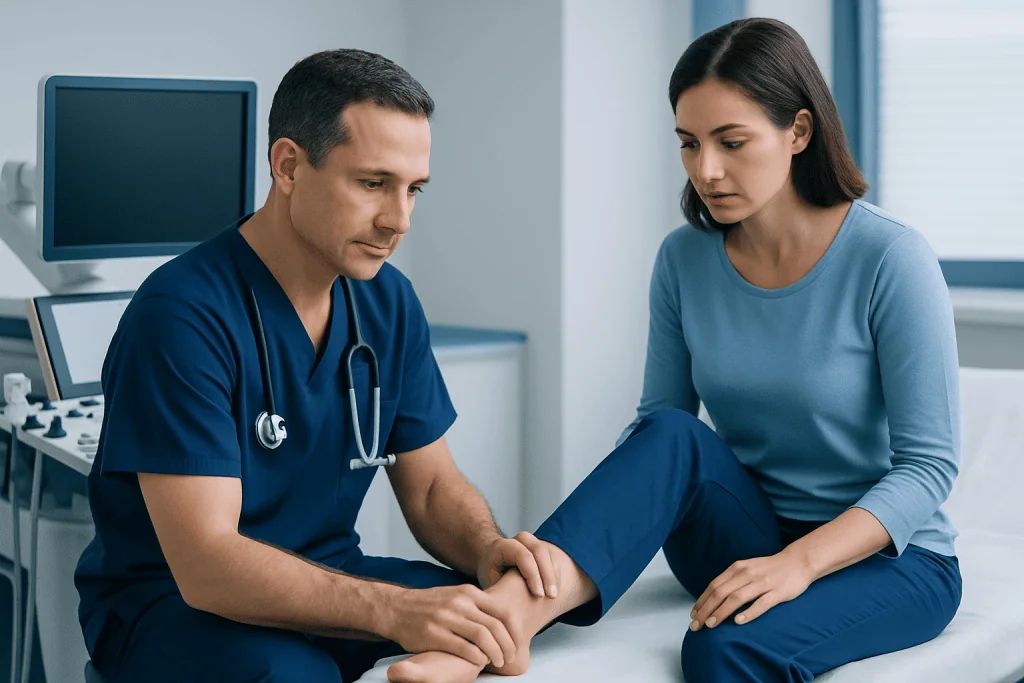
The earliest signs of posterior tibial tendonitis are often subtle. Many people first notice aching or tenderness along the inside of the ankle, especially after walking, running, climbing stairs, or standing for extended periods. The area may feel sore to touch, and some swelling may appear behind or below the inner ankle bone.
As irritation continues, symptoms can become more noticeable during daily activity. The foot may tire more quickly, and pushing off while walking may feel weak or uncomfortable. Some people describe a sense that the foot is “rolling inward” more than usual. Pain may improve with rest, then return when activity resumes.
Over time, the tendon may lose strength. This can make it hard to rise onto the toes of the affected foot or perform a single-leg heel raise. The arch may begin to flatten, and pain can spread from the inner ankle to the foot or even the outer side of the ankle if foot alignment changes.
- Pain or tenderness on the inner side of the ankle or foot
- Swelling along the course of the tendon
- Foot fatigue with walking or exercise
- Difficulty standing on tiptoe on one foot
- Gradual lowering of the arch
- Changes in walking pattern or balance
Why It Happens: Causes and Risk Factors
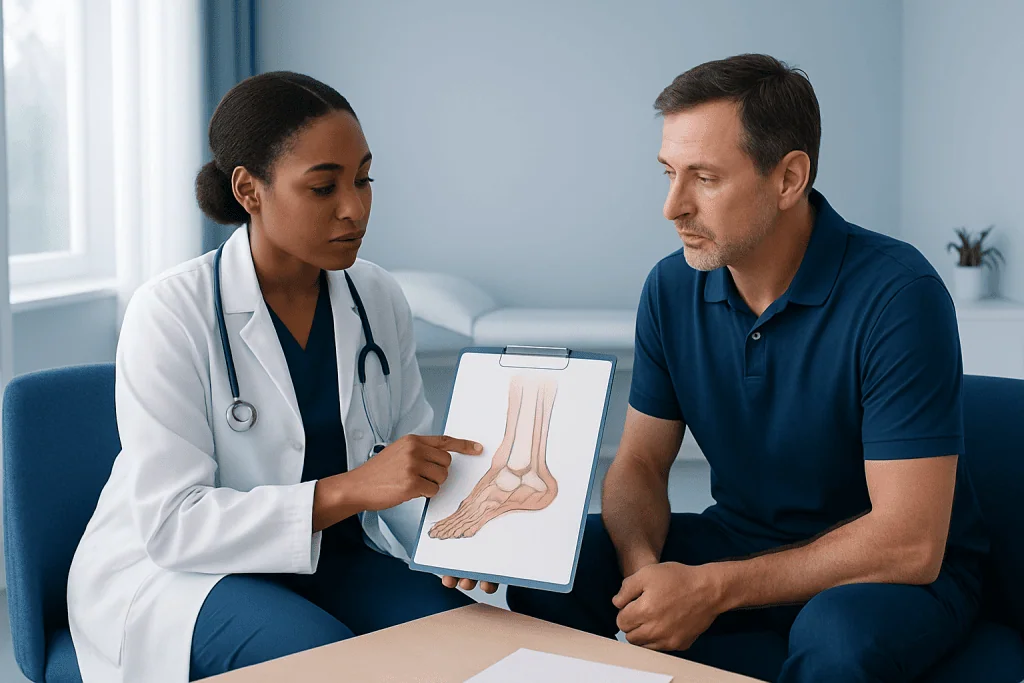
The posterior tibial tendon works hard every time a person walks, runs, or pushes off the ground. Tendonitis usually develops when repeated stress exceeds the tendon’s ability to recover. This may happen after a sudden increase in exercise, a new walking or running routine, or frequent standing on hard surfaces. In some cases, the irritation follows a minor ankle injury or repetitive strain rather than a single major trauma.
Foot structure plays an important role. People with naturally flat feet, overpronation, or tight calf muscles may place more stress on the tendon. Unsupportive footwear can also contribute, especially if shoes do not provide enough arch support or stability for work, exercise, or long-distance walking.
Some health conditions increase risk because they affect tendons, circulation, or body mechanics. These include obesity, diabetes, high blood pressure, inflammatory arthritis, and aging-related tendon degeneration. Women and adults over 40 are often affected, but the condition can occur at many ages depending on activity level and foot structure.
Posterior tibial tendonitis can overlap with other causes of ankle and foot pain. A clinician may also consider conditions such as flatfoot or ankle pain when assessing symptoms and function.
How Doctors Diagnose Posterior Tibial Tendonitis
Diagnosis starts with a careful history and physical examination. A doctor will ask where the pain is located, when it began, what activities worsen it, and whether the foot shape has changed. Because tendon problems can gradually affect alignment, even small details about arch fatigue, shoe wear, and walking difficulty can be useful.
During the examination, the clinician checks for tenderness, swelling, strength, flexibility, and foot posture. They may observe the patient walking, compare both feet, and test whether the person can perform a single-leg heel raise. Looking from behind, the doctor may check whether more toes are visible on the affected side, which can suggest outward turning of the front of the foot as the arch weakens.
Imaging is not always needed right away, but it can help when the diagnosis is uncertain or symptoms persist. X-rays may show alignment changes or arthritis. Ultrasound can evaluate tendon thickening or tears, and MRI is especially helpful if there is concern for more significant tendon injury. In some cases, advanced assessment may be part of a broader orthopedic evaluation to guide treatment planning.
Treatment Options
Treatment for posterior tibial tendonitis usually begins with conservative measures. The main goals are to reduce strain on the tendon, calm inflammation, relieve pain, and restore strength. Rest from aggravating activity is often recommended, but complete inactivity is not always necessary. Instead, a doctor may advise modifying exercise, reducing high-impact activity, and switching temporarily to lower-impact options.
Supportive footwear is a key part of care. Shoes with firm heel support and good arch structure can reduce stress on the tendon. Many patients benefit from orthotics, ankle braces, or a walking boot for a limited period, depending on symptom severity. Ice, elevation, and doctor-guided use of anti-inflammatory medication may also help with short-term symptom control.
Physical therapy is often central to recovery. A therapist may focus on calf stretching, strengthening of the posterior tibial tendon and surrounding muscles, balance training, and gait correction. As pain improves, exercises are typically progressed gradually to rebuild tendon tolerance. If foot mechanics are significantly affected, a tailored physical therapy and rehabilitation plan can support safer return to activity.
If conservative treatment does not provide enough relief, or if there is significant tendon damage or progressive deformity, surgery may be considered. Procedures vary depending on the degree of tendon injury and foot alignment. In more advanced cases, an orthopedic surgery team may discuss tendon repair, tendon transfer, or corrective procedures to improve support and function.
Prevention and Self-care
Preventing posterior tibial tendonitis focuses on reducing repetitive overload and supporting healthy foot mechanics. Gradual progression in walking, running, or sports can lower the risk of tendon irritation. Sudden increases in mileage, intensity, or hill training are common triggers, so structured activity changes are usually safer than rapid ones.
Footwear matters more than many people expect. Shoes should fit well, provide adequate support, and match the person’s activity. Worn-out soles or very unsupportive shoes can increase strain on the arch and inner ankle. For people with flat feet or overpronation, professionally recommended orthotics may help improve comfort and control.
Simple self-care may also reduce recurrence. Regular calf stretching, strengthening exercises for the foot and ankle, weight management when appropriate, and taking breaks from prolonged standing can all be helpful. It is also wise to avoid pushing through persistent inner ankle pain, since early treatment may prevent progression to more chronic tendon dysfunction.
When to Seek Medical Care
Medical care is appropriate if inner ankle or arch pain lasts more than a few days, returns repeatedly, or interferes with walking, exercise, or work. Evaluation is also important if swelling is obvious, the foot feels weak, or a person cannot comfortably rise onto the toes of the affected side.
A doctor should assess the foot promptly if the arch appears to be lowering, the foot shape changes, or pain spreads to the outer ankle. These signs can suggest that the tendon is no longer supporting the foot well. Early care may improve the chance of avoiding long-term instability or deformity.
Urgent evaluation is needed after a significant injury, sudden inability to bear weight, or severe swelling and pain. People with diabetes, inflammatory joint disease, or circulation problems should be especially cautious and seek assessment sooner. If specialist care is needed, Acibadem International’s multidisciplinary specialists in JCI-accredited hospitals diagnose and treat foot and ankle conditions for international patients.
Frequently asked questions
Is posterior tibial tendonitis the same as posterior tibial tendon dysfunction?
Not exactly. Posterior tibial tendonitis usually refers to inflammation or irritation of the tendon, often in earlier stages. Posterior tibial tendon dysfunction is a broader term that can include tendon weakening, tearing, and loss of arch support over time.
Can posterior tibial tendonitis heal without surgery?
Yes, many people improve with non-surgical treatment, especially when the condition is recognized early. Rest, supportive footwear, orthotics, physical therapy, and activity changes are often effective. Surgery is usually considered only when symptoms persist or the tendon damage is more advanced.
How long does recovery usually take?
Recovery time varies depending on how irritated or weakened the tendon is and whether foot alignment has changed. Mild cases may improve over several weeks with proper care, while more significant problems can take months. A gradual return to activity is usually important to protect the tendon.
What activities should be avoided during recovery?
Activities that increase pain, such as running, jumping, long walks, or prolonged standing on hard surfaces, may need to be limited for a period. Lower-impact options may be recommended instead. The best plan depends on symptoms, daily demands, and medical advice.
Can flat feet cause posterior tibial tendonitis?
Flat feet can increase strain on the posterior tibial tendon and are a recognized risk factor. The relationship can work both ways, because tendon weakness can also allow the arch to collapse over time. A doctor can help determine whether foot structure is contributing to the problem.
Should someone exercise with posterior tibial tendonitis?
Exercise may still be possible, but it usually needs to be modified to avoid worsening symptoms. High-impact activity is often reduced at first, while stretching and strengthening are introduced in a controlled way. A doctor or physical therapist can suggest safer options based on the stage of recovery.
References
- American Academy of Orthopaedic Surgeons
- American Orthopaedic Foot & Ankle Society
- National Institute of Arthritis and Musculoskeletal and Skin Diseases
- MedlinePlus
- Mayo Clinic
This article is for general information only and is not a substitute for professional medical advice. Please consult a qualified doctor about your individual situation.
Joint and spine care in Turkey — expert assessment & treatment
JCI-accredited · board-certified surgeons · reply within 24h
Add us as a Preferred Source to see more of our trusted health content across Google Search, AI Overviews and Discover.
Check your numbers in seconds
BMI, calories, due date, blood pressure and 30+ more clinical calculators — free, instant, doctor-reviewed ranges.

More from the Health Library



Related Specialists

Dr. Serdar Korkmaz
Anesthesiology
Mehmet Akif Aracı
Physical Medicine & Rehabilitation
Prof. Dr. Bülent Tutluoğlu
Pulmonology
Prof. Dr. Mete Güngör
Gynecology & Obstetrics