Pressure Points on the Body: An Evidence-Based Guide for Patients

Pressure points on the body can refer to tender areas, trigger points in muscle, or traditional acupressure points. Gentle pressure may help some people feel temporary relief from tension, headache, or nausea, but evidence is mixed.
Key Takeaways
- Pressure points on the body can refer to tender areas, trigger points in muscle, or traditional acupressure points.
- Gentle pressure may help some people feel temporary relief from tension, headache, or nausea, but evidence is mixed.
- Pressure-point techniques are best used as supportive self-care, not as a substitute for diagnosis or treatment.
- New, severe, spreading, or unexplained pain should be assessed by a qualified doctor.
- People with bleeding risk, skin injury, pregnancy-related concerns, or serious medical symptoms should seek professional advice before trying acupressure.
Pressure points on the body are commonly described as spots that may feel especially sensitive or may be pressed during acupressure or massage. Some people find short-term comfort from this approach, but it is not a proven treatment for all symptoms and should not replace a proper medical evaluation when pain is persistent, severe, or unexplained.
Overview: what pressure points on the body really are
Pressure points on the body are commonly understood in a few different ways. In everyday conversation, the term may describe areas that feel unusually tender when pressed. In massage and rehabilitation, it may refer to tight bands of muscle called trigger points. In traditional East Asian medicine, it often refers to acupressure points, which are specific locations pressed with the fingers rather than needles.
For patients, the most important point is that these are not all the same thing. A sore spot in the shoulder after poor posture, a tender area linked with fibromyalgia, and an acupressure point used for nausea come from different medical concepts. Because the term is broad, it helps to focus on the symptom itself: where the discomfort is, when it started, what makes it better or worse, and whether other symptoms are present.
Research on pressure-point techniques shows mixed but sometimes promising results for selected symptoms such as muscle tension, some headache patterns, stress, and postoperative or motion-related nausea. However, benefits are usually modest, vary from person to person, and do not mean the underlying cause has been treated. Persistent or recurrent symptoms still deserve proper medical attention.
Common locations people call pressure points
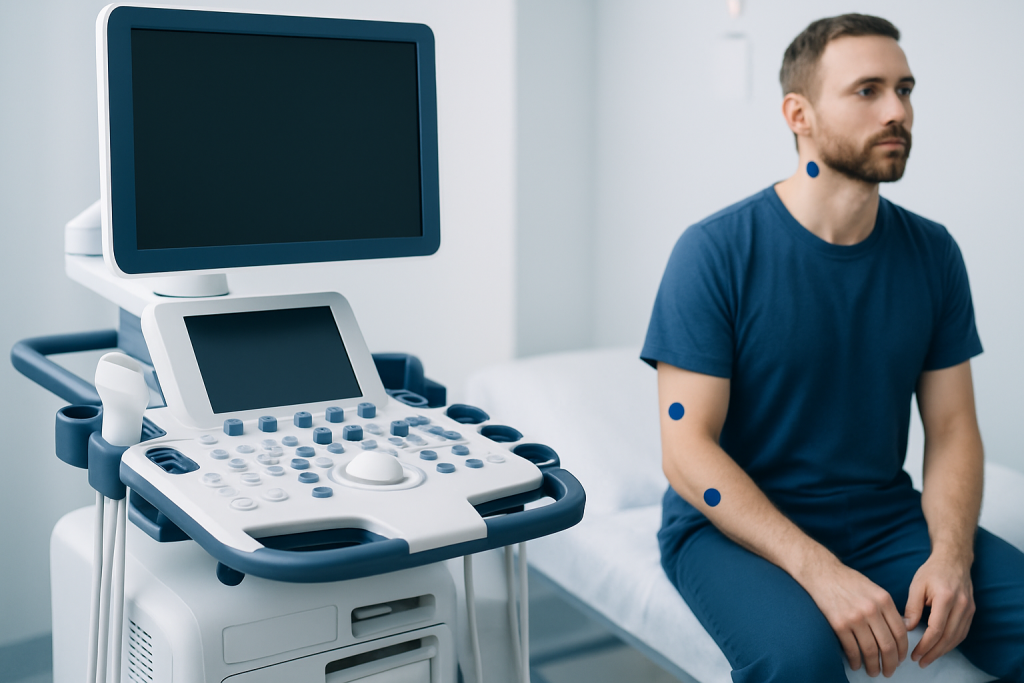
Many people look for pressure points on the body when they have neck pain, headaches, back tightness, jaw discomfort, or stress. Commonly discussed areas include the temples, the space between the thumb and index finger, the base of the skull, the tops of the shoulders, the forearm near the wrist, the low back, the calf, and the arch of the foot. These are areas where muscles, tendons, fascia, and nerves may be more noticeable or sensitive.
Muscular trigger points are especially common in the neck, upper back, shoulders, buttocks, and jaw muscles. These spots may feel like a small knot or firm band and can sometimes send discomfort to another area, a pattern called referred pain. For example, a trigger point in the neck or scalp muscles may contribute to a migraine-like or tension-type headache pattern, although headaches have many possible causes and should not be self-diagnosed.
Acupressure points used in self-care are often chosen for a symptom rather than because the point itself is diseased. For example, some people press the inner wrist for nausea or the web between the thumb and index finger for tension or headache. Even when these methods feel soothing, it is wise to use gentle pressure and avoid assuming that a symptom is harmless just because it improves briefly.
What the evidence says

Evidence for pressure-point techniques is strongest when they are presented modestly: as a possible comfort measure, not a cure. Studies suggest that acupressure or manual pressure may help some people with short-term pain relief, anxiety reduction, or nausea control. Benefits appear to be more consistent for symptom management than for treating a disease itself.
There are several reasons results vary. Symptoms such as headache, neck pain, dizziness, nausea, and fatigue can come from many different causes. Also, touch-based techniques involve relaxation, expectation, muscle release, and the natural waxing and waning of symptoms. This does not mean the effect is “just psychological”; it means pain and symptom relief are complex and influenced by both body and brain.
It is also important to recognize what pressure-point methods cannot do. They do not open blocked blood vessels, remove infections, set broken bones, treat tumors, or replace evidence-based care for chronic illnesses. If symptoms are significant or recurring, a clinician may recommend evaluation, physical therapy, medication, imaging, or another treatment plan such as physical therapy and rehabilitation depending on the cause.
How to use pressure points more safely at home
If a patient wants to try pressure-point self-care, the safest approach is gentle and brief. Pressure should feel tolerable, not sharp or intense. A common method is to use a thumb or fingertip to press or massage a sore or commonly used acupressure area for about 10 to 30 seconds, then release and repeat a few times. Slow breathing and relaxed posture may improve comfort.
For muscle-related tenderness, heat, stretching, hydration, posture changes, and rest may help as much as or more than pressing on the spot itself. If pressing increases pain, causes numbness, dizziness, or bruising, it should be stopped. Hard or prolonged pressure is not better and can irritate soft tissues.
People should avoid pressing over broken skin, rashes, burns, fresh injuries, visible swelling, varicose veins, or a possible blood clot. Extra caution is also sensible for people with fragile skin, neuropathy, bleeding disorders, or those taking blood thinners. During pregnancy, pressure techniques should only be used after guidance from a qualified healthcare professional, especially if the person has abdominal pain, bleeding, or contractions.
- Start with light to moderate pressure only.
- Stop if pain becomes sharp, radiating, or worsening.
- Do not press directly on the front of the neck, eyes, or injured joints.
- Use pressure points as supportive care, not as the only treatment.
When pressure-point pain may signal an underlying condition
Tender spots are not always harmless. Localized pain may come from muscle strain, overuse, stress, or poor ergonomics, but it can also reflect an underlying medical problem. For example, widespread tenderness and fatigue can occur in fibromyalgia. Jaw tenderness may relate to teeth grinding or temporomandibular joint problems. Pain at the base of the thumb can come from arthritis, and calf tenderness may occasionally require urgent evaluation.
Some symptoms need a broader workup because they are not simply about a pressure point. Chest pressure, arm pain, shortness of breath, fainting, one-sided weakness, sudden severe headache, fever with neck stiffness, and unexplained weight loss are examples where self-massage is not appropriate first-line care. In those situations, rapid medical assessment matters more than local symptom relief.
Even without emergency signs, a clinician may need to look for posture-related strain, nerve compression, inflammation, migraine, arthritis, sleep problems, or stress-related muscle tension. Depending on the findings, care may include exercise therapy, medication, imaging, or targeted services such as pain management for persistent symptoms that interfere with daily life.
How doctors evaluate persistent tender or painful points
Medical evaluation starts with a history rather than a pressure chart. A doctor will usually ask where the pain is located, how long it has been present, what it feels like, whether it spreads, and whether symptoms such as numbness, weakness, nausea, poor sleep, fever, or morning stiffness are present. Work, sports, posture, stress, and previous injuries also help guide the assessment.
The physical examination may include checking range of motion, muscle tension, posture, joint movement, neurologic function, and whether pressing on one area reproduces pain somewhere else. This can help distinguish a trigger point from nerve irritation, joint disease, tendon problems, or a systemic condition. If headache or facial pain is involved, the doctor may also look for dental, sinus, neck, or neurological causes.
Tests are not always necessary, but they may be used when symptoms suggest something more than uncomplicated muscle tension. Blood tests can help assess inflammation or other systemic issues. Imaging may be recommended after trauma, if pain is persistent, or if there are red flags. In some cases, a patient may benefit from specialist assessment in fields such as neurology, rheumatology, rehabilitation, or neurology.
Treatment options beyond pressure points
Treatment depends on the cause, not only on the tender area. Muscle strain and myofascial pain often improve with activity modification, stretching, strengthening, ergonomic changes, stress reduction, sleep optimization, and supervised rehabilitation. Heat, occasional cold packs, and clinician-guided manual therapy may also be helpful. Some patients benefit from medicines recommended by their doctor for pain, inflammation, or headache prevention.
For recurring headaches, jaw problems, widespread body pain, nerve symptoms, or joint disease, treatment is more specific. This may include dental care, migraine treatment, exercise programs, counseling for stress-related muscle tension, or management of inflammatory or neurologic conditions. The main goal is to reduce symptoms while also addressing the driver behind them.
Near the end of the care pathway, some patients also ask where they can obtain coordinated evaluation if symptoms cross specialties. Acibadem International offers multidisciplinary assessment for international patients in JCI-accredited hospitals, which may be useful when pain involves overlapping neurologic, musculoskeletal, and rehabilitation needs. A tailored plan is still based on individual findings rather than on the location of a single pressure point.
When to seek medical care
Patients should seek prompt medical care if pressure-point pain is accompanied by chest pain, trouble breathing, fainting, sudden weakness, confusion, severe headache, fever, neck stiffness, or new numbness. These symptoms can signal conditions that need urgent treatment and should not be managed with home pressure techniques.
Non-urgent medical review is also appropriate when tenderness lasts more than a few weeks, keeps returning, disrupts sleep, limits activity, follows an injury, or occurs with swelling, joint redness, rash, weight loss, or persistent fatigue. A doctor can help identify whether the issue is muscular, neurologic, inflammatory, or related to another condition.
In general, self-care is most reasonable for mild, short-lived discomfort that clearly improves with rest and has no warning signs. If there is any uncertainty about the cause, professional advice is the safest next step.
Frequently asked questions
Do pressure points on the body actually work?
They may help some people feel temporary relief from symptoms such as muscle tension, mild headache, stress, or nausea. However, results are variable, and pressure points are best viewed as supportive self-care rather than a proven stand-alone treatment.
Are pressure points the same as trigger points?
No. Trigger points are usually tender areas in a tight band of muscle, while acupressure points come from a traditional mapped system used for symptom relief. People often use the terms interchangeably, but they describe different concepts.
Can pressing a point make pain worse?
Yes, especially if pressure is too strong or the area is inflamed, injured, bruised, or near a nerve. Pressure should be gentle and stopped if it causes sharp pain, numbness, dizziness, or worsening symptoms.
Which symptoms should not be treated with pressure points alone?
Chest pain, shortness of breath, sudden severe headache, one-sided weakness, fainting, fever with neck stiffness, and symptoms after significant injury need medical assessment. Pressure-point techniques should not delay emergency or urgent care.
Can pressure points help with headaches?
They may provide short-term comfort for some people, particularly when headache is linked with neck or shoulder tension. But headaches have many possible causes, so repeated, severe, or unusual headaches should be assessed by a doctor.
Who should be cautious about trying acupressure?
People with bleeding disorders, those taking blood thinners, people with fragile skin or nerve damage, and anyone with skin infection or recent injury should be careful. Pregnant patients should ask a clinician before using pressure techniques, especially if they have concerning symptoms.
This article is for general information only and is not a substitute for professional medical advice. Please consult a qualified doctor about your individual situation.
Explore treatments in Turkey — costs, top hospitals & a free quote
JCI-accredited · board-certified surgeons · reply within 24h
Add us as a Preferred Source to see more of our trusted health content across Google Search, AI Overviews and Discover.

More from the Health Library

Velopharyngeal Insufficiency: What Patients Need to Know

Small Vigana: A Complete Medical Overview

Palmoplantar Psoriasis: An Evidence-Based Guide for Patients

Holistic Healing for Inflammation: An Evidence-Based Guide for Patients

Flank: An Evidence-Based Guide for Patients