Private health check Risks & Side Effects Explained by Surgeons

Most routine health check tests are low risk, but no screening test is perfect. False-positive, false-negative, and incidental findings can affect decisions and emotional wellbeing.
Key Takeaways
- Most routine health check tests are low risk, but no screening test is perfect.
- False-positive, false-negative, and incidental findings can affect decisions and emotional wellbeing.
- Radiation-based imaging and invasive tests should be used only when there is a clear clinical reason.
- A personalised check should begin with medical history, symptoms, family history, and informed consent.
- New or concerning symptoms should be assessed by a clinician rather than relying only on a screening package.
Private health checks can support preventive care when tests are selected for a person’s age, symptoms, health history, and risk factors. Their main risks are not usually from routine blood tests themselves, but from false or uncertain findings that may lead to worry, additional testing, or procedures that are not needed.
Overview: What Are the Risks of a Private Health Check?
Private health check risks are usually low when the assessment is clinically appropriate and interpreted by qualified clinicians. Routine elements such as a medical consultation, blood pressure measurement, urine testing, and standard blood tests are generally safe. However, a health check can also produce inaccurate, unclear, or unexpected results, which may lead to anxiety, repeat testing, imaging, biopsies, or treatments that ultimately prove unnecessary.
The purpose of a health check is to identify health risks or disease early, before symptoms develop. This can be valuable for some people, particularly when testing is matched to their age, sex, family history, lifestyle, existing conditions, and personal concerns. Screening is different from diagnosing symptoms: a person with chest pain, unexplained weight loss, bleeding, severe headache, or another new symptom needs timely medical assessment rather than a routine screening approach.
A safe private health check should not simply be a fixed list of tests. It should include an opportunity to discuss medical history and goals, understand the possible benefits and limitations of each investigation, and receive clear follow-up advice. A broader introduction to planning preventive assessments is available through private health check services.
How a Private Health Check Works
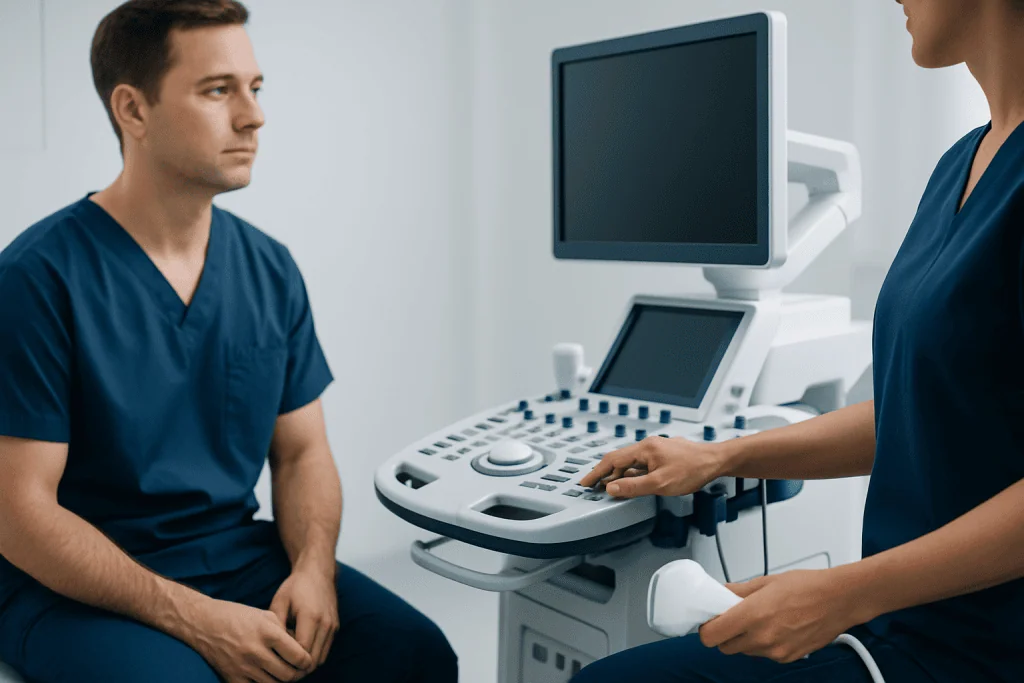
A private health check commonly starts with a pre-assessment questionnaire or consultation. The clinician reviews current symptoms, previous illnesses, medicines, allergies, family history, smoking and alcohol use, diet, activity, sleep, and mental wellbeing. This helps identify which examinations or tests may be useful and which are unlikely to add meaningful information.
Depending on the individual, the assessment may include height, weight, blood pressure, heart and lung examination, blood and urine tests, and selected tests for cardiometabolic health. Some programmes may offer imaging, heart rhythm testing, cancer screening, or specialist consultations. These should be chosen for a specific reason, not simply because they are available.
After results are reviewed, the clinician should explain what is normal, what needs monitoring, and what needs further investigation. A result outside a laboratory reference range does not automatically mean disease, while a result within range does not always exclude a health problem. Interpretation in the context of the whole person is essential.
Who May Benefit and Who Needs a Different Approach?

People may consider a health check when they want to review general health, have risk factors such as high blood pressure or diabetes in the family, have not had regular primary care, or are due for evidence-based age-appropriate screening. It can also be useful before making substantial lifestyle changes or when a clinician has identified a need to monitor a known risk factor.
Not everyone benefits from extensive screening. In younger people without symptoms or known risks, broad testing may be more likely to find minor variations or incidental changes than a serious condition. More testing does not always mean better care; it can create a cascade of appointments and investigations without improving health outcomes.
People who are pregnant, have kidney disease, use blood-thinning medicines, have severe allergies, or have implanted medical devices should tell the clinical team before testing. These factors may influence the safety or suitability of certain scans, contrast agents, exercise tests, or blood draws. Anyone with ongoing symptoms should ask for a focused clinical assessment, which may differ from a general health check.
- Individual risk factors should guide test selection.
- Evidence-based screening schedules may differ by country and personal history.
- Consent should include discussion of what a test can and cannot show.
Possible Side Effects and Test-Related Risks
Simple examinations have few physical risks. A blood draw can cause brief pain, bruising, light-headedness, or, rarely, infection or prolonged bleeding. Urine tests, blood pressure measurement, and most physical examinations are non-invasive. People who have fainted during blood tests before should let staff know so that precautions can be taken.
Some tests carry additional considerations. Imaging that uses ionising radiation, such as CT scans and some X-rays, adds a small radiation exposure. The potential benefit must outweigh that exposure, especially for repeated imaging and for people who may be pregnant. MRI does not use ionising radiation, but may not be suitable for everyone with certain implants and can be difficult for people with claustrophobia.
Tests involving contrast dye may occasionally cause allergic reactions or affect kidney function in susceptible people. Exercise-based cardiac testing can cause short-lived fatigue, breathlessness, or muscle discomfort; serious complications are uncommon but are more relevant for people with underlying heart disease. Invasive follow-up procedures, such as biopsies or endoscopy, have their own risks and should be considered only after discussion with the appropriate specialist.
For individuals at risk of cardiovascular disease, a clinician may recommend targeted evaluation rather than broad testing. Information on heart disease can help explain why symptoms and personal risk factors influence assessment choices.
False Results, Incidental Findings, and Overdiagnosis
The most important risks of health screening are often related to results rather than the test itself. A false-positive result suggests a problem when none is present. It may lead to worry, repeat blood tests, scans, referrals, or invasive procedures. A false-negative result is reassuring even though a condition is present, which may delay someone from seeking care if symptoms develop later.
An incidental finding is an unexpected change seen on a scan or test that is unrelated to the reason for testing. Many are harmless, but determining this can require surveillance imaging or specialist review. These findings can be stressful and may expose a person to further tests without necessarily improving health.
Overdiagnosis occurs when screening identifies a condition that would never have caused symptoms or affected health during that person’s lifetime. It is particularly relevant to some cancer screening and imaging programmes. Finding an abnormality early is not always the same as preventing illness, so decisions should weigh likely benefit against possible harms.
Clear communication reduces these risks. Before testing, people should ask why a test is recommended, what an abnormal result may mean, what follow-up could involve, and whether the result is likely to change their care.
Benefits and How to Make a Check Safer
Appropriately targeted health checks can identify modifiable risk factors, such as raised blood pressure, high cholesterol, elevated blood sugar, obesity, smoking-related risk, or unhealthy alcohol use. Early recognition can support practical steps including nutrition changes, physical activity, smoking cessation, sleep support, vaccination, and, when needed, medical treatment.
The safest and most useful approach is personalised. A person should provide an accurate medical history, bring a list of medicines and previous results, disclose pregnancy or possible pregnancy, and mention any contrast allergies, kidney problems, implanted devices, or prior reactions to tests. It is also reasonable to decline tests that have not been adequately explained.
After the appointment, results should be reviewed with a qualified clinician rather than interpreted in isolation. A written plan should explain whether an issue needs urgent assessment, a routine follow-up, repeat testing, lifestyle support, or no action. Healthy habits remain important even when results are reassuring, and a normal check should not be treated as a guarantee against future illness.
Acibadem International’s multidisciplinary specialists and JCI-accredited hospitals can assess health concerns and coordinate appropriate investigations for international patients, with testing guided by clinical need.
When to Seek Medical Care
A private health check is not a substitute for urgent care. A person should seek emergency medical help for symptoms such as chest pressure or pain, severe breathing difficulty, sudden weakness or numbness on one side of the body, fainting, seizures, sudden confusion, severe allergic symptoms, or heavy bleeding. These symptoms require prompt assessment even if recent screening results were normal.
Medical advice should also be arranged soon for persistent or unexplained changes, including a new lump, blood in urine or stool, ongoing fever, marked fatigue, unexplained weight loss, persistent abdominal pain, or a change in bowel habits. A clinician can determine whether focused testing, monitoring, or referral is appropriate.
After a health check, people should contact the care team if they develop worsening pain, swelling, spreading redness, fever, or prolonged bleeding after a blood draw or procedure. They should also discuss any result that is unclear, unexpected, or causing significant anxiety rather than making changes to prescribed medicines on their own.
Frequently asked questions
Are private health checks safe?
Most routine parts of a private health check, such as history-taking, examination, blood pressure checks, and standard blood tests, are low risk. The more significant concerns are false or uncertain results, unnecessary follow-up, and risks from tests such as radiation-based imaging or invasive procedures when they are not clinically indicated.
Can a private health check cause false-positive results?
Yes. A false-positive result happens when a test appears abnormal even though the person does not have the condition being assessed. It can lead to stress and additional tests, so results should be reviewed by a clinician who can interpret them alongside symptoms and individual risk factors.
Should everyone have a full-body scan during a health check?
Not necessarily. Full-body scans can identify incidental findings that may be harmless but require more imaging or procedures to clarify. Imaging is generally most helpful when selected for a defined clinical reason after an individual assessment.
What should a person tell the clinician before a health check?
They should share current symptoms, previous illnesses, family history, medicines, allergies, pregnancy status or possible pregnancy, and previous test results. It is also important to mention kidney disease, bleeding problems, implanted devices, and prior reactions to contrast dye or medical tests.
Can a normal health check rule out all diseases?
No. Screening tests assess selected conditions and may not detect disease at an early stage or identify every possible health concern. New, persistent, or worrying symptoms should always be discussed with a qualified doctor, even after reassuring results.
What happens if a health check finds an abnormal result?
An abnormal result may need to be repeated, compared with previous results, or assessed with a more specific test. Many abnormalities are temporary or not clinically important, but the next steps should be decided with a clinician who can explain the likely meaning and options.
References
- World Health Organization
- U.S. Preventive Services Task Force
- National Health Service
- Centers for Disease Control and Prevention
- National Cancer Institute
This article is for general information only and is not a substitute for professional medical advice. Please consult a qualified doctor about your individual situation.
Explore treatments in Turkey — costs, top hospitals & a free quote
JCI-accredited · board-certified surgeons · reply within 24h
Add us as a Preferred Source to see more of our trusted health content across Google Search, AI Overviews and Discover.
Check your numbers in seconds
BMI, calories, due date, blood pressure and 30+ more clinical calculators — free, instant, doctor-reviewed ranges.