Pyloric Sphincter: An Evidence-Based Guide for Patients

The pyloric sphincter acts as a valve between the stomach and the first part of the small intestine. Its main job is to control the timing and amount of partially digested food leaving the stomach.
Key Takeaways
- The pyloric sphincter acts as a valve between the stomach and the first part of the small intestine.
- Its main job is to control the timing and amount of partially digested food leaving the stomach.
- Problems affecting the pyloric sphincter may be functional, inflammatory, ulcer-related, or due to structural narrowing such as pyloric stenosis.
- Diagnosis may involve a physical examination, blood tests, upper endoscopy, imaging, and tests of stomach emptying.
- Treatment depends on the cause and can include dietary changes, medicines, endoscopic procedures, or surgery.
- Persistent vomiting, dehydration, severe pain, weight loss, or vomiting blood need prompt medical assessment.
The pyloric sphincter is a ring of muscle at the lower end of the stomach that regulates how stomach contents pass into the small intestine. When it does not open or close normally, it can contribute to symptoms such as nausea, vomiting, fullness, bloating, and upper abdominal discomfort.
Overview: what the pyloric sphincter does
The pyloric sphincter is a circular band of smooth muscle located where the stomach meets the duodenum, the first part of the small intestine. In simple terms, it works like a valve. It helps the stomach hold food long enough for mixing with acid and digestive enzymes, then releases small amounts of that material into the intestine at the right pace.
This timing matters because digestion is a coordinated process. If the pyloric sphincter stays too tight, food may remain in the stomach longer than it should. If it relaxes in an uncoordinated way, stomach emptying may become less efficient, which can affect comfort and digestion.
Patients often hear about the pyloric sphincter when discussing nausea, vomiting, bloating, indigestion, peptic ulcer disease, or delayed stomach emptying. The sphincter itself is only one part of a larger system that includes stomach muscles, nerves, hormones, and the small intestine. For that reason, symptoms linked to this valve are not always caused by a structural blockage.
How the pyloric sphincter works in digestion

After food is swallowed, the stomach stores it and begins to break it down mechanically and chemically. Waves of muscular contractions grind food into a semi-liquid mixture called chyme. The pyloric sphincter then opens briefly to let small portions of chyme pass into the duodenum.
The process is tightly controlled by nerves and hormones. Signals from the stomach and intestine help decide when the pyloric sphincter should relax and when it should remain closed. This protects the small intestine from receiving more material than it can handle at one time and helps optimize digestion and absorption.
The pyloric sphincter also helps limit backflow from the duodenum into the stomach. Although some reflux of bile and intestinal contents can happen in certain conditions, the normal valve mechanism and surrounding digestive motility help reduce this. A problem with stomach emptying may therefore reflect issues in muscular function, nerve signaling, inflammation, or a true narrowing at the outlet.
Common problems that can affect the pyloric sphincter
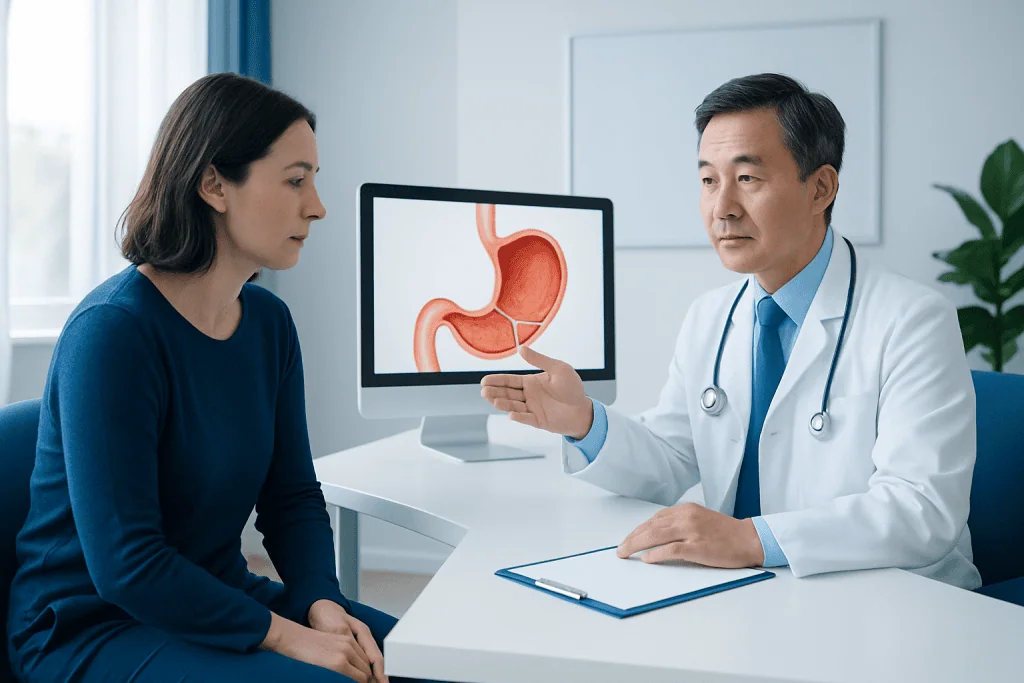
Several different conditions may involve the pyloric sphincter or the area around it. In infants, the best-known disorder is pyloric stenosis, a condition in which the muscle becomes abnormally thick and narrows the outlet of the stomach. In adults, outlet narrowing can also develop from scarring, chronic inflammation, ulcers, tumors, or swelling near the pylorus.
Not all pyloric sphincter problems are caused by a fixed obstruction. Some people have delayed gastric emptying, often called gastroparesis, in which the stomach empties too slowly. In these cases, the pyloric sphincter may contribute to symptoms as part of a broader motility disorder involving stomach muscles and nerves.
Other related concerns include peptic ulcer disease near the pylorus, irritation from medications such as nonsteroidal anti-inflammatory drugs, complications of diabetes affecting stomach nerves, and changes after gastric surgery. Doctors usually look at the whole digestive picture rather than assuming the valve itself is the only issue.
- Structural problems: narrowing, scarring, thickened muscle, masses
- Functional problems: poor relaxation or discoordinated opening
- Associated conditions: ulcers, diabetes-related nerve dysfunction, inflammation, prior surgery
Symptoms patients may notice
Symptoms related to the pyloric sphincter vary depending on the cause and how severe it is. Common complaints include early fullness after eating, bloating, nausea, vomiting, upper abdominal discomfort, and a feeling that food is staying in the stomach too long. Some people notice worsening symptoms after large meals, fatty foods, or meals eaten quickly.
If the stomach outlet is significantly narrowed, vomiting may become more frequent and may contain undigested food eaten hours earlier. Ongoing vomiting can lead to dehydration, weakness, and unintended weight loss. In infants with pyloric stenosis, forceful vomiting after feeding is a classic symptom and needs prompt pediatric assessment.
These symptoms are not specific to one diagnosis. Acid reflux, ulcers, gallbladder disease, intestinal obstruction, medication side effects, and other digestive conditions can cause similar complaints. That is why a medical review is important when symptoms persist, recur, or interfere with hydration or nutrition.
How doctors diagnose pyloric sphincter disorders
Diagnosis begins with a medical history and physical examination. A doctor will ask when symptoms started, whether vomiting occurs after meals, how often symptoms happen, what foods trigger them, whether weight loss is present, and whether there is a history of diabetes, ulcers, abdominal surgery, or certain medicines.
Testing depends on age and the suspected cause. In adults, an upper endoscopy is commonly used to examine the stomach and pyloric channel directly and to look for ulcers, inflammation, narrowing, or masses. Imaging studies such as ultrasound or CT may be used when doctors need to assess surrounding structures or possible blockage. Gastric emptying studies can help measure how quickly food leaves the stomach when delayed emptying is suspected.
Blood tests may help check hydration, electrolyte balance, anemia, infection, or nutritional effects from prolonged vomiting. In infants with suspected pyloric stenosis, abdominal ultrasound is often the first test because it can show thickening of the pyloric muscle clearly and noninvasively. The goal is to identify whether symptoms come from a mechanical narrowing, a motility disorder, or another digestive problem entirely.
Treatment options and what they aim to improve
Treatment for a pyloric sphincter problem depends on the underlying diagnosis. If symptoms are caused by dehydration, doctors may first correct fluids and electrolytes. If there is inflammation, ulcer disease, or medication-related irritation, treatment focuses on the cause while also reducing strain on the stomach outlet.
For delayed stomach emptying, care may include dietary adjustments, symptom-relieving medicines, and therapies aimed at improving gastric motility. In selected patients, endoscopic or surgical treatment can help if the pyloric region is contributing significantly to obstruction or poor emptying. Depending on the situation, this may include upper endoscopy for diagnosis and treatment, specialist gastroenterology care for motility disorders, or general surgery when a structural problem needs operative management.
In infants with pyloric stenosis, surgery is the standard treatment after stabilization, because the problem is a true muscular narrowing. In adults, procedures vary more because the causes are more diverse. A care plan may involve ulcer treatment, nutritional support, treatment of diabetes if relevant, temporary decompression of the stomach, or procedures to widen or bypass a narrowed outlet.
Because symptoms can overlap with other stomach disorders, treatment is most effective when it is targeted to a confirmed diagnosis rather than based on symptoms alone. At Acibadem International, multidisciplinary specialists in JCI-accredited hospitals evaluate digestive symptoms and provide treatment options for international patients when pyloric or gastric outlet disorders are suspected.
Self-care and prevention strategies
Not every pyloric sphincter problem can be prevented, but some daily habits may reduce symptoms and support stomach emptying. Smaller, more frequent meals are often easier to tolerate than large meals. Eating slowly, chewing thoroughly, and avoiding lying down immediately after eating may also help some patients feel more comfortable.
People with delayed stomach emptying often do better with lower-fat meals and foods that are easier to digest, although dietary advice should be individualized. Good hydration is important, especially if nausea or vomiting has occurred. If diabetes is present, keeping blood glucose as well controlled as possible can help support healthy stomach motility over time.
It is also wise to review medicines with a doctor, because some can worsen nausea or slow stomach emptying. Smoking cessation and limiting alcohol may benefit general digestive health. Anyone with persistent symptoms should avoid self-diagnosing, since repeated vomiting and weight loss need proper medical evaluation.
When to seek medical care
Medical care is appropriate if symptoms such as nausea, vomiting, early fullness, upper abdominal pain, or bloating continue for more than a short period, come back often, or begin to affect eating and daily life. A doctor should also review symptoms if there is diabetes, a history of ulcers, previous stomach surgery, or new difficulty tolerating meals.
Prompt assessment is especially important for vomiting that is persistent or forceful, signs of dehydration, faintness, inability to keep fluids down, black stools, vomiting blood, unexplained weight loss, or severe abdominal pain. In babies, repeated forceful vomiting after feeds should be assessed urgently because it may suggest pyloric stenosis.
Emergency care may be needed when there are signs of significant dehydration, confusion, ongoing severe pain, or evidence of gastrointestinal bleeding. Early evaluation can help distinguish a treatable digestive problem from a more serious blockage or complication.
Frequently asked questions
What is the pyloric sphincter in simple terms?
The pyloric sphincter is a muscular valve at the bottom of the stomach. It controls when and how quickly partially digested food moves into the first part of the small intestine.
Can pyloric sphincter problems cause nausea and vomiting?
Yes. If the stomach outlet is narrowed or if stomach emptying is delayed, food may remain in the stomach too long and lead to nausea, bloating, and vomiting. These symptoms can also have other causes, so medical evaluation is important.
Is pyloric stenosis the same as a general pyloric sphincter disorder?
Not exactly. Pyloric stenosis is a specific condition in which the muscle at the stomach outlet becomes thickened and narrowed, most commonly in infants. Other pyloric sphincter disorders may involve inflammation, ulcer-related scarring, or functional problems with relaxation and emptying.
How do doctors test the pyloric sphincter?
Doctors do not usually test the valve in isolation. They assess the stomach outlet and stomach emptying with tools such as upper endoscopy, ultrasound, CT imaging, and gastric emptying studies, depending on the patient’s age and symptoms.
Can diet help if the pyloric sphincter is not working well?
Diet changes may help reduce symptoms, especially when stomach emptying is slow. Smaller meals, slower eating, and foods that are easier to digest are commonly recommended, but the best plan depends on the diagnosis and should be guided by a clinician or dietitian.
When is surgery needed for pyloric sphincter problems?
Surgery is usually considered when there is a structural narrowing or another problem that cannot be managed adequately with medicines or endoscopic treatment. In infant pyloric stenosis, surgery is the standard treatment after the baby is stabilized.
This article is for general information only and is not a substitute for professional medical advice. Please consult a qualified doctor about your individual situation.
Persistent digestive symptoms? Get evaluated in Turkey
JCI-accredited · board-certified surgeons · reply within 24h
Add us as a Preferred Source to see more of our trusted health content across Google Search, AI Overviews and Discover.

More from the Health Library

Shingles on Scalp: An Evidence-Based Guide for Patients

Dental Cleaning — Explained by Medical Evidence, Not Myths

What is lupus? A Doctor-Reviewed Answer

Ice Packs for Injuries: An Evidence-Based Guide for Patients

Weighted Hula Hoop — Explained by Medical Evidence, Not Myths