Radiation for Multiple Myeloma: How It Works, Results and What to Expect

Radiation therapy treats a defined myeloma lesion, while systemic medicines treat myeloma throughout the body. It can be particularly helpful for bone pain, an impending fracture, spinal cord compression or a plasmacytoma.
Key Takeaways
- Radiation therapy treats a defined myeloma lesion, while systemic medicines treat myeloma throughout the body.
- It can be particularly helpful for bone pain, an impending fracture, spinal cord compression or a plasmacytoma.
- Treatment is painless and usually delivered as outpatient care over one or several sessions.
- Side effects depend mainly on the treatment area and are often temporary, although fatigue may build during treatment.
- New weakness, numbness, trouble walking, or changes in bladder or bowel control require urgent medical assessment.
Radiation for multiple myeloma uses precisely planned high-energy beams to treat a specific area affected by myeloma, most often a painful or structurally weakened bone lesion. It is commonly used alongside systemic treatments rather than as a stand-alone cure, and many people receive it to improve comfort, mobility and local disease control.
Overview: the role of radiation in multiple myeloma
Radiation for multiple myeloma is a local treatment that directs carefully planned high-energy radiation at a particular area of disease. It is most often used when myeloma has damaged a bone, caused persistent pain, formed a localized mass called a plasmacytoma, or is threatening nearby nerves or the spinal cord. The goal is to reduce myeloma cells in that area, ease symptoms and lower the risk of local complications.
Because multiple myeloma usually affects bone marrow in more than one part of the body, radiation is generally not used as the only treatment. Blood specialists and cancer specialists commonly combine it with systemic treatments, such as anti-myeloma medicines, corticosteroids, chemotherapy, targeted therapies, immunotherapies or stem cell transplantation when appropriate. The care plan depends on the person’s disease features, symptoms, previous treatment and overall health.
Radiation can sometimes be the main treatment for a solitary plasmacytoma, meaning a single localized collection of plasma cells without evidence of widespread myeloma. For established multiple myeloma, it is more commonly a supportive, focused part of a broader treatment plan designed to protect function and quality of life.
How radiation works and who may be a candidate
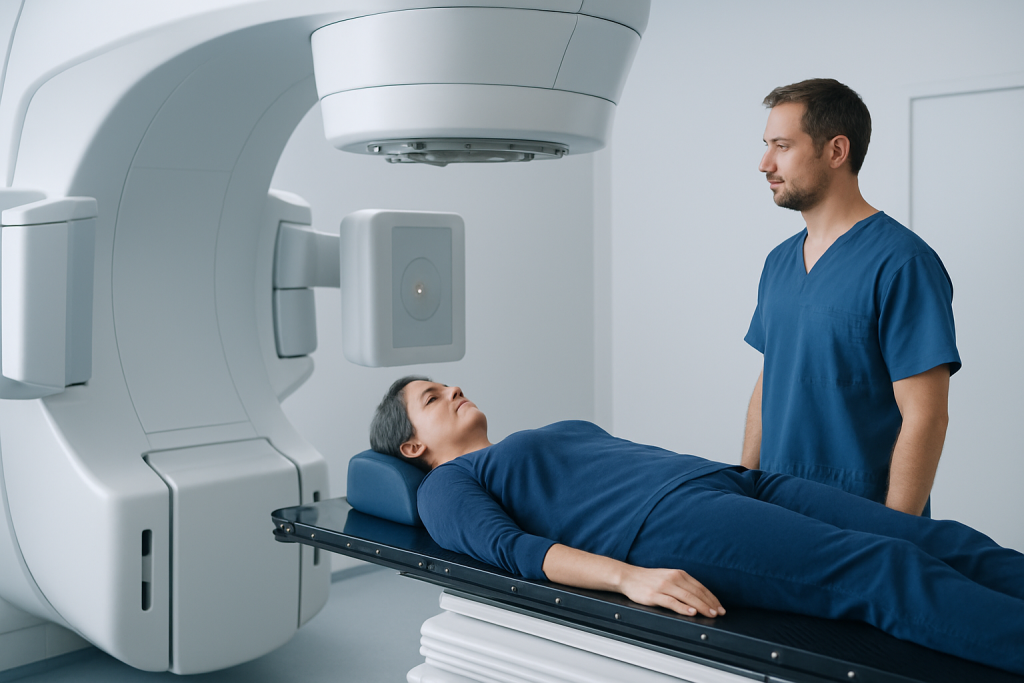
Radiation damages the genetic material inside rapidly dividing cells, making it difficult for them to continue growing. Treatment planning is designed to deliver the needed dose to the lesion while limiting exposure to nearby healthy tissues. Modern imaging and positioning techniques help the radiation oncology team target the affected bone or soft-tissue mass accurately.
A person may be considered for radiation when a myeloma lesion causes pain that is not adequately controlled with medicines, when imaging shows a bone at risk of fracture, or when a lesion presses on nerves. Radiation may also be recommended after surgery to stabilize a bone or relieve spinal pressure, depending on the clinical situation. In suspected spinal cord compression, treatment decisions are often made urgently with input from hematology, radiation oncology, spine surgery and other relevant specialists.
Before recommending treatment, the team considers the location and size of the lesion, prior radiation to the same area, blood counts, kidney function, current anti-myeloma therapy and whether surgery is needed. Radiation is not always the best first option for an unstable fracture or severe spinal compression; surgery, corticosteroids and systemic treatment may be needed promptly alongside or before radiation.
- Common reasons for treatment: painful bone lesions, localized plasmacytoma, nerve compression and prevention of complications in selected high-risk bone lesions.
- Important planning question: whether radiation may affect enough active bone marrow to worsen low blood counts, particularly when several areas have already been treated.
Step by step: planning and having radiation treatment

The process begins with a consultation with a radiation oncologist. The clinician reviews symptoms, scans, laboratory results and current medicines, explains the expected benefit and possible side effects, and discusses whether radiation should be coordinated with other myeloma treatments. Patients should share any history of previous radiation, implanted medical devices, pregnancy or possibility of pregnancy, and difficulties lying flat.
Next comes simulation, a planning appointment rather than a treatment session. A CT scan is usually performed in the treatment position, sometimes with additional MRI or PET/CT information used to define the target. The team may make a small temporary or permanent skin mark and may use customized supports, such as cushions or a mask for head or neck treatment, to help the patient remain in the same position each day.
After the radiation plan is checked, treatment is delivered on a linear accelerator. The patient lies still while the machine moves around the treatment table; the machine does not touch the body, and radiation cannot be felt. Staff monitor from a nearby room and can communicate throughout the session. The actual delivery is often brief, although positioning and safety checks make each visit longer.
Radiation therapy is outpatient treatment for most people. It does not make a person radioactive, so it is safe to be around family members, including children and pregnant people, after external-beam treatment. The team will provide individualized instructions when other procedures, such as internal radiation, are used, although these are uncommon for myeloma bone lesions.
How long is radiation treatment for multiple myeloma?
The length of radiation treatment for multiple myeloma varies according to the treatment goal, location of the lesion, nearby organs and whether there is an urgent complication. Some people receive a single treatment session for symptom relief, while others have a short course spread across several weekdays. A more extended schedule may be selected for a solitary plasmacytoma or when durable local control is especially important.
Each appointment commonly takes around 15 to 30 minutes in the department, though the radiation itself may take only a few minutes. The radiation oncologist will explain the proposed schedule before treatment begins and may adjust the plan if surgery, systemic therapy or new clinical information changes priorities.
Symptom improvement is not always immediate. Bone pain may begin to improve over days to a few weeks, and the maximum benefit can take longer. Pain medication should not be stopped abruptly simply because radiation has started; the treating team can guide safe adjustment as symptoms improve.
Benefits, risks and recovery timeline
The expected benefits of radiation include reduction of pain, shrinkage or control of a localized lesion, protection of nerve function and support for mobility. Response varies among individuals, but radiation is a well-established option for relieving symptoms from myeloma-related bone disease. When bone stability is a concern, radiation may be paired with orthopedic or spinal assessment because radiation alone cannot repair a severely weakened or fractured bone.
Most people return home after each session and can continue many normal activities, adjusting for fatigue or pain. Tiredness may develop gradually over the course of treatment and can last for several weeks afterward. Rest, regular fluids, adequate nutrition and gentle activity as tolerated may help. Follow-up may include symptom review, physical examination, blood tests and imaging when clinically needed.
Side effects depend on the part of the body treated. Radiation to the spine or pelvis may temporarily affect bone marrow and lower blood counts. Treatment near the stomach or bowel can cause nausea, loose stools or abdominal discomfort; treatment near the mouth or throat may cause soreness or swallowing difficulty. Skin in the treatment area can become red, dry or sensitive, often resembling a mild sunburn. The care team can suggest supportive measures and treatments for symptoms.
Less common or longer-term risks vary by location and dose and are discussed during consent. These may include persistent tissue changes, fracture risk in an already weakened bone, effects on fertility when the pelvis is treated, or injury to nearby organs. The planning process aims to keep these risks as low as reasonably possible while treating the myeloma lesion effectively.
What I wish I knew before radiation
Many people find it helpful to know that external-beam radiation is painless, noninvasive and does not make them radioactive. The first visits can feel unfamiliar because accurate positioning matters, but radiation therapists explain each step and can help make the treatment position more comfortable. Bringing a current medication list and reporting pain, anxiety, nausea or difficulty lying still can make planning easier.
It is also useful to plan for practical needs. Depending on the treatment site and schedule, a patient may feel well enough to drive and work, or may prefer support with transport, meals and household tasks as fatigue accumulates. Loose clothing can be more comfortable if skin sensitivity develops, and any lotions, creams or dressings should be discussed with the radiation team before use on the treated skin.
Communication between specialists matters because myeloma treatment often includes several therapies. Patients should ask how radiation fits with their medication schedule, whether blood counts need monitoring and who to call for symptoms between visits. A multidisciplinary plan can help balance local radiation treatment with ongoing control of myeloma throughout the body.
What is the most successful treatment for multiple myeloma?
There is no single treatment that is most successful for every person with multiple myeloma. The most effective approach is individualized and usually combines therapies that work throughout the body, selected according to disease risk, symptoms, age, organ function, prior treatments and personal goals. Radiation is highly valuable for treating a specific problem area, but it does not replace systemic treatment for widespread disease.
Initial treatment may include combinations of anti-myeloma medicines, often followed by stem cell transplantation for people who are eligible and choose that approach. Maintenance treatment may be recommended after initial therapy in some situations. For relapsed or treatment-resistant myeloma, other drug combinations, cellular therapies or clinical trials may be considered depending on availability and suitability.
Supportive care is equally important. This can include treatment to protect bone health, infection prevention, pain management, transfusions when needed, physical rehabilitation and attention to kidney health. Regular review with a hematologist experienced in myeloma helps ensure that treatment remains aligned with response, side effects and changing needs.
How do you feel after the first day of radiation? When to seek medical care
After the first day of radiation, many people feel much the same as they did before treatment. The radiation itself is not felt during delivery, and side effects often develop gradually rather than immediately. Some people may feel tired, emotionally drained after a new medical experience, or mildly uncomfortable from holding the treatment position. Symptoms related to the treated area, such as nausea after abdominal radiation, can occur earlier in some cases.
Patients should contact their oncology team for new or worsening symptoms that concern them, including uncontrolled pain, persistent vomiting, fever, marked dizziness, severe skin reaction or inability to eat or drink adequately. The team can assess whether symptoms are related to radiation, myeloma, medicines or another cause and can advise on supportive care.
Urgent medical assessment is important for new weakness or numbness in the arms or legs, trouble walking, new loss of bladder or bowel control, sudden severe back pain, confusion, chest pain, severe shortness of breath or signs of a possible fracture. These symptoms may indicate a complication requiring prompt treatment and should not wait for the next routine appointment.
Acibadem International’s multidisciplinary specialists and JCI-accredited hospitals provide diagnosis and treatment planning for international patients with multiple myeloma, including coordinated radiation and hematology care when clinically appropriate.
Frequently asked questions
Is radiation therapy used to cure multiple myeloma?
Radiation therapy is usually not used to cure widespread multiple myeloma because it treats only the targeted area. It is commonly used to control a painful or high-risk lesion while systemic medicines treat myeloma cells throughout the body. Radiation may be a main treatment for a solitary plasmacytoma in selected situations.
Can radiation help myeloma bone pain?
Yes. Radiation can reduce pain caused by a myeloma bone lesion by controlling plasma cells in that area. Improvement may begin within days to weeks, although the timing differs between individuals. Pain medicines and other supportive treatments may still be needed during recovery.
Will I be radioactive after external radiation therapy?
No. External-beam radiation does not leave radiation in the body. A person can safely be around other people after each treatment session, including children and pregnant family members.
Can radiation weaken bones in multiple myeloma?
Myeloma itself can weaken bones, and a severely damaged bone may remain at risk even after radiation controls the lesion. Radiation can help local disease control and pain, but it does not immediately restore bone strength. Orthopedic or spine assessment may be necessary when there is a fracture or high risk of one.
Can radiation be given with other myeloma treatments?
Yes, but the timing needs careful coordination. The hematology and radiation oncology teams consider blood counts, side effects, the urgency of local symptoms and the specific medicines being used. Some therapies may continue, while others may be adjusted around radiation.
How should someone prepare for a radiation appointment?
Patients should bring an up-to-date medication list and tell the team about any new symptoms or difficulty lying in a certain position. They should follow any instructions about eating, drinking, skin products or clothing for the treatment area. Asking who to contact after hours can also provide reassurance before treatment begins.
References
- National Cancer Institute
- American Cancer Society
- International Myeloma Foundation
- European Society for Medical Oncology
- RadiologyInfo.org
This article is for general information only and is not a substitute for professional medical advice. Please consult a qualified doctor about your individual situation.
Multiple Myeloma in Turkey — costs, top hospitals & a free quote
JCI-accredited · board-certified surgeons · reply within 24h
Add us as a Preferred Source to see more of our trusted health content across Google Search, AI Overviews and Discover.