Radiculopathy: Early Signs, Risk Factors, and How It Is Treated

Radiculopathy happens when a spinal nerve root is irritated or compressed. Symptoms may include radiating pain, tingling, numbness, or muscle weakness in an arm or leg.
Key Takeaways
- Radiculopathy happens when a spinal nerve root is irritated or compressed.
- Symptoms may include radiating pain, tingling, numbness, or muscle weakness in an arm or leg.
- Common causes include herniated discs, age-related spinal changes, and narrowing around the nerves.
- Many people improve with rest, physical therapy, medicines, and activity changes.
- Urgent medical assessment is important if symptoms include progressive weakness, bowel or bladder changes, or severe pain after trauma.
Radiculopathy is a condition in which a nerve root in the spine becomes irritated or compressed, leading to pain, tingling, numbness, or weakness along the path of that nerve. It most often affects the neck or lower back, and treatment depends on the cause, the severity of symptoms, and whether there is nerve-related weakness.
What radiculopathy is
Radiculopathy is a problem affecting a nerve root as it exits the spine. When that nerve root becomes compressed, inflamed, or irritated, it can send abnormal signals along the nerve pathway. This often causes pain that travels away from the spine, along with tingling, numbness, or weakness in the part of the body served by that nerve.
The condition is usually described by where it occurs. Cervical radiculopathy affects the neck and may send symptoms into the shoulder, arm, or hand. Lumbar radiculopathy affects the lower back and may cause symptoms in the buttock, leg, or foot. Thoracic radiculopathy, involving the mid-back, is less common and may cause band-like pain around the chest or trunk.
Although many people describe radiculopathy as a “pinched nerve,” the term is more specific. It refers to a spinal nerve root problem rather than every type of nerve pain. In some cases, the main symptom is pain. In others, numbness or weakness may be more noticeable than pain.
Radiculopathy can develop suddenly, such as after lifting or twisting, or gradually over time as age-related changes affect the spine. For many patients, symptoms improve with conservative care, but some need more specialized evaluation if nerve function is affected.
Early signs and common symptoms
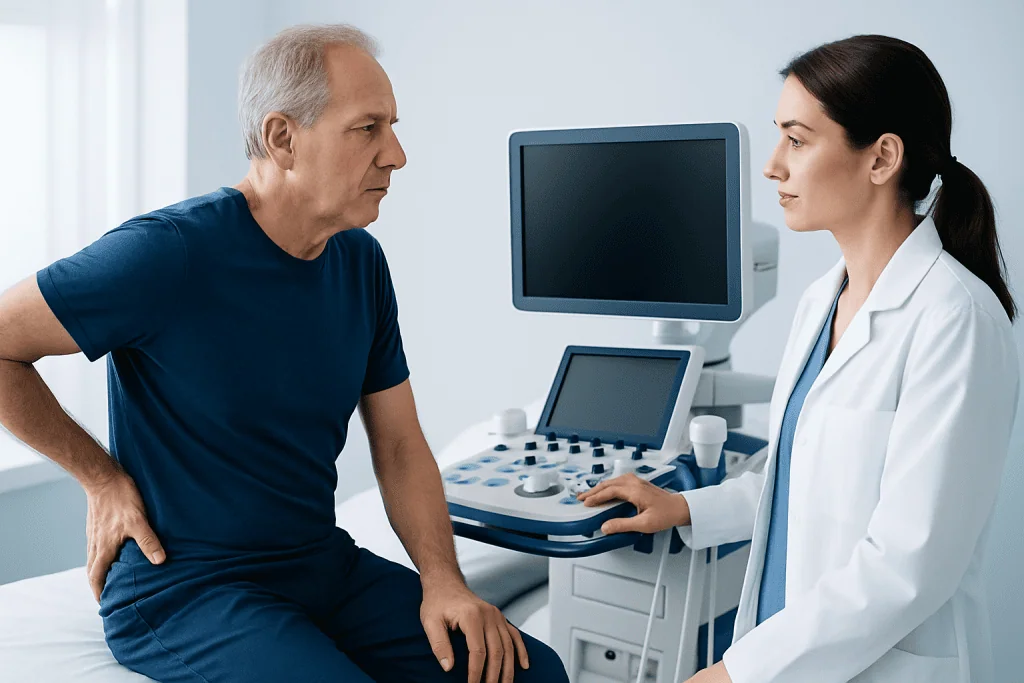
Early signs of radiculopathy often begin with radiating pain. In the neck, that pain may move into the shoulder blade, arm, or fingers. In the lower back, it may travel into the buttock, thigh, calf, or foot. The pain can feel sharp, burning, electric, or deep and aching, and it may worsen with certain movements, coughing, or sneezing.
Changes in sensation are also common. A person may notice tingling, pins-and-needles, or areas of numbness. These symptoms often follow a recognizable pattern because each nerve root serves a particular area of skin and muscle. Some people report clumsiness when buttoning clothes, trouble gripping objects, or a feeling that one leg is less reliable when walking.
Muscle weakness can occur if the affected nerve root is not sending normal signals to the muscle. For example, cervical radiculopathy may reduce grip strength or make lifting the arm harder, while lumbar radiculopathy may affect ankle movement or standing on the toes. Weakness deserves prompt medical attention because it can signal more significant nerve involvement.
- Neck or low back pain with pain spreading into an arm or leg
- Tingling or numbness in the hand, fingers, foot, or toes
- Burning, electric, or shooting nerve pain
- Muscle weakness or reduced reflexes
- Symptoms that worsen with certain positions or movements
Why radiculopathy happens
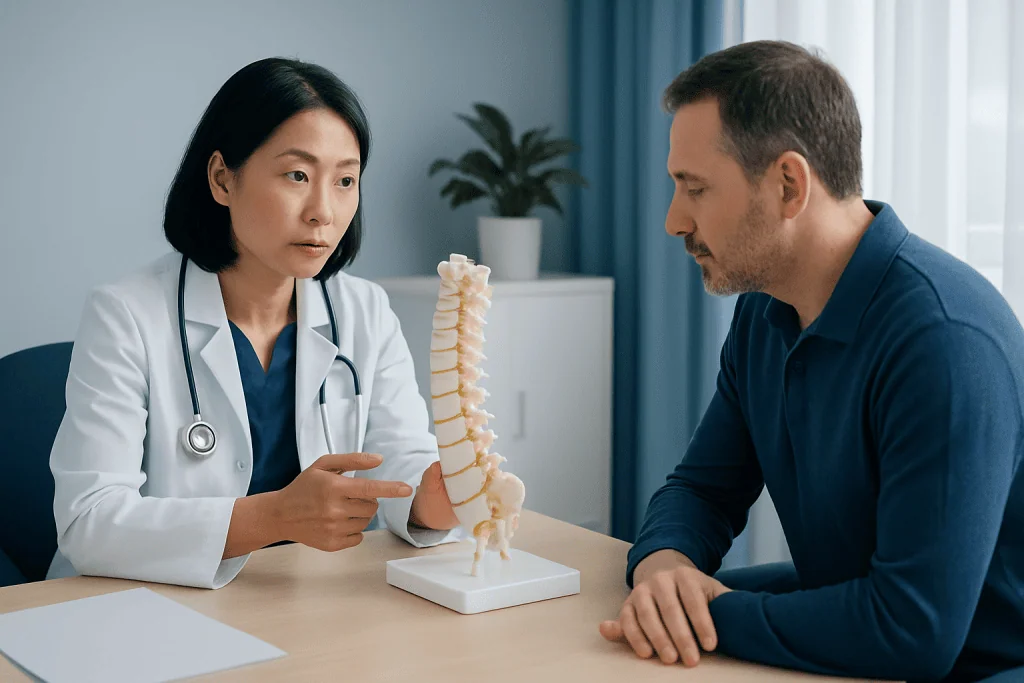
The most common reason for radiculopathy is pressure on a nerve root. A herniated or bulging disc can push into the space where the nerve exits the spine. Age-related wear, including bone spurs and thickening of nearby ligaments, can also narrow that space. This narrowing is often called spinal stenosis or foraminal stenosis.
Inflammation plays a role as well. Even when a disc does not cause severe compression, chemicals released from the disc can irritate the nerve root and trigger pain. This helps explain why symptoms can sometimes be significant even when imaging findings seem modest.
Risk factors include increasing age, physically demanding work, repetitive bending or twisting, prolonged sitting, poor posture, and previous spine injury. Smoking, excess body weight, and low activity levels may also contribute by affecting spinal health and recovery. In athletes, repeated strain on the neck or lower back can increase risk.
Less often, radiculopathy can result from infection, tumor, fracture, severe arthritis, or other structural problems in the spine. Doctors consider these possibilities more carefully if symptoms are unusual, severe at night, associated with fever or unexplained weight loss, or follow a significant injury. Related spinal causes may overlap with conditions such as herniated disc or spinal stenosis.
How doctors diagnose radiculopathy
Diagnosis begins with a careful medical history and physical examination. A doctor asks where the pain starts, where it travels, what positions make it better or worse, and whether there are changes in strength, balance, or sensation. The pattern of symptoms often provides important clues about which nerve root may be involved.
During the examination, the doctor may test reflexes, muscle strength, sensation, and range of motion. Specific maneuvers can sometimes reproduce symptoms and help localize the affected area. The aim is not only to confirm radiculopathy but also to look for signs that another condition may be causing the problem.
Imaging is not always needed right away, especially if symptoms are mild and there are no warning signs. However, MRI is commonly used when pain is persistent, weakness is present, or surgery is being considered, because it shows discs, nerves, and soft tissues clearly. In some situations, CT scans, X-rays, or electrodiagnostic tests such as EMG and nerve conduction studies may help clarify the diagnosis.
Doctors also assess for urgent causes of nerve compression. Significant trauma, rapidly progressive weakness, changes in bowel or bladder control, or numbness around the groin area require prompt evaluation. These symptoms may point to more serious spinal cord or nerve root compression that needs timely treatment.
Treatment options for radiculopathy
Treatment depends on the cause of radiculopathy, the severity of symptoms, and whether nerve function is impaired. Many people improve over time with non-surgical care. This usually includes activity modification, short-term use of pain-relieving or anti-inflammatory medicines when appropriate, and a guided return to normal movement rather than prolonged bed rest.
Physical therapy is a cornerstone of treatment for many patients. Therapy may focus on posture, flexibility, core support, nerve mobility, and strengthening of the neck, back, and surrounding muscles. The goal is to reduce pressure on the nerve root, improve function, and lower the chance of recurrence. In suitable cases, treatment may be part of a broader physical therapy and rehabilitation plan.
If pain remains significant, doctors may consider targeted procedures such as image-guided spinal injections to reduce inflammation around the nerve root. These are not appropriate for everyone, but they can sometimes provide short-term relief that allows a person to participate more fully in rehabilitation. If symptoms are driven by a structural problem such as advanced degenerative disc disease, treatment is tailored to the underlying anatomy and symptoms.
Surgery may be recommended when there is progressive weakness, persistent disabling pain despite adequate conservative care, or a clear structural cause that is unlikely to improve otherwise. Depending on the location and cause, options may include spine surgery or specific nerve-relieving procedures such as microdiscectomy. The choice of treatment is individualized after discussion of expected benefits, alternatives, and recovery.
Self-care, recovery, and prevention
Recovery from radiculopathy varies. Some episodes improve within weeks, while others take longer, especially if symptoms have been present for some time. Gentle movement, pacing of activities, and avoiding positions that repeatedly trigger symptoms can help during recovery. Complete inactivity is usually discouraged because it may lead to stiffness and deconditioning.
Good posture and body mechanics are important for both recovery and prevention. This may include setting up an ergonomic workstation, avoiding repeated heavy lifting, and using safe lifting techniques when needed. For people with neck symptoms, prolonged looking down at a phone or laptop can aggravate pain. For lower back symptoms, long periods of sitting may increase pressure on irritated structures.
Regular exercise supports spinal health. Programs that build core stability, flexibility, and overall conditioning can reduce strain on the spine over time. Maintaining a healthy weight and avoiding smoking are also helpful because they support circulation, tissue health, and healing.
Self-care should be guided by symptoms rather than by pushing through pain. If numbness is spreading, weakness is developing, or pain is becoming more severe despite rest and conservative measures, medical review is appropriate. A personalized plan is often the best way to return safely to work, exercise, and daily routines.
When to seek medical care
Medical advice is appropriate if pain radiates from the neck or back into an arm or leg and does not improve, or if it repeatedly returns. Evaluation is also helpful when numbness, tingling, or weakness interferes with daily activities, sleep, walking, or hand use. Early assessment can help identify the cause and guide the most suitable treatment.
Urgent medical care is important if there is new or worsening muscle weakness, loss of bowel or bladder control, numbness in the groin or saddle area, fever with back pain, severe pain after a fall or accident, or unexplained weight loss with persistent symptoms. These features can suggest a more serious problem that should not wait.
Because several conditions can mimic each other, persistent nerve-like pain should not be self-diagnosed for long periods. A qualified doctor can distinguish radiculopathy from joint, muscle, circulation, or peripheral nerve conditions and recommend the right next steps.
For patients who need specialist assessment, Acibadem International’s multidisciplinary teams and JCI-accredited hospitals evaluate and treat spinal nerve conditions for international patients, including rehabilitation and, when needed, advanced procedural or surgical care.
Frequently asked questions
Is radiculopathy the same as sciatica?
Not exactly. Sciatica usually refers to pain traveling down the leg along the sciatic nerve, while radiculopathy is the broader medical term for symptoms caused by irritation or compression of a spinal nerve root. Lumbar radiculopathy can cause sciatica, but not all radiculopathy is sciatica.
Can radiculopathy go away on its own?
Yes, many cases improve with time and conservative treatment. Symptoms often settle as inflammation decreases and the nerve root becomes less irritated. However, ongoing weakness, worsening pain, or symptoms that keep returning should be evaluated by a doctor.
What is the difference between cervical and lumbar radiculopathy?
Cervical radiculopathy starts in the neck and commonly affects the shoulder, arm, or hand. Lumbar radiculopathy starts in the lower back and may affect the buttock, leg, or foot. The location of symptoms depends on which nerve root is involved.
Does radiculopathy always require surgery?
No. Most people do not need surgery and improve with measures such as medication, physical therapy, and activity modification. Surgery is usually considered when there is progressive weakness, severe persistent pain, or a clear structural cause that is unlikely to improve with non-surgical care.
How is radiculopathy confirmed?
Doctors usually begin with a history and physical examination to identify a nerve root pattern. If symptoms are persistent, severe, or associated with weakness, imaging such as MRI may be used. In some cases, EMG and nerve conduction studies help confirm nerve involvement or rule out other causes.
What activities should be avoided with radiculopathy?
Activities that clearly worsen symptoms, such as repeated heavy lifting, forceful twisting, or prolonged awkward posture, are best limited during recovery. At the same time, complete bed rest is usually not advised. A doctor or physical therapist can suggest safer ways to stay active without overloading the spine.
References
- National Institute of Neurological Disorders and Stroke
- National Institute of Arthritis and Musculoskeletal and Skin Diseases
- American Academy of Orthopaedic Surgeons
- North American Spine Society
- Mayo Clinic
This article is for general information only and is not a substitute for professional medical advice. Please consult a qualified doctor about your individual situation.
Joint and spine care in Turkey — expert assessment & treatment
JCI-accredited · board-certified surgeons · reply within 24h
Add us as a Preferred Source to see more of our trusted health content across Google Search, AI Overviews and Discover.