Rathke Cyst Treatment: How It Works, Results and What to Expect

Rathke cleft cysts are usually benign, fluid-filled cysts near the pituitary gland. An incidental, symptom-free cyst often needs follow-up imaging rather than immediate treatment.
Key Takeaways
- Rathke cleft cysts are usually benign, fluid-filled cysts near the pituitary gland.
- An incidental, symptom-free cyst often needs follow-up imaging rather than immediate treatment.
- Surgery is considered for significant visual symptoms, persistent headaches, hormonal problems, or pressure on surrounding structures.
- The usual operation is transsphenoidal surgery, performed through the nose to drain and decompress the cyst.
- Long-term follow-up is important because hormone function can change and cysts can occasionally recur.
Rathke cyst treatment is often careful monitoring when a cyst causes no symptoms, while surgery may be recommended if it affects vision, pituitary hormones, or nearby brain structures. Most Rathke cleft cysts are benign, and care is individualized through assessment by endocrinology, neurosurgery, and eye specialists when needed.
Rathke Cyst Treatment: What It Involves
Rathke cyst treatment depends on whether the cyst is causing symptoms or affecting pituitary function. A small Rathke cleft cyst found unexpectedly on a scan may only require periodic magnetic resonance imaging (MRI), visual assessment when appropriate, and blood tests that check pituitary hormone levels. Treatment is not automatically necessary simply because a cyst is present.
When a cyst presses on the optic nerves, disrupts hormone production, causes troublesome symptoms, or becomes larger on follow-up scans, a specialist team may recommend surgery. The most common approach is transsphenoidal surgery, in which a neurosurgeon reaches the pituitary area through the nostril and sphenoid sinus rather than through an opening in the skull. The aim is usually to drain the cyst and relieve pressure while protecting normal pituitary tissue.
Care planning commonly involves a neurosurgeon, endocrinologist, neuroradiologist and, when vision is affected, a neuro-ophthalmologist. This approach helps clinicians distinguish a Rathke cleft cyst from other pituitary-region conditions and select the least invasive appropriate plan.
How Serious Is Rathke's Cleft Cyst?
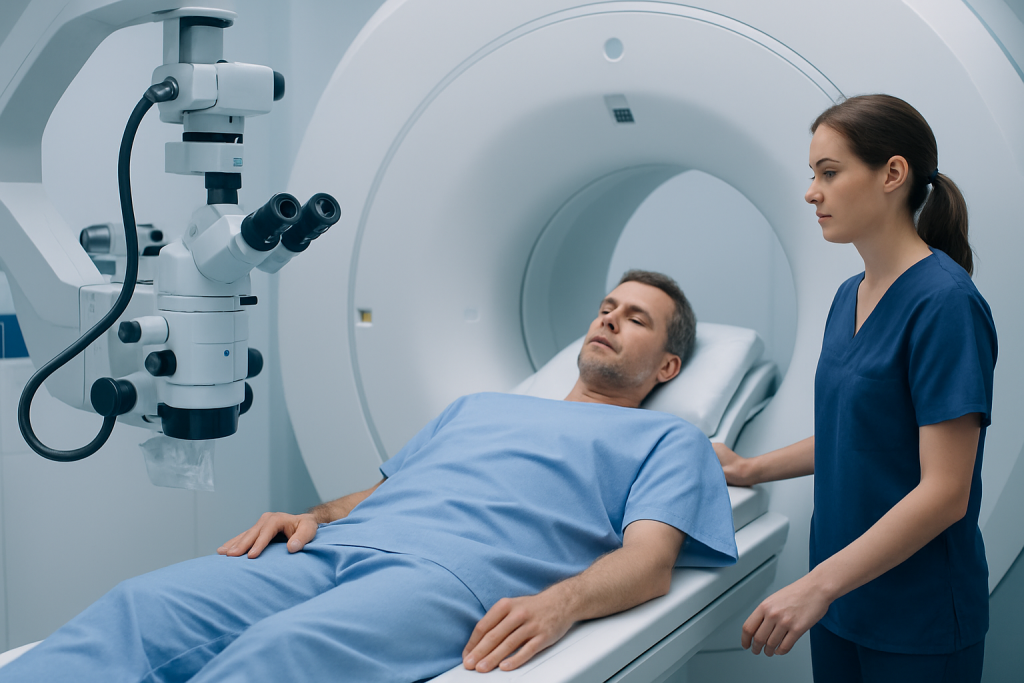
Rathke’s cleft cysts are generally benign, meaning they are not cancer. They develop from embryonic tissue left behind near the pituitary gland, a small gland at the base of the brain that helps regulate hormones involved in growth, metabolism, fertility, stress response and water balance. Many cysts remain small and never cause health problems.
Seriousness is determined mainly by location, size, growth pattern and effects on nearby structures, not by the diagnosis alone. A cyst can become clinically important if it presses upward on the optic chiasm, the point where visual pathways cross, or interferes with the pituitary gland or pituitary stalk. This can lead to visual changes, headaches or hormonal abnormalities.
Even symptomatic cysts can often be managed effectively with specialist care. However, sudden severe headache, new vision loss, confusion, marked vomiting, or symptoms of adrenal insufficiency require urgent medical assessment, since these symptoms may reflect an important pituitary or neurological problem.
Symptoms, Causes and Reasons a Cyst May Grow

Possible symptoms of a Rathke cleft cyst include persistent or recurrent headache, blurred or reduced side vision, fatigue, menstrual changes, reduced libido, fertility difficulties, unexplained weight changes, sensitivity to cold, excessive thirst or urination, and changes in growth or puberty in children. These symptoms are not specific to a cyst, so clinical assessment and testing are needed to identify the cause.
Rathke cleft cysts form during fetal development from remnants of Rathke’s pouch, a temporary structure involved in formation of the pituitary gland. They are not caused by lifestyle choices, injury, or something a person did or did not do. Most are discovered during evaluation for unrelated symptoms or imaging performed for another reason.
What causes Rathke cysts to grow is not always clear. Fluid can accumulate within the cyst, and changes in cyst contents, inflammation, or intermittent leakage may contribute in some cases. Growth is unpredictable: some cysts stay stable for years, while others enlarge or fluctuate. This is why follow-up MRI and endocrine review may be advised even when no operation is initially planned.
Other lesions can occur in the same region and may require different management. For example, clinicians may also evaluate for pituitary adenoma when imaging or hormone findings suggest a different pituitary disorder.
How Serious Is a Cyst on Your Pituitary Gland?
A cyst on or near the pituitary gland can be harmless, but its potential effect depends on what type of cyst it is and whether it affects nearby structures. The pituitary sits in a confined bony space, so even a benign lesion can sometimes cause symptoms if it expands enough to compress the gland, pituitary stalk, optic pathways, or surrounding nerves.
Doctors assess seriousness by reviewing symptoms, MRI features, formal visual field testing when the optic chiasm is close to the cyst, and blood tests for pituitary hormones. Hormonal changes can include too little production of one or more pituitary hormones. Less commonly, disruption of water-balance hormones can cause excessive thirst and frequent urination.
It is reassuring that a pituitary-area cyst does not automatically mean surgery or permanent hormone problems. Many people are safely observed. Those who need treatment benefit from structured follow-up because both the cyst and hormone function may change over time.
When Is Rathke Cyst Surgery Considered?
There is no single cyst measurement that determines treatment for every person. What size Rathke cleft cyst needs surgery? Surgery is usually based on the cyst’s effects rather than size alone. A relatively small cyst may need treatment if it clearly compresses the optic pathways or is associated with significant pituitary dysfunction, while a larger cyst without symptoms may sometimes be monitored under specialist guidance.
Reasons a team may discuss surgery include documented visual field loss or reduced visual acuity from compression, progressive enlargement on MRI, disabling headache believed to be related to the cyst, or hormone abnormalities caused by pressure on pituitary structures. The decision also considers imaging appearance, the person’s overall health, the likelihood that symptoms are cyst-related, and their preferences after an informed discussion.
Transsphenoidal drainage or fenestration is the standard surgical strategy for many symptomatic cysts. Rather than attempting to remove every part of the cyst wall, which may risk pituitary injury, surgeons often create an opening and drain its contents to reduce pressure. Patients considering this option can learn more about transsphenoidal pituitary surgery as part of a discussion with their surgical team.
Hormone replacement may be needed before or after surgery if testing identifies deficiencies. The type of treatment depends on the hormone affected and is directed by an endocrinologist, with regular review to see whether replacement remains necessary.
What Happens During Treatment and Recovery?
Before surgery, patients usually undergo detailed MRI imaging, pituitary hormone blood tests and an eye examination with visual field testing if the cyst approaches the optic pathways. The surgical team reviews medications, general health and anaesthetic suitability. In selected cases, an ear, nose and throat surgeon may assist with the nasal route to the sphenoid sinus.
During transsphenoidal surgery, the surgeon uses the nasal passage to access the sphenoid sinus and then the area around the pituitary gland. Microsurgical or endoscopic instruments are used to open and drain the cyst, relieving pressure. Tissue or cyst fluid may be sent for laboratory examination to confirm the diagnosis and exclude other lesions.
Hospital stay and recovery vary according to the operation, hormone status and any complications. Early recovery commonly includes monitoring of fluid balance, sodium levels, urine output, vision and pituitary hormones. Nasal congestion, fatigue and headache can occur temporarily. Patients are generally advised to avoid strenuous activity, heavy lifting and forceful nose blowing until their surgical team confirms it is safe.
Follow-up may include an MRI after healing, repeat hormone testing and visual assessment when relevant. Symptom improvement, especially visual improvement caused by pressure, may occur after decompression, but the degree and speed of recovery differ between individuals. Long-term surveillance remains important because a Rathke cleft cyst can occasionally refill or recur.
Benefits, Risks and Ongoing Self-Care
The potential benefit of surgery is relief of pressure on visual pathways and other nearby structures. Surgery may also improve headaches or hormone-related symptoms when these are caused by the cyst, although improvement cannot be guaranteed because symptoms may have more than one cause. For people without symptoms or pressure effects, avoiding unnecessary intervention through monitored observation can itself be an appropriate treatment choice.
Potential surgical risks include bleeding, infection, leakage of cerebrospinal fluid, nasal or sinus discomfort, changes in vision, and damage to normal pituitary function. A disturbance in water balance, including diabetes insipidus, can occur temporarily or, less often, persistently. Cysts may recur despite successful initial drainage. The surgical team explains individual risks based on imaging, anatomy and the planned technique.
There is no proven diet, supplement or home remedy that shrinks a Rathke cleft cyst. Helpful self-care includes attending scheduled imaging and endocrine appointments, taking prescribed hormone replacement as directed, and reporting new symptoms promptly. People should not stop steroid, thyroid, sex-hormone or other pituitary-related medication without advice from their clinician.
Acibadem International’s multidisciplinary specialists in JCI-accredited hospitals assess and treat pituitary-region conditions for international patients, coordinating neurosurgical, endocrine and visual care where needed.
When to Seek Medical Care
People with a known Rathke cleft cyst should contact their doctor if they develop worsening headaches, new blurred vision, reduced side vision, double vision, marked fatigue, unexplained changes in thirst or urination, or symptoms suggesting a hormone change. New symptoms do not always mean that the cyst has grown, but they deserve timely assessment.
Urgent medical care is appropriate for sudden or rapidly worsening vision changes, an abrupt severe headache unlike usual headaches, fainting, confusion, severe weakness, repeated vomiting, or symptoms after recent pituitary surgery that concern the clinical team. These symptoms can have several causes and should be evaluated without delay.
Regular care with an endocrinologist or neurosurgical team is especially important for patients with abnormal pituitary hormone tests, a cyst near the optic chiasm, previous surgery, or a plan for imaging surveillance. Individual follow-up intervals are based on MRI findings, symptoms and hormone results.
Frequently asked questions
Can a Rathke cleft cyst go away on its own?
Some Rathke cleft cysts remain stable, and some may decrease in size on follow-up imaging. Others persist or enlarge. Because the course is unpredictable, a clinician may recommend repeat MRI scans and hormone testing rather than assuming the cyst will resolve.
Is Rathke cyst treatment always surgery?
No. Treatment is often observation when the cyst is small, stable and not causing symptoms, visual compression or hormone problems. Surgery is generally reserved for cysts that are producing clinically significant effects or showing concerning progression.
Can Rathke cleft cyst surgery improve vision?
When visual loss is caused by pressure from the cyst on the optic pathways, decompression surgery may improve vision or help prevent further deterioration. Recovery varies and can depend on how severe and how long-standing the compression was. Formal eye testing before and after treatment helps measure change.
Can a Rathke cleft cyst come back after surgery?
Yes, a cyst can refill or recur after drainage, even when surgery initially relieves symptoms. This is one reason follow-up MRI and endocrine assessment are commonly recommended. Recurrence does not always require another operation; the decision depends on symptoms and cyst behavior.
Do Rathke cleft cysts affect hormones?
They can. If a cyst interferes with the pituitary gland or stalk, it may affect hormones involved in thyroid function, adrenal function, reproductive health, growth and water balance. Blood testing helps identify deficiencies or other hormone changes, and replacement treatment may be used when clinically needed.
Are headaches from a Rathke cleft cyst permanent?
Headaches have many possible causes, so it is not always possible to confirm that a Rathke cleft cyst is responsible. If headache is linked to cyst pressure, it may improve after appropriate treatment, but this is not certain. A clinician can evaluate headache features alongside MRI findings and other potential causes.
References
- National Institute of Diabetes and Digestive and Kidney Diseases
- Endocrine Society
- American Association of Neurological Surgeons
- Merck Manual Professional Edition
This article is for general information only and is not a substitute for professional medical advice. Please consult a qualified doctor about your individual situation.
Explore treatments in Turkey — costs, top hospitals & a free quote
JCI-accredited · board-certified surgeons · reply within 24h
Add us as a Preferred Source to see more of our trusted health content across Google Search, AI Overviews and Discover.