

Robotic Spine Surgery: Procedure, Recovery and Results
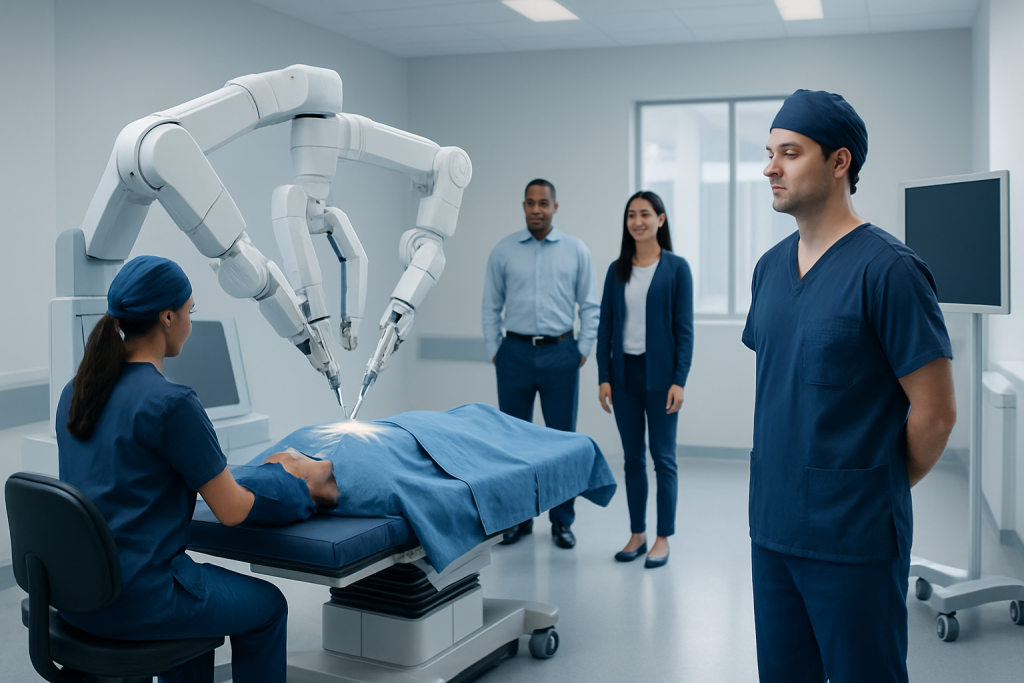
Robotic guidance supports surgical planning and precise placement of spinal implants; the surgeon remains in full control of the operation. It may be used for selected fusion, deformity, instability, fracture, tumor, and revision procedures, but is not suitable or necessary for every spine operation.
Key Takeaways
- Robotic guidance supports surgical planning and precise placement of spinal implants; the surgeon remains in full control of the operation.
- It may be used for selected fusion, deformity, instability, fracture, tumor, and revision procedures, but is not suitable or necessary for every spine operation.
- Many patients begin assisted movement soon after surgery, while full recovery can range from several weeks to several months depending on procedure complexity.
- Potential benefits include more accurate screw placement and less tissue disruption in some approaches, but risks of spine surgery still apply.
- A personalized assessment by a spine specialist is needed to determine whether robotic assistance is appropriate.
Robotic spine surgery is a technology-assisted approach that helps a spine surgeon plan and carry out selected procedures, particularly placement of screws during spinal fusion. It does not replace the surgeon, and recovery, pain relief, and long-term results depend on the underlying spinal condition, the operation performed, and the individual patient.
Overview: What Is Robotic Spine Surgery?
Robotic spine surgery is a technology-assisted surgical approach used to help a spine surgeon plan and perform certain spinal operations. Most commonly, it supports the placement of screws and other implants used to stabilize the spine during fusion surgery. It is not an operation performed independently by a robot: the surgeon makes all clinical decisions and carries out the procedure.
Before surgery, detailed imaging is used to create a three-dimensional plan of the spinal anatomy. During the operation, the robotic system helps align surgical instruments with that plan. This may be particularly helpful where the anatomy is small, complex, changed by a previous operation, or affected by deformity.
The term robotic spine surgery can describe different systems and techniques. Some operations use a minimally invasive approach through smaller incisions, while others require a traditional open incision for safe access. The technology alone does not determine the incision size, recovery time, or likely result.
How Robotic Spine Surgery Works and Who May Be a Candidate

Planning usually begins with CT, MRI, X-ray, or other imaging studies. The surgeon reviews the images, identifies the spinal levels to be treated, and maps the intended path for screws or instruments. In the operating room, the patient’s position and anatomy are matched to the digital plan through a process called registration.
A robotic arm or guidance platform then provides a stable pathway for the planned implant trajectory. The surgeon uses this guidance to place the instruments and implants, checking their position with imaging as needed. The technology can improve consistency in selected technical steps, but it does not eliminate the need for surgical expertise, clinical judgment, or safety checks.
Potential candidates include people who need stabilization for spinal instability, certain degenerative conditions, scoliosis or other deformities, fractures, infection, tumors, or revision surgery. It may be considered alongside spine surgery when fusion or instrumentation is recommended. Suitability depends on the diagnosis, spinal anatomy, bone quality, prior surgery, overall health, and the goals of treatment.
Not every person needing back or neck surgery benefits from robotic assistance. Procedures that do not require implants, such as some decompressions, may not need it. A spine surgeon can explain whether robotic guidance is likely to add value in an individual case.
Step by Step: What Happens During the Procedure?
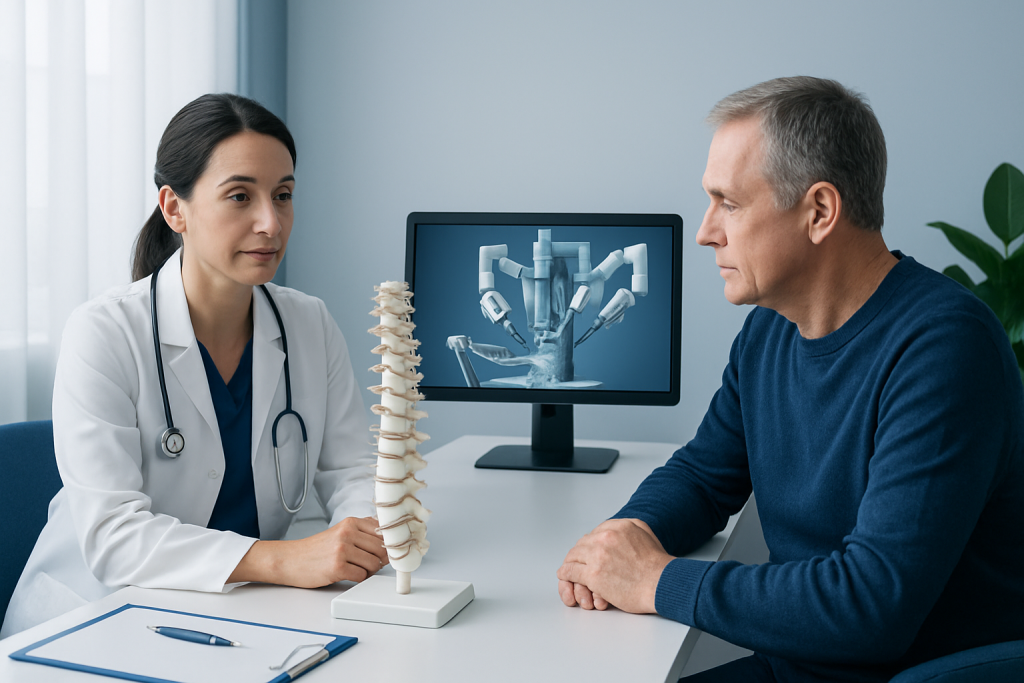
Before the operation, the care team reviews medications, allergies, medical conditions, and anesthesia needs. Blood tests, imaging, and other assessments may be arranged. Patients are usually asked to follow instructions about eating, drinking, smoking, and medicines that may affect bleeding or blood sugar.
Robotic spine surgery is performed under general anesthesia, meaning the patient is asleep and does not feel the procedure. After careful positioning, the surgical team prepares the skin and confirms the correct spinal level. The surgeon registers the patient’s anatomy to the preoperative plan and uses robotic guidance to assist placement of screws when these are needed.
The rest of the operation depends on the reason for surgery. The surgeon may relieve pressure on nerves, remove damaged disc material, correct alignment, place bone graft material, and connect screws with rods to create stability. In a fusion, bone is encouraged to grow between selected vertebrae over time.
After surgery, patients are monitored in a recovery area while anesthesia wears off. The team checks comfort, movement, sensation, wound drainage, and other signs of recovery. Depending on the procedure, patients may go home the same day, stay overnight, or remain in hospital for several days.
Benefits, Limitations and Robotic Spine Surgery Outcomes
In appropriate operations, robotic guidance may help improve the accuracy of spinal screw placement and may support less invasive access in selected patients. Greater accuracy can be especially relevant near nerves and blood vessels or in complex anatomy. Some patients may also have less blood loss, reduced muscle disruption, or a shorter hospital stay when a minimally invasive technique is suitable, although these outcomes are not guaranteed.
Robotic spine surgery outcomes should be judged by more than the technology used. Important measures include relief of the symptoms surgery was intended to address, nerve function, mobility, fusion progress when applicable, complication rates, and quality of life. Results are influenced by the underlying condition, the number of spinal levels treated, smoking status, bone health, rehabilitation, and adherence to follow-up care.
Robotic spine surgery reviews can be helpful for learning about other patients’ experiences, but they cannot predict an individual outcome. Reviews often describe different diagnoses, operations, surgeons, and recovery circumstances. A more reliable discussion is one based on the patient’s imaging, symptoms, treatment goals, and expected alternatives.
The past, present and future of robotic spine surgery reflect a continuing effort to improve surgical planning, navigation, and precision. Current systems are tools that complement, rather than replace, an experienced spine team. Research continues to evaluate which patients and procedures benefit most.
What Are the Disadvantages of Robotic Spine Surgery?
The main disadvantage is that robotic guidance does not remove the inherent risks of spinal surgery or guarantee a better clinical result. A technically accurate implant position is important, but it cannot by itself ensure pain relief, nerve recovery, or successful fusion. The underlying diagnosis and the overall surgical plan remain central to the outcome.
Robotic systems require specialized equipment, trained staff, preoperative planning, and careful registration in the operating room. Technical issues, changes in anatomy, or a mismatch between the digital plan and the surgical field can require the surgeon to adjust the approach or proceed without robotic guidance. This is why the surgeon must be fully prepared to use conventional techniques when needed.
Depending on the type of imaging and navigation used, there may be additional imaging exposure, though teams aim to use imaging carefully and safely. The system may also not be practical for every anatomy or procedure. A surgeon should explain why robotic assistance is proposed, what alternatives exist, and whether it is expected to change the treatment plan.
Possible complications remain those of spine surgery generally and can include bleeding, infection, blood clots, nerve injury, leakage of spinal fluid, persistent symptoms, implant problems, failure of bone fusion, and the need for further treatment. Individual risks vary and should be reviewed carefully during informed consent.
How Long Does It Take to Recover From Robotic Spine Surgery?
Robotic spine surgery recovery time varies widely because it reflects the operation, not only the robotic technology. After a smaller, single-level procedure, some people may return to light daily activities within a few weeks. Recovery after a multilevel fusion, deformity correction, fracture treatment, or revision operation can take several months, and bone fusion may continue to develop for many months.
In the first days, the focus is on safe movement, pain control, wound care, breathing exercises, and preventing complications such as blood clots. Physical therapists may teach safe ways to get in and out of bed, walk, and protect the spine during everyday activities. Activity restrictions may include avoiding heavy lifting, bending, twisting, or driving for a period specified by the surgeon.
Robotic back surgery recovery time also depends on age, physical conditioning, diabetes, smoking, nutrition, bone health, and whether there was nerve weakness before surgery. Some nerve-related symptoms improve gradually as irritated or compressed nerves recover. Improvement may therefore be uneven, and temporary soreness or fatigue is common during early rehabilitation.
Follow-up appointments allow the surgeon to assess the incision, symptoms, mobility, and imaging when needed. Patients should follow the prescribed rehabilitation plan and contact the surgical team if they have concerns rather than comparing their progress with another person’s recovery timeline.
How Painful Is Robotic Surgery? How Long Is Bed Rest After Spinal Surgery?
Robotic surgery is performed under general anesthesia, so the patient is not awake or in pain during the operation. Afterward, pain is expected because tissues need time to heal, but the intensity varies with the location and extent of surgery, the approach used, and personal pain sensitivity. The care team uses a multimodal plan that may include non-opioid medicines, short-term stronger pain relief when appropriate, ice or other comfort measures, and guided activity.
Smaller-incision procedures may cause less incision and muscle discomfort for some people, but they can still be significant operations. Pain should gradually become more manageable over time. Severe, worsening, or unusual pain should be discussed with the treating team rather than managed by changing medicines independently.
Complete bed rest is usually not recommended after spinal surgery unless a surgeon specifically advises it for a particular reason. Many patients are encouraged to sit up, stand, and walk with assistance on the day of surgery or the following day. Early, safe mobilization supports circulation, lung function, bowel function, and confidence with movement.
Rest remains important, but it is generally balanced with short, frequent walks and gradual increases in activity. The exact plan differs after cervical, thoracic, and lumbar procedures and may include a brace for selected patients. The surgical team’s instructions take priority over general guidance.
When to Seek Medical Care
Before considering surgery, medical assessment is important for back or neck pain that persists despite appropriate conservative care, limits daily life, or is accompanied by numbness, weakness, balance problems, or pain traveling into an arm or leg. A clinician can determine whether symptoms may be related to a condition such as spinal stenosis or another cause requiring specific treatment.
Urgent medical attention is needed for new or worsening weakness, loss of bladder or bowel control, numbness around the groin or inner thighs, fever with severe back pain, or symptoms after significant trauma. These symptoms do not always mean an emergency spinal condition, but they require prompt evaluation.
After surgery, patients should contact their surgical team promptly for increasing redness, swelling, drainage, fever, wound opening, uncontrolled pain, new numbness or weakness, chest pain, shortness of breath, or calf swelling. Seeking advice early can help the team assess whether normal healing or treatment is needed.
Acibadem International’s multidisciplinary specialists and JCI-accredited hospitals evaluate and treat spinal conditions for international patients. A spine consultation can help patients understand whether surgery, robotic guidance, rehabilitation, or non-surgical care best fits their situation.
Frequently asked questions
Is robotic spine surgery safer than traditional spine surgery?
Robotic guidance may improve the accuracy of screw placement in selected operations, particularly when anatomy is complex. However, safety depends on many factors, including the patient’s health, the procedure, the surgeon’s experience, and the hospital team. It does not eliminate the risks associated with spinal surgery.
Does robotic spine surgery use a robot to operate on the patient?
No. The robot does not independently perform the surgery. It provides planning and guidance tools, while the spine surgeon controls the procedure and makes all decisions during the operation.
How long does it take to recover from robotic spine surgery?
Recovery may range from weeks for a less extensive procedure to several months after a larger fusion or deformity correction. Return to full activity is gradual, and fusion healing can continue for many months. The surgeon’s activity plan is tailored to the procedure and individual healing progress.
What are the disadvantages of robotic spine surgery?
Robotic systems require specialized equipment, planning, and trained teams, and they are not necessary or appropriate for every operation. They do not guarantee symptom relief or prevent complications. The technology may need to be adjusted or replaced with conventional techniques if circumstances during surgery require it.
How painful is robotic spine surgery?
Patients are asleep under general anesthesia during surgery. Pain afterward varies, but it is managed with a personalized plan and usually improves as healing progresses. Smaller incisions may reduce some soft-tissue discomfort in appropriate cases, but pain levels still depend mainly on the operation performed.
How long is bed rest after spinal surgery?
Most patients are encouraged to begin safe, assisted movement soon after surgery, often on the same day or the next day. Prolonged bed rest is generally avoided unless the surgeon gives specific instructions. Walking and activity are increased gradually according to the recovery plan.
References
- American Association of Neurological Surgeons
- North American Spine Society
- American Academy of Orthopaedic Surgeons
- National Institute of Neurological Disorders and Stroke
- World Health Organization
This article is for general information only and is not a substitute for professional medical advice. Please consult a qualified doctor about your individual situation.
Spine Surgery in Turkey — costs, top hospitals & a free quote
JCI-accredited · board-certified surgeons · reply within 24h
Add us as a Preferred Source to see more of our trusted health content across Google Search, AI Overviews and Discover.

More from the Health Library



Related Specialists

Dr. Serap Gülşeni
Occupational Medicine
Embriyolog Feray Farsak
Vitro Fertilization and Reproductive Medicine Center
Prof. Dr. Yavuz Atar
Otorhinolaryngology
Prof. Dr. Bülent Tutluoğlu
Pulmonary Medicine