

Roos Test: An Evidence-Based Guide for Patients

The roos test is also called the elevated arm stress test. It is mainly used when thoracic outlet syndrome is suspected.
Key Takeaways
- The roos test is also called the elevated arm stress test.
- It is mainly used when thoracic outlet syndrome is suspected.
- A positive roos test is not specific, so further evaluation is often needed.
- Symptoms during the test may include pain, numbness, tingling, heaviness, or arm fatigue.
- Doctors interpret the result together with a physical exam, medical history, and imaging or nerve tests when needed.
The roos test is a bedside physical exam used to look for signs that nerves or blood vessels may be compressed around the shoulder and collarbone area. It can support the evaluation of thoracic outlet syndrome, but by itself it does not confirm or rule out a diagnosis.
What is the Roos test?
The roos test is a simple physical examination maneuver used to help evaluate whether nerves or blood vessels may be getting compressed in the upper chest and shoulder region. This area, called the thoracic outlet, is the space between the collarbone, first rib, and nearby muscles. When structures in this space are narrowed or irritated, symptoms can develop in the neck, shoulder, arm, or hand.
The test is most often used when a clinician is considering thoracic outlet syndrome, a term for several conditions that involve compression of the brachial plexus nerves, the subclavian artery, or the subclavian vein. A roos test can reproduce symptoms that matter to the patient, which is one reason it remains part of many musculoskeletal and vascular examinations.
The roos test is also known as the elevated arm stress test or roos maneuver. Even though it is widely used, it is best understood as a screening tool rather than a stand-alone answer. A normal or abnormal result gains meaning only when combined with symptoms, physical findings, and sometimes additional testing.
How the Roos test is performed and what a positive result means
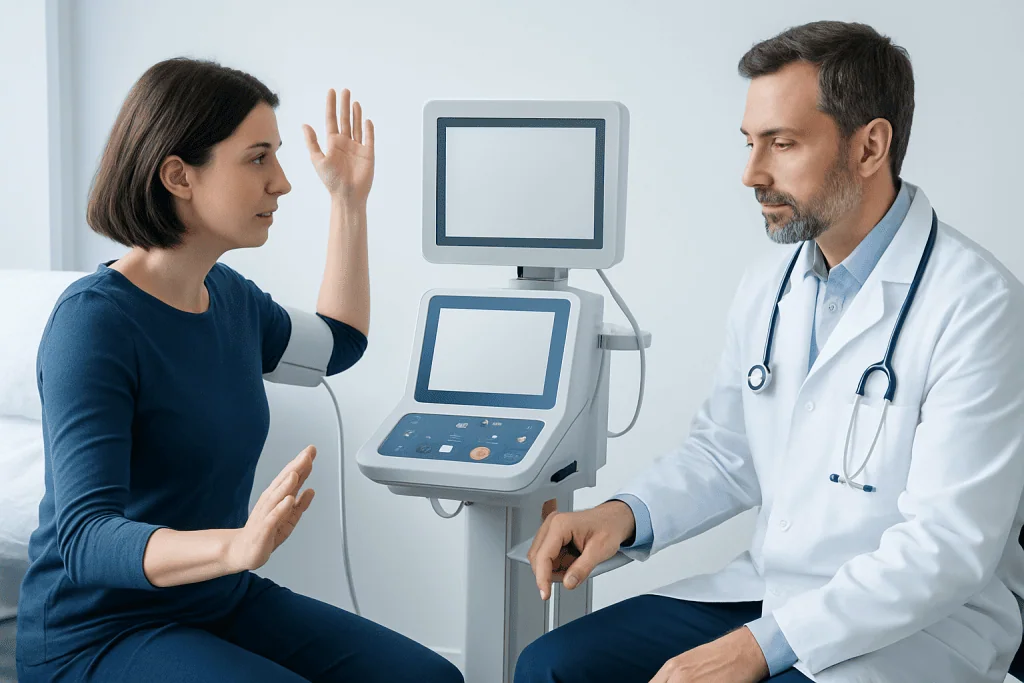
During the test, the patient raises both arms to about shoulder level, bends the elbows, and opens and closes the hands repeatedly for a set period, often up to three minutes. This position narrows the thoracic outlet and can make existing compression more noticeable. The clinician watches for symptom reproduction and may also compare the two sides.
A positive roos test usually means that the maneuver brings on symptoms such as pain, numbness, tingling, heaviness, weakness, cramping, or unusual fatigue in the arm or hand. Some people also report a sense of pressure around the shoulder or collarbone. In cases where blood flow is affected, the hand may appear pale, cool, or discolored, though this is less common than nerve-related symptoms.
Importantly, a positive result does not prove thoracic outlet syndrome by itself. Other shoulder, neck, nerve, or circulation problems can also cause discomfort during the test. Likewise, some people with true thoracic outlet syndrome may not have a clearly positive result every time.
Why doctors use the Roos test

The main purpose of the roos test is to help connect a patient’s symptoms with arm position and activity. Many people with suspected thoracic outlet syndrome notice that symptoms worsen when the arms are elevated, when carrying objects, or after repetitive overhead movement. The test can recreate those conditions in a controlled setting.
Clinicians do not usually rely on one provocative test alone. Instead, they build a fuller picture using the patient’s history, posture, neck and shoulder motion, pulse changes, nerve findings, and other maneuvers. This approach is especially important because thoracic outlet syndrome can overlap with conditions such as cervical radiculopathy, peripheral nerve entrapment, or shoulder disorders.
When the overall pattern fits, the roos test may support an evaluation for thoracic outlet syndrome. If symptoms suggest a vascular rather than primarily nerve-related problem, the test may also prompt more urgent circulation studies.
Accuracy, limitations, and common misconceptions
One of the most important points for patients is that the roos test is not highly specific. In plain terms, that means a positive test can occur in more than one condition. Some healthy people may also feel fatigue or discomfort if they hold the position long enough, especially if they already have neck or shoulder strain.
The test also depends on context. Symptoms that closely match a patient’s usual complaints are generally more meaningful than mild, vague tiredness in the hands. Doctors also consider whether one arm is clearly different from the other, whether pulse or color changes occur, and whether other examination findings point in the same direction.
Another misconception is that a negative roos test rules out thoracic outlet syndrome. It does not. Symptoms may fluctuate from day to day, and some people have positional compression that appears only in certain postures or after specific activities. For this reason, evidence-based assessment looks beyond the roos test and avoids making a diagnosis from a single maneuver.
In patient care, the best use of the test is as one piece of evidence among several. This balanced interpretation helps reduce overdiagnosis while still recognizing people who need a more detailed workup.
Symptoms and conditions that may lead to a Roos test
A clinician may consider the roos test when a person has symptoms involving the neck, shoulder, arm, or hand that seem to worsen with posture or arm elevation. Typical complaints include numbness, tingling, aching, burning pain, arm heaviness, weakness, hand clumsiness, or early fatigue during repeated use.
These symptoms can arise from several different causes, which is why careful evaluation matters. Thoracic outlet syndrome is one possibility, but doctors may also think about neck-related nerve irritation, shoulder impingement, rotator cuff problems, ulnar neuropathy, carpal tunnel syndrome, or vascular conditions affecting circulation. In some patients, poor posture, repetitive work, athletic training, or prior trauma can contribute to symptoms.
Depending on the pattern, a doctor may also examine for related problems such as a herniated disc in the cervical spine or other causes of nerve compression. If shoulder pathology is suspected, assessment may include imaging and, in selected cases, treatments used in shoulder arthroscopy planning, although surgery is not part of the initial evaluation for most people.
- Symptoms often worsen with overhead activity.
- One-sided symptoms may be more noticeable than symptoms in both arms.
- Pain may be accompanied by tingling or visible circulation changes.
- A history of repetitive strain, sports, or injury can be relevant.
How diagnosis is confirmed after the Roos test
If the roos test raises suspicion for thoracic outlet syndrome, the next step is usually a structured clinical evaluation rather than an immediate diagnosis. The doctor will review symptoms in detail, including what triggers them, how long they last, and whether there is associated neck pain, weakness, swelling, or discoloration. A careful physical examination can help distinguish nerve compression from arterial or venous problems.
Additional tests are chosen based on the likely type of thoracic outlet syndrome. These may include imaging such as X-ray, ultrasound, CT, or MRI to look at anatomy and blood flow, as well as nerve studies in selected cases. If vascular compression is suspected, circulation-focused tests may be prioritized because they can identify reduced flow or clot-related complications.
In some situations, clinicians may recommend advanced evaluation by specialists in neurology, vascular medicine, orthopedics, or physical medicine and rehabilitation. When imaging of the spine is needed to investigate alternative causes, MRI may help assess nerve roots, soft tissues, and structural narrowing. If symptoms strongly suggest a vascular form of thoracic outlet syndrome, consultation may involve planning for vascular surgery in carefully selected patients.
Treatment and self-care after a positive Roos test
A positive roos test does not create a treatment plan on its own. Treatment depends on the confirmed cause of symptoms. For many people with suspected neurogenic thoracic outlet syndrome, first-line care includes posture correction, activity modification, and physical therapy focused on shoulder mechanics, chest wall flexibility, and muscle balance around the neck and upper back.
Self-care often centers on reducing positions that provoke symptoms, especially prolonged overhead use, heavy carrying, or workstations that encourage rounded shoulders. Breaks during repetitive tasks, supportive ergonomics, and targeted exercises can be helpful when advised by a clinician or therapist. If pain is significant, a doctor may discuss short-term symptom relief options based on the individual’s health profile.
When a vascular cause is identified, treatment may be more specialized and sometimes urgent. Swelling, color change, coldness, or severe pain may require prompt testing and closer follow-up. In selected cases, procedures or surgery are considered, but conservative management remains appropriate for many patients once serious causes are excluded.
Near the end of evaluation and treatment planning, some patients seek multidisciplinary care. Acibadem International’s specialists in neurology, orthopedics, rehabilitation, and vascular care at JCI-accredited hospitals diagnose and treat thoracic outlet-related conditions for international patients.
When to seek medical care
Medical care is appropriate if arm, shoulder, neck, or hand symptoms are recurring, getting worse, or interfering with daily activities. It is especially helpful to be assessed when symptoms are triggered by raising the arms, carrying items, exercise, or repetitive work. Early evaluation can help identify whether the problem is related to nerves, circulation, the neck, or the shoulder.
Prompt medical attention is more important if symptoms are sudden or severe, or if there is visible swelling, color change, unusual coldness of the hand, marked weakness, or loss of coordination. These features can suggest a vascular problem or another condition that should not be monitored at home. If chest pain, shortness of breath, or signs of a stroke occur, emergency care is needed.
Because the roos test is only one part of assessment, patients should avoid self-diagnosing from online descriptions alone. A qualified doctor can interpret the test in context and decide whether reassurance, therapy, imaging, or specialist referral is the most appropriate next step.
Frequently asked questions
What does the roos test check for?
The roos test is used to help assess whether nerves or blood vessels may be compressed in the thoracic outlet area near the collarbone and shoulder. It is most often used when thoracic outlet syndrome is being considered.
Is a positive roos test enough to diagnose thoracic outlet syndrome?
No. A positive roos test can support suspicion, but it cannot confirm the diagnosis by itself. Doctors usually combine it with medical history, physical examination, and sometimes imaging or nerve and vascular studies.
Can the roos test be negative even if someone has thoracic outlet syndrome?
Yes. Symptoms of thoracic outlet syndrome can vary over time and may not appear during every examination. A negative result does not completely rule out the condition.
Does the roos test mean there is a blood vessel problem?
Not necessarily. Many positive roos test results relate more to nerve irritation than to artery or vein compression. However, if swelling, discoloration, or coldness is present, vascular assessment becomes more important.
Is the roos test painful?
The maneuver itself is not designed to cause harm, but it may reproduce a person’s usual symptoms, such as tingling, aching, or heaviness in the arms. If symptoms become severe, the test is typically stopped.
What happens after a positive roos test?
The next step is usually a broader evaluation to find the actual cause of symptoms. Depending on the findings, this may include posture assessment, physical therapy, imaging, nerve tests, or referral to a specialist.
References
- National Institute of Neurological Disorders and Stroke
- American Academy of Orthopaedic Surgeons
- Society for Vascular Surgery
- National Library of Medicine
- Mayo Clinic
This article is for general information only and is not a substitute for professional medical advice. Please consult a qualified doctor about your individual situation.
Joint and spine care in Turkey — expert assessment & treatment
JCI-accredited · board-certified surgeons · reply within 24h
Add us as a Preferred Source to see more of our trusted health content across Google Search, AI Overviews and Discover.

More from the Health Library



Related Specialists

Dr. Murat Aydın
Pediatrics
Assoc. Prof. Dr. Ahmet Özveren
Medical Oncology
Prof. Dr. Şule Arslan
Physical Medicine & Rehabilitation
Assoc. Prof. Dr. Abdülhak Hamit Karayağız
General Surgery