

Rop Treatment: How It Works, Results and What to Expect

ROP is most often found through scheduled retinal screening in premature babies before symptoms are noticeable. The right approach depends on the ROP zone, stage, vessel changes and the baby’s overall health.
Key Takeaways
- ROP is most often found through scheduled retinal screening in premature babies before symptoms are noticeable.
- The right approach depends on the ROP zone, stage, vessel changes and the baby’s overall health.
- Laser therapy and anti-VEGF eye injections are common treatments for severe or high-risk ROP.
- Long-term eye follow-up is important even after successful treatment, as some children develop refractive errors, strabismus or other vision concerns.
- Parents should attend every screening appointment and contact the neonatal or eye team if follow-up arrangements are unclear.
ROP treatment is care for retinopathy of prematurity, an eye condition in which retinal blood vessels develop abnormally in some premature babies. Many babies only need close monitoring, while more severe ROP may need prompt treatment to reduce the risk of retinal detachment and vision loss.
ROP Treatment: an answer-first overview
ROP treatment is used to manage retinopathy of prematurity (ROP), a condition affecting the retina, the light-sensitive tissue at the back of the eye. In some babies born very early or with a very low birth weight, retinal blood vessels are still developing and may grow abnormally. Care ranges from careful repeat examinations to laser treatment or medication injections, depending on the findings.
The purpose of treatment is to prevent abnormal vessels from causing scarring or pulling on the retina. Early detection through screening is especially important because babies with ROP usually do not show outward symptoms that parents can see.
In this context, ROP means retinopathy of prematurity. It is not related to “ROP return on profit” or “ROP vs ROI,” which are financial terms sometimes encountered in online searches. A clinician’s ROP analysis refers to a detailed retinal examination that identifies the location, stage and severity of the eye condition.
How ROP develops and how doctors assess it
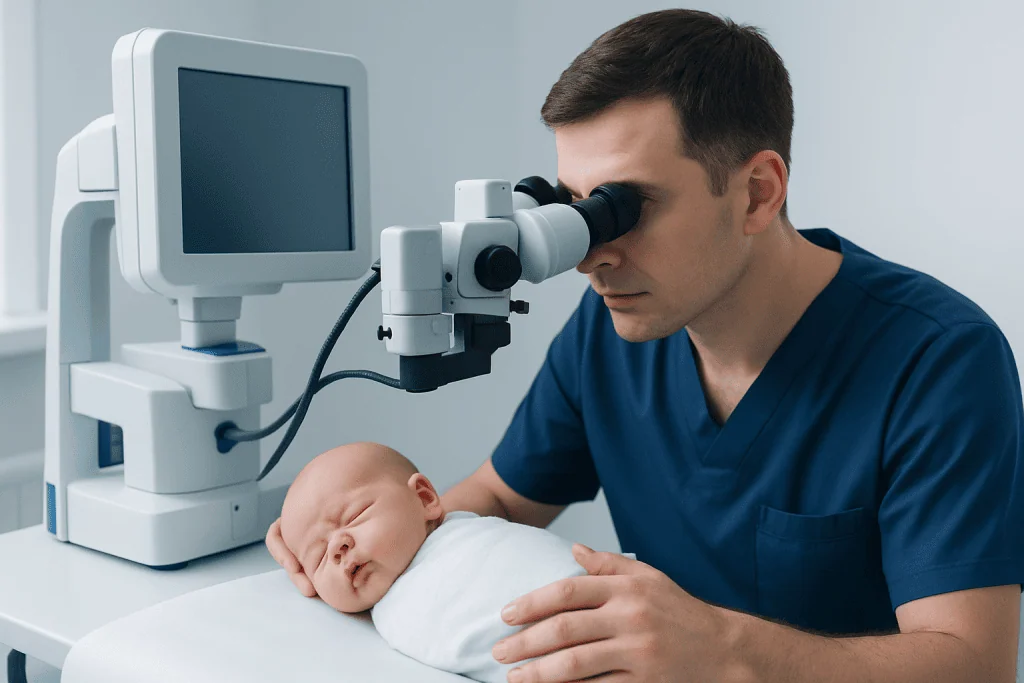
During pregnancy, blood vessels normally grow across the retina until close to full term. When a baby is born prematurely, this process continues after birth in a very different environment. Some babies develop irregular, fragile retinal vessels that can leak, bleed or form scar tissue.
Eye specialists assess ROP with dilated retinal examinations, usually performed while the baby is in the neonatal unit or during planned outpatient follow-up. They document the retinal zone involved, the stage of disease and whether “plus disease” is present. Plus disease describes concerning enlargement and twisting of retinal blood vessels and can indicate a greater need for treatment.
ROP treatment criteria are based on these examination findings rather than on one factor alone. The ophthalmology and neonatal teams also consider the baby’s gestational age, weight, medical stability and ability to return reliably for follow-up examinations.
What are the 5 stages of ROP?
ROP is classified from stage 1 to stage 5 according to changes seen at the boundary between vascularized and immature retina. The stages help specialists describe severity, but the retinal zone and presence of plus disease are also essential when deciding whether treatment is needed.
- Stage 1: A faint line separates areas with and without fully developed blood vessels.
- Stage 2: The line becomes a raised ridge.
- Stage 3: Abnormal blood vessels grow from the ridge into the eye.
- Stage 4: Scar tissue begins to pull the retina partly away from the back of the eye, causing partial retinal detachment.
- Stage 5: The retina is completely detached.
Stages 1 and 2 often improve without treatment, particularly when plus disease is absent. Stage 3 may also regress in selected cases, but severe stage 3, posterior disease or plus disease can require urgent therapy. Stages 4 and 5 are advanced disease and may require vitreoretinal surgery, although restoring vision can be difficult once retinal detachment has occurred.
How to stop stage 1 ROP progressing in babies?
There is no home treatment that parents can use to stop stage 1 ROP from progressing. The safest and most effective approach is to follow the scheduled retinal examination plan exactly, as the condition can change over days or weeks and treatment is only recommended when specific clinical thresholds are met.
Neonatal teams support healthy development by carefully managing oxygen, nutrition, infection risk and the baby’s overall medical needs. Parents can help by understanding the follow-up schedule, keeping contact details current and ensuring the baby is seen by the eye specialist if discharge occurs before retinal development is complete.
Most stage 1 ROP resolves spontaneously. If the retinal findings become more concerning, the specialist will explain whether closer observation or active ROP treatment is appropriate. It is important not to delay appointments because babies do not generally have visible warning signs of progression.
ROP treatment options and how the procedure works
Observation is appropriate for many babies with mild ROP. The ophthalmologist repeats examinations at intervals based on the retinal findings until the vessels mature, the disease regresses or treatment criteria are reached.
For treatment-requiring ROP, laser photocoagulation is a well-established option. Under carefully managed anaesthesia or sedation, the ophthalmologist applies small laser spots to the peripheral retina without normal blood vessel growth. This reduces the retina’s drive to produce the abnormal vessels that can lead to scarring and detachment. Families can learn more about laser eye surgery as part of the broader discussion of laser-based ophthalmic care.
Anti-VEGF injections may also be used for some types of severe ROP. This treatment places a very small amount of medicine into the eye to reduce the signal driving abnormal blood vessel growth. It can allow peripheral vessels to continue developing, but it also requires particularly careful and sometimes prolonged follow-up because late reactivation can occur.
In advanced ROP with retinal detachment, retinal surgery may be considered by specialist paediatric vitreoretinal teams. The aim is to preserve or improve retinal structure where possible, but outcomes depend on the extent and timing of detachment.
Candidacy, the treatment day and recovery timeline
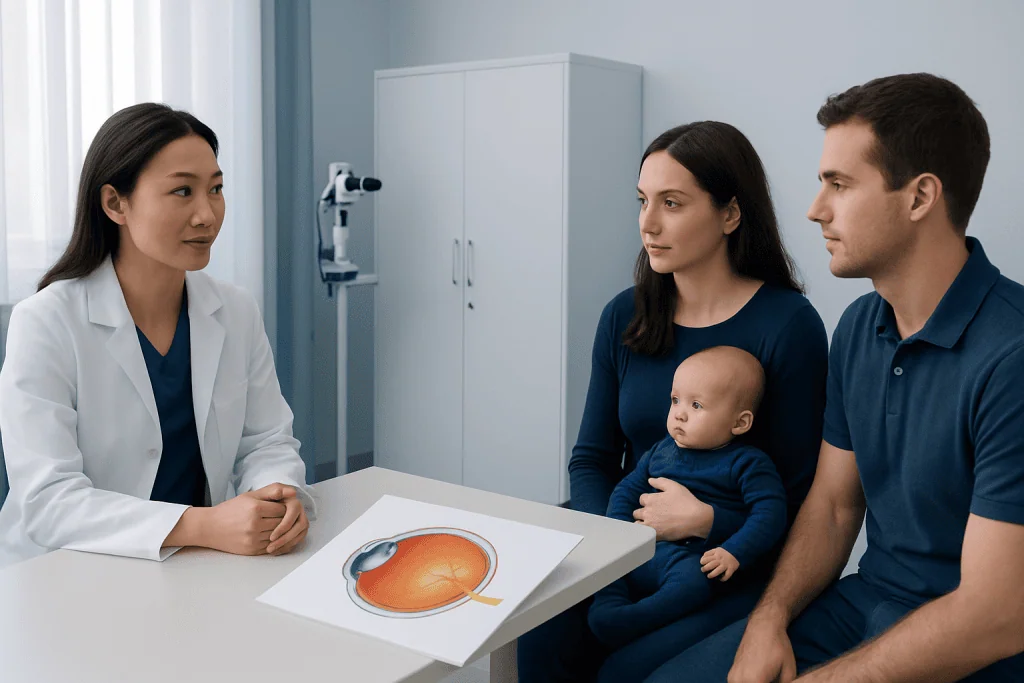
A baby may be considered for treatment when the ROP examination shows high-risk disease, such as certain forms of stage 3 ROP with plus disease or disease in the central retinal zones. The treating ophthalmologist explains why treatment is advised, the available options, the expected follow-up and the anaesthesia considerations.
Before laser or injection treatment, the care team confirms the retinal findings and checks the baby’s medical stability. During the procedure, the neonatal, anaesthesia and ophthalmology teams monitor breathing, heart rate, oxygen levels and comfort. The treatment itself is performed under sterile conditions and parents are usually updated before and after the procedure.
After treatment, a baby generally remains under observation in the neonatal unit or hospital setting as needed. Follow-up eye examinations are essential, often beginning within days to weeks, because clinicians need to confirm that ROP is regressing and identify any recurrence or continued peripheral retinal immaturity.
There is no single recovery timeline for all babies. Retinal development may continue for weeks or months, particularly after anti-VEGF treatment. Even when the immediate ROP results are reassuring, ongoing paediatric eye assessments help detect vision problems early.
Benefits, risks and what ROP results can mean
The main benefit of timely ROP treatment is a lower risk of progression to retinal detachment and severe vision loss. Treatment decisions are made carefully because the goal is to intervene when the expected benefit outweighs the risks of the procedure and the risks of untreated disease.
Laser treatment may affect peripheral retina and can be associated with later short-sightedness. Injection treatment may be followed by recurrence, persistent avascular retina or a need for further treatment, and the possible wider effects of medications in very premature babies continue to be studied. Anaesthesia or sedation also has risks, which are assessed individually by the neonatal and anaesthesia teams.
ROP results vary widely. Some children have normal or near-normal vision after spontaneous regression or successful treatment, while others may develop myopia, astigmatism, amblyopia, strabismus or reduced vision. Advanced ROP carries a greater risk of long-term visual impairment, which is why regular follow-up matters.
What is the prognosis for babies with ROP?
The prognosis for babies with ROP is often good when the condition is mild or detected and treated before retinal detachment develops. Many cases regress naturally, and modern screening and treatment have improved the ability to identify babies who need care at the right time.
Prognosis depends on the stage and zone of ROP, the presence of plus disease, whether retinal detachment has developed and how the condition responds to treatment. A child’s general health and other consequences of prematurity can also influence development and visual outcomes.
Follow-up should continue beyond the neonatal period. Children born prematurely may need checks for focusing problems, eye alignment issues and reduced vision in one eye, even if their ROP resolved. Early support for visual or developmental needs can make a meaningful difference for the child and family.
Is ROP a disability? When to seek medical care
ROP itself is a medical eye condition, not automatically a disability. Many children with a history of ROP have useful vision and do not develop significant long-term impairment. However, severe ROP can cause lasting visual impairment, and eligibility for disability support depends on the child’s functional vision and the rules in the family’s country or region.
Parents should seek prompt guidance from the neonatal team or paediatric ophthalmologist if they have missed a screening appointment, are unsure when the next examination is due, or are moving to another area and need follow-up arranged. Because ROP changes are usually detected only during retinal examinations, scheduled care is more reliable than waiting for visible symptoms.
After discharge, families should also discuss concerns such as an eye that appears to turn in or out, unusual sensitivity to light, failure to follow faces or objects as expected, or any concern about visual development. These signs do not necessarily mean ROP has returned, but they deserve professional assessment. Acibadem International’s multidisciplinary specialists and JCI-accredited hospitals provide ophthalmic and neonatal care for international patients when specialist evaluation is needed.
Frequently asked questions
Can ROP go away on its own?
Yes. Many mild cases, especially stage 1 and stage 2 ROP without plus disease, regress without active treatment as retinal blood vessels mature. Regular examinations are still necessary because a small proportion of cases can progress and require timely treatment.
At what stage does ROP need treatment?
Treatment is not decided by stage alone. Specialists use the stage, retinal zone, plus disease and the pattern of vessel growth to identify treatment-requiring ROP. Some stage 3 disease needs urgent treatment, while some less severe cases can be safely monitored.
Is laser or injection better for ROP?
Both laser treatment and anti-VEGF injections can be appropriate for selected babies. The best choice depends on the location and severity of ROP, the baby’s health, the expected follow-up and the treating specialist’s assessment. Each option has different follow-up needs and potential risks.
Can ROP return after treatment?
ROP can reactivate or continue developing after treatment, particularly after anti-VEGF injections. This is why follow-up retinal examinations remain essential even when the first treatment response appears positive. The ophthalmologist will provide an individualized surveillance plan.
Will a baby with ROP need glasses?
Some children who had ROP develop short-sightedness, astigmatism or other focusing problems and may benefit from glasses. Others do not need corrective lenses. Regular paediatric eye examinations identify these concerns early.
How long are babies monitored for ROP?
Monitoring continues until the retina has matured sufficiently, the ROP has regressed, or treatment follow-up is complete. The exact timing varies, especially after injection treatment, when longer observation may be needed. Children with previous ROP should also have ongoing eye checks during childhood.
References
- American Academy of Ophthalmology
- American Academy of Pediatrics
- National Eye Institute
- World Health Organization
- Royal College of Ophthalmologists
This article is for general information only and is not a substitute for professional medical advice. Please consult a qualified doctor about your individual situation.
Explore treatments in Turkey — costs, top hospitals & a free quote
JCI-accredited · board-certified surgeons · reply within 24h
Add us as a Preferred Source to see more of our trusted health content across Google Search, AI Overviews and Discover.

More from the Health Library



Related Specialists

Dr. Güner Esra Kutlu
Pediatrics
Dr. Serdar Korkmaz
Anesthesiology
Dr. Uğur Öner
Aesthetic Plastic & Reconstructive Surgery
Prof. Dr. Mehmet Ufuk Abacıoğlu
Radiation Oncology