Sclerosis: Diagnosis, Outlook, and Modern Treatment Approaches

Sclerosis describes tissue hardening or scarring and can affect the brain, skin, blood vessels, liver, or other organs. Symptoms depend on the type of sclerosis and the body system involved.
Key Takeaways
- Sclerosis describes tissue hardening or scarring and can affect the brain, skin, blood vessels, liver, or other organs.
- Symptoms depend on the type of sclerosis and the body system involved.
- Diagnosis usually combines a medical history, physical examination, imaging, blood tests, and sometimes biopsy or specialized nerve tests.
- Treatment focuses on the underlying cause, symptom control, and protecting organ function.
- Early medical assessment can improve management and help prevent complications.
Sclerosis is a broad medical term for abnormal hardening or scarring of tissue, not a single disease. The outlook and treatment vary widely depending on where it occurs, why it develops, and how early it is diagnosed.
Overview: What sclerosis means
Sclerosis means abnormal hardening, thickening, or scarring of body tissue. It is a descriptive medical term rather than one single diagnosis. Doctors use it in the names of several different conditions, such as multiple sclerosis, systemic sclerosis, and atherosclerosis, because these disorders involve tissue changes that become firm, scarred, or less flexible over time.
Because the term is broad, the answer to “What is sclerosis?” depends on which organ is affected. In the nervous system, sclerosis may refer to damage to the protective covering of nerves. In the skin or connective tissues, it may describe thickening and tightening. In blood vessels, it can refer to stiffening of the vessel walls.
This difference matters because diagnosis, treatment, and outlook are not the same for all forms of sclerosis. Some types are autoimmune, some are linked to aging or cardiovascular risk factors, and others may follow inflammation or injury. A careful medical evaluation is needed to identify the exact type and guide treatment.
Common types of sclerosis and how they differ
Several conditions include the word sclerosis, but they affect different parts of the body. One of the most recognized is multiple sclerosis, a disease in which the immune system attacks the central nervous system, affecting the brain and spinal cord. Symptoms can include vision problems, numbness, weakness, balance changes, and fatigue.
Another important type is systemic sclerosis, also called scleroderma. This is a connective tissue disease that can cause skin thickening and may also affect blood vessels, the digestive system, lungs, heart, and kidneys. Symptoms and severity vary widely from person to person.
Atherosclerosis is a different process. It involves hardening and narrowing of the arteries due to fatty plaque buildup, which can reduce blood flow and increase the risk of heart attack or stroke. In other settings, doctors may use the word sclerosis to describe scarring seen in the liver, kidneys, or other tissues after injury or long-term inflammation.
- Nervous system: multiple sclerosis and other forms of nerve-related scarring
- Connective tissue and skin: systemic sclerosis or localized scleroderma
- Blood vessels: atherosclerosis and vessel stiffening
- Other organs: scarring changes in the liver, kidneys, lungs, or bone
Symptoms: signs depend on the affected organ
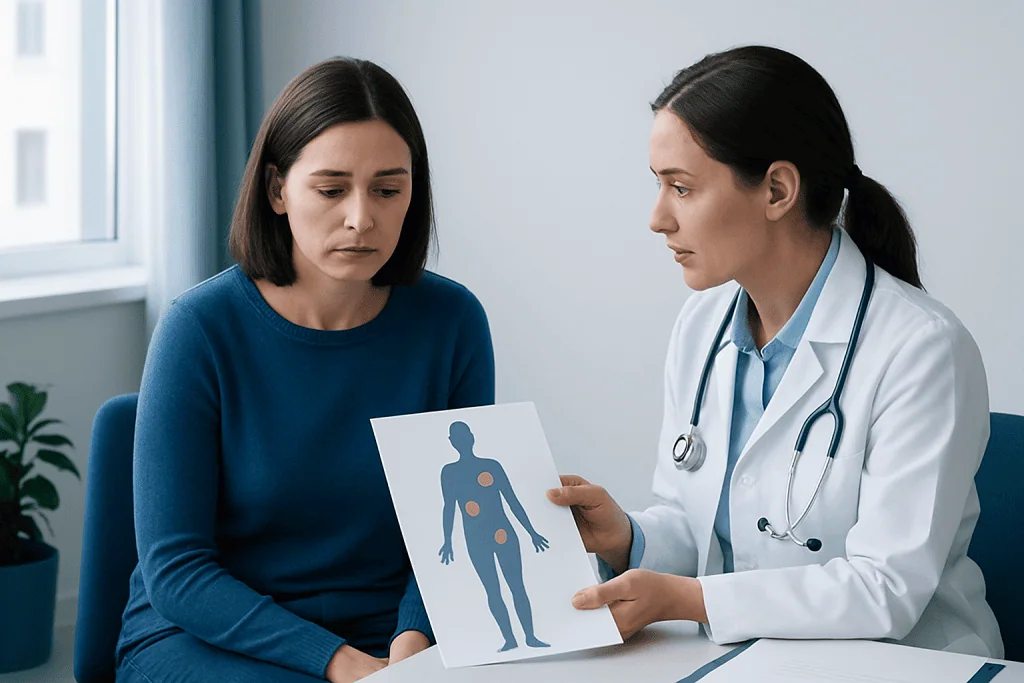
Sclerosis does not produce one standard set of symptoms. Instead, symptoms reflect where the hardening or scarring occurs and how much tissue function is affected. Some people notice mild, slowly developing changes, while others have symptoms that are more disruptive and need prompt evaluation.
When the nervous system is involved, symptoms may include numbness, tingling, muscle weakness, balance problems, tremor, vision changes, bladder symptoms, or cognitive changes. In skin and connective tissue disease, there may be tight or thickened skin, finger color changes in the cold, joint stiffness, swallowing difficulty, or shortness of breath if internal organs are involved.
When blood vessels are affected, symptoms may relate to reduced circulation. Depending on the vessel involved, this can cause chest pain, leg pain with walking, high blood pressure, or stroke-like symptoms. In some forms of sclerosis, especially early in the process, there may be few or no symptoms, which is why screening and medical follow-up can be important for people with risk factors.
Causes and risk factors
The causes of sclerosis vary by condition. Some forms are driven by immune system dysfunction. For example, multiple sclerosis and systemic sclerosis are autoimmune disorders, meaning the body’s immune response mistakenly damages healthy tissue. Genetics may influence susceptibility, but genes alone usually do not explain the condition.
Other forms are linked to long-term tissue injury or metabolic stress. Atherosclerosis is associated with high cholesterol, smoking, high blood pressure, diabetes, obesity, and limited physical activity. Chronic inflammation, aging, and environmental exposures can also contribute to tissue stiffening or scarring in different organs.
Doctors often look at a combination of risks rather than one single cause. These may include family history, autoimmune disease, infections, vascular risk factors, medication history, and prior injury. Understanding the likely cause helps shape treatment and can also provide a clearer sense of outlook and prevention.
How sclerosis is diagnosed
Diagnosing sclerosis begins with defining exactly which condition is present. A doctor usually starts with a detailed medical history and physical examination, asking about symptom timing, progression, family history, and signs of autoimmune, neurologic, vascular, or organ-related disease. Because sclerosis is a broad term, diagnosis often involves several specialists.
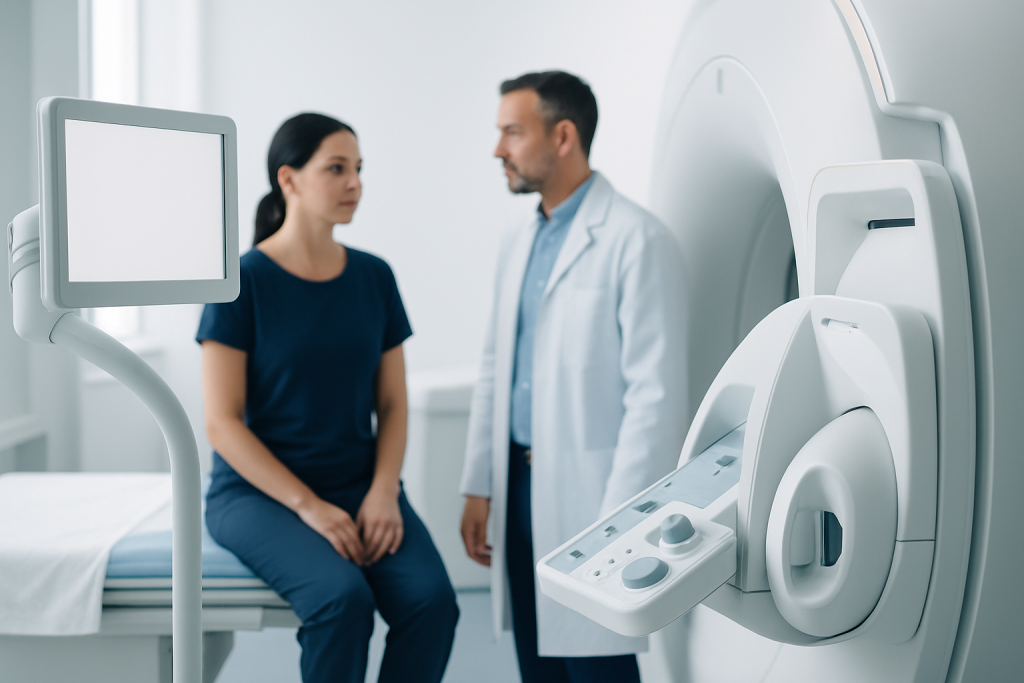
Tests depend on the suspected type. Imaging such as MRI is commonly used for nervous system disorders and may be part of MRI scanning to look for characteristic lesions or structural changes. Blood tests may help detect inflammation, autoimmune markers, cholesterol problems, kidney function changes, or other organ involvement. For vascular disease, ultrasound, CT, or other circulation studies may be useful.
In some cases, diagnosis also involves nerve testing, lung function tests, endoscopy, skin assessment, or biopsy of affected tissue. For conditions with possible immune causes, neurologists, rheumatologists, cardiologists, dermatologists, and other specialists may work together. This multidisciplinary approach is especially helpful when symptoms overlap or multiple organs are involved.
If multiple sclerosis is suspected, the evaluation may include neurologic examination, MRI findings over time, and other tests that help rule out similar conditions. For selected patients, specialized assessment in neurology care or brain MRI can help clarify the diagnosis and support a tailored treatment plan.
Modern treatment approaches
There is no single treatment for all forms of sclerosis. Treatment depends on the type, cause, severity, and organs involved. In general, care aims to slow disease activity where possible, reduce symptoms, preserve function, and lower the risk of complications. The most effective plan is usually individualized rather than one-size-fits-all.
For autoimmune forms such as multiple sclerosis or systemic sclerosis, treatment may include medications that modify immune activity, reduce inflammation, or manage specific symptoms. Rehabilitation, physical therapy, occupational therapy, and lifestyle support can play an important role in maintaining mobility, energy, and daily function. When swallowing, breathing, or circulation are affected, organ-specific treatment becomes a key part of care.
For atherosclerosis and similar vascular conditions, treatment often focuses on risk reduction. This may include cholesterol-lowering therapy, blood pressure management, diabetes control, smoking cessation, physical activity, and a heart-healthy diet. Some people may also need procedures when blood flow is severely narrowed.
Follow-up is an important part of modern treatment because sclerosis-related conditions may change over time. Monitoring helps doctors assess disease activity, treatment response, and side effects. Near the end of the care journey, some patients may benefit from coordinated services in centers that bring different specialties together. Acibadem International’s multidisciplinary specialists and JCI-accredited hospitals diagnose and treat sclerosis-related conditions for international patients when advanced evaluation is needed.
Outlook, prevention, and self-care
The outlook for sclerosis depends on the exact diagnosis. Some forms are mild and progress slowly, while others need long-term treatment and close monitoring. Early diagnosis, consistent follow-up, and prompt attention to new symptoms often improve symptom control and help protect organ function.
Prevention is not always possible, especially for autoimmune types. However, healthy habits can still support overall health and may reduce complications. These include not smoking, staying physically active within personal ability, eating a balanced diet, sleeping well, managing stress, and keeping routine medical appointments.
For vascular sclerosis such as atherosclerosis, prevention is especially important. Managing blood pressure, cholesterol, blood sugar, and weight can reduce progression and improve long-term cardiovascular health. Patients living with chronic sclerosis-related disease may also benefit from symptom tracking, rehabilitation exercises, mental health support, and practical planning for flare-ups or fatigue.
When to seek medical care
A person should seek medical care if they develop unexplained neurologic symptoms such as new weakness, numbness, balance problems, vision changes, or persistent dizziness. Medical review is also important for skin tightening, finger color changes in the cold, swallowing difficulty, shortness of breath, chest discomfort, or leg pain with walking.
Urgent medical attention is needed for signs that could indicate stroke, severe breathing trouble, sudden vision loss, or chest pain. These symptoms are not always caused by sclerosis, but they should never be ignored. Prompt evaluation can help identify the cause and start appropriate treatment quickly.
Even when symptoms seem mild, persistent or recurring changes deserve attention. An early diagnosis can help clarify whether the issue is related to multiple sclerosis or another form of sclerosis and can guide safe, evidence-based management.
Frequently asked questions
Is sclerosis a disease by itself?
Not usually. Sclerosis is a medical term that describes abnormal hardening or scarring of tissue, and it appears in the names of several different conditions. A doctor needs to identify the specific type before discussing treatment or outlook.
What is the difference between sclerosis and multiple sclerosis?
Sclerosis is a general term, while multiple sclerosis is one specific disease. Multiple sclerosis affects the brain and spinal cord and involves immune-related damage to nerve covering. Other forms of sclerosis affect different tissues, such as skin, arteries, or internal organs.
Can sclerosis be cured?
Some sclerosis-related conditions cannot be fully cured, but many can be treated and managed effectively. The goal is often to slow progression, control symptoms, and protect organ function. The best approach depends on the specific diagnosis.
How is sclerosis usually found?
It may be suspected based on symptoms, physical examination, or abnormal findings on routine tests. Diagnosis often uses imaging, blood tests, and sometimes biopsy or specialized studies. Because the term covers several conditions, the exact workup varies from person to person.
Does sclerosis always get worse over time?
Not always. Some forms progress slowly, some remain stable for long periods, and others improve with treatment or risk-factor control. Regular follow-up helps doctors detect changes early and adjust care when needed.
What lifestyle changes can help with sclerosis?
Helpful steps may include not smoking, eating a balanced diet, staying active, sleeping well, and managing stress. For vascular sclerosis, controlling blood pressure, cholesterol, and diabetes is especially important. Patients should ask their doctor for advice that fits their specific condition.
References
- World Health Organization
- National Institute of Neurological Disorders and Stroke
- National Institute of Arthritis and Musculoskeletal and Skin Diseases
- American Heart Association
- Mayo Clinic
This article is for general information only and is not a substitute for professional medical advice. Please consult a qualified doctor about your individual situation.
Explore treatments in Turkey — costs, top hospitals & a free quote
JCI-accredited · board-certified surgeons · reply within 24h
Add us as a Preferred Source to see more of our trusted health content across Google Search, AI Overviews and Discover.
Check your numbers in seconds
BMI, calories, due date, blood pressure and 30+ more clinical calculators — free, instant, doctor-reviewed ranges.

More from the Health Library



Related Specialists

Dr. Faısla Rabea
Emergency Service
Dr. Mesil Acar
Inpatient Clinic Physicians Clinical Service
Assoc. Prof. Dr. Selin Özaltın
Gynecology & Obstetrics
Dr. Sanem Pişkin
Pediatrics