Small Intestine Bleeding Treatment: How It Works, Results and What to Expect

Small bowel bleeding can cause visible blood in stool, black stools, anemia, weakness or dizziness, but it may also be hidden. Urgent evaluation is important for heavy bleeding, fainting, severe weakness, chest pain, shortness of breath or black, tar-like stools.
Key Takeaways
- Small bowel bleeding can cause visible blood in stool, black stools, anemia, weakness or dizziness, but it may also be hidden.
- Urgent evaluation is important for heavy bleeding, fainting, severe weakness, chest pain, shortness of breath or black, tar-like stools.
- Capsule endoscopy, deep enteroscopy and CT angiography can help locate bleeding that standard upper endoscopy or colonoscopy does not find.
- Most bleeding sources can be managed without open surgery, although treatment depends on the cause, location and rate of bleeding.
- Recovery varies from days after a minor, controlled episode to weeks when anemia, hospitalization or a procedure is involved.
Small intestine bleeding treatment begins with stabilizing the person, finding the bleeding source and using the least invasive effective option to stop it. Treatment may involve medication, specialized endoscopy, catheter-based radiology or, less commonly, surgery, depending on the cause and severity.
Overview: how small intestine bleeding treatment works
Small intestine bleeding treatment works by first supporting circulation and correcting blood loss, then locating the source and stopping it with medication, endoscopic therapy, interventional radiology or surgery when necessary. The small intestine lies between the stomach and colon, and bleeding in this area can be difficult to find because it is long and not fully reached by routine endoscopy.
Clinicians may describe this as suspected small-bowel bleeding when an upper endoscopy and colonoscopy have not found a source, particularly in a person with unexplained iron-deficiency anemia or recurrent gastrointestinal bleeding. The goal is not only to control the current bleed but also to identify and treat the underlying condition, reducing the chance of recurrence.
Care is tailored to the person’s symptoms, blood test results, medical history and how actively they are bleeding. A gastroenterologist often works alongside emergency, radiology, surgery and blood-management teams when bleeding is significant.
How serious is bleeding from the small intestine?
Bleeding from the small intestine ranges from slow, hidden blood loss to a rapid emergency. Slow bleeding may gradually lower iron levels and hemoglobin, causing tiredness, reduced exercise tolerance, paleness, headaches or breathlessness with activity. Rapid bleeding can lead to low blood pressure, a fast heartbeat, confusion, fainting or shock and needs immediate care.
The seriousness depends on the amount and speed of blood loss, the person’s age and overall health, and whether they take medicines that affect clotting. People with heart, lung, kidney or liver disease may become unwell with smaller amounts of blood loss than otherwise healthy people.
Black, tar-like stool can indicate bleeding higher in the digestive tract, although some supplements and medicines can also darken stool. Bright red blood may come from the lower bowel but can occasionally occur with brisk upper or small-bowel bleeding. Testing is needed to determine the source reliably.
Causes, risk factors and candidacy for treatment

Common causes include small abnormal blood vessels called angioectasias, ulcers related to anti-inflammatory medicines, inflammation, benign growths, polyps, diverticula, tumors and, less often, inherited vascular conditions. Bleeding may also occur after surgery or in association with disorders that affect blood clotting.
Risk factors include regular use of nonsteroidal anti-inflammatory drugs such as ibuprofen or naproxen, antiplatelet medicines, anticoagulants, kidney disease, liver disease and older age. These medicines should never be stopped without advice from the prescribing clinician, as they may be essential for preventing stroke, blood clots or heart events.
Almost anyone with confirmed or strongly suspected small-bowel bleeding may be considered for evaluation and treatment. The best approach depends on whether bleeding is ongoing, whether the person is stable, whether a suspected cause has been seen on imaging, and whether anesthesia or a procedure is safe for them.
How do they fix bleeding in the small intestine?
Doctors treat the cause whenever possible. If bleeding is active or blood loss is substantial, care may begin with intravenous fluids, blood tests, iron replacement and, when clinically necessary, blood transfusion. Medication may be used to treat ulcers, inflammation or an underlying disease, while a clinician reviews medicines that may increase bleeding risk.
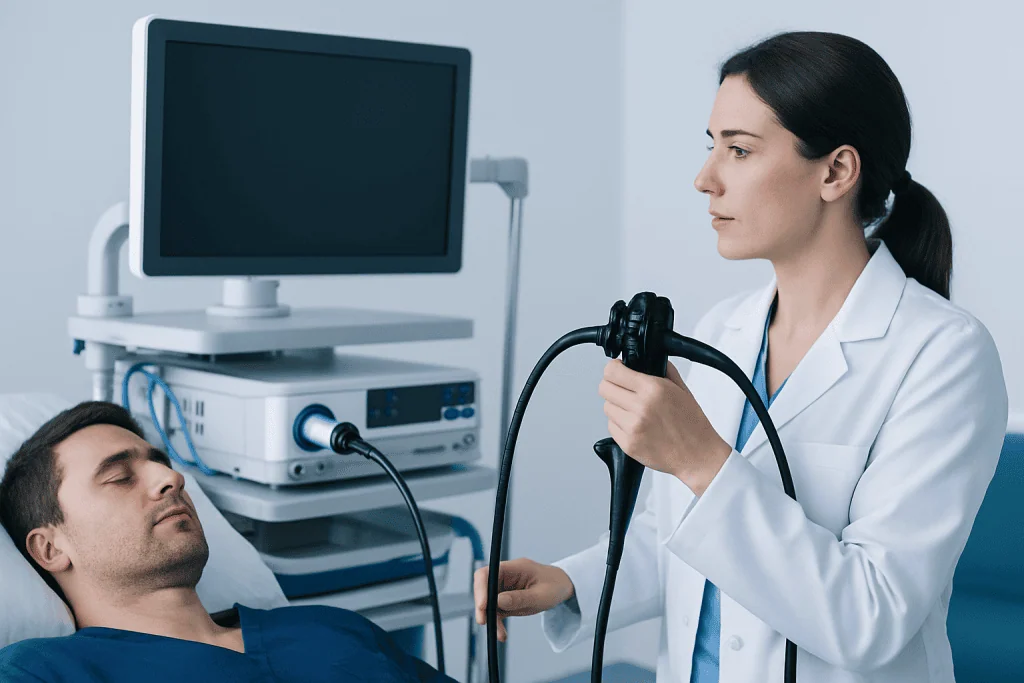
Specialized endoscopic methods are often central to treatment. Capsule endoscopy uses a swallowable camera to look through the small intestine. If it identifies a likely location, deep enteroscopy may allow a gastroenterologist to reach the area and treat it with techniques such as heat therapy, clips, injection therapy or removal of a bleeding lesion. These approaches are part of advanced endoscopic evaluation and treatment.
If bleeding is rapid and cannot be controlled endoscopically, CT angiography may help identify its location. An interventional radiologist can sometimes guide a catheter through an artery and block the bleeding vessel, a procedure called embolization. Surgery is generally reserved for bleeding that persists despite other options, a lesion requiring removal, or cases where the source cannot otherwise be managed.
- Medication: may treat ulcers, inflammation, anemia or a contributing condition.
- Endoscopic therapy: can diagnose and treat accessible bleeding points in the same session.
- Angiographic embolization: may control active arterial bleeding without open surgery.
- Surgery: may remove a tumor, diseased bowel segment or a source that cannot be controlled otherwise.
Step by step: diagnosis, procedure and recovery timeline
The first step is an assessment of symptoms, vital signs and blood counts. Clinicians ask about stool appearance, previous bleeding, abdominal symptoms and all medicines and supplements. Standard upper endoscopy and colonoscopy may be repeated when an earlier examination was incomplete or when there is reason to suspect a missed source.
For stable patients with suspected small-bowel bleeding, capsule endoscopy is commonly used to guide the next test. The person swallows a capsule camera, wears a recording device and usually continues ordinary light activity as instructed. If a treatable source is found, deep enteroscopy is usually performed with sedation or anesthesia; preparation and fasting instructions depend on the planned approach.
After an endoscopic procedure, many people go home the same day once sedation effects have worn off, unless they have ongoing bleeding or other medical concerns. Following embolization or surgery, hospital observation is typically longer. Follow-up blood tests can confirm that hemoglobin and iron stores are recovering, and repeat testing may be needed if symptoms return.
How long does it take to recover from intestinal bleeding?
Recovery from intestinal bleeding depends on the amount of blood lost, whether bleeding has fully stopped and the treatment required. A mild episode treated promptly may improve over several days, while recovery from anemia can take weeks or longer because the body needs time to rebuild red blood cells and iron stores.
After capsule endoscopy, recovery is usually immediate. After deep enteroscopy, mild bloating, throat discomfort or fatigue from sedation may last a day or two. Recovery after catheter-based embolization varies, and surgical recovery commonly takes longer, with the timeline influenced by the type of operation and the person’s general health.
Clinicians may recommend iron therapy, follow-up blood tests and a review of medications. It is important to take prescribed treatment as directed and report recurrent black stools, visible blood, dizziness, worsening fatigue or abdominal pain rather than assuming recovery is complete.
Benefits, risks and prevention of recurrence
The main benefits of treatment are control of bleeding, correction of anemia, relief of symptoms and identification of an underlying cause that may need ongoing care. Finding the source can also help clinicians make safer decisions about anticoagulants, antiplatelet medicines and anti-inflammatory pain relievers.
Risks differ by procedure. Endoscopic treatment can rarely cause bleeding, perforation, pancreatitis in selected approaches, sedation reactions or missed lesions. Embolization carries risks related to contrast dye, blood vessels and reduced blood flow to bowel tissue. Surgery has risks such as infection, blood clots, anesthesia complications and bowel-related complications. The team weighs these risks against the danger of continued bleeding.
Preventing recurrence may include avoiding unnecessary nonsteroidal anti-inflammatory drugs, treating ulcers or inflammatory disease, managing anemia and attending follow-up appointments. A doctor can advise whether alternatives to a medicine that irritates the digestive tract are suitable; people should not make changes to prescribed blood-thinning treatment on their own.
Acibadem International’s multidisciplinary specialists and JCI-accredited hospitals can assess and treat small-bowel bleeding for international patients, coordinating gastroenterology, interventional radiology, surgery and supportive care when appropriate.
When to seek medical care and how long GI bleeding can be survived
How long can you survive with GI bleeding? There is no safe or predictable timeframe. Slow bleeding can persist for weeks or months while causing progressive anemia, whereas heavy bleeding can become life-threatening within hours. The amount of blood loss cannot be judged reliably at home, so suspected gastrointestinal bleeding should be assessed by a qualified clinician.
Emergency care is needed for vomiting blood, black tar-like stools with weakness, large amounts of red blood in stool, fainting, confusion, severe dizziness, chest pain, shortness of breath, cold clammy skin or severe abdominal pain. People who take anticoagulants or have significant heart, kidney or liver disease should seek urgent advice even for less dramatic symptoms.
For new fatigue, unexplained anemia, recurrent dark stools or intermittent visible blood without emergency symptoms, prompt medical assessment is still important. Early evaluation can identify treatable causes before blood loss becomes more severe.
Frequently asked questions
What tests find bleeding in the small intestine?
Tests may include capsule endoscopy, CT angiography, specialized deep enteroscopy and blood tests for anemia. The choice depends on whether bleeding is active, the severity of symptoms and results from prior upper endoscopy and colonoscopy.
Can small intestine bleeding stop on its own?
Some minor bleeding episodes may stop temporarily, but the underlying cause can remain and bleeding can recur. Medical assessment is important, especially when there is anemia, black stool, visible blood, dizziness or use of blood-thinning medication.
Is capsule endoscopy painful?
Capsule endoscopy is generally painless because the camera is swallowed like a large pill. It does not allow treatment during the test, but it can help direct a later therapeutic procedure if a bleeding source is found.
Will I need surgery for small bowel bleeding?
Most people do not need surgery. Endoscopic treatment, medication or catheter-based embolization can often control bleeding, while surgery is considered when these approaches are not suitable or a condition requires bowel removal.
Can blood thinners cause small intestine bleeding?
Anticoagulants and antiplatelet medicines can increase the likelihood or severity of bleeding from an existing lesion. They should not be stopped independently, because stopping them may increase the risk of stroke or clotting; a prescribing clinician should guide any changes.
What should I eat after intestinal bleeding?
Diet advice depends on the cause and treatment. Many people can resume a usual balanced diet after a minor endoscopic procedure, but those recovering from surgery or with active symptoms may need individualized instructions from their clinical team.
References
- National Institute of Diabetes and Digestive and Kidney Diseases
- American College of Gastroenterology
- American Society for Gastrointestinal Endoscopy
- National Health Service
- Mayo Clinic
This article is for general information only and is not a substitute for professional medical advice. Please consult a qualified doctor about your individual situation.
Persistent digestive symptoms? Get evaluated in Turkey
JCI-accredited · board-certified surgeons · reply within 24h
Add us as a Preferred Source to see more of our trusted health content across Google Search, AI Overviews and Discover.
Check your numbers in seconds
BMI, calories, due date, blood pressure and 30+ more clinical calculators — free, instant, doctor-reviewed ranges.