Spermatocele Treatment: How It Works, Results and What to Expect

Most spermatoceles are benign and can be monitored without treatment. A scrotal ultrasound is commonly used to confirm the diagnosis and exclude other causes of a lump.
Key Takeaways
- Most spermatoceles are benign and can be monitored without treatment.
- A scrotal ultrasound is commonly used to confirm the diagnosis and exclude other causes of a lump.
- Spermatocelectomy removes a symptomatic spermatocele but may affect the epididymis and fertility potential.
- Recovery after surgery commonly involves swelling and activity limits for several weeks.
- New, painful, firm, or rapidly changing scrotal lumps should be assessed promptly by a clinician.
Spermatocele treatment is often not needed because these fluid-filled cysts are usually harmless. When a spermatocele causes persistent pain, becomes bothersome because of its size, or creates diagnostic uncertainty, a urologist may recommend surgery or, less commonly, a drainage-based procedure.
Spermatocele treatment: the practical overview
Spermatocele treatment usually begins with reassurance and observation. A spermatocele is a benign, fluid-filled sac that develops near the epididymis, the coiled tube behind the testicle that stores and transports sperm. Many are small, painless and found incidentally during self-examination, an examination for another concern, or scrotal imaging.
If there is no significant pain, pressure or disruption to everyday activities, treatment may simply involve periodic review and supportive measures. Surgery, called spermatocelectomy, is generally considered when symptoms remain troublesome, the cyst is enlarging, or its size makes examination and comfort difficult. The decision is individual and should take account of symptoms, future fertility plans and the possibility of treatment-related complications.
A spermatocele is different from conditions such as a varicocele, which involves enlarged veins in the scrotum. Because several scrotal conditions can feel similar, a clinician should assess a new lump rather than relying on self-diagnosis.
How spermatocele treatment works
Observation is the most common approach. It does not make the cyst disappear, but it avoids unnecessary procedures when the spermatocele is not causing problems. Supportive underwear, avoiding activities that aggravate discomfort, and clinician-guided use of common pain relief may be helpful for occasional mild aching.
Spermatocelectomy is the definitive surgical treatment. During this operation, the surgeon makes a small incision in the scrotum, identifies the spermatocele and carefully separates and removes it while aiming to preserve the testicle and surrounding structures. The procedure is often performed as day surgery under general or regional anesthesia, depending on the person and local practice.
Aspiration, in which fluid is removed with a needle, and sclerotherapy, in which an irritant is placed into the cavity after drainage, may be considered in selected situations. However, the fluid may return, and these approaches can inflame or damage the epididymis. They are not routine first-line options for people who wish to preserve fertility.
Who may be a candidate for spermatocele surgery?

A urologist may discuss surgery when a confirmed spermatocele causes ongoing pain, heaviness, pressure, difficulty with exercise or sexual comfort, or concern because of progressive enlargement. Size alone does not determine treatment. A relatively small cyst may be very uncomfortable for one person, while a larger one may cause no symptoms at all.
Before recommending an operation, the clinician considers whether symptoms are truly likely to come from the spermatocele. Scrotal pain can also arise from infection, inflammation, hernia, varicocele, injury, nerve-related pain or another testicular condition. Treating a cyst that is not the source of pain may not provide the expected relief.
Fertility plans deserve particular attention. The epididymis and vas deferens are involved in moving sperm, and surgery or sclerotherapy can potentially obstruct these structures. People hoping for future biological children should discuss this risk with their urologist; semen analysis or fertility preservation may occasionally be relevant depending on the clinical situation.
Diagnosis and the step-by-step procedure
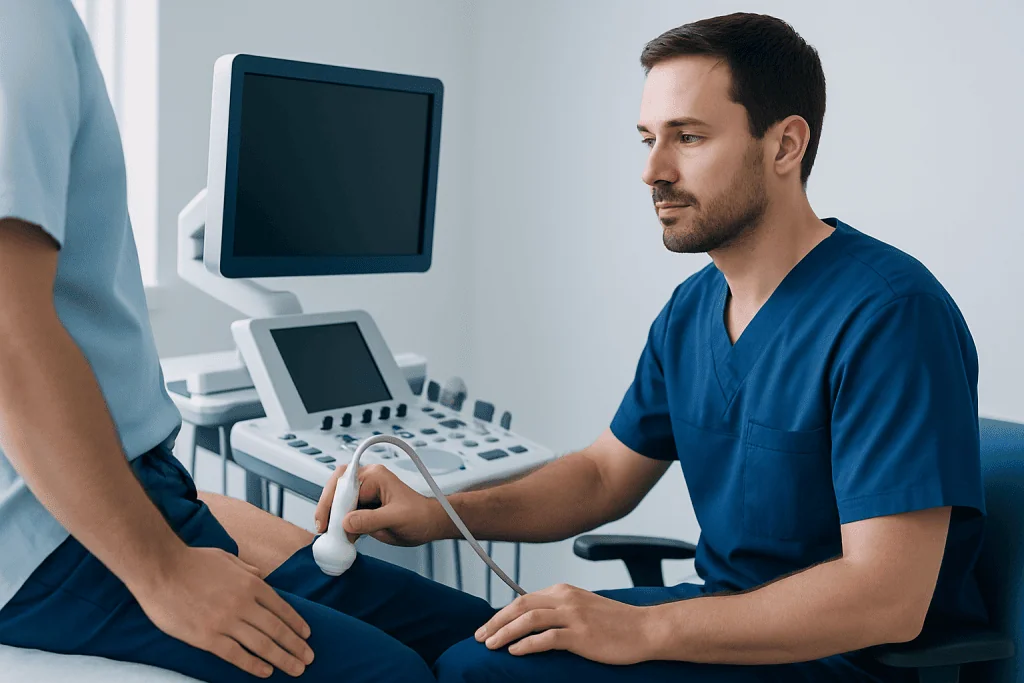
Diagnosis starts with a medical history and physical examination. A spermatocele commonly feels like a smooth, mobile lump above or behind the testicle rather than within the testicle itself. Scrotal ultrasound is often used to show that the lump is fluid-filled and separate from the testicular tissue, helping distinguish it from conditions that need different care.
For spermatocelectomy, the patient is assessed before surgery for anesthesia suitability, current medicines, bleeding risk and any infection. The surgical team provides individualized instructions about eating and drinking before anesthesia, transport home and temporary changes to medicines when appropriate. It is important not to stop prescribed medication without direct clinical advice.
During the procedure, the surgeon makes a scrotal incision, exposes the cyst and removes it as safely as possible. The incision is then closed, and a dressing or scrotal support may be applied. Tissue may be sent for laboratory examination when clinically appropriate, although spermatoceles are typically benign. Urology teams can also assess related male reproductive concerns, including male infertility treatment, when this is relevant to the patient’s goals.
Most patients go home the same day after observation in the recovery area. They should arrange for a responsible adult to accompany them and follow the discharge instructions provided by their surgical team.
Recovery timeline, benefits and possible risks
After spermatocele surgery, soreness, bruising and swelling are common during the first days. A scrotal support, intermittent cold packs protected by a cloth, rest and prescribed or clinician-recommended pain relief can improve comfort. Light walking is usually encouraged as tolerated, while heavy lifting, cycling, strenuous exercise and sexual activity may need to be avoided until the surgeon confirms it is safe.
Many people can return to desk-based activity within several days to around one week, but recovery varies with the operation, physical work demands and individual healing. Swelling may take several weeks to settle completely. Follow-up helps confirm that the wound is healing and provides an opportunity to discuss any ongoing discomfort.
The main expected benefit is relief from the pressure or discomfort caused by a symptomatic cyst. Possible risks include bleeding, infection, hematoma, persistent pain, recurrence, injury to the epididymis or sperm-carrying structures, and reduced fertility potential. Rarely, pain can persist even after successful removal. A surgeon can explain how these considerations apply to an individual case.
Prompt medical advice is important for fever, worsening redness, drainage from the wound, severe or increasing pain, rapidly growing swelling, difficulty passing urine, or symptoms that feel concerning after surgery.
Does ejaculating help spermatocele?
Ejaculation does not treat or drain a spermatocele. The cyst is a separate fluid-filled sac near the epididymis, so sexual activity does not make it resolve. Some people notice no change with ejaculation, while others may experience temporary discomfort because of pressure or sensitivity in the area.
There is usually no need to avoid ejaculation solely because a spermatocele is present if it is comfortable. However, a person should pause and seek medical advice if ejaculation causes significant or recurrent pain, blood in semen, urinary symptoms, fever, or other new symptoms. After surgery, the surgeon will advise when sexual activity can safely resume.
How big is too big for a spermatocele?
There is no single measurement that makes a spermatocele “too big.” Treatment decisions are based more on symptoms, growth pattern, physical examination findings and the person’s preferences than on diameter alone. A cyst may be monitored even when it is noticeable if it is painless and imaging confirms a benign appearance.
An enlarging lump, a cyst that causes pressure or limits activity, or one that makes it hard to examine the testicle should be reviewed by a urologist. Ultrasound can clarify its size and features. Surgery may be considered when the impact on comfort or daily life outweighs the potential risks of intervention.
Should I worry about spermatocele? When to seek medical care
In most cases, a spermatocele is not dangerous and does not increase the risk of testicular cancer. Still, any new scrotal lump deserves a medical examination because it is not possible to reliably identify the cause by touch alone. A clinician can provide reassurance after appropriate assessment and imaging when needed.
Urgent assessment is needed for sudden severe testicular or scrotal pain, especially if it begins abruptly, because testicular torsion and other urgent conditions need prompt treatment. Medical care should also be sought soon for a hard lump in the testicle, rapid enlargement, fever, redness, urinary symptoms, injury, or unexplained persistent scrotal pain.
Acibadem International’s multidisciplinary specialists and JCI-accredited hospitals assess and treat urologic conditions for international patients. A consultation with a urologist can help determine whether monitoring, symptom management or a procedure is the most appropriate spermatocele treatment.
Frequently asked questions
How long does it take for a spermatocele to heal?
A spermatocele that is being monitored may remain present for years and does not necessarily shrink or disappear. After spermatocelectomy, initial soreness often improves within days, while swelling and full comfort may take several weeks. Healing time varies according to the extent of surgery, activity level and individual health.
Can spermatocele go away without surgery?
A spermatocele often remains stable rather than disappearing on its own. If it is painless and confirmed to be benign, no treatment may be necessary. Regular review may be advised if it changes or begins causing symptoms.
Does ejaculating help spermatocele?
No. Ejaculation does not empty or cure a spermatocele. It is generally acceptable if comfortable, but recurring pain with ejaculation should be discussed with a clinician.
How big is too big for a spermatocele?
There is no universal size threshold for treatment. A urologist considers pain, pressure, growth, effect on daily activities and ultrasound findings. A large but symptom-free spermatocele may still be monitored, while a smaller painful one may need treatment.
Should I worry about spermatocele?
Spermatoceles are usually benign and not a sign of cancer. However, every new scrotal lump should be examined because other conditions can have similar symptoms. Sudden severe pain requires urgent medical assessment.
Can spermatocele surgery affect fertility?
It can. Because the spermatocele is close to the epididymis and sperm transport pathways, surgery may cause scarring or injury that affects fertility, particularly on the treated side. People who want future children should discuss this risk and available options with a urologist before treatment.
References
- American Urological Association
- Urology Care Foundation
- Mayo Clinic
- Merck Manual Consumer Version
This article is for general information only and is not a substitute for professional medical advice. Please consult a qualified doctor about your individual situation.
Explore treatments in Turkey — costs, top hospitals & a free quote
JCI-accredited · board-certified surgeons · reply within 24h