Spondylosis: Diagnosis, Outlook, and Modern Treatment Approaches

Spondylosis refers to wear-and-tear changes in the spine, most often in the neck or lower back. Symptoms range from none at all to pain, stiffness, tingling, weakness, or balance problems if nerves are affected.
Key Takeaways
- Spondylosis refers to wear-and-tear changes in the spine, most often in the neck or lower back.
- Symptoms range from none at all to pain, stiffness, tingling, weakness, or balance problems if nerves are affected.
- Diagnosis is based on symptoms, physical examination, and imaging when clinically needed.
- Most people improve with non-surgical treatment such as exercise, physical therapy, posture support, and pain management.
- Urgent assessment is important if there is worsening weakness, problems with walking, or loss of bladder or bowel control.
Spondylosis is a common term for age-related degenerative changes in the spine, including the discs, joints, and bones. Many people have spondylosis without serious symptoms, and modern treatment usually focuses on relieving pain, improving movement, and protecting nerve function when needed.
Overview: what spondylosis means
Spondylosis is a broad medical term for age-related degenerative changes in the spine. It can affect the discs between the vertebrae, the facet joints that guide movement, and the surrounding bone and ligaments. In everyday language, it is often described as spinal wear and tear, but that phrase does not always mean severe disease.
Many adults develop some degree of spondylosis over time, especially in the neck and lower back. In some people, these changes cause no symptoms and are found only on imaging. In others, they may lead to pain, stiffness, or irritation of nearby nerves.
Spondylosis is not one single condition with one fixed course. It is a pattern of structural change that may include disc thinning, bone spur formation, and joint arthritis. When these changes narrow the spaces around nerves or the spinal cord, symptoms may become more noticeable and targeted treatment may be needed.
How spondylosis can affect the neck, back, and nerves
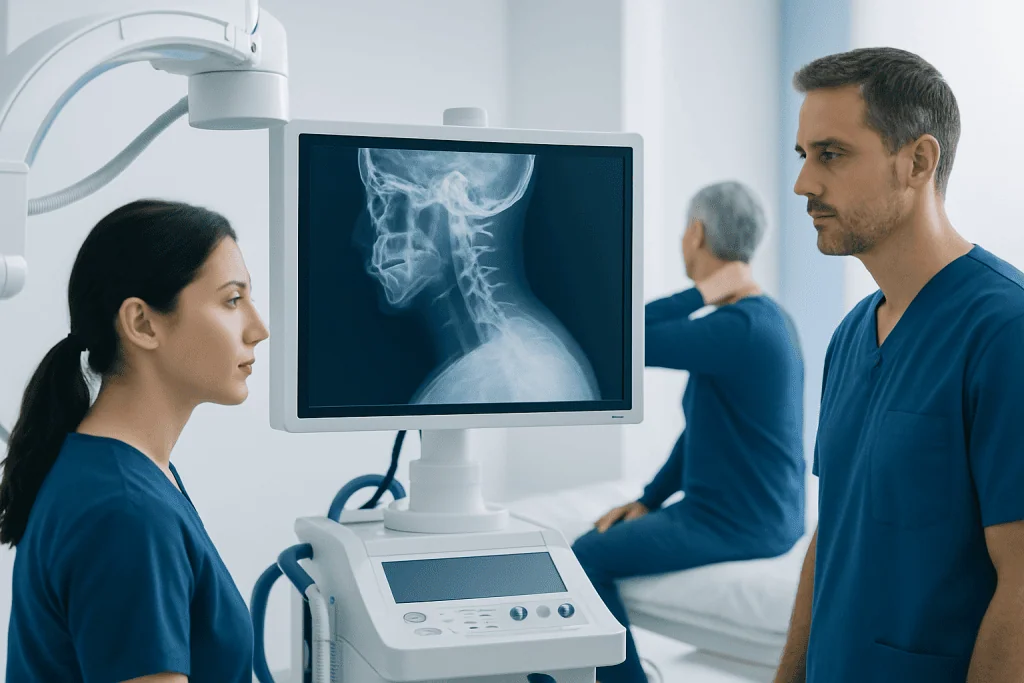
The spine is designed to support the body, protect the spinal cord, and allow flexible movement. With time, the discs can lose water content and become less cushioned. The small joints in the spine may also become arthritic, and the body may form bone spurs as part of the degenerative process.
These changes are often described by location. Cervical spondylosis affects the neck, thoracic spondylosis affects the mid-back, and lumbar spondylosis affects the lower back. Cervical and lumbar forms are the most likely to cause symptoms because these areas move more and carry more mechanical stress.
If nearby nerves become compressed, a person may develop radiating arm or leg pain, numbness, or weakness. If the spinal cord itself is affected, especially in the neck, symptoms can include clumsiness in the hands, balance difficulty, or changes in walking. This is why careful evaluation matters when symptoms go beyond simple stiffness or soreness.
Some related conditions may overlap with spondylosis, such as herniated disc or spinal stenosis. A clinician may use more than one term if imaging and symptoms show several degenerative problems at the same time.
Symptoms and warning signs

Spondylosis symptoms vary widely. The most common complaints are neck pain, back pain, stiffness after rest, and reduced flexibility. Pain may feel dull and aching, or it may flare after certain activities, long periods of sitting, or poor posture.
When nerves are irritated or compressed, symptoms may travel away from the spine. In the neck, this can cause shoulder or arm pain, tingling in the fingers, or reduced grip strength. In the lower back, symptoms may spread into the buttock or leg and may resemble sciatica.
Symptoms that suggest spinal cord involvement need more prompt medical attention. These can include hand clumsiness, trouble with balance, leg heaviness, frequent falls, or difficulty controlling fine movements. In more serious cases, bladder or bowel changes can occur.
- Neck or back pain that persists or returns often
- Morning stiffness or stiffness after inactivity
- Pain that radiates into an arm or leg
- Numbness, tingling, or pins-and-needles sensations
- Muscle weakness or reduced coordination
- Headaches related to neck tension in some people
Causes and risk factors
The main driver of spondylosis is aging. Over the years, normal use of the spine can lead to disc dehydration, reduced disc height, joint cartilage wear, and thickening of supporting ligaments. These changes are common and do not always indicate a dangerous problem.
Several factors can increase the likelihood of symptoms. These include repetitive heavy lifting, physically demanding work, prior spine injury, poor posture, smoking, obesity, and low physical activity. Genetic factors may also influence how quickly the discs and joints change over time.
Occupation and daily habits matter as well. Repeated neck flexion, long hours at a computer without ergonomic support, or jobs involving vibration and strain may contribute to discomfort. However, symptoms are not always directly proportional to imaging findings, which is why the whole clinical picture is important.
In younger adults, spondylosis can still occur, especially after trauma or long-term mechanical stress. Doctors may also consider other causes of pain, such as inflammatory arthritis, fracture, infection, or tumor, when the history or examination suggests a different process.
How spondylosis is diagnosed
Diagnosis begins with a detailed history and physical examination. A doctor asks where the pain is felt, how long it has been present, what makes it better or worse, and whether there are symptoms such as numbness, weakness, gait change, or bladder problems. The examination may include posture assessment, range of motion, reflexes, sensation, strength, and balance.
Imaging is not always necessary at the first visit, especially if symptoms are mild and there are no warning signs. Plain X-rays can show alignment, disc space narrowing, and bone spurs. Magnetic resonance imaging is more useful when nerve compression or spinal cord involvement is suspected because it shows discs, nerves, and soft tissues in more detail.
Computed tomography may help assess bony anatomy, especially if surgery is being considered. In selected cases, nerve conduction studies or electromyography may be used to evaluate nerve function and distinguish spinal nerve irritation from other nerve disorders.
The goal of diagnosis is not only to label the degeneration but to identify whether it is truly responsible for the symptoms. This helps avoid unnecessary treatment and supports a plan tailored to function, pain control, and neurologic safety.
Modern treatment approaches and outlook
For most people, treatment begins without surgery. The main goals are to reduce pain, improve mobility, strengthen supporting muscles, and maintain normal daily activities. A structured plan often includes activity modification, targeted exercise, physical therapy, heat or cold, and medicines recommended by a doctor for symptom relief.
Physical therapy can be especially helpful because it addresses posture, flexibility, and core or neck muscle support. Exercises are chosen according to the location of symptoms and whether a nerve is involved. Many people improve gradually with consistent rehabilitation and a realistic pace of recovery.
When pain is persistent or inflammation is driving symptoms, doctors may consider image-guided injections in selected cases. If symptoms point to significant disc-related nerve compression, evaluation may also overlap with care for cervical disc herniation. Depending on the problem, a specialist may discuss options such as physical therapy and rehabilitation or targeted pain management.
Surgery is usually reserved for specific situations, such as progressive neurologic weakness, spinal cord compression, severe pain that does not improve with conservative care, or structural instability. Procedures vary by level and cause, but the aim is to relieve pressure on nerves or the spinal cord and stabilize the spine when necessary. In appropriate patients, options may include spine surgery.
The outlook is often favorable, especially when symptoms are recognized early and managed consistently. Many people live well with spondylosis by combining exercise, ergonomic habits, and periodic medical follow-up. Near the end of the care pathway, some international patients may choose centers such as Acibadem International, where multidisciplinary specialists in JCI-accredited hospitals evaluate and treat spinal conditions.
Self-care, prevention, and when to seek medical care
Although age-related changes cannot be completely prevented, healthy spine habits can reduce strain and improve resilience. Regular low-impact activity, stretching, strength training, weight management, and smoking cessation can all support spinal health. Workstation ergonomics and safe lifting techniques are also important for both prevention and symptom control.
During a flare, many people benefit from short-term activity adjustment rather than complete bed rest. Gentle movement usually helps more than prolonged immobility. A doctor or physical therapist can guide a safe return to exercise and advise which movements should be limited temporarily.
Medical review is appropriate if pain lasts more than a few weeks, keeps returning, interferes with sleep or daily activities, or causes radiating arm or leg symptoms. Earlier assessment is especially important when there is numbness, weakness, or symptoms affecting walking or hand function.
Urgent medical attention is needed for new or worsening muscle weakness, severe balance problems, fever with back pain, major trauma, unexplained weight loss, or loss of bladder or bowel control. These features do not always mean a serious emergency, but they should be assessed promptly by a qualified clinician.
Frequently asked questions
Is spondylosis the same as arthritis of the spine?
Spondylosis is a broad term that often includes arthritic changes in the spinal joints, along with disc degeneration and bone spur formation. So it is closely related to spinal osteoarthritis, but it is slightly wider in meaning.
Can spondylosis be cured?
The underlying age-related changes in the spine cannot usually be reversed completely. However, symptoms can often be managed well with exercise, physical therapy, posture changes, and other treatments tailored to the cause of pain.
Does spondylosis always get worse over time?
Not necessarily. Imaging changes may progress gradually with age, but symptoms do not always worsen in the same way. Many people remain stable for long periods or improve with conservative treatment and healthy habits.
What is the difference between cervical and lumbar spondylosis?
Cervical spondylosis affects the neck, while lumbar spondylosis affects the lower back. The location influences symptoms, so neck changes may cause arm symptoms, while lower back changes may affect the buttock or legs.
When is surgery considered for spondylosis?
Surgery is generally considered when there is progressive weakness, spinal cord compression, severe nerve-related symptoms, or pain that does not improve with non-surgical care. The decision depends on symptoms, examination findings, imaging, and overall health.
What type of exercise is usually helpful for spondylosis?
Gentle range-of-motion work, core strengthening, walking, and exercises that improve posture are commonly recommended. A physical therapist can adapt the program to the neck or lower back and make it safer if nerve symptoms are present.
References
- National Institute of Arthritis and Musculoskeletal and Skin Diseases
- American Academy of Orthopaedic Surgeons
- National Institute of Neurological Disorders and Stroke
- Mayo Clinic
- North American Spine Society
This article is for general information only and is not a substitute for professional medical advice. Please consult a qualified doctor about your individual situation.
Joint and spine care in Turkey — expert assessment & treatment
JCI-accredited · board-certified surgeons · reply within 24h
Add us as a Preferred Source to see more of our trusted health content across Google Search, AI Overviews and Discover.