Steam Burn: What Patients Need to Know
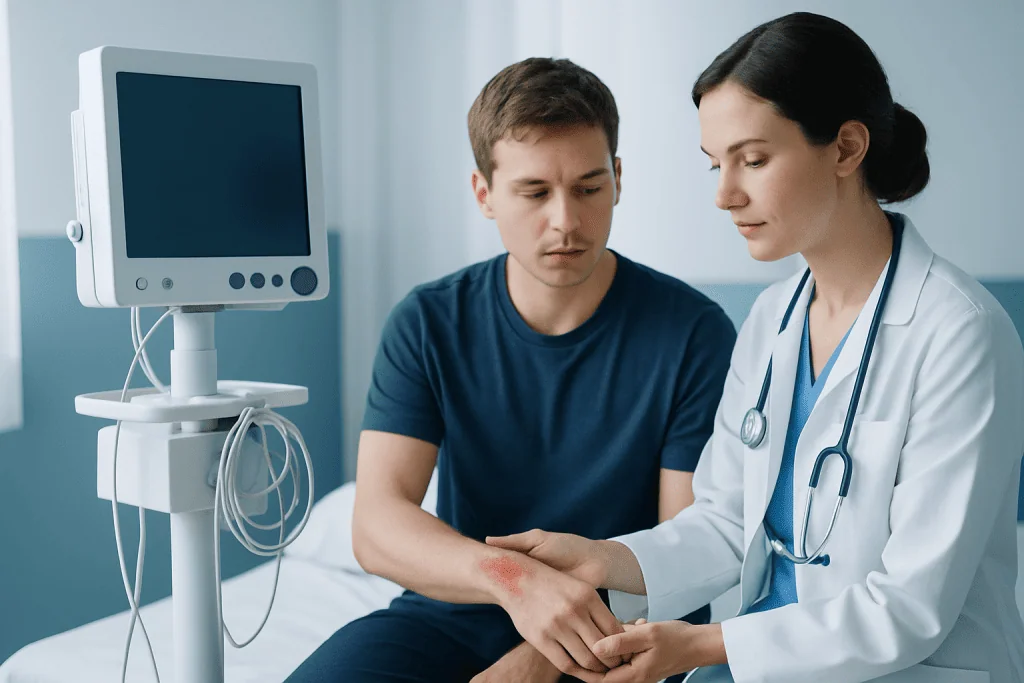
Steam can cause deeper skin injury than its brief contact may suggest because it releases heat as it condenses on the skin. Cool a steam burn under cool or lukewarm running water for 20 minutes as soon as possible; do not use ice.
Key Takeaways
- Steam can cause deeper skin injury than its brief contact may suggest because it releases heat as it condenses on the skin.
- Cool a steam burn under cool or lukewarm running water for 20 minutes as soon as possible; do not use ice.
- Blisters, increasing pain, white or charred skin, numbness, or burns affecting the face, hands, genitals, feet or joints need prompt medical assessment.
- Do not pop blisters or apply butter, toothpaste, oils, powders or adhesive dressings to a fresh burn.
- Children, older adults, and people with diabetes, reduced sensation or weakened immunity may need earlier medical advice for a burn.
A steam burn is a thermal injury caused by contact with hot water vapor. Because steam transfers heat efficiently and may affect a larger area than expected, prompt cooling and appropriate medical assessment are important for limiting skin damage and supporting healing.
Steam burn: what it is and why prompt care matters
A steam burn is a type of thermal burn, also called a scald, that occurs when hot water vapor contacts the skin. It commonly happens around boiling pots, pressure cookers, kettles, steam irons, hot-water pipes, humidifiers, industrial equipment, and hot showers. Steam burns should be taken seriously even when the exposure seems brief: when steam changes back into water on cooler skin, it releases stored heat rapidly.
The immediate priorities are to move away from the heat source, cool the injured skin with cool or lukewarm running water, and protect the area from friction or contamination. The visible appearance immediately after injury does not always show the full depth of the burn. Pain, redness, swelling, blistering, and changes in skin color can develop or become clearer over the next several hours.
Most small, superficial steam burns heal with basic first aid and careful home care. However, a clinician should assess burns that are extensive, deep-looking, circumferential, or located on sensitive or functional areas of the body. Fast, appropriate care can reduce ongoing heat injury and help clinicians decide whether specialist burn treatment is needed.
How steam burns affect the skin
Burns are described by how deeply they affect the skin. A superficial burn affects the outer layer and usually causes redness, tenderness, and mild swelling without blisters. It often heals within several days and generally does not leave a scar, although temporary color change may occur.
A partial-thickness burn reaches deeper layers of skin. It may look moist, bright pink or red, mottled, and swollen, and it often forms blisters. These burns can be very painful because nerve endings are exposed or irritated. Healing may take weeks, and medical review is helpful because the risk of infection, scarring, and reduced movement can be higher.
A full-thickness burn destroys the full depth of the skin. It may appear white, brown, waxy, leathery, or charred. It can sometimes feel less painful or numb in the deepest central area because nerves have been damaged, while surrounding skin is painful. Full-thickness burns require urgent professional treatment and may require procedures such as wound cleaning, skin coverage, or reconstructive care.
Depth is not always easy to judge at home, particularly in the first hours after a steam injury. For this reason, anyone unsure about the severity of a burn should contact a healthcare professional for guidance.
Immediate first aid for a steam burn
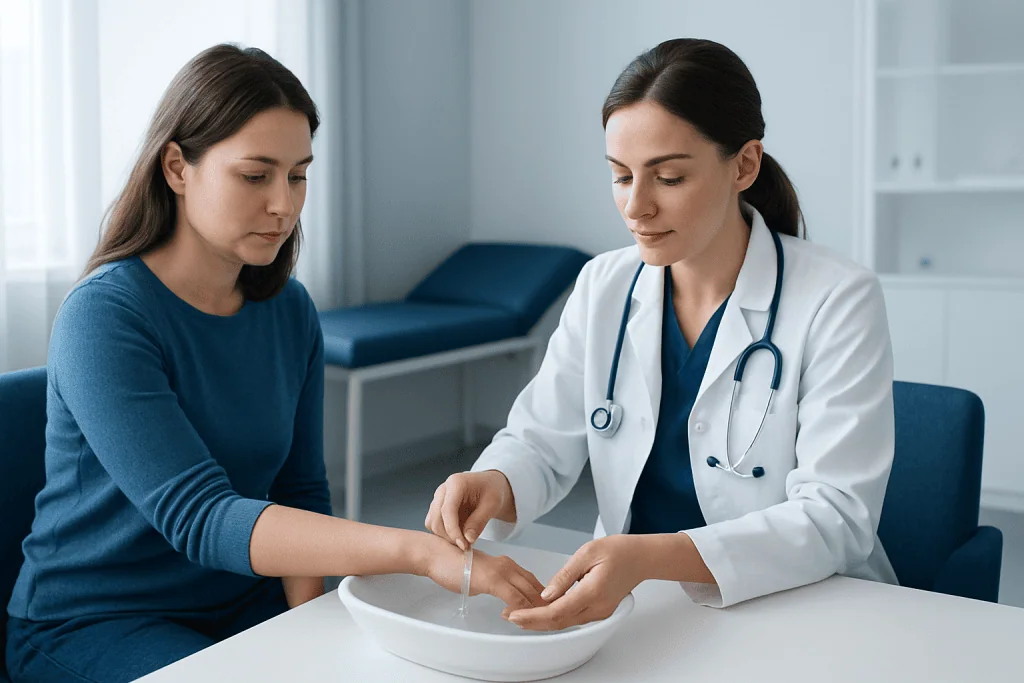
First, stop the exposure safely. Move away from the steam source and remove rings, watches, belts, or other tight items near the injured area before swelling begins. Remove clothing only if it is not stuck to the skin. Clothing that has adhered to a burn should be left in place for medical professionals to remove.
Cool the burned area under gently running cool or lukewarm water for 20 minutes, ideally as soon as possible. Cooling is still worthwhile if started within a few hours. A clean, cool wet cloth can be used if running water is unavailable, but it should be refreshed frequently. The aim is to reduce retained heat in the skin, not to make the person cold.
After cooling, loosely cover the burn with sterile non-stick gauze or a clean lint-free cloth. Keep the person warm and, if practical, raise an injured hand or limb to help limit swelling. Simple over-the-counter pain relief may be suitable for some people when used according to the product label and their clinician’s advice.
- Do not apply ice or iced water, which can worsen tissue damage and cause excessive cooling.
- Do not use butter, cooking oil, toothpaste, powders, egg whites, or home remedies on a fresh burn.
- Do not burst blisters, as the skin over a blister can help protect the wound.
- Do not place adhesive bandages directly over burned skin.
What to expect during healing and home care
A minor superficial steam burn may remain sore and red for a few days. Keeping the area clean, protected, and moisturized once the skin has closed can support comfort. If the burn is small and does not need urgent care, a pharmacist or clinician can advise on suitable non-adherent dressings. Dressings should be changed as directed and whenever they become wet, dirty, or loose.
Blistered burns need more caution. An intact blister should generally be left alone unless a healthcare professional advises otherwise. If a blister breaks, gently rinse the area with clean water, avoid pulling away attached skin, cover it with a sterile non-stick dressing, and arrange medical advice. A clinician can assess the wound depth, remove nonviable tissue when needed, and recommend a dressing plan.
Once the skin has fully healed, new skin may be dry, itchy, or more sensitive to sunlight. A fragrance-free moisturizer may be helpful. Protecting the area from the sun with clothing or broad-spectrum sunscreen can reduce lasting darkening or color changes. Persistent tightness, raised scarring, reduced movement, or altered sensation should be reviewed by a clinician.
Healing should gradually improve rather than worsen. Increasing redness, warmth, swelling, pain, drainage, fever, or a bad smell may indicate infection or another complication and should prompt medical assessment.
Who may be at higher risk of complications
Steam burns can happen to anyone, but certain people may be more vulnerable to serious injury or delayed healing. Young children have thinner skin and can sustain deeper burns from shorter exposures. Older adults may have thinner skin, reduced mobility, or medical conditions that make it harder to move away from a heat source quickly.
People with diabetes, circulation problems, nerve damage, immune system suppression, or conditions that reduce sensation should seek medical advice sooner after a burn. Reduced sensation can make the injury seem less painful than it is, while poor circulation or impaired immunity can slow healing and increase infection risk.
Burns around the mouth or nose after inhaling hot steam also deserve urgent attention. Heat exposure to the airways can cause swelling that may progress after the event. New hoarseness, coughing, wheezing, trouble swallowing, shortness of breath, or soot-like material around the nose or mouth requires emergency evaluation.
A clinician may also review tetanus vaccination status after a burn. Whether a booster is recommended depends on the wound and the person’s previous immunization history.
When to seek medical care
Urgent medical care is needed for any steam burn that is deep, painless or numb, white, brown, charred, leathery, or rapidly swelling. Emergency assessment is also appropriate for burns involving breathing difficulty, the face, eyes, hands, feet, genitals, buttocks, or major joints. These areas are important for vision, movement, sensation, and daily function.
Medical assessment is recommended for a burn larger than the injured person’s palm, a burn that goes all the way around a finger, limb, chest, or neck, or any burn caused by high-pressure steam. Seek prompt advice for significant blistering, severe pain that is difficult to control, or burns affecting infants, young children, frail older adults, or people with important long-term health conditions.
Contact a doctor if the wound is not improving, if it has not healed within about two weeks, or if infection is suspected. Warning signs include spreading redness, worsening pain, increasing swelling, pus or cloudy drainage, fever, red streaks from the wound, or feeling generally unwell.
Acibadem International’s multidisciplinary specialists and JCI-accredited hospitals can assess and treat burn injuries for international patients when specialist care is required.
Reducing the chance of steam burns
Many steam burns are preventable through simple kitchen and household habits. When lifting a pot lid, angle it away from the face and body so steam escapes in the opposite direction. Use dry oven gloves or mitts when handling hot cookware, and keep pot handles turned inward and away from the edge of the stove.
Pressure cookers and other steam-producing appliances should only be opened after pressure has fully released according to the manufacturer’s instructions. Avoid leaning directly over kettles, steamers, or boiling pans, and keep children away from cooking areas and hot drinks. Hot liquids should be placed well back from table edges and on stable surfaces.
In workplaces, appropriate protective clothing, gloves, face protection, equipment maintenance, and training are important when employees work around pressurized steam or hot pipes. Any steam leak should be treated as hazardous and reported promptly rather than approached closely.
At home, adjusting water-heater settings and checking hot-water temperature can help reduce the risk of scalds in bathrooms. Caregivers should test bath water before a child or vulnerable adult enters it, using the elbow or a bath thermometer rather than relying only on hand sensation.
Frequently asked questions
Is a steam burn worse than a burn from hot water?
Steam can cause a significant burn because it transfers heat quickly when it condenses into water on the skin. The severity depends on the temperature, duration of contact, body area involved, and how deeply the skin is damaged. Any blistering, pale or numb skin, or burn on a sensitive area should be medically assessed.
Should a steam burn be put under cold water?
A steam burn should be cooled with cool or lukewarm running water for 20 minutes. Ice, iced water, and very cold compresses should be avoided because they can further injure the skin and make the person too cold. Cooling should begin as soon as it can be done safely.
Can blisters from a steam burn be popped?
Blisters should not be popped at home. The blister roof helps protect the damaged skin underneath and may reduce the chance of infection. If a blister breaks on its own, the area should be gently rinsed, covered with a non-stick sterile dressing, and reviewed if it is large or appears infected.
How long does a minor steam burn take to heal?
A superficial steam burn often improves within several days and may heal in about a week. A blistering or partial-thickness burn can take two weeks or longer, depending on its depth and location. A burn that is not healing as expected should be assessed by a healthcare professional.
What are signs that a steam burn is infected?
Possible signs include increasing rather than improving pain, spreading redness, warmth, swelling, pus-like drainage, unpleasant odor, fever, or feeling unwell. These symptoms do not always mean infection, but they need timely medical review. Do not attempt to treat a suspected infection with leftover antibiotics or unverified home remedies.
When is a steam burn an emergency?
Emergency care is needed for trouble breathing, burns to the face or eyes, deep-looking or numb burns, and burns affecting the hands, feet, genitals, major joints, or a large body area. It is also urgent if the burn circles a limb, chest, or neck, or if it follows exposure to pressurized steam. Children and vulnerable adults should be assessed promptly after anything more than a minor burn.
References
- American Burn Association
- American Academy of Dermatology Association
- National Health Service
- Mayo Clinic
- World Health Organization
This article is for general information only and is not a substitute for professional medical advice. Please consult a qualified doctor about your individual situation.
Explore treatments in Turkey — costs, top hospitals & a free quote
JCI-accredited · board-certified surgeons · reply within 24h
Add us as a Preferred Source to see more of our trusted health content across Google Search, AI Overviews and Discover.

More from the Health Library



Related Specialists

Dr. Eren Yılmaz
Otorhinolaryngology
Dr. Kaan Maşrabacı
Pediatric Surgery
Dr. Cansu Hemşinlioğlu
Inpatient Clinic Physicians
Fatma Yilmaz
Physical Medicine & Rehabilitation