Stem Cell Under Microscope: An Evidence-Based Patient Guide
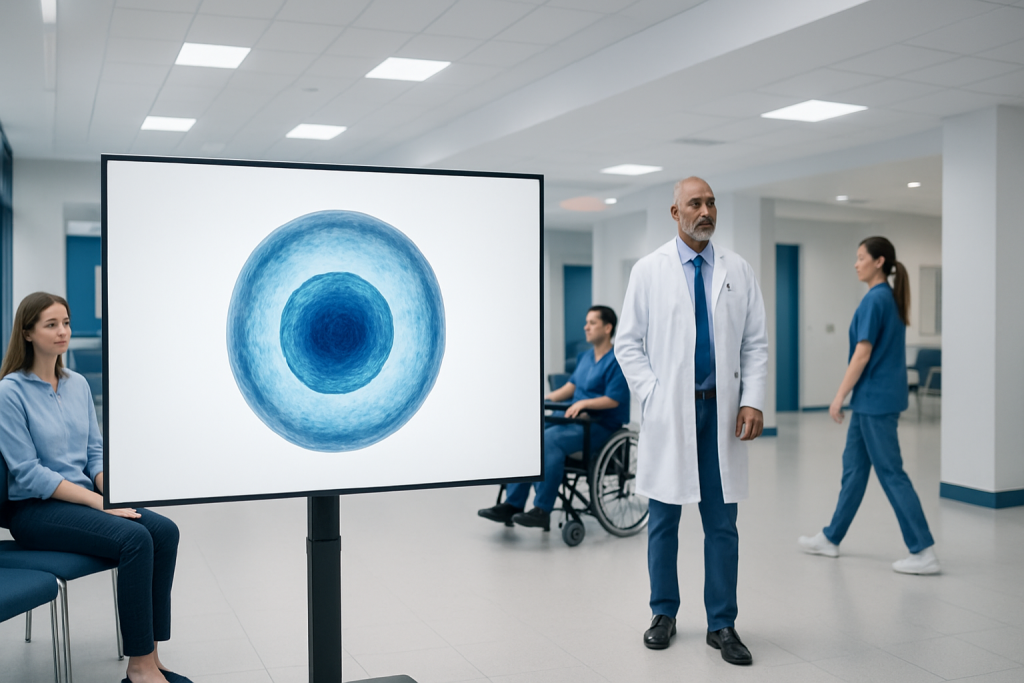
Microscopy helps laboratories observe cells, but additional testing is needed to confirm cell type, purity, viability, and safety. Stem cell transplantation is an established treatment for selected blood cancers, bone marrow disorders, and immune conditions.
Key Takeaways
- Microscopy helps laboratories observe cells, but additional testing is needed to confirm cell type, purity, viability, and safety.
- Stem cell transplantation is an established treatment for selected blood cancers, bone marrow disorders, and immune conditions.
- Many advertised stem cell treatments remain experimental and should be offered only through properly regulated clinical research or specialist care.
- Whether a person is a candidate depends on the diagnosis, overall health, treatment goals, donor options, and available evidence.
- Patients should ask what cells are being used, why they are appropriate, what regulation applies, and what risks and alternatives exist.
A stem cell under microscope can show important features such as cell shape, growth pattern, and laboratory labels, but an image alone does not establish a cell’s identity, quality, or clinical usefulness. This guide explains how stem cells are examined, when established stem cell treatments are used, and how patients can assess claims safely.
Overview: What Does a Stem Cell Under Microscope Show?
A stem cell under microscope may appear as a small, rounded or flattened cell, often growing in clusters or colonies depending on its source and the laboratory conditions. Microscopy allows specialists to monitor cell appearance, attachment, growth, and possible contamination. However, a visual image cannot by itself confirm that cells are stem cells or that they are suitable for treatment.
Stem cells are cells with the ability to make more cells and, in some circumstances, develop into specialised cell types. They are found in places including bone marrow, blood, umbilical cord blood, skin, and other tissues. Their clinical role varies greatly: some uses are well established, while many proposed regenerative uses are still being studied.
A stem cell under microscope labeled image may include stains, fluorescent markers, or annotations that highlight certain structures or proteins. Such labels can help researchers identify features associated with particular cells, but they must be interpreted alongside validated laboratory tests and the patient’s clinical situation.
How Stem Cells Are Examined and Identified

Laboratories use several methods to assess cells. Light microscopy can show general structure and growth patterns. Fluorescence microscopy uses dyes or markers that bind to specific cellular components, allowing scientists to see selected proteins, cell nuclei, or other features. Higher-resolution methods may be used in research to examine much smaller structures.
Because cells can look similar, laboratories do not rely on appearance alone. Cell identity and quality may also be assessed through surface-marker testing, genetic or molecular testing, viability testing, sterility checks, and measurement of cell number. The exact tests depend on the cell source and the intended use.
For a patient, laboratory images are best understood as part of a broader quality-control process. A trustworthy medical team should be able to explain the origin of the cells, how they are processed, what testing is performed, and whether the proposed use is established care, a clinical trial, or an unproven intervention.
Established Uses and Areas Still Under Research
The most established form of stem cell treatment is hematopoietic stem cell transplantation, also called a bone marrow or blood stem cell transplant. It can restore blood-forming cells after intensive treatment or replace abnormal bone marrow in selected conditions. It may be used for some leukemias, lymphomas, multiple myeloma, bone marrow failure syndromes, and certain inherited or immune-related diseases.
In this setting, stem cells may come from the patient, a related donor, an unrelated donor, or stored cord blood. The appropriate source depends on the disease, the purpose of transplantation, donor matching, and the person’s overall health. Bone marrow transplantation is planned by a specialist team and requires careful monitoring before, during, and after treatment.
Research is continuing into stem-cell-based approaches for neurological conditions, heart disease, joint problems, diabetes, eye disease, and tissue repair. Some early studies are promising, but research findings do not automatically mean that a treatment is proven for routine care. Patients should be cautious about clinics that describe experimental cell products as established cures.
Who May Be a Candidate?
Candidacy is determined by the underlying condition rather than by a microscope image or a general wish to use stem cells. For an established transplant, specialists consider the diagnosis, disease stage or response to prior treatment, treatment goals, age, organ function, infection status, and ability to manage the recovery period.
For donor-based transplantation, compatibility testing is important. Doctors assess donor availability and matching, while also considering the advantages and limitations of different stem cell sources. A transplant may not be suitable for everyone, particularly when its risks are likely to outweigh its potential benefit.
People considering a regenerative medicine procedure should ask whether it is approved or supported by high-quality evidence for their exact condition. They should also ask whether the care is part of a formally reviewed clinical trial and what conventional treatments or supportive options are available. A second opinion from an appropriate specialist can be helpful when claims are unclear.
What the Procedure Involves and the Recovery Timeline
In an autologous transplant, blood-forming stem cells are collected from the patient, usually from circulating blood after medication has encouraged stem cells to move out of the bone marrow. The cells are stored while the patient receives treatment designed to control disease or prepare the marrow. The stored cells are then returned through an intravenous infusion.
In an allogeneic transplant, cells are collected from a compatible donor and infused into the recipient after a conditioning regimen. The infusion itself is similar to receiving a blood product and does not involve surgical implantation into an organ. The major part of care is the preparation, protection against infection, and follow-up while the donated cells establish blood production.
Recovery varies considerably. Blood counts may remain low for weeks, and close monitoring is needed for infection, bleeding, medication effects, nutrition, and other complications. Energy levels and immune recovery may take months or longer. The care team provides an individual follow-up plan, including appointments, blood tests, vaccinations when appropriate, and guidance on returning to work, school, travel, and everyday activities.
Potential Benefits, Risks, and Safety Questions
For selected diseases, a stem cell transplant can offer the possibility of long-term disease control, restoration of healthy blood formation, or cure. Its benefits must always be weighed against its intensity and risks. The expected outcome differs according to the condition, prior treatment, donor type, and individual health factors.
Possible short-term risks include infection, low blood counts, fatigue, mouth sores, nausea, bleeding, and reactions related to medicines or infused products. Donor-cell transplants can also cause graft-versus-host disease, in which donor immune cells attack the recipient’s tissues. Long-term effects can include fertility concerns, hormonal changes, organ effects, or an increased risk of some later health problems.
Unregulated or poorly supported stem cell procedures may carry additional risks, including infection, immune reactions, inappropriate tissue growth, clots, contamination, and financial harm. Patients should be especially cautious if a provider offers the same cell treatment for many unrelated conditions, discourages questions, minimizes risks, or cannot provide clear information about oversight and follow-up.
- What exact condition is being treated, and what evidence supports this use?
- What is the source of the cells, and how are they tested for quality and infection?
- What are the realistic benefits, possible harms, and alternatives?
- Who will manage complications and provide long-term follow-up?
When to Seek Medical Care
People with a blood cancer, unexplained low blood counts, recurrent serious infections, persistent swollen lymph nodes, unusual bruising or bleeding, or symptoms that are worsening should seek medical assessment promptly. The need for specialist referral depends on the symptoms and test results, and most symptoms have causes other than a condition requiring stem cell transplantation.
Anyone who has had a transplant should contact their treatment team urgently for fever, chills, shortness of breath, chest pain, new rash, persistent vomiting or diarrhea, confusion, significant bleeding, or an inability to keep fluids down. These symptoms may need timely assessment, particularly when the immune system is suppressed.
For international patients, Acibadem International’s multidisciplinary specialists and JCI-accredited hospitals can assess conditions that may require transplant-based care and coordinate diagnostic and treatment planning. Decisions should be made with qualified hematology and transplant teams after an individual evaluation.
Making an Informed Decision About Stem Cell Care
Stem cell science is advancing, but responsible care requires matching the right treatment to the right diagnosis. A photograph of cells, even one with detailed laboratory labels, is not evidence that a product will help a particular person. Reliable treatment decisions are based on clinical studies, regulatory standards, laboratory quality systems, and specialist assessment.
Patients can prepare for a consultation by bringing medical records, imaging, pathology reports, medication lists, and questions about goals of care. It is reasonable to ask whether a proposed procedure is standard treatment, a clinical trial, or an experimental option. Clear consent should include a balanced discussion of uncertainties as well as potential benefits.
When transplant is being considered, care commonly involves hematologists, oncologists, infectious disease specialists, nursing teams, pharmacists, dietitians, psychologists, and rehabilitation professionals. This coordinated approach helps address both disease treatment and practical recovery needs.
Frequently asked questions
Can a microscope confirm that a cell is a stem cell?
A microscope can provide useful clues about a cell’s shape, growth, and behavior, but it cannot confirm stem cell identity on its own. Laboratories use additional tests, such as marker analysis, viability testing, and quality-control checks, to characterize cells properly.
What does a stem cell under microscope labeled image mean?
It usually means that dyes, fluorescent markers, or written annotations have been used to highlight cell structures or particular proteins. These labels may support laboratory identification, but they need expert interpretation and do not prove that a treatment will be effective for a patient.
Are stem cell treatments proven for joint pain or anti-aging?
Many stem-cell-based treatments promoted for joint pain, anti-aging, or general wellness are not established standard care. Evidence varies by condition and product, so a person should discuss the proposed treatment with an appropriate specialist and ask about clinical evidence and regulatory oversight.
Is a stem cell transplant the same as surgery?
A blood stem cell transplant usually involves an intravenous infusion of stem cells rather than an operation to place cells into the body. However, it is an intensive medical treatment because preparation and recovery can involve close monitoring and significant risks.
How long does recovery after a stem cell transplant take?
Early recovery often takes weeks, particularly while blood counts are low and infection risk is higher. Immune recovery, energy levels, and return to usual activities can take months or longer, depending on the transplant type and individual circumstances.
What questions should patients ask before considering stem cell therapy?
Patients should ask what condition is being treated, what type and source of cells will be used, and whether the treatment is established or experimental. They should also ask about expected benefits, known risks, alternatives, costs, regulation, and the plan for managing complications and follow-up.
References
- World Health Organization
- U.S. Food and Drug Administration
- National Cancer Institute
- European Society for Blood and Marrow Transplantation
- International Society for Cell and Gene Therapy
This article is for general information only and is not a substitute for professional medical advice. Please consult a qualified doctor about your individual situation.
Persistent digestive symptoms? Get evaluated in Turkey
JCI-accredited · board-certified surgeons · reply within 24h
Add us as a Preferred Source to see more of our trusted health content across Google Search, AI Overviews and Discover.