Stress Headache Relief: How to Ease Tension and Stress Headaches

Stress headaches are commonly tension-type headaches linked to muscle tightness, stress, fatigue, or poor posture. They often feel like a dull, pressing band around the head rather than a throbbing one-sided pain.
Key Takeaways
- Stress headaches are commonly tension-type headaches linked to muscle tightness, stress, fatigue, or poor posture.
- They often feel like a dull, pressing band around the head rather than a throbbing one-sided pain.
- Relief may come from hydration, regular meals, sleep, posture correction, relaxation techniques, and appropriate medicines.
- Keeping a headache diary can help identify triggers and patterns.
- Urgent medical care is needed for sudden severe headache, neurological symptoms, fever, or headache after injury.
Stress headache relief usually starts with simple steps such as rest, hydration, gentle stretching, and stress management. When headaches become frequent, severe, or unusual, a medical evaluation can help confirm the cause and guide treatment.
Overview
Stress headaches are commonly described as tension-type headaches. They are one of the most frequent kinds of headache and are often linked to emotional stress, muscle tension, long hours at a desk, missed meals, poor sleep, or general fatigue. Although they can be uncomfortable and disruptive, they are usually not dangerous.
Many people use the term “stress headache” to describe a dull, tight, pressure-like pain across the forehead, temples, or back of the head and neck. The pain may feel like a band is wrapped around the head. Unlike some other headache types, these headaches are not usually associated with strong nausea or severe sensitivity to light and sound, though mild sensitivity can happen.
Stress headache relief often begins with practical self-care. Drinking water, resting the eyes, loosening tense neck and shoulder muscles, improving posture, and taking breaks from screens may help ease symptoms. Learning what triggers headaches can also reduce how often they happen.
It is also important to remember that not every headache is caused by stress. Recurring or changing headaches should be assessed by a qualified clinician, especially if they interfere with daily life. A doctor can help tell the difference between a tension headache, a migraine, or another type of headache disorder.
Symptoms of Stress and Tension Headaches
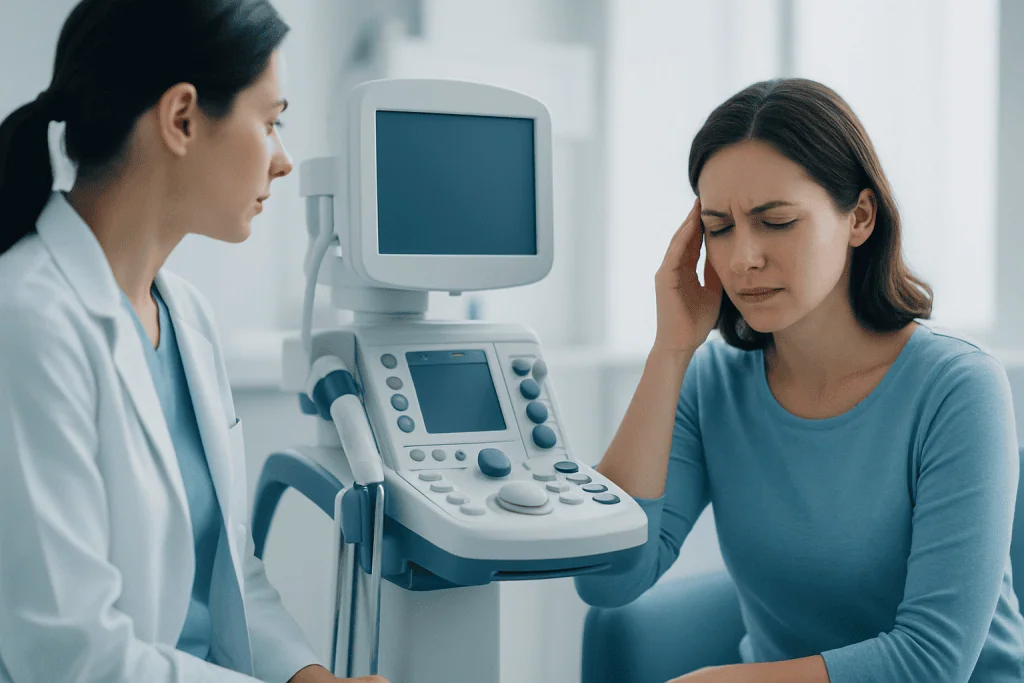
The most common symptom is a steady, dull ache or pressure on both sides of the head. Some people feel it most in the forehead, while others notice it in the temples, scalp, or back of the head. The neck and shoulders may also feel sore, stiff, or tight.
Stress headaches are often described as mild to moderate rather than severe. They may come on gradually during the day, especially after emotional strain, long concentration, poor posture, or skipped meals. For some people, they last for 30 minutes; for others, they may continue for several hours.
Common features may include:
- A tight or pressing sensation, often like a band around the head
- Pain on both sides of the head
- Tenderness in the scalp, neck, or shoulder muscles
- Worsening with stress, fatigue, or prolonged screen time
- Mild sensitivity to light or sound in some cases
Symptoms that are less typical for simple tension headaches include throbbing pain, pain only on one side, vomiting, marked visual changes, weakness, confusion, or a very sudden severe onset. These features may point to another cause and should be medically assessed.
Causes and Risk Factors

Stress headaches do not always have a single cause. Instead, they often develop from a combination of physical and emotional factors. Psychological stress can increase muscle tension in the neck, scalp, and shoulders, which may contribute to pain. Daily habits can also play a major role.
Common triggers and risk factors include poor posture, long periods at a computer, eye strain, dehydration, missed meals, inadequate sleep, anxiety, depression, jaw clenching, and lack of regular physical activity. Some people are also more likely to develop headaches when their routine changes, such as during travel, busy work periods, or family stress.
Medication overuse can be another hidden factor. Taking pain relievers too often may lead to rebound headaches, where the headache returns as medicine wears off. This can make occasional tension headaches become more frequent and harder to manage without professional guidance.
Other conditions may mimic or overlap with stress headaches. Sinus problems, dental issues, neck strain, sleep disorders, and migraine can all cause head pain. For people with repeated or disabling symptoms, a doctor may evaluate for related conditions and discuss strategies such as physical therapy, lifestyle support, or, when appropriate, neurology care.
How Stress Headaches Are Diagnosed
Diagnosis usually begins with a detailed medical history. A doctor will ask when the headaches started, how often they happen, where the pain is located, what it feels like, how long it lasts, and whether there are associated symptoms such as nausea, visual changes, or dizziness. A headache diary can be especially helpful during this step.
A physical examination often includes checking blood pressure, examining the head and neck, and looking for tenderness or muscle tightness. The doctor may also perform a basic neurological examination to check strength, sensation, reflexes, balance, and eye movements. This helps identify signs that might suggest a cause other than tension headache.
Imaging tests are not needed for most straightforward stress headaches. However, they may be recommended if symptoms are unusual, severe, suddenly different, or associated with warning signs. In selected cases, doctors may arrange MRI or CT scan imaging to rule out structural causes.
The goal of diagnosis is not only to name the headache type but also to understand patterns and triggers. This can guide treatment decisions and help prevent headaches from becoming chronic. People who are unsure whether they are dealing with tension headaches or another condition benefit from a professional evaluation rather than self-diagnosing.
Stress Headache Relief and Treatment Options
Many stress headaches improve with simple measures. Resting in a calm environment, drinking water, eating a light meal if one was missed, and applying a warm compress to tight neck or shoulder muscles may help. Gentle stretching, deep breathing, and stepping away from screens can also reduce symptoms.
Over-the-counter pain relievers may be useful for occasional headaches when taken as directed by a doctor or product label. However, frequent use should be avoided unless a clinician advises otherwise, because it may contribute to medication-overuse headaches. If headaches are regular or disruptive, a doctor may recommend a broader management plan rather than repeated short-term relief alone.
For people with recurring tension headaches, treatment may include identifying triggers, improving sleep habits, addressing posture and workstation setup, managing anxiety, and using relaxation-based therapies. Some patients benefit from physical therapy, especially when neck and shoulder tension are prominent. In some situations, clinicians may suggest preventive treatment if headaches occur very often.
Medical care is individualized. A specialist may also evaluate whether symptoms are actually related to migraine, neck disorders, or another neurological issue. Near the end of the care pathway, international patients may choose centers such as Acibadem International, where multidisciplinary specialists in JCI-accredited hospitals diagnose and treat headache conditions with coordinated care.
Prevention and Self-Care
Preventing stress headaches often depends on reducing triggers and supporting overall health. Regular meals, adequate hydration, consistent sleep, and routine physical activity can make a meaningful difference. Even simple habits like standing up every hour, adjusting screen height, and relaxing the shoulders may lower strain on the head and neck.
Stress management is another key part of prevention. Breathing exercises, mindfulness, yoga, walking, and scheduled breaks during the workday may help reduce muscle tension and mental overload. Some people find that counseling or cognitive behavioral strategies help them manage stress more effectively, which can reduce headache frequency over time.
A headache diary can be a practical tool. It may include the time the headache started, how long it lasted, pain severity, foods eaten, sleep quality, stress level, menstrual cycle details if relevant, and medicines taken. Patterns often become clearer after a few weeks and can help both the patient and doctor choose better prevention strategies.
Good self-care also includes using pain medicine carefully. If headaches are becoming more common, it is better to seek medical advice than to keep increasing medication use. Preventive care is often more effective and safer than relying on repeated short-term relief.
When to See a Doctor
Occasional mild tension headaches are common, but medical advice is important if headaches are frequent, worsening, or interfering with work, sleep, or daily activities. A doctor should also be consulted if over-the-counter medicines are needed often, or if the usual pattern of headache changes.
Urgent evaluation is needed for a sudden severe headache that peaks quickly, especially if it is described as the worst headache a person has ever had. Immediate medical attention is also important for headache with weakness, numbness, confusion, fainting, seizure, fever, stiff neck, vision loss, chest pain, or after a head injury.
Headaches in people with cancer, immune system problems, pregnancy, or significant new neurological symptoms should also be assessed promptly. While many headaches are benign, these situations deserve careful evaluation to rule out more serious causes.
Seeking care early can be reassuring and practical. It helps confirm whether the problem is a tension headache, identify treatable triggers, and create a plan that supports both symptom relief and prevention.
Frequently asked questions
What is the fastest way to get stress headache relief?
Quick relief often starts with resting in a quiet place, drinking water, and loosening tense neck and shoulder muscles. A light meal, gentle stretching, and appropriate over-the-counter pain relief may also help if suitable for the individual. If headaches are frequent, it is better to look for the trigger and seek medical advice.
How can someone tell if a headache is from stress?
A stress headache usually feels like dull, steady pressure on both sides of the head, often with tightness in the scalp, neck, or shoulders. It commonly appears during or after stress, fatigue, poor sleep, or long hours of concentration. A doctor can help confirm the diagnosis if symptoms are unclear or recurring.
Are stress headaches the same as migraines?
No. Stress headaches are often tension-type headaches, while migraines are a different neurological condition. Migraines are more likely to cause throbbing pain, nausea, and stronger sensitivity to light or sound, sometimes on one side of the head.
Can dehydration cause or worsen a stress headache?
Yes. Dehydration can trigger headache on its own and may worsen a headache related to stress, fatigue, or muscle tension. Drinking enough fluids regularly is a simple but important preventive step.
When should a person worry about a stress headache?
A headache should be medically assessed if it is new, severe, frequent, changing, or interfering with daily life. Urgent care is needed for sudden intense headache, neurological symptoms, fever, stiff neck, or headache after head injury. These features are not typical of a simple tension headache.
Can stress headaches be prevented?
Often, yes. Prevention may include regular sleep, hydration, meals, exercise, stress management, and good posture during desk work. Tracking headaches in a diary can help identify triggers and reduce future episodes.
References
- World Health Organization
- International Headache Society
- National Institute of Neurological Disorders and Stroke
- Mayo Clinic
- MedlinePlus
This article is for general information only and is not a substitute for professional medical advice. Please consult a qualified doctor about your individual situation.
Explore treatments in Turkey — costs, top hospitals & a free quote
JCI-accredited · board-certified surgeons · reply within 24h
Add us as a Preferred Source to see more of our trusted health content across Google Search, AI Overviews and Discover.
Check your numbers in seconds
BMI, calories, due date, blood pressure and 30+ more clinical calculators — free, instant, doctor-reviewed ranges.