Succinylcholine — Explained by Medical Evidence, Not Myths

Succinylcholine is a fast-acting muscle relaxant used during anesthesia and emergency airway management. It does not treat pain or cause unconsciousness, so it is used together with other medicines.
Key Takeaways
- Succinylcholine is a fast-acting muscle relaxant used during anesthesia and emergency airway management.
- It does not treat pain or cause unconsciousness, so it is used together with other medicines.
- The drug can be very helpful, but it is not suitable for everyone because it may trigger dangerous side effects in certain conditions.
- Doctors review medical history, potassium risk, burns, nerve or muscle disorders, and family anesthesia history before using it.
- Modern airway care may use succinylcholine or alternative medicines depending on the patient and the procedure.
Succinylcholine is a short-acting medicine used by anesthesiology and emergency teams to relax muscles quickly, especially to help place a breathing tube during surgery or urgent airway care. It is highly effective when used in the right setting, but because it can cause serious complications in some people, it is given only with close monitoring by trained clinicians.
Overview: what succinylcholine is and why it is used
Succinylcholine is a prescription medicine that temporarily relaxes the body’s skeletal muscles. In practical terms, it is most often used when doctors need the muscles to become relaxed within seconds, especially to insert a breathing tube safely and efficiently. This can happen in the operating room before surgery or in emergency situations when a person cannot protect their airway or breathe adequately on their own.
A key point that often causes confusion is that succinylcholine is not a pain medicine and not a sedative. It does not make a person sleep, and it does not prevent awareness by itself. Instead, it is used alongside anesthetic or sedative medicines so that the patient is unconscious or appropriately sedated while the muscles are briefly relaxed.
Succinylcholine belongs to a group of drugs called neuromuscular blocking agents. It is known for acting very quickly and usually wearing off quickly too, which is why it has been widely used for rapid sequence intubation and short procedures. In many hospitals, clinicians compare it with longer-acting alternatives and choose the medication that offers the best balance of speed, duration, and safety for that individual patient.
How succinylcholine works in the body
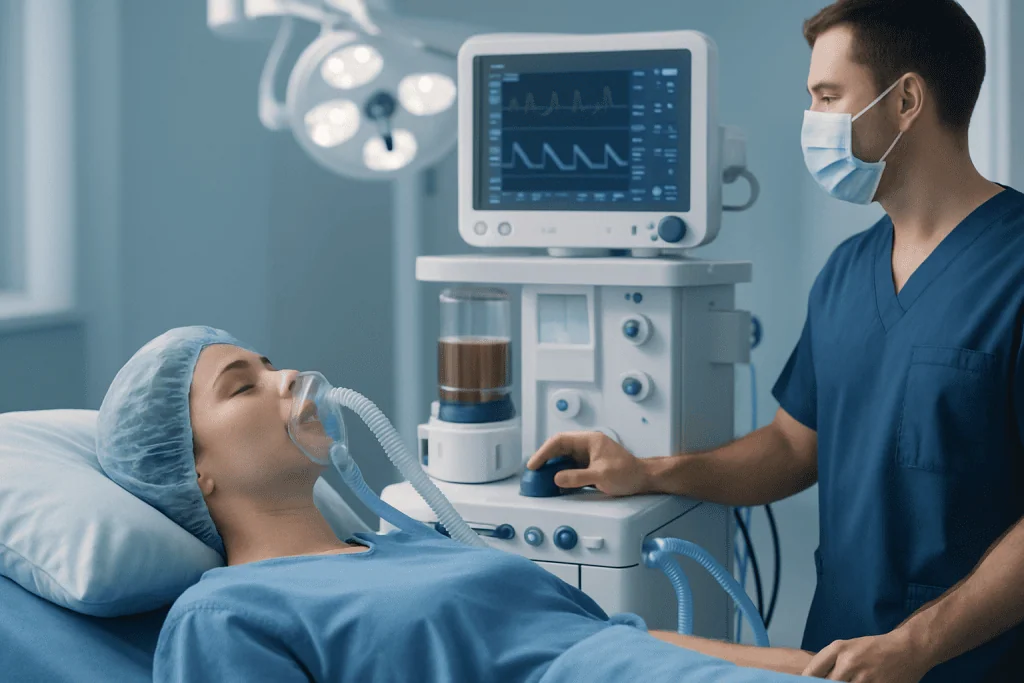
Succinylcholine works at the connection between nerves and muscles, called the neuromuscular junction. It briefly stimulates the receptor that normally responds to acetylcholine, the body’s natural signaling chemical. This initial stimulation may cause visible muscle twitching for a moment, followed by a short period in which the muscle can no longer contract normally.
Because the breathing muscles are also affected, a person who receives succinylcholine cannot breathe effectively without support until the drug wears off. That is why it is only given by professionals who are prepared to manage the airway, provide oxygen, and monitor heart rhythm, blood pressure, and oxygen levels continuously.
Its rapid onset is one of its main advantages. In settings where time matters, fast muscle relaxation can make airway placement easier and may reduce the risk of complications from a delayed intubation. At the same time, the same powerful effect means the medicine must be used carefully, in the right environment, and with a clear plan for ventilation and follow-up care.
Common uses and what patients may experience

The most common use of succinylcholine is to assist with endotracheal intubation, the placement of a tube into the windpipe to secure breathing during surgery or emergencies. It may also be used for some short procedures requiring brief muscle relaxation. In many patients, the period of paralysis lasts only a few minutes, though the exact timing depends on the person’s physiology and the clinical setting.
From a patient perspective, there is usually little direct memory of the medication because it is typically given after anesthetic induction or urgent sedation. Afterward, some people may notice temporary muscle aches, jaw discomfort, or a feeling of soreness, often related to the brief muscle fasciculations that can happen when the drug first takes effect. These symptoms are usually limited and improve on their own.
Its use is most common in anesthesia and critical care, including situations connected with anesthesia and reanimation and advanced airway management. Depending on the procedure, clinicians may choose succinylcholine or another neuromuscular blocker as part of a broader plan that also includes sedation, pain control, and breathing support.
Risks, side effects, and who may not be a good candidate
Although succinylcholine is effective, it is not a routine medicine for every patient. One of the best-known concerns is a rise in blood potassium, which can be dangerous in people who already have high potassium or conditions that make sudden potassium release more likely. This includes certain muscle diseases, major burns after the first day or two, severe crush injuries, prolonged immobility, or some nerve injuries that lead to muscle changes.
Other potential side effects include a slow heart rate, changes in heart rhythm, increased pressure in the stomach, eyes, or inside muscles, and postoperative muscle pain. Some patients can experience prolonged weakness if they have an inherited or acquired problem with the enzyme that breaks down the drug. Rarely, a person may have a severe reaction linked to malignant hyperthermia, a life-threatening anesthesia emergency that can also be triggered by some inhaled anesthetic gases.
For these reasons, clinicians carefully review personal and family history before use. A history of severe reaction to anesthesia, unexplained high fever during surgery, known muscle disorders, neuromuscular disease, or previous problems with muscle relaxants can all affect the decision. In some cases, the care team may choose a different medicine, particularly when a condition such as muscular dystrophy or another neuromuscular disorder raises safety concerns.
- Possible short-term effects: muscle twitching, aches, jaw tightness, slow heart rate
- Important serious risks: high potassium, abnormal heart rhythm, prolonged paralysis, malignant hyperthermia in susceptible people
- Higher-risk situations: major burns, crush trauma, denervation injuries, certain inherited muscle conditions, known pseudocholinesterase deficiency
How doctors decide whether to use succinylcholine
The decision to use succinylcholine is based on more than speed alone. Clinicians weigh the urgency of airway control, the expected difficulty of intubation, the patient’s medical history, and whether an alternative such as rocuronium may be safer. In elective surgery, there is often more time to review previous anesthetic records and ask about family history. In emergencies, doctors make a rapid risk-benefit decision using the information available at the bedside.
Assessment may include questions about recent burns or major injuries, long periods of immobilization, known muscle disease, kidney problems, and any prior anesthesia complications. If there is concern for a neuromuscular problem, the team may consider how this overlaps with broader care in neurology or critical care. If a person has had unusually long weakness after anesthesia in the past, inherited enzyme deficiency may be considered.
Monitoring is an essential part of safe use. During and after administration, the team observes breathing, oxygenation, circulation, and muscle recovery. If recovery is slower than expected, ventilation support continues until the patient can breathe normally again. This close supervision is why succinylcholine should never be viewed as a medication for self-use or for settings without full medical support.
Alternatives and treatment planning
Succinylcholine is no longer the automatic first choice in every case. Another commonly used option is rocuronium, a nondepolarizing neuromuscular blocker. Rocuronium does not carry all of the same risks, particularly the potassium-related concerns seen with succinylcholine, but it usually lasts longer. The best option depends on the patient, the procedure, and whether rapid reversal or prolonged paralysis is acceptable.
In some emergency and operating room situations, airway teams prefer succinylcholine because of its speed and short duration. In others, they prefer a nondepolarizing agent because of a safer profile in a patient with burns, trauma, muscle disease, or a concerning family history. This choice is part of individualized perioperative planning, not a sign that one medicine is universally better than the other.
For people with complex medical conditions, management may involve several specialties. In advanced surgical and intensive care settings, airway support can be integrated with services such as intensive care when close observation is needed after intubation or major illness. Near the end of the care pathway, Acibadem International’s multidisciplinary specialists and JCI-accredited hospitals also evaluate and treat patients who need anesthesia, airway procedures, and related hospital care.
When to seek medical care
Most people who receive succinylcholine are already in a hospital or emergency setting, so any immediate reaction is handled by the medical team. However, if a person has had anesthesia in the past and remembers a prolonged inability to move, unexpectedly long time on a ventilator, severe fever during surgery, or was told there was an anesthesia complication, this history should be shared with a doctor before any future procedure.
People should also seek medical advice before planned surgery if they have a personal or family history of malignant hyperthermia, unexplained anesthesia reactions, inherited muscle disorders, or episodes of severe weakness. These details can affect which anesthetic medicines are safest. A pre-anesthesia assessment is especially important for patients with significant burns, nerve injuries, or chronic neuromuscular conditions.
After a procedure, urgent medical attention is needed if there is persistent severe muscle weakness, trouble breathing, chest symptoms, or any concerning reaction once discharged. While these problems are not common, they should never be ignored. Prompt evaluation helps doctors determine whether symptoms are related to the anesthetic, the procedure itself, or another medical issue.
Frequently asked questions
Is succinylcholine the same as anesthesia?
No. Succinylcholine is a muscle relaxant, not a full anesthetic. It is usually given together with medicines that cause unconsciousness or sedation and, when needed, pain control.
Why do doctors use succinylcholine so often in airway emergencies?
It works very quickly and usually wears off quickly, which can be useful when a breathing tube must be placed without delay. That speed can help experienced teams secure the airway efficiently while monitoring the patient closely.
Can succinylcholine be dangerous?
It can be dangerous in certain people, which is why it is only used in closely supervised medical settings. Important risks include abnormal heart rhythm, high potassium, prolonged paralysis, and rare severe anesthesia reactions in susceptible patients.
Who should tell their doctor about past reactions before surgery?
Anyone with a personal or family history of malignant hyperthermia, prolonged weakness after anesthesia, inherited muscle disease, or unexplained complications during surgery should mention this before a procedure. These details may change the anesthetic plan and improve safety.
What does succinylcholine feel like after a procedure?
Many patients do not remember the medication itself because it is commonly given after sedation or anesthesia begins. Some may notice temporary muscle soreness or aches afterward, which are usually mild and short-lived.
Are there alternatives to succinylcholine?
Yes. Doctors may use other neuromuscular blockers, such as rocuronium, depending on the situation and the patient’s health profile. The choice depends on how quickly muscle relaxation is needed, how long it should last, and whether certain risks are present.
This article is for general information only and is not a substitute for professional medical advice. Please consult a qualified doctor about your individual situation.
Explore treatments in Turkey — costs, top hospitals & a free quote
JCI-accredited · board-certified surgeons · reply within 24h
Add us as a Preferred Source to see more of our trusted health content across Google Search, AI Overviews and Discover.
Check your numbers in seconds
BMI, calories, due date, blood pressure and 30+ more clinical calculators — free, instant, doctor-reviewed ranges.

More from the Health Library

Xy Dysgenesis: A Complete Medical Overview

Bronchoalveolar Lavage: An Evidence-Based Guide for Patients

White Pimple on Tonsil: An Evidence-Based Guide for Patients

Uvelby: What Patients Need to Know

Ozone: What Patients Need to Know