

Sudden Hearing Loss: Urgent Symptoms, Hearing Tests, and Steroid Treatment

Sudden hearing loss is usually defined as a rapid drop in hearing over 72 hours or less and often affects only one ear. Same-day or next-day medical assessment is recommended, especially if hearing loss is new, one-sided, or accompanied by tinnitus, ear fullness, dizziness, or imbalance.
Key Takeaways
- Sudden hearing loss is usually defined as a rapid drop in hearing over 72 hours or less and often affects only one ear.
- Same-day or next-day medical assessment is recommended, especially if hearing loss is new, one-sided, or accompanied by tinnitus, ear fullness, dizziness, or imbalance.
- Formal hearing tests, particularly pure-tone audiometry, are essential to distinguish sensorineural hearing loss from conductive causes such as wax, infection, or fluid.
- Steroid treatment may be offered early, either by mouth or by injection through the eardrum, depending on the patient’s situation and medical history.
- Recovery varies; some people improve fully, some partially, and others need longer-term support such as hearing rehabilitation or hearing devices.
Sudden hearing loss, especially when it affects one ear over hours to a few days, should be assessed urgently because early treatment may improve the chance of recovery. A hearing test helps confirm whether the problem is in the inner ear or due to a more common cause such as earwax or fluid.
Overview
Sudden hearing loss is a rapid decrease in hearing that develops over hours or within a few days. Doctors are especially concerned about sudden sensorineural hearing loss, which involves the inner ear or the hearing nerve rather than a blockage in the ear canal. It most often affects one ear, and some people first notice it when they wake up, use the phone, or realize that sounds seem muffled on one side.
A common medical definition is a hearing drop of at least 30 decibels across three connected sound frequencies within 72 hours. In everyday terms, this means the person may suddenly struggle to hear speech, environmental sounds, or high-pitched tones in one ear. Sudden sensorineural hearing loss is considered urgent because treatment is generally more effective when started early.
Not every sudden hearing change is due to inner ear damage. Earwax, middle ear fluid, a recent cold, pressure changes, or an ear infection can also cause muffled hearing. However, it is not possible to reliably tell the difference without an ear examination and hearing tests, so prompt assessment is the safest approach.
Urgent Symptoms to Recognize
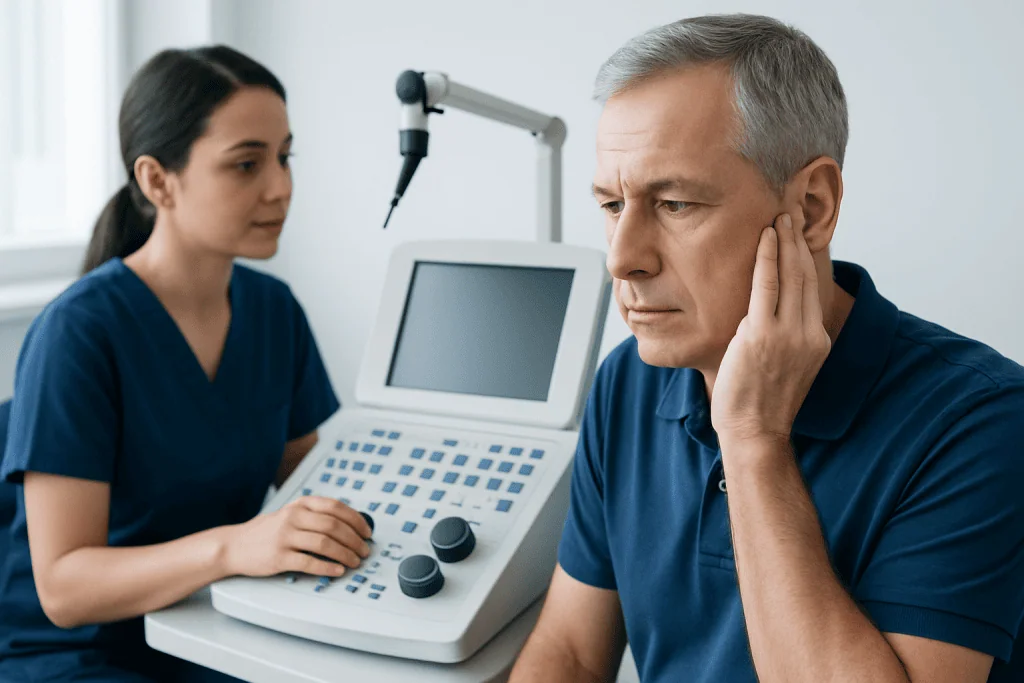
The main symptom is a sudden, noticeable reduction in hearing in one or both ears. It may feel as if the ear is blocked, plugged, or underwater. Some people describe distorted sound rather than complete deafness, while others notice that voices are unclear or that they cannot hear well when the unaffected ear is covered.
Sudden hearing loss may occur with other ear and balance symptoms. These symptoms do not always mean the condition is severe, but they help doctors understand which part of the ear may be involved.
- Ringing, buzzing, or hissing in the ear, known as tinnitus
- A feeling of pressure or fullness in the affected ear
- Dizziness, vertigo, or a spinning sensation
- Imbalance, nausea, or unsteadiness
- Sound sensitivity or distorted sound quality
People sometimes delay care because there is no pain, or because they assume the ear is blocked with wax. This is understandable, but sudden one-sided hearing loss should be checked quickly even when it is painless. Early evaluation allows treatable causes to be identified and gives the best opportunity for timely therapy if the inner ear is affected.
Causes and Risk Factors

In many cases of sudden sensorineural hearing loss, no single cause is found. Doctors may describe this as idiopathic, meaning that the exact trigger is unclear after assessment. Possible mechanisms include inflammation in the inner ear, viral effects, changes in blood flow to the cochlea, autoimmune inner ear disease, or small membrane disruptions inside the inner ear.
Other conditions can produce sudden or rapidly noticeable hearing loss and may need different treatment. These include earwax blockage, middle ear infection, fluid behind the eardrum, eardrum injury, noise trauma, head injury, certain medications that can affect hearing, and less commonly tumors of the hearing and balance nerve. Rarely, sudden hearing loss can occur with neurological conditions, which is why associated symptoms are important.
Risk factors may include recent viral illness, autoimmune disease, migraine, cardiovascular risk factors, diabetes, high blood pressure, smoking, and exposure to very loud noise. These factors do not mean a person will develop sudden hearing loss, and many affected people have no obvious risk factor. A doctor considers the whole clinical picture rather than one factor alone.
Diagnosis and Hearing Tests
Diagnosis begins with a careful history and ear examination. The doctor will ask when the hearing changed, whether it was sudden or gradual, whether one or both ears are affected, and whether there is tinnitus, vertigo, pain, discharge, recent infection, head injury, or medication exposure. Looking into the ear canal can reveal wax, infection, fluid, or eardrum problems that may cause conductive hearing loss.
Formal hearing testing is central to diagnosis. Pure-tone audiometry measures the quietest sounds a person can hear at different pitches and helps identify whether hearing loss is sensorineural, conductive, or mixed. Speech testing may assess how clearly words are understood. Tympanometry can evaluate eardrum movement and middle ear pressure, which is useful when fluid or eustachian tube dysfunction is suspected.
If sudden sensorineural hearing loss is confirmed, additional tests may be recommended based on the patient’s symptoms and examination. Magnetic resonance imaging, or MRI, may be used to assess the hearing and balance nerve and to rule out uncommon structural causes. Blood tests are not needed for every patient, but they may be considered when autoimmune, infectious, metabolic, or other systemic causes are suspected.
Steroid Treatment and Other Options
Steroids are commonly used to treat sudden sensorineural hearing loss because they can reduce inflammation and swelling in the inner ear. Treatment is usually most helpful when started as soon as possible, often within the first two weeks after symptoms begin. The decision to use steroids depends on the patient’s hearing test results, overall health, timing, and possible risks.
Steroids may be given by mouth or delivered directly into the middle ear through the eardrum, known as intratympanic steroid injection. Oral steroids affect the whole body and may not be suitable for some people, such as those with poorly controlled diabetes, certain infections, or specific stomach, bone, or eye conditions. Intratympanic treatment can provide a higher local concentration near the inner ear and may be used when oral steroids are not suitable, as an initial option in selected cases, or as salvage treatment if recovery is incomplete.
Other treatments depend on the cause. If the hearing loss is conductive, removing earwax, treating infection, or managing middle ear fluid may restore hearing. Routine antivirals, antibiotics, or circulation medicines are not recommended for every case unless there is a specific reason. When hearing does not fully recover, hearing aids, tinnitus support, balance rehabilitation, and communication strategies can improve daily function and quality of life.
Recovery, Follow-Up, and Hearing Rehabilitation
Recovery after sudden sensorineural hearing loss varies from person to person. Some people notice improvement within days, while others improve gradually over several weeks. The degree of initial hearing loss, presence of vertigo, age, timing of treatment, and the pattern seen on audiometry may influence recovery, but they do not predict the outcome with certainty for an individual patient.
Follow-up hearing tests are important because they show whether hearing is improving, stable, or worsening. These results guide decisions about continuing treatment, considering intratympanic steroids, arranging imaging, or starting hearing rehabilitation. Even if symptoms feel better, repeat audiometry can confirm recovery and document any remaining hearing gap.
If hearing loss persists, rehabilitation can be very helpful. Options may include hearing aids, devices for single-sided deafness, assistive listening technology, tinnitus counseling, and balance therapy when dizziness is present. The goal is not only to measure hearing, but also to support communication, confidence, work, travel, and everyday safety.
Prevention, Self-Care, and When to See a Doctor
Not all cases of sudden hearing loss can be prevented, but general ear health can reduce some risks. People should protect their ears from loud noise, use hearing protection in noisy environments, avoid inserting cotton buds or objects into the ear canal, and seek medical advice before stopping or changing prescribed medicines. Managing blood pressure, diabetes, cholesterol, and smoking cessation may also support overall vascular and inner ear health.
Self-care should not delay medical assessment when hearing changes suddenly. A person can note the exact time symptoms began, whether one or both ears are affected, and any dizziness, tinnitus, infection symptoms, injury, recent flights, diving, or new medicines. This information helps the doctor decide which tests and treatments are appropriate.
Medical help should be sought urgently for sudden hearing loss, especially if it is one-sided, develops over 72 hours or less, or occurs with tinnitus, ear fullness, vertigo, facial weakness, severe headache, neurological symptoms, ear injury, or sudden loss in both ears. Acibadem International’s multidisciplinary ear, nose and throat specialists and JCI-accredited hospitals diagnose and treat hearing disorders for international patients, including urgent assessment, audiology testing, imaging when needed, and individualized treatment planning.
Frequently asked questions
Is sudden hearing loss an emergency?
Sudden hearing loss should be treated as an urgent medical problem, particularly when it affects one ear and develops over hours or a few days. Early assessment helps distinguish inner ear hearing loss from wax, infection, or fluid. If sudden sensorineural hearing loss is present, timely treatment may improve the chance of recovery.
How can someone tell if hearing loss is due to earwax or the inner ear?
Symptoms can feel very similar, so it is difficult to tell without an examination. Earwax may cause a blocked sensation and muffled hearing, but sudden sensorineural hearing loss can feel the same. A clinician can examine the ear and arrange audiometry to identify the type and severity of hearing loss.
What hearing test is used for sudden hearing loss?
Pure-tone audiometry is the key test because it measures hearing levels across different sound frequencies. It helps determine whether the hearing loss is conductive, sensorineural, or mixed. Speech testing and tympanometry may also be used to assess word understanding and middle ear function.
Why are steroids used for sudden sensorineural hearing loss?
Steroids are used because inflammation may contribute to sudden inner ear hearing loss in some patients. They may be given by mouth or through an injection into the middle ear, depending on the situation. A doctor will consider potential benefits and risks, especially in people with diabetes, infections, or other medical conditions.
Can hearing return without treatment?
Some people improve spontaneously, but it is not possible to predict this reliably at the start. Because early treatment may help certain patients, waiting to see what happens can reduce treatment options. A prompt hearing test and specialist assessment are the safest way to guide care.
What should a person do while waiting for an appointment?
They should avoid putting drops, cotton buds, or other objects into the ear unless advised by a clinician. It is useful to write down when symptoms began, whether tinnitus or dizziness is present, and any recent illness, injury, travel, diving, noise exposure, or new medication. If there are neurological symptoms, severe vertigo, facial weakness, or sudden hearing loss in both ears, urgent emergency care is appropriate.
References
- American Academy of Otolaryngology-Head and Neck Surgery Foundation
- National Institute on Deafness and Other Communication Disorders
- National Health Service
- Mayo Clinic
- Merck Manual Professional Edition
This article is for general information only and is not a substitute for professional medical advice. Please consult a qualified doctor about your individual situation.
Explore treatments in Turkey — costs, top hospitals & a free quote
JCI-accredited · board-certified surgeons · reply within 24h
Add us as a Preferred Source to see more of our trusted health content across Google Search, AI Overviews and Discover.
Check your numbers in seconds
BMI, calories, due date, blood pressure and 30+ more clinical calculators — free, instant, doctor-reviewed ranges.

Otorhinolaryngology (ENT)
Care for ear, nose, throat and head-and-neck conditions, including hearing and balance disorders.
126 specialists in this unitMore from the Health Library



Related Specialists

Dr. Tülay Aslan Yayla
Neurosurgery
Assoc. Prof. Dr. Şafak Yılmaz Baran
Gynecology & Obstetrics
Dr. Mustafa Göğebakan
Pediatrics
Prof. Dr. Nur Dilek Bakan
Pulmonology