Surgical Ergonomics: Procedure, Recovery and Results

Surgical ergonomics focuses on the posture, movement, visibility and equipment access of operating-room professionals. It is relevant across open, laparoscopic, robotic, endoscopic and microsurgical procedures.
Key Takeaways
- Surgical ergonomics focuses on the posture, movement, visibility and equipment access of operating-room professionals.
- It is relevant across open, laparoscopic, robotic, endoscopic and microsurgical procedures.
- Good ergonomic planning may reduce work-related discomfort and fatigue among clinicians, but it does not replace surgical skill, safety protocols or patient-specific planning.
- Patients usually do not need to prepare differently for surgery because of ergonomics, although the surgical approach can affect recovery.
- Recovery depends mainly on the operation, anesthesia, overall health and any complications—not on ergonomics alone.
- New or worsening symptoms after surgery should be discussed promptly with the surgical team.
Surgical ergonomics is the use of practical positioning, equipment setup and workflow methods that reduce physical strain on surgeons and operating-room staff while supporting safe, precise patient care. It is not a procedure performed on a patient, but it can influence how a procedure is planned, delivered and sustained by the clinical team.
Overview: What Is Surgical Ergonomics?
Surgical ergonomics is the application of ergonomics—the science of fitting work, tools and environments to people—to the operating room. Its purpose is to help surgeons, nurses, anesthesiology professionals and other team members maintain effective posture, clear sight lines, safe reach distances and coordinated movement while caring for a patient.
Surgical ergonomics meaning is therefore different from a surgical treatment. It does not describe an operation that a patient undergoes. Instead, it describes how a procedure is organized: the height and placement of the operating table, monitors and instruments; the position of team members; and the way tasks are performed during surgery.
Well-designed surgery ergonomics can be especially important during lengthy or technically demanding operations, including minimally invasive, robotic, endoscopic and microsurgical procedures. It supports clinician comfort and concentration while remaining only one part of a larger patient-safety system that also includes sterile technique, anesthesia monitoring, surgical checklists and clear communication.
How Surgical Ergonomics Works During an Operation
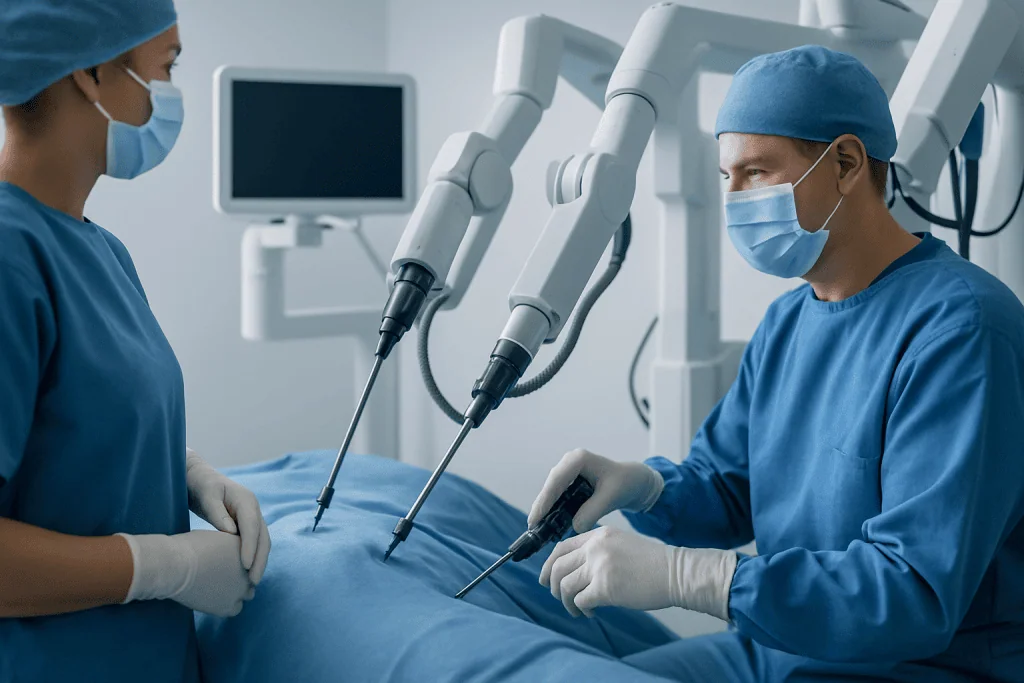
Before surgery begins, the team considers the planned procedure, the patient’s position and the equipment required. The operating table may be adjusted to help the surgeon avoid prolonged bending, shoulder elevation or excessive reaching. Screens are generally placed where they can be viewed without sustained neck twisting, particularly during laparoscopic or robotic operations.
Instruments, foot pedals, imaging equipment and anesthesia devices are arranged so that team members can access them safely without interfering with one another. For procedures that require fine movements, stable support for the arms, hands or wrists may be helpful. The exact setup varies by specialty, patient anatomy, surgical approach and equipment used.
Good surgical ergonomics recommendations also include team briefings, planned position changes when appropriate, and attention to repetitive tasks. These measures aim to reduce avoidable physical load on staff. They do not change the medical reason for surgery, the need for informed consent or the clinical standards used to select a surgical technique.
- Neutral neck, shoulder and wrist positions when feasible
- Appropriate operating-table and monitor height
- Frequently used instruments kept within easy reach
- Clear routes for safe movement around the operating table
- Regular communication when positioning or workflow needs to change
Who Benefits From Ergonomic Surgical Planning?

Ergonomic planning is relevant to almost every operating-room team and may be particularly valuable when procedures are long, highly repetitive or require fixed attention to a screen or microscope. Laparoscopic, robotic and endoscopic techniques can require sustained hand positioning and visual focus, while open operations may involve prolonged standing, leaning or reaching.
For patients, the main benefit is indirect: an organized environment can help the team work efficiently and maintain attention during complex care. A patient is not usually considered a “candidate” for surgical ergonomics in the same way they are evaluated for a specific operation. Instead, the surgeon determines whether surgery is indicated and which approach is medically appropriate.
Decisions about open, minimally invasive, robotic or other approaches are based on the condition being treated, anatomy, prior surgery, imaging findings, general health and the surgeon’s expertise. Patients should ask why a particular technique is recommended and what recovery is likely to involve. If rehabilitation is part of the care plan, physical therapy and rehabilitation may help restore safe movement and function after selected operations.
What Happens Step by Step?
From a patient perspective, an ergonomically planned operation follows the same broad pathway as other surgeries. Before the procedure, the clinical team confirms the patient’s identity, planned operation, consent, allergies, relevant test results and surgical site where applicable. The anesthesiology team then provides and monitors the planned form of anesthesia.
Once the patient is positioned safely and pressure areas are protected, the surgical team arranges equipment and verifies that imaging, instruments and screens are appropriately placed. The operation is then performed according to the clinical plan. During longer cases, team members may make careful adjustments to equipment or position while preserving sterility and patient safety.
After surgery, the patient is moved to a recovery area for monitoring as anesthesia wears off. Pain control, nausea prevention, wound care, breathing exercises, mobility and nutrition are addressed according to the type of operation. The surgical team provides individualized discharge instructions, including activity limits and follow-up timing.
Benefits, Limits and Possible Risks
The potential benefits of surgical ergonomics include improved comfort, reduced physical strain and less fatigue for operating-room professionals. By supporting a well-organized workspace, ergonomic practice may also help teams maintain efficient, consistent movements throughout a procedure. These benefits are most relevant to the work environment rather than a direct treatment effect for an individual patient.
There are important limits. Ergonomic setup cannot eliminate the usual risks of surgery, such as bleeding, infection, blood clots, reactions to anesthesia, pain, scarring or procedure-specific complications. It also cannot guarantee a particular outcome, shorten recovery for every patient or make every procedure suitable for minimally invasive techniques.
Patients may be positioned in ways that are necessary for safe surgical access. The team takes precautions to protect nerves, skin and circulation, but temporary soreness or discomfort related to positioning can occasionally occur. The surgeon can explain the specific risks associated with the planned operation and how they apply to the individual patient.
Recovery Timeline and What to Expect
Recovery is determined primarily by the operation itself. A minor outpatient procedure may involve a short period of discomfort and limited activity, while major abdominal, chest, orthopedic or neurologic surgery can require weeks to months of healing and rehabilitation. The surgical approach, anesthesia, age, nutrition, mobility, other medical conditions and complications can all influence the timeline.
In the first few days, it is common to feel tired, sore and less active than usual. Pain should be manageable with the plan provided by the clinical team, and it should gradually improve rather than steadily worsen. Patients should follow instructions for wound care, medicines, movement, lifting restrictions, diet and return visits.
At five days after surgery, many people are still experiencing fatigue, bruising, swelling or discomfort, especially after a larger operation. However, they should generally be able to take part in gentle activity as advised and should have a clear plan for symptom control. Recovery does not follow one universal schedule, so the surgeon’s instructions take priority over general timelines.
Acibadem International’s multidisciplinary specialists and JCI-accredited hospitals support international patients through diagnosis, surgery and individualized recovery planning when surgical care is needed.
What Are the Top 5 Hardest Surgeries to Recover From?
There is no definitive ranking of the five hardest surgeries to recover from because recovery differs greatly between individuals. The physical and emotional demands of healing depend on the extent of surgery, the organs involved, complications, baseline health, pain control, rehabilitation needs and available support at home.
Operations that may involve a longer or more demanding recovery include major heart surgery, complex spine surgery, joint replacement, major abdominal surgery and surgery for cancer that removes or reconstructs organs or tissue. Transplant surgery and major trauma surgery can also involve substantial recovery needs. This does not mean these procedures always have poor outcomes; many are performed because their expected benefits outweigh their risks.
Patients considering a major operation should ask about expected hospital stay, activity restrictions, pain management, nutrition, rehabilitation, return to work and warning signs. A personalized recovery plan is more useful than comparing one person’s experience with another’s.
What Is the 90/90/90 Rule for Ergonomics?
The 90/90/90 rule is a common general ergonomics guideline, usually used for seated work. It refers to aiming for approximately 90-degree angles at the hips, knees and elbows, with feet supported and the work surface positioned to avoid excessive reaching or slumping.
In an operating room, this rule may be a useful starting concept but is not a fixed standard. Surgeons and other clinicians may stand, sit, lean, use foot pedals or work around specialized equipment. The safest setup is one that allows stable posture, access to equipment, clear visualization and safe care for the patient.
Ergonomic adjustments should also be individualized. A team member’s height, the patient’s position, the procedure and the room layout all affect what is practical. Regular reassessment is often more helpful than trying to maintain one exact joint angle throughout a long case.
What's the Worst Day of Recovery After Surgery?
There is no single worst day of recovery after surgery. For some people, discomfort and tiredness are most noticeable during the first one to three days, as anesthesia effects wear off and movement resumes. For others, swelling, stiffness or bruising may peak several days later, depending on the procedure.
A temporary increase in soreness can occur when activity increases, but severe pain, sudden worsening pain or pain that is not controlled by the prescribed plan should be reported. It is also important to remember that emotional changes, poor sleep and reduced appetite can occur during early recovery and may affect how difficult a day feels.
The care team can explain what pattern is expected after a specific operation. Patients should not wait for a scheduled appointment if they are concerned that their recovery is moving in the wrong direction.
How Should I Feel 5 Days After Surgery?
Five days after surgery, many patients still feel tired and have some pain, swelling, bruising or limited mobility. Depending on the operation, they may be gradually walking more, eating more normally and relying less on stronger pain medicine. A healing incision may be mildly tender, but it should not become increasingly red, hot, swollen or draining.
Feeling exactly “normal” at day five is not expected after many procedures. The key is gradual progress within the instructions provided by the surgical team. Patients should continue prescribed medicines as directed, avoid restricted activities and attend follow-up appointments.
Contact the surgical team for individualized advice if symptoms are not improving, if pain is escalating or if there are questions about activity, wound care or medicines. Recovery guidance should always be tailored to the operation and the patient’s health needs.
When to Seek Medical Care
Patients should seek urgent medical care after surgery for trouble breathing, chest pain, fainting, severe or rapidly worsening pain, uncontrolled bleeding, new confusion, weakness on one side of the body, or signs of a serious allergic reaction. They should also contact the surgical team urgently for fever, worsening redness or drainage from an incision, persistent vomiting, inability to keep fluids down, marked swelling in a leg or concerns about a cast, drain or catheter.
Less urgent questions are also worth raising. These include uncertainty about showering, diet, driving, work, lifting, exercise, constipation, sleep or the expected appearance of a wound. Early communication can help the team provide appropriate reassurance or identify a problem before it becomes more difficult to manage.
For any planned operation, patients should use the contact instructions provided at discharge and call local emergency services if symptoms suggest an emergency. Surgical ergonomics supports the care environment, but prompt assessment of concerning postoperative symptoms remains essential.
Frequently asked questions
Is surgical ergonomics a type of surgery?
No. Surgical ergonomics is not an operation or treatment performed on a patient. It is a set of principles used to organize posture, equipment and workflow for professionals in the operating room.
Does surgical ergonomics make surgery safer?
Ergonomic planning can support a well-organized, less physically demanding working environment for the surgical team. However, it is only one component of safety and cannot remove the usual risks associated with surgery or anesthesia.
Do patients need to do anything special for surgical ergonomics?
Usually, no additional patient preparation is needed specifically for ergonomics. Patients should follow the standard preoperative instructions about fasting, medicines, testing, transport and informed consent.
Can surgical ergonomics affect recovery time?
Recovery time mainly depends on the type and extent of surgery, the patient’s overall health and whether complications occur. Ergonomic surgical practice may support team performance, but it does not guarantee a shorter recovery.
Why are monitors and operating tables adjusted during surgery?
They are adjusted to give the team safe access to the surgical area while helping maintain clear visualization and workable posture. Patient positioning is also planned carefully to protect pressure areas, nerves and circulation.
When should pain after surgery be reported?
Pain that is severe, suddenly worse, not controlled by the prescribed plan or accompanied by symptoms such as fever, breathing difficulty, chest pain or wound drainage should be reported promptly. The surgical team can advise whether the symptoms need urgent assessment.
References
- World Health Organization
- Agency for Healthcare Research and Quality
- American College of Surgeons
- Occupational Safety and Health Administration
- National Institute for Occupational Safety and Health
This article is for general information only and is not a substitute for professional medical advice. Please consult a qualified doctor about your individual situation.
Joint and spine care in Turkey — expert assessment & treatment
JCI-accredited · board-certified surgeons · reply within 24h
Add us as a Preferred Source to see more of our trusted health content across Google Search, AI Overviews and Discover.