Swallowing Problems in Parkinson Disease: When to Seek Evaluation

Dysphagia in Parkinson disease may involve the mouth, throat, or esophagus and can appear at any stage. Common warning signs include coughing during meals, food sticking, drooling, weight loss, and repeated chest infections.
Key Takeaways
- Dysphagia in Parkinson disease may involve the mouth, throat, or esophagus and can appear at any stage.
- Common warning signs include coughing during meals, food sticking, drooling, weight loss, and repeated chest infections.
- A swallowing evaluation may include bedside assessment and imaging tests such as videofluoroscopic swallow study or FEES.
- Treatment often combines swallowing therapy, food and liquid adjustments, posture strategies, and Parkinson medication review.
- Medical advice is important promptly if there is choking, dehydration, weight loss, or suspected aspiration.
Swallowing problems in Parkinson disease are common and can affect nutrition, hydration, and breathing safety. Early evaluation can help identify dysphagia, reduce aspiration risk, and support safer eating and drinking.
Overview
Swallowing problems in Parkinson disease, also called dysphagia, happen when the muscles and nerves involved in eating and drinking do not work in a smooth, well-coordinated way. Parkinson disease can affect movement throughout the body, including the lips, tongue, throat, and esophagus. As a result, swallowing may become slower, less efficient, or less safe.
Some people notice only mild symptoms, such as needing more time to finish meals or feeling that pills are harder to swallow. Others may cough with thin liquids, have food collect in the cheeks, or feel that food is stuck after swallowing. In some cases, material can enter the airway instead of the esophagus, which is called aspiration.
Because swallowing changes can develop gradually, they are sometimes overlooked or mistaken for normal aging. However, dysphagia is not simply an expected part of getting older. In people with Parkinson disease, evaluation is important because untreated swallowing problems can lead to poor nutrition, dehydration, and lung complications.
Early recognition often makes management easier. A careful assessment can help the care team understand which stage of swallowing is affected and which strategies may improve safety and comfort during meals.
Symptoms and warning signs
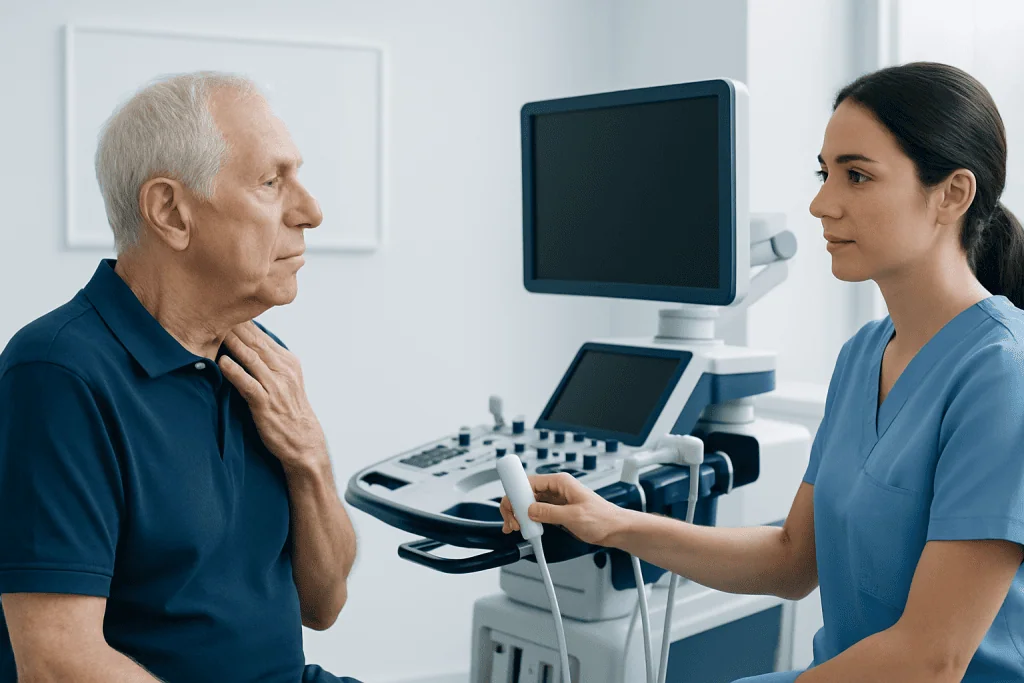
Symptoms of Parkinson-related dysphagia can vary from person to person. Some symptoms happen in the mouth and throat, while others are felt lower down in the chest. A person may have one problem or several at the same time, and symptoms may be more noticeable when tired, distracted, or eating quickly.
Common signs include coughing or throat clearing during meals, a wet or gurgly voice after swallowing, drooling, food remaining in the mouth, taking a long time to chew, or needing to swallow several times for one bite. Some people feel that tablets or food stick in the throat or chest. Others avoid certain foods because they feel difficult to manage.
There may also be less obvious signs. These include unexplained weight loss, reduced appetite, dehydration, recurring chest infections, or fever after meals. In Parkinson disease, some episodes of aspiration can be “silent,” meaning food or liquid enters the airway without obvious coughing.
- Coughing or choking with food, liquids, or saliva
- Drooling or difficulty managing saliva
- Slow eating or fatigue during meals
- Food pocketing in the cheeks or trouble clearing the mouth
- Sensation of food sticking
- Unintended weight loss or repeated pneumonia
Why Parkinson disease affects swallowing

Swallowing is a complex action that depends on precise timing between many muscles. Parkinson disease can reduce the speed, strength, and coordination of these movements. The tongue may move less effectively to push food backward, and the throat muscles may not trigger a prompt swallow. This can leave food or liquid behind after a swallow or allow it to go toward the airway.
Changes in posture, tremor, rigidity, and slowness may also make eating more difficult. Some people have reduced facial expression and lip control, which can affect sealing the mouth around a spoon or cup. Others may have trouble sitting upright for long meals or controlling hand movements well enough to eat steadily and safely.
In addition, Parkinson disease can affect automatic body functions, including saliva control and esophageal movement. This may contribute to drooling, reflux, or a sensation of food not moving down well. Problems with attention or thinking, which can occur in some people, may further increase swallowing risk if meals become rushed or distracting.
Medication timing can matter too. Some people swallow better when Parkinson symptoms are well controlled, while others continue to have dysphagia despite good movement control. That is why swallowing difficulties deserve their own assessment rather than being viewed only as a general Parkinson symptom.
When to seek evaluation
Any new or ongoing difficulty swallowing in Parkinson disease should be discussed with a doctor. Evaluation is especially important if symptoms happen more than occasionally, interfere with normal eating, or cause concern about choking. Even mild problems deserve attention because they can progress slowly over time.
Prompt assessment is recommended if there is coughing with meals, frequent throat clearing, a wet-sounding voice after drinking, or a feeling that food is sticking. Medical review is also important if the person has lost weight, becomes dehydrated, avoids meals, or takes much longer than usual to eat.
Urgent care is needed if there is severe choking, trouble breathing, blue lips, inability to swallow saliva, chest pain after swallowing, or signs of aspiration pneumonia such as fever, shortness of breath, or a new productive cough. These situations should not wait for a routine appointment.
In many cases, the next step is referral to a neurologist, speech-language pathologist, or swallowing specialist. At centers with multidisciplinary movement disorder care, the assessment may be coordinated alongside review of voice, mobility, nutrition, and medications, including evaluation for Parkinson disease treatment when symptom control may affect swallowing.
How swallowing problems are diagnosed
Diagnosis starts with a detailed history. The clinician asks when symptoms occur, whether they are worse with solids or liquids, how long meals take, and whether there has been coughing, weight loss, dehydration, or chest infection. A medication review is also useful, especially in relation to “on” and “off” periods in Parkinson symptoms.
A bedside swallowing assessment may include checking lip and tongue movement, voice quality, cough strength, posture, and the ability to swallow different textures. This first evaluation helps identify obvious risk, but it may not show the full picture. Because silent aspiration can occur, instrumental testing is often important.
Two commonly used tests are the videofluoroscopic swallow study and fiberoptic endoscopic evaluation of swallowing, often called FEES. These tests show how food and liquid move through the mouth and throat and whether material enters the airway. They also help determine which strategies improve swallowing safety.
If symptoms suggest a problem lower in the esophagus, additional digestive evaluation may be considered. This is particularly relevant when there is chest sticking, significant reflux, or concern for another disorder such as achalasia. In selected cases, swallowing studies may be complemented by endoscopy or other digestive tests to rule out structural causes.
Treatment options and day-to-day management
Treatment depends on the cause, severity, and part of swallowing that is affected. A speech-language pathologist often plays a central role by teaching exercises, pacing techniques, and safer swallowing strategies. Therapy may focus on improving tongue control, airway protection, swallow timing, or mealtime habits. For many patients, physical therapy and rehabilitation can also support posture, mobility, and overall function during meals.
Simple changes can make meals safer and less tiring. These may include sitting fully upright, taking smaller bites and sips, swallowing twice when needed, reducing distractions, and allowing enough time for meals. Some people benefit from changing food texture or liquid thickness, but these decisions are best guided by a qualified professional so nutrition and hydration are not compromised.
Medication review is another important part of care. If swallowing is worse during “off” times, a doctor may consider adjusting the Parkinson treatment plan. Excess saliva, reflux, constipation, and poor dental health may also need attention because they can worsen swallowing comfort and safety. When symptoms are complex, coordinated care between neurology, nutrition, rehabilitation, and gastroenterology may be helpful.
In advanced cases, other feeding approaches may sometimes be discussed if eating by mouth is no longer safe enough to maintain nutrition or hydration. This decision is individualized and should consider the person’s goals, quality of life, medical status, and specialist recommendations. In some patients with advanced movement symptoms, broader treatment planning such as deep brain stimulation may be reviewed, although DBS is not a primary treatment for dysphagia itself.
Prevention, self-care, and support
Not all swallowing problems can be prevented, but regular monitoring can reduce complications. People with Parkinson disease may benefit from discussing swallowing at routine neurology visits, even before major symptoms appear. Keeping a symptom diary can help identify patterns, such as whether problems occur with pills, thin liquids, or at certain times of day.
At home, supportive habits can make a difference. Good oral hygiene matters because bacteria in the mouth can increase the risk of pneumonia if aspiration occurs. Staying well hydrated, eating slowly, and avoiding talking while chewing or swallowing may also help. Caregivers can support by encouraging an upright position and a calm mealtime environment.
Nutrition should be watched closely. If weight is dropping or meals become exhausting, advice from a dietitian can help maintain calories and fluid intake while staying within any texture recommendations. People should not make major diet changes on their own without guidance, especially if they are already frail or have other medical conditions.
Near the end of the care pathway, some patients choose evaluation at specialized centers. Acibadem International’s multidisciplinary specialists in JCI-accredited hospitals diagnose and treat Parkinson-related swallowing concerns for international patients, coordinating neurology, swallowing assessment, rehabilitation, and nutrition support when needed.
When to see a doctor urgently
Although many swallowing issues develop slowly, some situations need urgent medical attention. Severe choking, sudden inability to swallow, new breathing difficulty during meals, or suspected food blockage should be treated as emergencies. If a person cannot clear the airway, emergency services should be contacted immediately.
Medical care should also be sought quickly if there are signs of aspiration or infection. These include fever, shortness of breath, chest discomfort, confusion, or a worsening cough after eating or drinking. Older adults may show fewer classic symptoms, so any sudden decline after swallowing trouble deserves attention.
Persistent dehydration is another reason for prompt care. Warning signs include dizziness, dry mouth, dark urine, marked fatigue, and reduced urine output. These problems can become more serious when combined with Parkinson disease, limited mobility, or other chronic conditions.
Even when symptoms are not dramatic, it is sensible to arrange assessment if there is repeated coughing with meals, fear of eating, or ongoing weight loss. Early review often provides practical strategies that improve confidence, comfort, and safety at the table.
Frequently asked questions
Are swallowing problems common in Parkinson disease?
Yes. Swallowing difficulties are common in Parkinson disease because the condition can affect the coordination and strength of muscles used for chewing and swallowing. Symptoms may be mild at first, so they are sometimes missed unless they are asked about directly.
What are the first signs of dysphagia in Parkinson disease?
Early signs may include coughing with drinks, taking longer to eat, needing repeated swallows, drooling, or feeling that food sticks. Some people also notice a wet-sounding voice after swallowing or start avoiding certain foods.
Can swallowing problems in Parkinson disease cause pneumonia?
They can. If food, liquid, or saliva enters the airway, it may lead to aspiration and sometimes aspiration pneumonia. This is one reason why persistent coughing during meals or repeated chest infections should be evaluated.
Which doctor evaluates swallowing problems in Parkinson disease?
Evaluation often involves more than one specialist. A neurologist may assess Parkinson symptom control, while a speech-language pathologist performs swallowing assessment and therapy; some patients may also need gastroenterology or nutrition input.
How are swallowing problems tested?
Testing usually begins with a clinical swallowing assessment and medical history. If more detail is needed, specialists may use a videofluoroscopic swallow study or FEES to see how food and liquid move and whether aspiration occurs.
Can swallowing therapy help?
Yes, many people benefit from swallowing therapy. Treatment may include exercises, posture changes, pacing techniques, and recommendations about food texture or liquid consistency based on the person's specific swallowing pattern.
When should someone with Parkinson disease seek urgent help for swallowing trouble?
Urgent help is needed for severe choking, trouble breathing, inability to swallow saliva, or signs of aspiration pneumonia such as fever and shortness of breath. Rapid evaluation is also important if there is significant dehydration or sudden worsening of swallowing.
References
- National Institute of Neurological Disorders and Stroke
- National Institute on Aging
- Parkinson's Foundation
- American Speech-Language-Hearing Association
- National Institute of Diabetes and Digestive and Kidney Diseases
This article is for general information only and is not a substitute for professional medical advice. Please consult a qualified doctor about your individual situation.
Parkinson Disease in Turkey — costs, top hospitals & a free quote
JCI-accredited · board-certified surgeons · reply within 24h
Add us as a Preferred Source to see more of our trusted health content across Google Search, AI Overviews and Discover.

Neurology
Diagnosis and treatment of disorders of the brain, spinal cord, nerves and muscles.
51 specialists in this unit