Syringes: An Evidence-Based Guide for Patients

Syringes come in different sizes and designs for specific purposes, including injections, irrigation, and oral dosing. Most injection syringes are single-use devices and should not be shared or reused.
Key Takeaways
- Syringes come in different sizes and designs for specific purposes, including injections, irrigation, and oral dosing.
- Most injection syringes are single-use devices and should not be shared or reused.
- Safe syringe technique helps reduce the risk of infection, dosing errors, needle injuries, and tissue irritation.
- Used syringes and needles should go into an approved sharps container, not household recycling.
- A doctor or pharmacist can help patients choose the correct syringe type for home treatment.
Syringes are medical devices used to measure, draw up, or deliver fluids such as medicines and vaccines. For patients, the most important points are choosing the right syringe for the intended use, never reusing single-use syringes, and disposing of used sharps safely.
Overview: what syringes are and why they matter
Syringes are handheld medical devices designed to move fluid into or out of the body or into another container. They are commonly used to give medicines, vaccines, insulin, and other injectable treatments, but they can also be used without needles for oral medicines or irrigation. In everyday patient care, the term “syringe” usually refers to a barrel with measurement markings and a plunger that controls the flow of fluid.
Understanding syringes matters because the right device supports accurate dosing and safer treatment. A syringe that is too large, the wrong connection type, or a poorly fitting needle can make treatment less precise or more uncomfortable. Clear guidance from a clinician, nurse, or pharmacist is especially important when a person is learning to give medicine at home.
For most patients, syringe safety centers on three basics: use the prescribed type, follow the instructions for one-time use unless specifically told otherwise, and dispose of used sharps correctly. These simple steps help lower the risk of infection, medication errors, and accidental needle-stick injuries.
Types of syringes patients may encounter
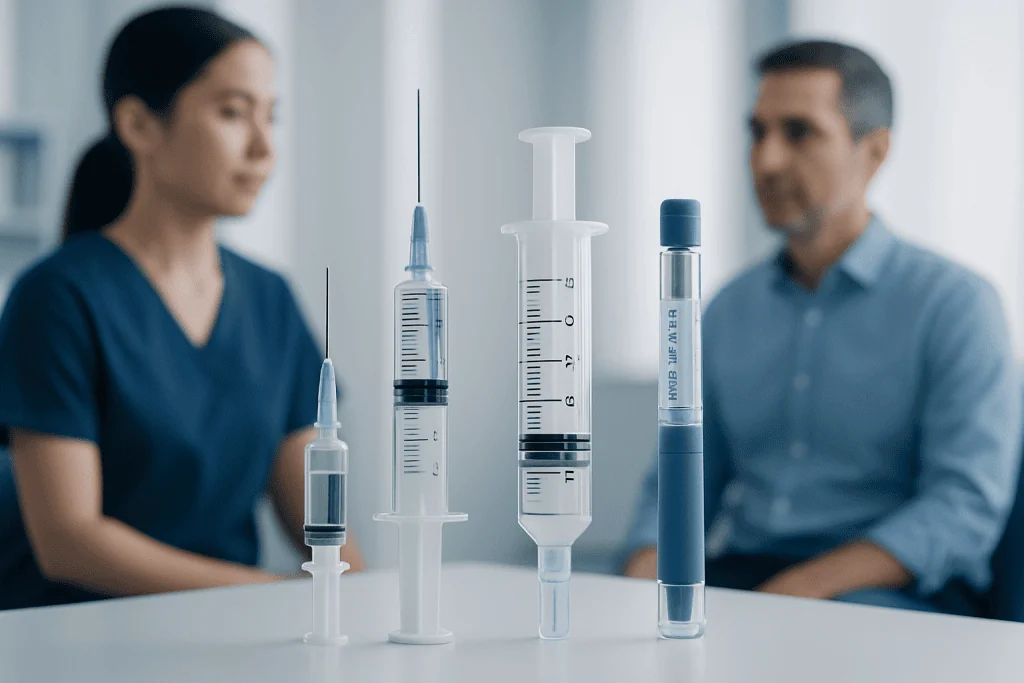
Syringes vary by size, tip style, and intended purpose. Small-capacity syringes may be used for insulin or other medicines that require precise small-volume dosing, while larger syringes may be used for irrigation or to give larger volumes. The measurement scale may be in milliliters, insulin units, or another format depending on the medication.
Some syringes are used with needles, while others are needle-free. Oral syringes are meant for liquid medicine taken by mouth and should not be connected to injectable equipment. Irrigation syringes are designed to flush wounds, tubes, or body areas under clinical advice. Using one syringe type in place of another can increase the chance of a dosing mistake.
Patients may also hear about special safety syringes that include features to reduce needle-stick injuries, such as retractable needles or protective shields. These are often used in hospitals and clinics. At home, a patient may be taught to use a standard syringe for medicines such as insulin or other chemotherapy-related supportive injections when prescribed.
- Injection syringes: used with a needle for medicines given under the skin, into muscle, or into a vein.
- Insulin syringes: marked for insulin dosing and paired with a fixed needle in many designs.
- Oral syringes: used for liquid medicines taken by mouth; no needle is attached.
- Irrigation syringes: used to flush or rinse, not to inject medication.
How syringes are used safely

Safe syringe use starts before the injection or dose is prepared. Patients should confirm the medication name, dose, expiration date, and the prescribed route of administration. Clean hands, a clean preparation area, and the correct syringe-and-needle combination help reduce contamination and improve accuracy. If instructions are unclear, it is safer to pause and ask a healthcare professional than to guess.
When drawing up medication, the syringe should be used exactly as instructed for that product. Measurement marks should be read at eye level, and air bubbles should be handled according to the training provided for the specific medicine. For injections, site rotation may be recommended to help limit irritation or thickening of tissue, especially with repeated treatments such as insulin use or some long-term medications.
Single-use syringes are not meant to be reused or shared, even by the same person unless a clinician has given a very specific exception for a noninvasive device. Reusing or sharing can introduce bacteria or blood contamination and can also dull the needle, making injections more painful. If a person has a condition such as diabetes and gives regular injections, a nurse educator or endocrinology team can provide practical teaching on safe technique and rotating sites.
Common risks: infection, injury, and dosing errors
Most syringe-related problems are preventable. The main concerns are infection, incorrect dose measurement, tissue irritation, and accidental needle-stick injury. Infection risk rises when equipment is reused, shared, stored improperly, or handled with unclean hands. Even when a needle looks normal, it may no longer be sterile after use.
Dosing errors can happen when the wrong syringe is chosen or when a person confuses units with milliliters. This is especially important for insulin, pediatric liquid medicines, and high-risk medications. Oral syringes are helpful for accurate liquid dosing because household spoons are not reliable measuring tools.
Needle injuries can occur during recapping, hurried disposal, or carrying used syringes loosely. In addition, repeated injections into the same small area may cause bruising, skin changes, or lumps under the skin. If a patient notices unusual swelling, persistent pain, drainage, or signs of skin infection after injections, a medical review is appropriate.
In some cases, syringes are part of treatment plans for serious conditions such as cancer, blood disorders, or hormone therapies. These situations may involve more complex handling instructions, so individualized training is important.
Storage, disposal, and travel tips
Unused syringes should be stored according to the instructions from the pharmacy or manufacturer, usually in a clean, dry place and away from children or pets. The medication itself may have separate storage rules, such as refrigeration or protection from light. Syringes should remain in original packaging until use when possible.
Used syringes and needles should be placed promptly into a puncture-resistant sharps container. They should not be thrown loosely into household trash or recycling bins. Local regulations differ, so patients should check community guidance on sharps drop-off sites, pharmacy programs, or mail-back options.
When traveling, patients who use injectable medicines should carry enough supplies for the trip, keep medicines labeled, and bring a copy of the prescription or care plan if possible. A travel-sized sharps container can be helpful. If treatment is time-sensitive or specialized, such as IVF-related injections or biologic medicines, advance planning with the care team can reduce stress and avoid missed doses.
Choosing the right syringe for home care
The right syringe depends on the medicine, the dose, and the route it needs to take. A smaller syringe often allows more precise measurement for small doses, while larger syringes may be used when larger volumes are needed. Needle length and gauge also vary based on whether a medication is given under the skin, into muscle, or by another route.
Patients should not substitute one type of syringe for another unless a clinician or pharmacist confirms that it is appropriate. This is particularly important for insulin and pediatric medicines, where small differences in markings can matter. If the prescribed product is unavailable, a pharmacist can recommend a clinically suitable alternative and explain how to use it.
Some patients need ongoing support with injectable treatment because of chronic conditions or recovery after procedures. In those cases, teaching may include demonstration, supervised practice, and written instructions. Near the end of the care pathway, some international patients may seek coordinated support from centers such as Acibadem International, where multidisciplinary specialists and JCI-accredited hospitals diagnose and treat conditions that may require syringe-based therapies, including stem cell transplant support in selected cases.
When to seek medical care
Medical advice is important if a patient is unsure which syringe to use, how to measure a dose, or how to give the medicine safely. It is also wise to ask for help if injections are repeatedly painful, difficult to administer, or followed by bruising or skin reactions. Early guidance can prevent small technique problems from becoming bigger ones.
Prompt medical care is needed after a significant dosing mistake, an accidental needle-stick injury, or a suspected severe allergic reaction after an injection. A person should also seek care if the injection site becomes increasingly red, warm, swollen, or starts draining pus, as these can be signs of infection.
Patients should contact their healthcare team if they miss doses because of uncertainty about syringe use or if they have trouble obtaining the correct supplies. Safe treatment depends not only on the medicine itself but also on using the proper equipment consistently and confidently.
Frequently asked questions
Are syringes and needles the same thing?
No. A syringe is the device with the barrel and plunger that holds and measures fluid, while a needle is the sharp attachment used for some types of injections. Some syringes are used without needles, such as oral syringes for liquid medicines.
Can a syringe be reused at home?
Most syringes intended for injections are single-use devices and should not be reused. Reuse can increase the risk of infection, contamination, pain, and inaccurate dosing. Patients should follow the instructions given for their specific medical product and ask a clinician if unsure.
What is the safest way to throw away used syringes?
Used syringes and needles should be placed in a puncture-resistant sharps container as soon as possible after use. They should not be put loosely in regular trash or recycling. Local disposal rules may include pharmacy drop-off, community collection sites, or mail-back programs.
Why are there different syringe sizes?
Different sizes help match the syringe to the amount of medicine and the level of precision needed. Small syringes are often better for measuring tiny doses accurately, while larger ones are used for greater volumes. The correct choice depends on the prescription and route of use.
What should a patient do after a needle-stick injury?
The area should be washed with soap and water, and medical advice should be sought promptly. The exact follow-up depends on how the injury happened and whether blood exposure may have occurred. A healthcare professional can assess whether testing or preventive treatment is needed.
Are oral syringes safer than household spoons for liquid medicine?
Yes, oral syringes are generally more accurate than household spoons for measuring liquid medicines. They can help reduce dosing errors, especially in children and with medicines that need precise amounts. Patients should use the measurement device that comes with the medicine whenever possible.
References
- World Health Organization
- Centers for Disease Control and Prevention
- U.S. Food and Drug Administration
- MedlinePlus
- American Diabetes Association
This article is for general information only and is not a substitute for professional medical advice. Please consult a qualified doctor about your individual situation.
Explore treatments in Turkey — costs, top hospitals & a free quote
JCI-accredited · board-certified surgeons · reply within 24h
Add us as a Preferred Source to see more of our trusted health content across Google Search, AI Overviews and Discover.

More from the Health Library

Olive Oil for Constipation: A Complete Medical Overview

Polymyxin B Sulfate: A Complete Medical Overview

Insulin Degludec: A Complete Medical Overview

Anastomotic Leak: What Patients Need to Know

Oatmilk: A Complete Medical Overview