Tapeworms in Dogs: An Evidence-Based Guide for Patients

Tapeworms in dogs usually affect pets more than people, but human infection can occur. The most common route of spread is accidental swallowing of an infected flea rather than direct contact with a dog.
Key Takeaways
- Tapeworms in dogs usually affect pets more than people, but human infection can occur.
- The most common route of spread is accidental swallowing of an infected flea rather than direct contact with a dog.
- Many human infections cause few or no symptoms, though digestive discomfort or visible worm segments may occur.
- Diagnosis may involve stool testing, symptom review, and sometimes repeat samples because parasites are not always found in one test.
- Treatment is typically straightforward with prescription antiparasitic medicine, along with treating the pet and controlling fleas.
- Good hand hygiene, veterinary care, flea prevention, and safe food practices help reduce risk.
Tapeworms in dogs are common intestinal parasites, and in most cases they pose a low risk to healthy adults. People can still become infected in certain situations, especially through accidental ingestion of infected fleas or contaminated food, so understanding symptoms, diagnosis, treatment, and prevention is important.
Overview: what tapeworms in dogs mean for people
Tapeworms in dogs are intestinal parasites made up of small segments. The question many people ask is whether a dog with tapeworms can make a person sick. The short answer is yes, but this is uncommon, and the risk depends on the type of tapeworm and how exposure happens.
The most familiar canine tapeworm is Dipylidium caninum, which is usually spread by fleas. People, especially young children, may become infected if they accidentally swallow an infected flea. Other types, such as Echinococcus, are less common but medically more important because they can cause cysts in human organs rather than staying only in the intestine.
This topic matters because signs in a dog, such as rice-like worm segments near the tail or in bedding, often prompt concern for the whole household. In most situations, reassurance is appropriate: casual petting alone does not usually spread infection. Still, veterinary treatment for the dog and sensible hygiene steps are important.
Because symptoms in people may be mild or absent, individuals who think they may have been exposed should speak with a qualified doctor if they notice digestive symptoms, worm segments in the stool, or if a child has close contact with a dog known to have fleas or tapeworms.
How tapeworms spread from dogs to humans

Understanding transmission helps separate real risk from common misconceptions. With Dipylidium caninum, people do not usually get infected by touching a dog, being licked, or cleaning up after a pet. Infection typically happens when an infected flea is swallowed by accident. This is why flea control is central to prevention.
Some other tapeworms have different life cycles. Dogs can carry species linked to contaminated raw meat, animal offal, or contact with infected livestock or wild animals. In these settings, eggs shed in dog feces may contaminate the environment. If a person accidentally ingests these eggs, infection may occur, and the medical consequences can be more serious than with the common flea-borne tapeworm.
Risk is usually higher in households where pets are not receiving regular veterinary care, where fleas are present, where children play closely with pets and then put hands in their mouths, or where dogs are fed raw animal products. Good hygiene reduces risk substantially.
It is also important to remember that not all worms in dogs are tapeworms. Roundworms and other intestinal parasites can cause different problems and may have different routes of spread. A clinician may consider other parasitic infections, including intestinal parasites, when symptoms are unclear.
Symptoms in dogs and possible symptoms in humans
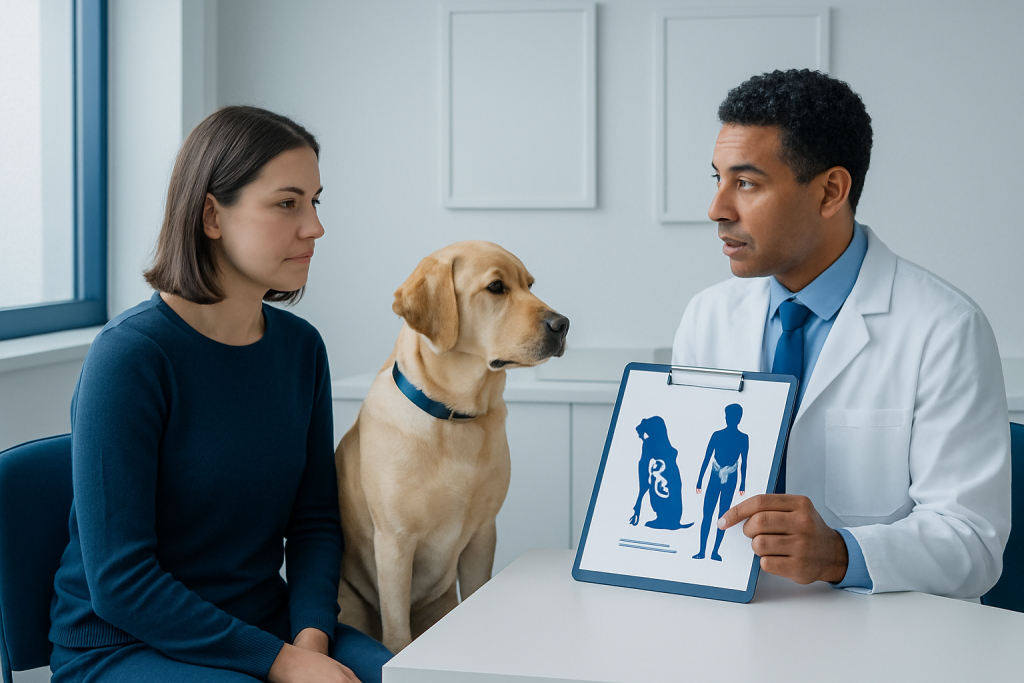
Dogs with tapeworms may show no obvious illness. Often the first sign is the appearance of small white segments that look like grains of rice around the anus, in stool, or on bedding. Some dogs may lick the anal area, drag their bottom on the floor, or have mild digestive upset, but many remain otherwise active and well.
Humans infected with the common dog tapeworm may also have few or no symptoms. When symptoms do occur, they can include mild abdominal discomfort, nausea, changes in appetite, diarrhea, or visible segments in the stool. In children, irritability or anal itching may sometimes be noticed.
Different symptoms can occur with less common tapeworm species. For example, if infection leads to cyst formation in the liver, lungs, or other organs, symptoms may develop slowly over time and depend on the organ involved. This can include abdominal pain, cough, or pressure symptoms. These situations need specialist evaluation and should not be managed as routine intestinal upset.
Visible worm segments do not always confirm which parasite is present. For that reason, medical assessment is useful when a person has symptoms or known exposure, particularly if there is concern about more than a simple flea-borne infection.
Diagnosis and medical evaluation
A doctor begins with a history of exposure. Helpful details include whether the dog has been diagnosed with tapeworms, whether fleas are present in the home, whether the person has seen worm segments, recent travel, food exposures, and whether the dog is fed raw meat. This information helps guide which parasites should be considered.
Diagnosis for intestinal tapeworm infection often involves a stool examination. Because parasite eggs or segments are not always present in every sample, repeat testing may sometimes be recommended. If the concern is a species that can affect organs outside the intestine, blood tests and imaging may be needed. In some cases, doctors may use MRI scan or other imaging to evaluate suspicious cysts or masses, depending on symptoms and the organ involved.
Doctors also consider other causes of digestive complaints, including viral illness, food intolerance, hemorrhoids, and other parasitic infections. If a person reports seeing blood in the stool, unexplained weight loss, persistent pain, or prolonged diarrhea, evaluation should be broader rather than assuming tapeworms are the cause.
In children, a pediatric assessment may be especially helpful because symptoms can be vague and because young children are more likely to have close hand-to-mouth exposure. A careful diagnosis helps avoid unnecessary treatment and ensures that other conditions are not missed.
Treatment options for people and pets
Treatment for human intestinal tapeworm infection is usually straightforward and typically involves a prescription antiparasitic medicine chosen by a doctor. The exact treatment depends on the species involved, the person’s age, pregnancy status, and overall health. Self-treating without a confirmed diagnosis is not ideal, because different parasites may require different approaches.
If a more complex tapeworm infection is suspected, especially one involving cysts in organs, care may involve multiple specialists. Treatment can include medication, monitoring, and sometimes procedures or surgery depending on the location and size of cysts. In selected cases, doctors may use advanced imaging or interventional radiology techniques as part of diagnosis or management planning.
The dog also needs treatment from a veterinarian. Treating only the person but not the pet, or treating the pet without controlling fleas, increases the chance of reinfection. The home environment may also need attention, including washing pet bedding and addressing flea infestation.
If symptoms suggest digestive disease and the diagnosis remains uncertain, referral to specialists in gastroenterology may be useful. Near the end of the care pathway, patients seeking coordinated evaluation may find that Acibadem International’s multidisciplinary specialists and JCI-accredited hospitals provide diagnosis and treatment for parasitic and digestive conditions in international patients.
Prevention and self-care at home
The most effective prevention for tapeworms in dogs is regular veterinary care and reliable flea control. A household should follow the veterinarian’s advice on parasite prevention, stool checks, and treatment if an infection is found. Preventing fleas is especially important because it interrupts the life cycle of the most common canine tapeworm.
Hand hygiene matters for everyone, and particularly for children. Washing hands after touching pets, cleaning up pet feces, gardening, or playing outdoors lowers the chance of many infections, not only tapeworms. Fingernails should be kept clean, and children should be discouraged from putting dirty hands or objects into their mouths.
Food safety also plays a role. Dogs should not be fed raw or undercooked meat unless a veterinarian has advised otherwise and risks are understood. People should practice safe food handling at home, including proper washing, cooking, and storage of food. These steps help reduce exposure to several parasites and infections.
- Use regular flea prevention for pets.
- Arrange veterinary treatment promptly if worm segments are seen.
- Pick up dog feces and dispose of it hygienically.
- Wash hands after pet contact and before eating.
- Keep children away from areas contaminated by pet feces.
- Avoid feeding dogs raw animal products when possible.
When to seek medical care
Medical advice should be sought if a person sees worm segments in the stool, has ongoing abdominal symptoms, or has had clear exposure to a dog with fleas or confirmed tapeworm infection. This is particularly important for infants, young children, older adults, pregnant individuals, and people with weakened immune systems.
Prompt assessment is also appropriate if symptoms are persistent or unusual, such as ongoing nausea, prolonged diarrhea, weight loss, anal itching that does not improve, or abdominal pain without a clear explanation. Although these symptoms are not specific to tapeworms, they deserve proper evaluation.
Urgent care is needed for severe abdominal pain, vomiting that prevents drinking, signs of dehydration, breathing symptoms, jaundice, or other concerning symptoms suggesting illness beyond a simple intestinal infection. These features are not typical of routine dog tapeworm exposure and may point to another condition requiring immediate attention.
If there is any uncertainty, especially when a pet has been diagnosed and a child in the household has symptoms, a healthcare professional can advise on whether stool tests, observation, or specialist assessment is the best next step.
Frequently asked questions
Can humans catch tapeworms directly from dogs?
Usually not through simple touching or being near a dog. The most common dog tapeworm infects people when an infected flea is accidentally swallowed, which is why flea control is so important.
What are the signs of tapeworm infection in a person?
Many people have no symptoms at all. Others may notice mild stomach discomfort, nausea, diarrhea, anal itching, or small white worm segments in the stool.
If a dog has tapeworms, should everyone in the household be treated?
Not automatically. People should only be treated if a clinician thinks infection is likely or confirms it, because household members may have no infection even if the dog is affected.
Are tapeworms in dogs dangerous for children?
Children can be at somewhat higher risk because they are more likely to have close contact with pets and may put their hands in their mouths. Even so, infection remains uncommon, and prevention through flea control and handwashing is very effective.
How are human tapeworm infections diagnosed?
Doctors often start with a history of exposure and a stool test. If symptoms suggest a less common tapeworm that can affect organs outside the intestine, blood tests or imaging may also be needed.
Can tapeworm infection go away on its own?
Some intestinal tapeworm infections may cause minimal symptoms, but it is still best to seek medical advice rather than waiting. Proper treatment helps clear the parasite and reduces the chance of ongoing exposure or confusion with another condition.
This article is for general information only and is not a substitute for professional medical advice. Please consult a qualified doctor about your individual situation.
Persistent digestive symptoms? Get evaluated in Turkey
JCI-accredited · board-certified surgeons · reply within 24h
Add us as a Preferred Source to see more of our trusted health content across Google Search, AI Overviews and Discover.

More from the Health Library

Deadly Nightshade Plant: What Patients Need to Know

Nyquil Ingredients: What Patients Need to Know

Big Poo: What Patients Need to Know

Abductor Muscle — Explained by Medical Evidence, Not Myths

Ovaries — Explained by Medical Evidence, Not Myths