Tennis Elbow: Lateral Elbow Pain and Treatment Choices

Tennis elbow is usually a tendon overload problem rather than an acute injury or infection. Pain is typically felt on the outer elbow and may worsen with gripping, twisting, lifting, or using tools.
Key Takeaways
- Tennis elbow is usually a tendon overload problem rather than an acute injury or infection.
- Pain is typically felt on the outer elbow and may worsen with gripping, twisting, lifting, or using tools.
- Diagnosis is usually made through medical history and physical examination; imaging is only needed in selected cases.
- First-line treatment often includes relative rest, ergonomic changes, physiotherapy exercises, and pain control.
- Injections or surgery may be considered only when symptoms persist despite a structured non-surgical plan.
- Early adjustment of repetitive activities can reduce strain and support long-term recovery.
Tennis elbow is a common overuse condition that causes pain on the outer side of the elbow, often during gripping, lifting, or repetitive wrist movements. Most people improve with activity changes, guided exercises, and time, while a smaller group may need additional treatments.
Overview
Tennis elbow, medically called lateral epicondylitis or lateral elbow tendinopathy, is a painful condition affecting the tendons that attach to the outer part of the elbow. These tendons help extend the wrist and fingers, especially during gripping and lifting. Although the name is associated with tennis, many people who develop the condition do not play tennis.
The problem usually develops gradually when the tendon is exposed to repeated load faster than it can adapt. In many cases, the tendon shows small changes related to overload and healing response rather than active inflammation. This is why treatment focuses not only on reducing pain, but also on improving tendon strength and tolerance over time.
Tennis elbow is common among adults who perform repetitive hand, wrist, or forearm movements. It may affect athletes, manual workers, office workers, musicians, cooks, gardeners, and parents who frequently lift children or carry heavy bags. The condition can be frustrating, but most cases improve with conservative care and a structured return to activity.
Symptoms
The main symptom of tennis elbow is pain or tenderness on the outer side of the elbow, near the bony prominence called the lateral epicondyle. The pain may stay around the elbow or travel down the forearm toward the wrist. It often starts mildly and becomes more noticeable during daily tasks that involve gripping or lifting.
People commonly notice discomfort when shaking hands, turning a door handle, lifting a kettle, using a screwdriver, typing for long periods, or holding a racquet. Grip strength may feel reduced because the forearm muscles and tendons are painful, not necessarily because the arm is weak. Some patients describe a burning ache after activity or stiffness when the arm has been resting.
Typical features include:
- Pain on the outer elbow during gripping, lifting, or wrist extension
- Tenderness when pressing over the lateral elbow
- Discomfort when twisting the forearm, such as opening a jar
- Symptoms that worsen with repeated use and ease with rest
- Reduced confidence using the affected hand for heavier tasks
Numbness, tingling, marked swelling, redness, or severe loss of motion is not typical for uncomplicated tennis elbow. If these symptoms are present, a doctor may look for other causes such as nerve irritation, arthritis, neck-related pain, or a recent injury.
Causes and Risk Factors
Tennis elbow usually results from repetitive loading of the wrist extensor tendons, especially the tendon connected to the extensor carpi radialis brevis muscle. This muscle helps stabilize the wrist when the hand grips an object. When the same movement is repeated often, or when loads suddenly increase, the tendon can become irritated and less tolerant of normal activity.
Risk increases when the forearm muscles are exposed to awkward positions, poor technique, insufficient recovery, or tools that require forceful gripping. A tennis player may develop symptoms after changing racquets, increasing training intensity, or using a backhand technique that overloads the forearm. A worker may develop similar symptoms from using vibrating tools, lifting with the palm facing down, or repetitive mouse and keyboard use.
Common contributing factors include:
- Repetitive gripping, lifting, pulling, or twisting motions
- Sudden increase in workload, sport intensity, or household tasks
- Heavy or poorly balanced tools and equipment
- Reduced shoulder, wrist, or forearm strength and endurance
- Inadequate warm-up or recovery between demanding activities
- Workstation or technique issues that increase wrist strain
Age can also play a role because tendons may become less adaptable over time. However, tennis elbow is not simply a normal part of aging. Many people recover well when the load on the tendon is managed and the surrounding muscles are strengthened appropriately.
Diagnosis
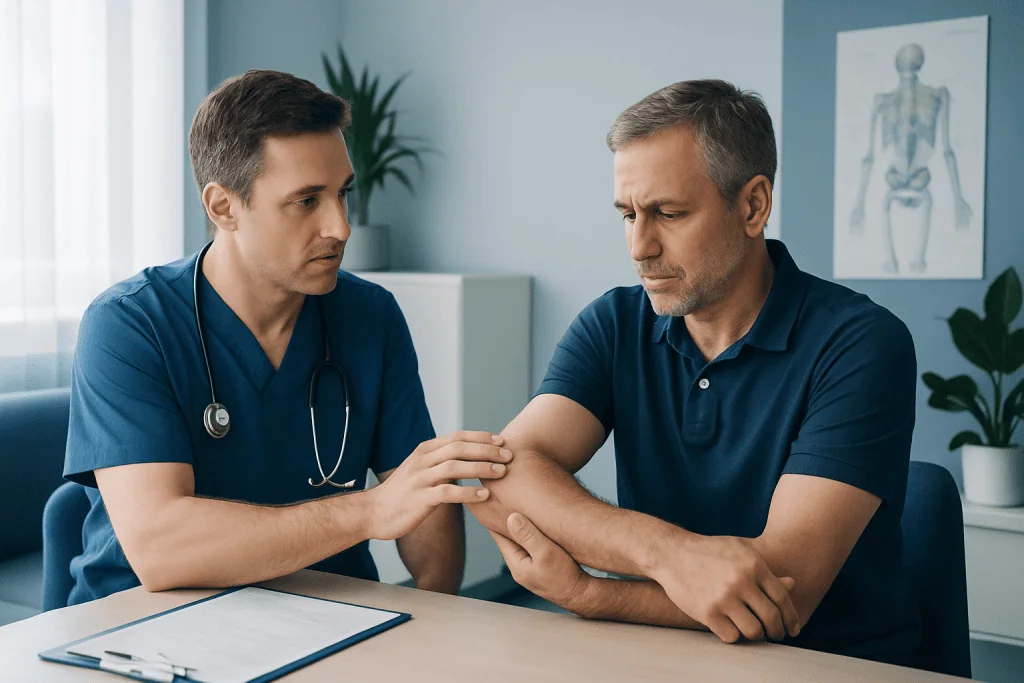
A doctor can often diagnose tennis elbow through a careful discussion of symptoms and a physical examination. The clinician may ask when the pain started, which activities worsen it, whether there was a specific injury, and whether there are symptoms such as numbness or neck pain. This helps distinguish tennis elbow from other conditions that can cause similar discomfort.
During examination, the doctor may press on the outer elbow and ask the patient to extend the wrist or middle finger against resistance. Pain reproduced during these movements is a typical sign. Range of motion, grip strength, shoulder function, wrist movement, and nerve signs may also be assessed.
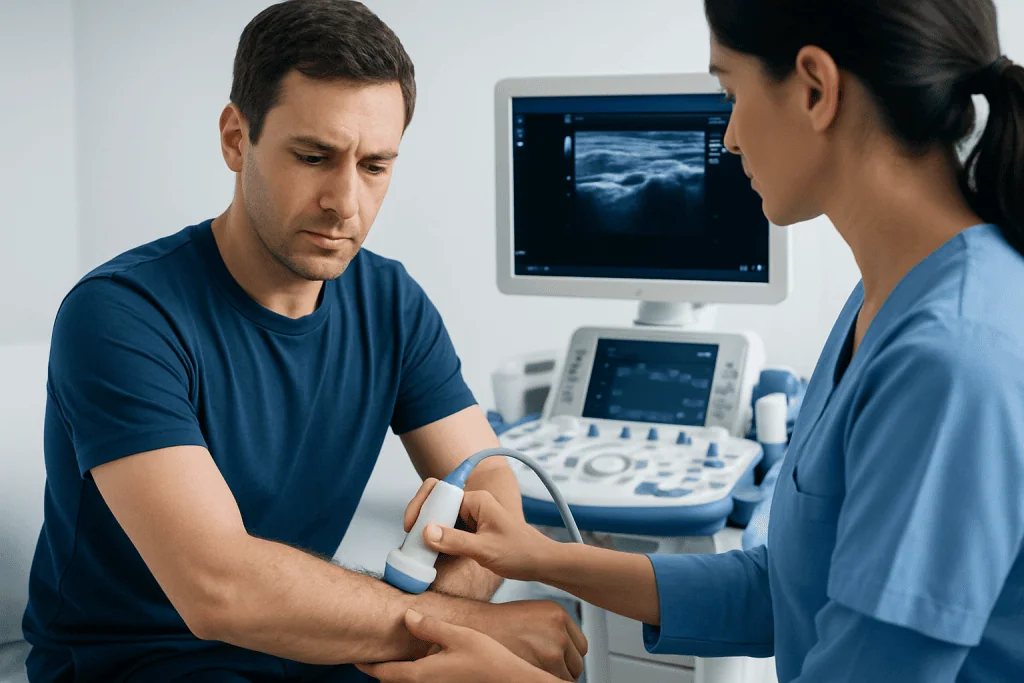
Imaging is not always required. X-rays may be considered if there is a history of trauma, stiffness, arthritis symptoms, or concern for a bone problem. Ultrasound or magnetic resonance imaging may be used when symptoms are persistent, the diagnosis is unclear, or a procedure is being planned. These tests can show tendon changes, but findings must be interpreted together with the patient’s symptoms because imaging changes do not always match pain severity.
Treatment Options
Most cases of tennis elbow are treated without surgery. The first step is usually relative rest, which means reducing or modifying painful activities rather than stopping all movement. Complete immobilization for long periods is generally avoided because tendons need controlled loading to recover strength. Short-term pain relief may include ice after activity, heat for stiffness, or anti-inflammatory medication if recommended by a doctor and safe for the individual.
Physiotherapy is a central part of treatment. A rehabilitation plan may include stretching, progressive strengthening of the wrist extensors, forearm conditioning, shoulder and scapular exercises, and gradual return to sport or work tasks. Eccentric and heavy-slow resistance exercises are often used, but they should be introduced at a tolerable level. Pain during exercise should be monitored, and progression should be individualized.
Braces or straps may help some people by reducing strain across the painful tendon during activities. A counterforce strap worn below the elbow or a wrist splint may be used temporarily, especially during work or sport. These supports are not a cure on their own, but they can make daily tasks more comfortable while rehabilitation continues.
If symptoms do not improve with a structured conservative program, a specialist may discuss additional options. Corticosteroid injections may provide short-term pain relief for selected patients, but repeated injections are generally used cautiously because they may not support long-term tendon health. Other options, such as platelet-rich plasma injections or shockwave therapy, may be considered in some cases, although results vary. Surgery is uncommon and usually reserved for persistent symptoms that continue despite several months of appropriate non-surgical treatment.
Prevention and Self-Care
Preventing tennis elbow focuses on reducing unnecessary tendon overload and improving the body’s ability to tolerate activity. People who use their hands and wrists repetitively should take short breaks, vary tasks when possible, and avoid sustained forceful gripping. Simple changes, such as carrying objects with the palm facing upward or keeping loads close to the body, can reduce strain on the outer elbow.
Ergonomics are important at work and at home. Tools with larger, cushioned handles may require less gripping force. A computer mouse and keyboard should allow the wrist to stay in a neutral position. For racquet sports, coaching on technique, grip size, string tension, and training volume can help distribute load more safely.
Self-care strategies may include:
- Reducing activities that sharply increase pain, then returning gradually
- Using two hands for heavy lifting when possible
- Keeping the wrist neutral rather than bent back during gripping
- Warming up before sports or demanding manual work
- Building forearm, shoulder, and upper back strength progressively
- Allowing recovery time after repeated or heavy tasks
Patients should avoid pushing through worsening pain for weeks, as this may prolong recovery. A practical approach is to keep activity within a tolerable range, then increase load step by step as symptoms settle and strength improves.
When to See a Doctor
A person should consider medical evaluation if outer elbow pain lasts more than a few weeks, interferes with work or daily activities, or keeps returning despite rest and self-care. Early assessment can confirm the diagnosis and help identify specific movements or habits that are maintaining the problem. It also allows a safe rehabilitation plan to be started before symptoms become more limiting.
Prompt medical advice is recommended if pain follows a fall or direct injury, if the elbow is visibly swollen or deformed, or if the person cannot move the elbow normally. Medical review is also important when there is numbness, tingling, weakness of the hand, fever, redness, or unexplained pain at rest. These features may suggest a different condition that needs separate evaluation.
Patients with diabetes, inflammatory joint disease, bleeding disorders, or those taking blood-thinning medication should speak with a doctor before using anti-inflammatory medicines or considering injections. Treatment choices should be adapted to the person’s medical history, work requirements, and activity goals.
For international patients seeking assessment, Acibadem International’s multidisciplinary specialists and JCI-accredited hospitals diagnose and treat elbow and tendon conditions, including tennis elbow. A qualified orthopedic or rehabilitation specialist can help select the most appropriate treatment pathway based on examination findings and individual needs.
Frequently asked questions
Is tennis elbow the same as a tendon tear?
Tennis elbow is usually a tendon overload or tendinopathy rather than a complete tear. The tendon may show small degenerative or irritation-related changes, but most cases do not involve a major rupture. A doctor may order imaging if symptoms are unusual, severe, or not improving as expected.
Can someone get tennis elbow without playing tennis?
Yes. Many people with tennis elbow have never played tennis. Repetitive gripping, lifting, typing, tool use, cooking, gardening, or other hand-intensive tasks can overload the same tendon area.
How long does tennis elbow take to improve?
Recovery time varies depending on symptom duration, activity demands, and how well the tendon load is managed. Some people improve within weeks, while others need several months of consistent rehabilitation. Persistent symptoms should be reviewed by a healthcare professional.
Should the arm be completely rested?
Complete rest is usually not necessary and may slow return to normal function if used for too long. It is better to reduce painful activities and continue gentle, tolerable movement. A physiotherapist or doctor can guide safe strengthening as pain improves.
Do injections cure tennis elbow?
Injections may help selected patients, but they are not a guaranteed cure. Corticosteroid injections can reduce pain in the short term, while other injection options have mixed evidence and may not be suitable for everyone. The decision should be made with a qualified clinician after discussing benefits and risks.
When is surgery considered for tennis elbow?
Surgery is usually considered only when symptoms continue despite a well-planned non-surgical treatment program over several months. Most patients do not need surgery. If surgery is discussed, the specialist will consider the diagnosis, imaging findings, functional limitations, and the patient’s goals.
References
- American Academy of Orthopaedic Surgeons
- British Society for Surgery of the Hand
- National Institute for Health and Care Excellence
- Mayo Clinic
- Cochrane Library
This article is for general information only and is not a substitute for professional medical advice. Please consult a qualified doctor about your individual situation.
Joint and spine care in Turkey — expert assessment & treatment
JCI-accredited · board-certified surgeons · reply within 24h
Add us as a Preferred Source to see more of our trusted health content across Google Search, AI Overviews and Discover.

Orthopedics & Spine
Care for bones, joints and the musculoskeletal system, including joint replacement, sports injuries and trauma.
125 specialists in this unit