Tennis Elbow: Tendon Pain, Diagnosis, and Treatment

Tennis elbow is usually a tendon-related overuse injury, not an inflammation caused only by playing tennis. Pain typically occurs on the outside of the elbow and may worsen with gripping, lifting, typing, or turning a doorknob.
Key Takeaways
- Tennis elbow is usually a tendon-related overuse injury, not an inflammation caused only by playing tennis.
- Pain typically occurs on the outside of the elbow and may worsen with gripping, lifting, typing, or turning a doorknob.
- Diagnosis is usually based on medical history and a physical examination; imaging may be used if symptoms are unclear or persistent.
- Treatment often includes activity modification, physiotherapy, strengthening exercises, pain relief measures, and sometimes injections or other procedures.
- Surgery is considered only for a small number of people with persistent symptoms after months of well-supervised non-surgical care.
Tennis elbow is a common overuse condition that causes pain on the outside of the elbow, often during gripping, lifting, or twisting movements. With the right diagnosis, activity changes, and guided rehabilitation, most people improve without surgery.
Overview
Tennis elbow, medically called lateral epicondylitis or lateral elbow tendinopathy, is a condition that causes pain around the bony area on the outside of the elbow. Although its name suggests a sports injury, many people who develop tennis elbow have never played tennis. It is commonly linked to repeated gripping, lifting, twisting, or wrist extension movements used in work, hobbies, and daily tasks.
The condition usually involves the tendons that attach the forearm muscles to the outer part of the elbow, especially the tendon connected to the extensor carpi radialis brevis muscle. In many cases, the tendon becomes irritated or develops small degenerative changes after repeated strain. For this reason, many specialists now describe it as tendinopathy rather than simple inflammation.
Tennis elbow can be frustrating because it affects everyday actions such as carrying shopping bags, using tools, shaking hands, typing, or lifting a kettle. However, it is usually not dangerous, and most cases improve gradually with appropriate self-care, physiotherapy, and changes in activities that overload the tendon.
Symptoms of Tennis Elbow
The main symptom is pain or tenderness on the outside of the elbow. The discomfort may start gradually and become more noticeable over time, especially after repeated use of the wrist and forearm. Some people describe a burning or aching feeling that may travel down the forearm toward the wrist.
Symptoms often worsen with activities that require gripping or resisted wrist movement. Examples include lifting a pan, using a screwdriver, opening a jar, holding a racket, or carrying a laptop. Pain may also appear when shaking hands or squeezing an object, and grip strength may feel reduced.
- Pain on the outer side of the elbow
- Tenderness when pressing over the lateral epicondyle
- Discomfort with gripping, lifting, or twisting
- Weakness or fatigue in the forearm during use
- Stiffness or aching after activity or in the morning
Tennis elbow usually affects one arm, often the dominant arm, but it can occur on both sides. Severe swelling, major bruising, deformity, numbness, fever, or sudden inability to move the elbow are not typical features and should be assessed by a doctor promptly.
Causes and Risk Factors

Tennis elbow is usually caused by repeated loading of the wrist and finger extensor tendons near their attachment at the outer elbow. When the tendon is stressed more than it can recover from, small changes may develop in the tendon structure. Over time, this can lead to pain, reduced tolerance to activity, and difficulty with gripping tasks.
Racket sports can contribute, particularly when technique, equipment, or training load places extra strain on the forearm. However, many non-sporting activities are also common triggers. These include manual work, painting, plumbing, carpentry, gardening, cooking, computer mouse use, and repetitive lifting.
Risk may increase when activity levels rise suddenly, when tools or sports equipment are poorly fitted, or when tasks involve forceful gripping with the wrist extended. Age can also play a role, as tendon resilience may change over time. The condition is often seen in adults, especially those whose work or hobbies repeatedly load the forearm muscles.
Other conditions can sometimes mimic or contribute to outer elbow pain, including neck-related nerve irritation, radial tunnel syndrome, elbow arthritis, or ligament problems. This is why a careful assessment is important if symptoms do not follow a typical pattern or do not improve with initial care.
Diagnosis
Diagnosis of tennis elbow is usually made through a medical history and physical examination. A doctor or physiotherapist will ask when the pain started, which movements aggravate it, what work or sports activities are involved, and whether there has been an injury. They may also ask about numbness, neck pain, previous elbow problems, or other medical conditions.
During the examination, the clinician may press around the outer elbow to find the tender point and test wrist and finger movements against resistance. Pain with resisted wrist extension or middle finger extension is commonly associated with tennis elbow. Grip strength and range of motion may also be checked.
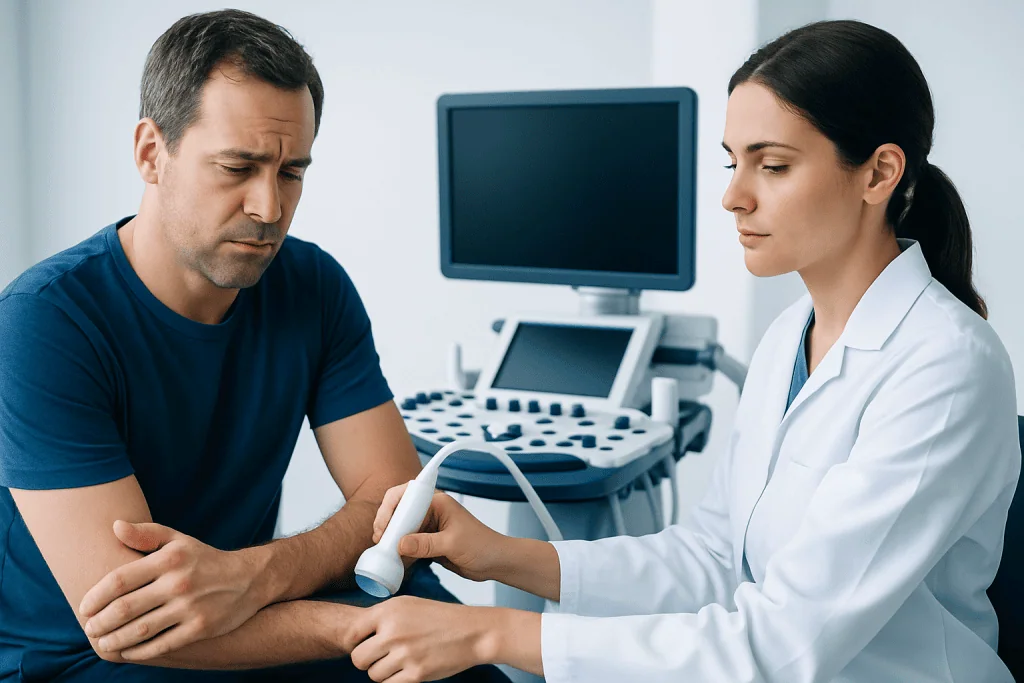
Imaging is not always needed, especially when symptoms and examination findings are typical. An X-ray may be requested if there is concern about arthritis, bone injury, or another joint problem. Ultrasound or MRI can be helpful in selected cases, particularly when symptoms are persistent, the diagnosis is uncertain, or a procedure is being considered.
Accurate diagnosis helps avoid unnecessary treatment and guides rehabilitation. It is also important because the best plan depends on the person’s activity level, work demands, symptom duration, and any contributing factors such as shoulder weakness, poor ergonomics, or sports technique.
Treatment Options
Most people with tennis elbow improve with non-surgical treatment. The first step is usually to reduce or modify activities that overload the painful tendon while staying generally active. Complete rest for a long time is rarely helpful; instead, the aim is to keep the arm moving within a tolerable range and gradually rebuild tendon capacity.
Simple pain relief measures may include short periods of ice after aggravating activity, heat for stiffness, and over-the-counter pain medicines if suitable for the person’s health status. Non-steroidal anti-inflammatory drugs may help some people with short-term pain, but they are not appropriate for everyone and should be used according to medical advice, especially in people with stomach, kidney, heart, or blood pressure concerns.
Physiotherapy is a central part of treatment. A rehabilitation plan may include stretching, progressive strengthening of the wrist and forearm muscles, shoulder and upper-back exercises, manual therapy, and guidance on work or sports technique. Eccentric and heavy slow resistance exercises are commonly used approaches, but they should be progressed carefully to avoid flare-ups.
Some people benefit from a counterforce brace, elbow strap, or wrist splint for short-term symptom control during activities. If pain remains persistent despite appropriate rehabilitation, a specialist may discuss injection therapies or procedures. Corticosteroid injections may reduce pain in the short term for some patients, but symptoms can return, so they are used selectively. Platelet-rich plasma, dry needling, or extracorporeal shockwave therapy may be considered in certain cases, although benefits vary and should be discussed with a qualified clinician.
Recovery, Prevention, and Self-Care
Recovery from tennis elbow is often gradual. Many people feel better within weeks to months, but tendon recovery can take time, especially if symptoms have been present for a long period or the arm is exposed to repeated strain at work. A realistic plan focuses on reducing pain, restoring strength, and preventing repeated overload.
Activity modification does not mean avoiding all movement. Instead, people can reduce the force, frequency, or duration of painful tasks. For example, using two hands to lift heavier objects, keeping the wrist in a neutral position, taking short breaks, or changing tool handles can reduce strain on the tendon. In sports, technique review, grip size adjustment, and gradual training progression may help.
- Warm up before sports or repetitive manual tasks.
- Avoid sudden increases in training, lifting, or gripping workload.
- Use tools with comfortable handles and avoid prolonged tight gripping.
- Keep the wrist neutral when lifting when possible.
- Build forearm, shoulder, and upper-back strength progressively.
- Take regular breaks during repetitive computer or tool-based work.
Exercises should be performed in a way that causes no more than mild, acceptable discomfort and does not lead to prolonged worsening afterward. If pain increases significantly after exercise or daily tasks, the load may need to be reduced and progressed more slowly under professional guidance.
When to See a Doctor
A person should consider seeing a doctor if outer elbow pain lasts more than a few weeks, interferes with work or sleep, or keeps returning despite self-care. Medical assessment is also helpful if there is significant weakness, reduced range of motion, or uncertainty about whether the pain is truly tennis elbow.
Urgent medical advice is recommended if elbow pain follows a fall or direct injury, or if there is visible deformity, major swelling, fever, redness, spreading warmth, severe bruising, numbness, tingling, or sudden inability to use the arm. These features may suggest another condition that needs timely evaluation.
Surgery is rarely needed, but it may be discussed if symptoms remain disabling after a prolonged period of well-supervised non-surgical care, often several months or longer. Surgical options generally aim to remove diseased tendon tissue and stimulate healing, but the decision depends on the individual’s symptoms, imaging findings, functional needs, and response to rehabilitation.
International patients seeking assessment can be evaluated by orthopedic, sports medicine, rehabilitation, and imaging specialists. Acibadem International’s multidisciplinary teams and JCI-accredited hospitals diagnose and treat elbow tendon conditions, including tennis elbow, with treatment plans tailored to the patient’s needs and safe travel considerations.
Frequently asked questions
Is tennis elbow the same as tendonitis?
Tennis elbow is often called tendonitis, but many cases are better described as tendinopathy. This means the tendon has become painful and less tolerant of load, often with small structural changes rather than simple inflammation. The difference matters because treatment usually focuses on gradual strengthening and load management, not just rest or anti-inflammatory medicines.
Can tennis elbow heal on its own?
Mild cases can improve with time, especially if the person reduces aggravating activities and avoids repeated overload. However, persistent symptoms often need a structured rehabilitation plan to restore tendon strength and prevent recurrence. If pain continues for more than a few weeks or affects daily function, medical advice is recommended.
Should a person stop using the arm completely?
Complete rest is usually not necessary and may lead to stiffness or weakness. It is better to reduce painful loads, modify activities, and keep the elbow moving within a comfortable range. A physiotherapist can help guide safe strengthening and gradual return to normal tasks.
Are braces helpful for tennis elbow?
A counterforce brace or elbow strap may reduce strain on the tendon during gripping or lifting for some people. It is usually considered a short-term aid rather than a cure. The best results often come when bracing is combined with activity changes and progressive exercise.
Do injections cure tennis elbow?
Injections may help selected patients, but they do not guarantee a cure. Corticosteroid injections can provide short-term pain relief for some people, but symptoms may return, and repeated use is approached cautiously. Other options such as platelet-rich plasma or dry needling may be discussed with a specialist when standard care has not helped.
When is surgery considered for tennis elbow?
Surgery is considered only for a small proportion of people with ongoing, disabling symptoms after months of appropriate non-surgical treatment. Before surgery, doctors usually confirm the diagnosis and review factors such as work demands, imaging findings, and response to physiotherapy. Most patients improve without needing an operation.
References
- American Academy of Orthopaedic Surgeons
- Mayo Clinic
- National Institute for Health and Care Excellence
- Cochrane
- British Orthopaedic Association
This article is for general information only and is not a substitute for professional medical advice. Please consult a qualified doctor about your individual situation.
Joint and spine care in Turkey — expert assessment & treatment
JCI-accredited · board-certified surgeons · reply within 24h
Add us as a Preferred Source to see more of our trusted health content across Google Search, AI Overviews and Discover.

Orthopedics & Spine
Care for bones, joints and the musculoskeletal system, including joint replacement, sports injuries and trauma.
125 specialists in this unit