Therapy Vac: How It Works, Results and What to Expect

Therapy vac uses controlled negative pressure to remove wound fluid and support healthy healing tissue. It may be used for surgical wounds, traumatic wounds, pressure injuries and some diabetic foot wounds.
Key Takeaways
- Therapy vac uses controlled negative pressure to remove wound fluid and support healthy healing tissue.
- It may be used for surgical wounds, traumatic wounds, pressure injuries and some diabetic foot wounds.
- Healing time and outcomes vary widely depending on the wound, circulation, infection control and overall health.
- The dressing and machine require regular monitoring; new pain, leaks, bleeding, fever or device alarms should be reported promptly.
- Some patients can continue VAC therapy at home with training, follow-up and access to clinical support.
Therapy vac, also called negative pressure wound therapy or wound VAC therapy, is a sealed dressing system that applies gentle suction to selected wounds. It can help manage drainage, protect the wound and support the body’s healing process when used alongside appropriate wound care.
Therapy Vac Overview: What It Does for Wounds
A therapy vac is a negative pressure wound therapy (NPWT) system. It consists of a foam or gauze wound filler, a clear adhesive drape, tubing and a small pump. Once the dressing is sealed, the pump creates carefully controlled suction, also called negative pressure, within the wound dressing.
For appropriate wounds, this therapy can remove excess fluid, reduce swelling around the wound, help draw wound edges closer together and encourage the formation of granulation tissue, the healthy new tissue that supports healing. The vac therapy system is not a substitute for cleaning a wound, treating infection, restoring blood flow or managing conditions such as diabetes; it works as one part of an individualized wound-care plan.
Clinicians may recommend VAC therapy for wounds after surgery, injury or tissue loss when standard dressings are unlikely to manage drainage or support healing as effectively. It is used in hospitals and, for selected patients, in outpatient or home-care settings under medical supervision.
How Does VAC Therapy Work?
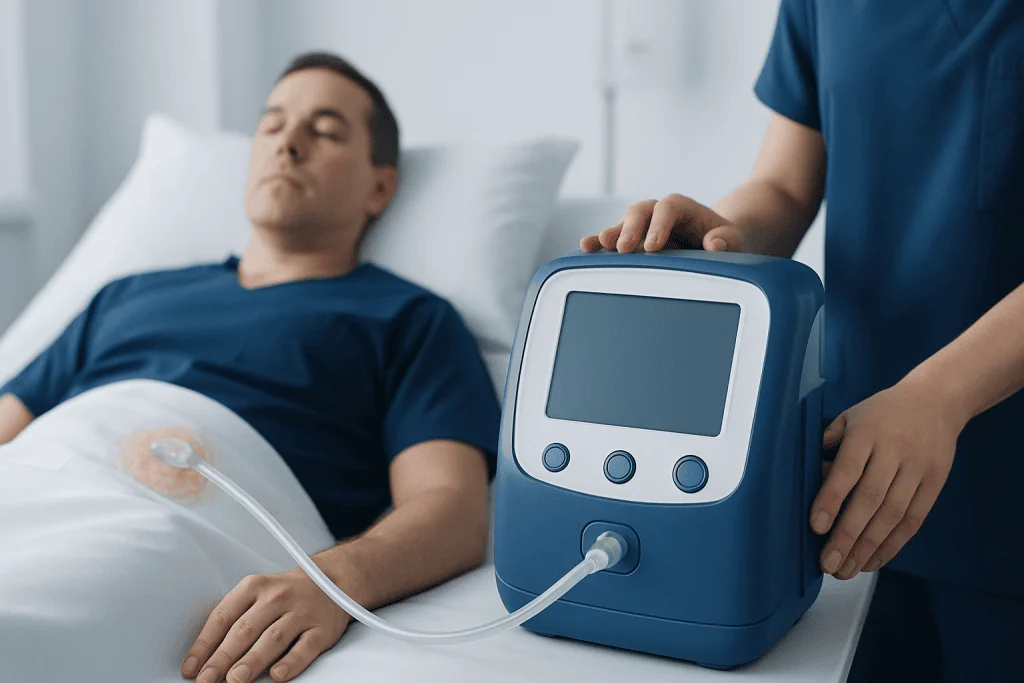
Understanding VAC therapy begins with the dressing seal. A clinician places sterile foam or gauze into or over the wound and covers it with an adhesive film. Tubing connects the dressing to a portable pump. The pump applies negative pressure at settings chosen by the treating team, either continuously or intermittently, depending on the wound and the person’s comfort and clinical needs.
The suction moves wound fluid and infectious material into a collection canister while maintaining a moist, protected healing environment. By reducing fluid buildup and supporting blood flow in the wound bed, negative pressure may promote granulation tissue. The sealed cover also provides a barrier from outside contaminants between dressing changes.
The system should remain on as instructed. Disconnecting it, turning it off or attempting to change settings without guidance can interrupt treatment. The device may make a low humming sound, and the dressing may look slightly compressed while the therapy is active; these are often expected features of vac how it works.
Who May Be a Candidate for Therapy Vac?

Therapy vac may be considered for complex, deep, draining or slow-healing wounds. Examples include some surgical wounds that have opened or are at risk of complications, traumatic wounds, certain pressure injuries, skin-graft sites and selected diabetic foot wounds. The wound-care team first assesses the wound’s location, depth, drainage, tissue quality and blood supply.
It is particularly important to address factors that can delay healing. These include poor circulation, uncontrolled blood glucose, smoking, inadequate nutrition, pressure on the wound and infection. Some people may need surgical cleaning of dead or infected tissue, known as debridement, before negative pressure therapy is started.
VAC therapy is not suitable for every wound. It may be avoided or delayed when there is untreated dead tissue, an unprotected blood vessel or organ, unexplained bleeding, active untreated infection in some circumstances, or a concern for cancer within the wound. A clinician also reviews medications, including blood thinners, and individual bleeding risk before recommending treatment.
What Happens During Therapy Vac Treatment?
At the first appointment, the clinician examines the wound and cleans it using an appropriate method. If needed, nonviable tissue is removed and the surrounding skin is protected. The clinician then measures the wound, places the selected foam or gauze dressing, seals it with an adhesive film and attaches the tubing to the pump.
When the pump begins, a patient may feel a gentle pulling sensation. Mild temporary discomfort can occur, especially with dressing changes, but significant or worsening pain should be reported. The care team can discuss pain-management options and adjust the approach when clinically appropriate.
Dressing changes are commonly performed several times each week, but the schedule varies according to the wound, amount of drainage, infection risk and treatment setting. At each change, the clinician checks wound size, drainage, odor, tissue appearance and surrounding skin. This regular review helps determine whether therapy should continue, be modified or be stopped.
- Keep the pump running and the dressing sealed unless the care team gives different instructions.
- Protect the tubing from kinks, pulling and compression.
- Bring the pump, charger or power supply, and any needed supplies to follow-up visits.
- Follow instructions about bathing; the equipment generally should not be submerged in water.
What Results Can Patients Expect?
Therapy vac can support wound management, but results depend on the underlying cause and the overall care plan. Clinicians look for gradual improvements such as reduced drainage and swelling, healthy red granulation tissue, less wound depth or surface area, and progress toward closure, grafting or surgical reconstruction where needed.
What is the success rate of VAC therapy? There is no single success rate that applies to every patient or wound. Research supports negative pressure wound therapy in selected situations, but outcomes differ substantially by wound type, severity, blood supply, infection, surgical needs and conditions such as diabetes. A wound-care specialist can explain the expected goals and likely benefits in an individual case rather than relying on one percentage.
How long does VAC therapy take to heal? The duration can range from days to several weeks or longer. Some wounds improve enough to transition to another dressing or closure method relatively quickly, while larger or medically complex wounds need prolonged care. The team will reassess progress at dressing changes and may revise treatment if the wound is not responding as expected.
How to Tell if a Wound Vac Is Working
A wound vac is usually working when the pump is running as prescribed, the dressing remains flattened and sealed, and wound fluid is moving into the canister when drainage is present. Over time, clinicians may document less drainage, healthier wound tissue and a smaller or shallower wound. These changes are often gradual rather than immediate.
The device may alarm if there is a leak, blockage, low battery, full canister or other issue. For basic vac therapy troubleshooting, check whether the tubing is kinked or compressed, whether the device has power and whether the dressing edges appear loose. Patients should follow the device-specific instructions provided by their care team and contact that team if an alarm persists.
Do not add tape, remove the dressing, change pressure settings or try to repair equipment unless a trained clinician has specifically taught the patient how to do so. A new foul odor, increasing drainage, increasing redness or pain around the wound, or a sudden change in the appearance of the wound should be assessed promptly.
Can Patients Go Home With Wound Vacs? Recovery and Daily Living
Do patients go home with wound vacs? Yes, many suitable patients can use a portable wound vac at home. This depends on their medical stability, wound characteristics, ability to manage the equipment or availability of a caregiver, and access to home nursing or scheduled wound-clinic follow-up. The treating team provides training on carrying the pump, charging it, recognizing alarms and whom to call for help.
During recovery, patients should take medications as prescribed, attend all dressing-change appointments and follow advice about nutrition, glucose management, mobility and pressure relief. A balanced diet with adequate protein and fluids, when medically appropriate, can support the healing process. Smoking cessation is also important because tobacco can reduce blood flow and impair wound healing.
Movement is often encouraged within the limits set by the surgical or wound-care team. The pump may be worn in a carrying case, allowing some daily activities, but the tubing should be secured and protected. The team can provide individualized advice on work, travel, sleep positions, showering and physical activity.
At Acibadem International, multidisciplinary specialists in wound care, surgery, infectious diseases and related fields support assessment and treatment planning for international patients in JCI-accredited hospitals.
When to Seek Medical Care
Contact the wound-care team promptly if the therapy vac alarm does not resolve with the instructions provided, if the dressing loses its seal, or if the pump has stopped and cannot be restarted. It is also important to call for increasing pain, spreading redness, warmth, swelling, fever, chills, worsening odor, pus-like drainage or a sudden increase in wound fluid.
Seek urgent medical care for active or heavy bleeding into the dressing or tubing, dizziness or fainting, chest pain, shortness of breath, or severe sudden pain. These symptoms may not always be caused by the wound vac, but they require timely assessment.
Patients should never feel they need to manage a concerning change alone. Early communication with the care team can help address equipment problems, infection concerns or pain before they become more difficult to manage.
Frequently asked questions
Is therapy vac painful?
Some people feel pressure or a pulling sensation when the pump starts, and dressing changes can be uncomfortable. Pain should be discussed with the care team, especially if it is worsening or interfering with sleep or daily activities. Significant new pain may also signal a dressing or wound problem that needs review.
How often is a wound vac dressing changed?
The schedule varies according to the wound, drainage level, infection risk and the clinician’s instructions. Many dressings are changed several times per week, often by trained hospital, clinic or home-care staff. A patient should not change the dressing independently unless specifically trained and instructed to do so.
Can a wound vac treat an infection?
A wound vac can help remove drainage and support the wound environment, but it does not replace treatment for an infection. Infection management may include wound cleaning, debridement, antibiotics when appropriate and treatment of the underlying cause. The care team determines whether negative pressure therapy is suitable while infection is being managed.
What should patients do if a wound vac alarm sounds?
They should check the device instructions and the steps taught by their care team, such as checking the battery, canister and tubing for a kink. If the alarm continues, the dressing is leaking, or the pump stops, the wound-care team should be contacted promptly. Patients should seek urgent care for bleeding, severe pain or signs of serious illness.
Can patients shower with a therapy vac?
Instructions depend on the device, wound location and dressing type. In general, the pump and dressing should not be submerged, and patients may need to keep the equipment dry or use a clinician-approved method for bathing. The wound-care team can provide specific guidance for showering and hygiene.
When is VAC therapy stopped?
VAC therapy may be stopped when the wound has developed enough healthy tissue for closure, grafting, a different dressing plan or natural healing. It may also be changed if the wound is not improving, if complications arise or if it is no longer appropriate for the patient’s clinical situation. The decision is made through regular wound assessments by the treating team.
References
- World Health Organization
- National Institute for Health and Care Excellence
- U.S. Food and Drug Administration
- Wound, Ostomy and Continence Nurses Society
- Cochrane
This article is for general information only and is not a substitute for professional medical advice. Please consult a qualified doctor about your individual situation.
Explore treatments in Turkey — costs, top hospitals & a free quote
JCI-accredited · board-certified surgeons · reply within 24h
Add us as a Preferred Source to see more of our trusted health content across Google Search, AI Overviews and Discover.