Trichotillomania: A Complete Medical Overview

Trichotillomania involves repeated hair pulling that leads to hair loss and distress or impairment. It can affect the scalp, eyebrows, eyelashes, beard area, or other body hair.
Key Takeaways
- Trichotillomania involves repeated hair pulling that leads to hair loss and distress or impairment.
- It can affect the scalp, eyebrows, eyelashes, beard area, or other body hair.
- Diagnosis is based on symptoms, patterns of behavior, and ruling out other medical causes of hair loss.
- Treatment often includes cognitive behavioral approaches such as habit reversal training.
- Early support may help prevent skin damage, infection, shame, and disruption to daily life.
Trichotillomania is a mental health condition in which a person repeatedly pulls out their own hair, often feeling tension, urges, or relief around the behavior. It is not simply a habit or lack of self-control, and effective treatment can help reduce pulling, distress, and related skin or hair problems.
Overview
Trichotillomania is a condition in which a person repeatedly pulls out hair from the scalp, eyebrows, eyelashes, beard area, or other parts of the body. The behavior may happen automatically without full awareness, or it may be focused and intentional in response to tension, discomfort, stress, or a strong urge. Over time, it can lead to visible hair loss, emotional distress, and difficulty at school, work, or in social situations.
Clinicians classify trichotillomania as a body-focused repetitive behavior and a mental health disorder related to impulse control and compulsive features. It is not a sign of poor willpower, vanity, or simple nervous habit. Many people try hard to stop but find the urge difficult to resist without structured treatment and support.
The condition can begin in childhood, adolescence, or adulthood. For some people it is mild and intermittent, while for others it becomes chronic and significantly affects self-esteem, relationships, and everyday functioning. A careful assessment is important because hair loss can also be caused by skin diseases, autoimmune conditions, nutritional deficiencies, or other psychiatric conditions.
How trichotillomania may appear in daily life
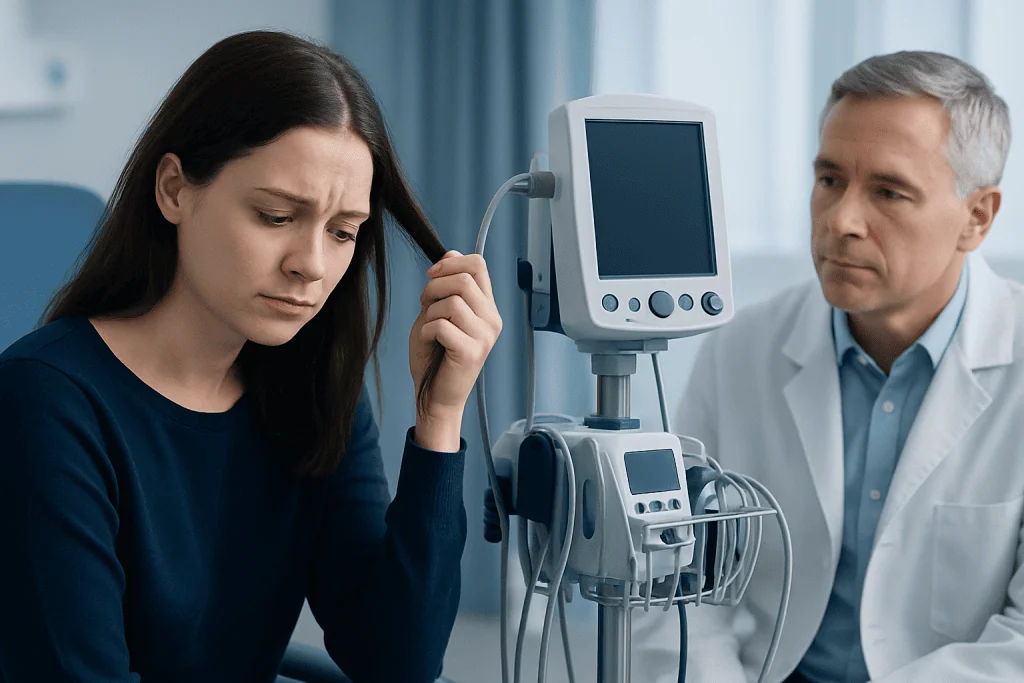
Hair pulling does not look the same for everyone. Some people pull one hair at a time while reading, watching television, studying, or lying in bed. Others search for hairs that feel coarse, uneven, or “not right” and may inspect, rub, bite, or play with the hair after pulling it. These patterns can make the condition hard to recognize, especially if pulling happens in private or without full awareness.
The behavior may be preceded by a physical urge, inner tension, anxiety, boredom, frustration, or a feeling that something is incomplete until the hair is removed. Some people report a brief sense of relief or satisfaction after pulling. Others feel immediate regret, embarrassment, or sadness, particularly when they notice thinning patches or try to cover the hair loss.
Common areas affected include:
- Scalp hair
- Eyebrows
- Eyelashes
- Beard or mustache area
- Arm, leg, chest, or pubic hair
Because many people conceal the behavior with hairstyles, hats, makeup, false eyelashes, or avoidance of close contact, family members and clinicians may not recognize the condition right away. Sensitive, nonjudgmental questioning often helps reveal the pattern.
Symptoms and possible complications

The hallmark symptom is recurrent hair pulling that causes noticeable hair loss. The loss may appear as patchy thinning, broken hairs of uneven length, or absent eyebrows or eyelashes. A person may make repeated efforts to stop or reduce the behavior but still struggle with ongoing urges.
Emotional symptoms are also common. People may feel shame, anxiety, guilt, frustration, or social embarrassment, especially if the hair loss is visible. They may avoid haircuts, photographs, swimming, intimacy, or medical visits because they worry others will notice or misunderstand what is happening.
Complications may include skin irritation, bleeding, follicle damage, and infection from repeated pulling or picking at the skin. In some cases, years of repeated trauma can reduce hair regrowth in affected areas. If a person chews or swallows pulled hair, there can be digestive complications that require medical evaluation.
Trichotillomania can also occur alongside other conditions such as anxiety disorders, depression, obsessive-compulsive symptoms, or alopecia and other causes of hair loss that need a different treatment plan. That is why both psychological and dermatologic assessment may be helpful when the diagnosis is unclear.
Causes and risk factors
There is no single known cause of trichotillomania. Experts believe it develops through a combination of biological, psychological, and environmental factors. Brain circuits involved in habit formation, emotional regulation, reward, and inhibition may play a role, which helps explain why the behavior can feel repetitive and hard to stop even when a person strongly wants to stop.
Stress does not cause every case, but it can make symptoms worse. Pulling may increase during periods of anxiety, loneliness, boredom, fatigue, conflict, or major life changes. Some people also notice sensory triggers, such as the feel of a certain hair texture or a strong awareness of an eyelash or eyebrow that seems out of place.
Risk may be higher in people with a personal or family history of body-focused repetitive behaviors, anxiety, depression, or obsessive-compulsive traits. Trichotillomania may begin around puberty for some individuals, although it can occur at any age. In children, symptoms may be mistaken for a temporary habit, but persistent or distressing behavior deserves professional attention.
Importantly, the behavior is not usually done for cosmetic reasons or to cause self-harm. Understanding that distinction can reduce stigma and help families approach treatment with empathy rather than blame.
How doctors diagnose trichotillomania
Diagnosis is based mainly on a detailed clinical history and physical examination. A doctor or mental health professional asks about the pattern of hair pulling, areas involved, triggers, awareness during episodes, attempts to stop, and how much the behavior affects daily life. Questions about stress, mood, anxiety, and related repetitive behaviors are also common.
A skin and hair examination helps determine whether the pattern fits trichotillomania or suggests another cause of hair loss. Doctors may look for broken hairs of different lengths, patchy loss, signs of inflammation, or evidence of infection. If needed, a dermatologist may perform additional evaluation to distinguish hair pulling from fungal infection, scarring disorders, traction alopecia, or autoimmune causes.
Laboratory tests are not always necessary, but they may be used when there are signs of another medical problem such as nutritional deficiency, hormonal imbalance, or thyroid disease. In selected cases, dermatology evaluation can be useful to assess scalp health and protect hair follicles while mental health treatment is underway.
An accurate diagnosis matters because treatment works best when both the behavior and any contributing emotional or medical factors are recognized early.
Treatment options
Treatment for trichotillomania usually focuses on reducing urges, changing the pulling pattern, and addressing stress or emotional triggers. The most commonly recommended first-line approach is a form of cognitive behavioral therapy called habit reversal training. This therapy helps the person identify triggers, notice early warning signs, and use competing responses or alternative actions instead of pulling.
Other behavioral strategies may include stimulus control, which changes the environment to make pulling less likely. Examples include covering fingertips, keeping tweezers out of reach, adjusting lighting or mirrors, using fidget tools, or changing routines linked to pulling. Therapy may also address perfectionism, anxiety, low mood, or shame that can maintain the cycle.
Some people may benefit from medication, especially if trichotillomania occurs with significant anxiety, depression, obsessive-compulsive symptoms, or sleep problems. Medication choices vary by the individual, and a psychiatrist or treating physician can explain potential benefits and limitations. In many cases, combined care offers the best support, including psychiatric evaluation when symptoms are complex or persistent.
If skin injury, infection, or significant hair loss is present, parallel care may be needed to protect the scalp, eyebrows, or eyelashes. Depending on the situation, treatment may involve psychological support together with medical follow-up to monitor healing and regrowth. Near the end of the care pathway, some patients may seek cosmetic advice only after active pulling is better controlled.
Self-care, family support, and prevention of worsening
Although there is no guaranteed way to prevent trichotillomania, early recognition can reduce complications. Tracking when and where pulling happens may reveal patterns related to stress, fatigue, screens, studying, grooming, or bedtime. Once triggers are clearer, a care plan can be built around those moments rather than relying only on willpower.
Helpful self-care steps may include regular sleep, stress management, movement, and structured routines. Keeping hands busy during high-risk activities can also help. Some people benefit from mindfulness exercises that increase awareness of urges before pulling begins, while others do better with practical environmental changes such as wearing gloves at home or limiting mirror checking.
Family members and loved ones can play an important role by responding calmly and without criticism. Calling attention to pulling in a shaming way often increases distress and may worsen the cycle. Supportive questions, help with tracking triggers, and encouragement to attend treatment are usually more effective.
Children and teenagers may need coordinated support between caregivers, school staff, pediatricians, and mental health professionals. If hair loss is severe or diagnosis is uncertain, a clinician may also assess for related concerns such as obsessive-compulsive disorder or anxiety symptoms that need their own treatment plan.
When to seek medical care
Medical care is appropriate when hair pulling causes noticeable hair loss, distress, skin damage, infection, or interference with school, work, sleep, or relationships. A doctor should also evaluate any unexplained patchy hair loss, especially if the cause is uncertain. Early assessment can clarify whether the problem is trichotillomania, another medical condition, or both.
Prompt care is especially important if a person swallows hair, develops abdominal pain, has signs of depression, or feels hopeless. If there are thoughts of self-harm or suicide, urgent mental health support is needed. Treatment is most effective when concerns are addressed with compassion rather than delayed because of embarrassment.
In centers with multidisciplinary care, evaluation may involve mental health professionals, dermatologists, and pediatric or adult specialists depending on age and symptoms. Acibadem International’s multidisciplinary specialists in JCI-accredited hospitals diagnose and treat trichotillomania and related hair and mental health concerns for international patients.
Frequently asked questions
Is trichotillomania the same as a bad habit?
No. Trichotillomania is a recognized mental health condition, not simply a bad habit or lack of discipline. People often want to stop but experience strong urges, automatic behaviors, or emotional triggers that make stopping difficult without treatment.
Can hair grow back after trichotillomania?
In many cases, hair can grow back once pulling is reduced or stopped, especially if the follicles have not been significantly damaged. Regrowth may take time, and long-term repeated pulling can sometimes lead to reduced or uneven regrowth. A doctor can assess scalp or skin health if there is concern.
Who gets trichotillomania?
Trichotillomania can affect children, teenagers, and adults. It may begin in early childhood or around puberty, but onset at other ages is also possible. The condition can occur in people of any gender.
What treatment works best for trichotillomania?
Behavioral therapy, especially habit reversal training, is often considered a key treatment. Some people also benefit from treatment for anxiety, depression, or obsessive-compulsive symptoms, and medication may be considered in selected cases. The best plan is individualized after a proper evaluation.
Should a person see a dermatologist or a mental health professional?
Often, both can be helpful. A dermatologist can evaluate hair loss, scalp injury, or other skin conditions, while a mental health professional can assess urges, triggers, and treatment strategies. Which specialist to see first may depend on whether the main concern is unexplained hair loss, distress, or both.
Can children outgrow trichotillomania?
Some young children may have temporary pulling behaviors that improve, but persistent pulling with hair loss or distress should not be dismissed. Early support may reduce complications and improve coping skills. A pediatrician or child mental health professional can help decide whether treatment is needed.
References
- American Psychiatric Association
- National Institute of Mental Health
- Mayo Clinic
- National Health Service
- Merck Manual
This article is for general information only and is not a substitute for professional medical advice. Please consult a qualified doctor about your individual situation.
Hair transplant in Turkey — costs, graft counts & a free assessment
JCI-accredited · board-certified surgeons · reply within 24h
Add us as a Preferred Source to see more of our trusted health content across Google Search, AI Overviews and Discover.

More from the Health Library



Related Specialists

Fzt. Merve Güvendi
Physical Medicine & Rehabilitation
Fzt. Dilem Kadıoğlu
Physical Medicine & Rehabilitation
Dr. Muammer Karagöz
Otorhinolaryngology
Dt. Aslı Şener Bozkır
Oral & Dental Health