Trisomy 13: A Complete Medical Overview

Trisomy 13 happens when there is an extra copy of chromosome 13 in some or all cells. It can cause multiple congenital differences, including effects on the brain, heart, face, and other organs.
Key Takeaways
- Trisomy 13 happens when there is an extra copy of chromosome 13 in some or all cells.
- It can cause multiple congenital differences, including effects on the brain, heart, face, and other organs.
- Diagnosis often involves prenatal screening, ultrasound findings, and confirmatory genetic testing.
- Treatment focuses on the baby's specific needs and may include neonatal, cardiac, surgical, feeding, and supportive care.
- Families benefit from coordinated counseling, palliative support, and clear discussions about goals of care.
Trisomy 13 is a rare chromosome condition, also called Patau syndrome, caused by an extra copy of chromosome 13. It affects development in many parts of the body and is usually identified during pregnancy or soon after birth through screening, imaging, and genetic testing.
Overview
Trisomy 13 is a rare genetic condition in which a baby has an extra copy of chromosome 13. It is also known as Patau syndrome. This extra genetic material changes normal development and can affect many organs and body systems before birth and after delivery.
Chromosomes carry the body’s genetic instructions. Most people have 46 chromosomes arranged in 23 pairs, but in trisomy 13 there are three copies of chromosome 13 instead of two. The condition may involve all cells in the body, called full trisomy 13, or only some cells, called mosaic trisomy 13. In some cases, part of chromosome 13 becomes attached to another chromosome, which is called translocation trisomy 13.
The effects of trisomy 13 can vary, but it is usually associated with significant medical needs. Many babies have growth differences, congenital anomalies, and developmental challenges. Because the condition is complex, care often involves specialists in fetal medicine, neonatology, genetics, cardiology, neurology, surgery, nutrition, and supportive care.
How trisomy 13 affects the body
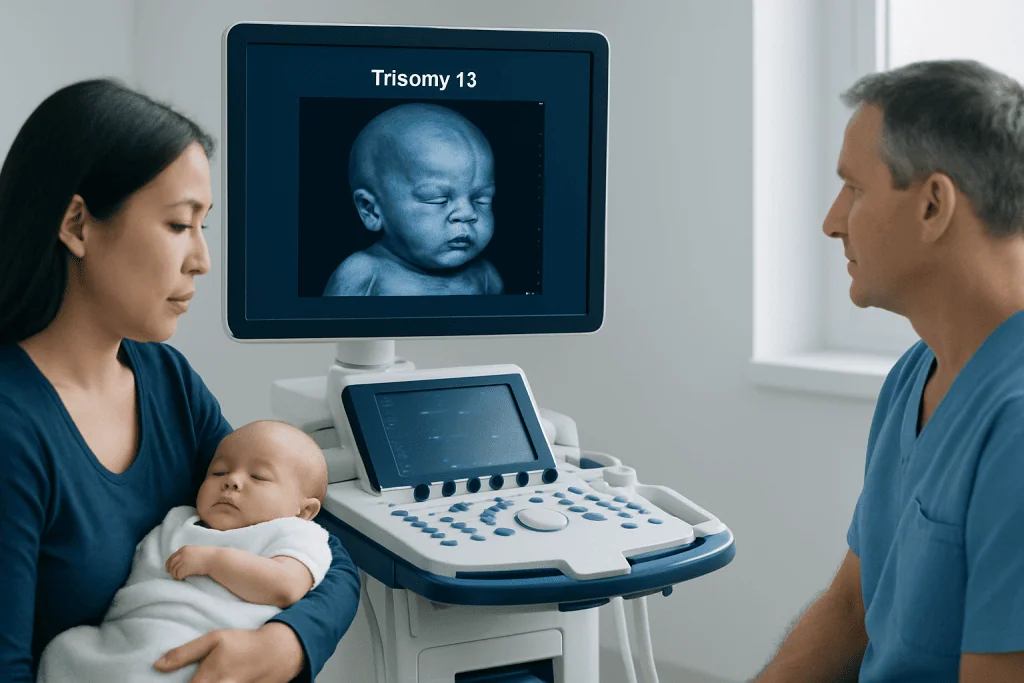
Trisomy 13 influences early fetal development, so its effects are often seen in more than one organ system. Commonly affected areas include the brain, heart, face, eyes, kidneys, limbs, and digestive system. Some babies also have difficulty with breathing, feeding, and maintaining growth after birth.
One reason the condition can look different from child to child is that the amount of extra chromosome material may vary. Babies with mosaic trisomy 13 may have milder or less widespread features than those with full trisomy 13, although this is not always predictable. The exact combination of findings can only be understood through careful examination and testing.
Families may also hear related terms during evaluation, such as congenital anomalies, chromosomal disorders, or fetal anomalies seen on prenatal imaging. When brain development is being assessed, doctors may discuss conditions such as hydrocephalus if fluid buildup is present, but this is only one possible associated finding and not part of every case.
Symptoms and signs
Signs of trisomy 13 may be suspected during pregnancy or recognized at birth. Prenatal ultrasound can suggest the diagnosis if there are structural differences, growth restriction, or findings involving the brain, heart, or face. After birth, the baby may show characteristic physical features and signs related to affected organ systems.
Possible findings include low birth weight, a small head size, cleft lip or palate, closely spaced eyes, scalp defects, extra fingers or toes, and muscle tone differences. Internal problems may include congenital heart defects, kidney abnormalities, feeding difficulties, seizures, and breathing problems. Development is usually profoundly affected, although the pattern varies from child to child.
Not every baby will have the same features. Doctors assess the whole clinical picture rather than relying on one sign alone. Common signs and complications may include:
- Growth restriction before birth
- Brain and nervous system abnormalities
- Congenital heart defects
- Cleft lip and/or cleft palate
- Eye abnormalities or reduced vision
- Extra fingers or toes
- Kidney or urinary tract differences
- Feeding, swallowing, or breathing difficulties
Causes and risk factors
Trisomy 13 is caused by an extra copy of chromosome 13. In most cases, this happens as a random event during the formation of the egg or sperm, or very early after fertilization. Parents do not cause this condition through anything they did or did not do during pregnancy.
The main forms are full trisomy 13, mosaic trisomy 13, and translocation trisomy 13. Full trisomy 13 is the most common form and typically results from a process called nondisjunction, where chromosomes do not separate normally. Mosaic trisomy 13 occurs when the extra chromosome is present in only some cells. Translocation trisomy 13 happens when chromosome 13 material is attached to another chromosome; sometimes a parent may carry a balanced translocation without having symptoms.
Advanced maternal age is associated with a higher chance of chromosome conditions in general, including trisomy 13, although the condition can occur at any maternal age. If translocation trisomy 13 is identified, parents may be advised to have chromosome testing and genetic counseling to understand recurrence risk in future pregnancies.
Diagnosis before and after birth
Trisomy 13 may first be suspected through prenatal screening. Screening tests estimate the chance that a fetus has a chromosome condition, but they do not confirm the diagnosis. These may include first-trimester screening, maternal blood tests, and cell-free fetal DNA screening. Ultrasound can also reveal findings that increase suspicion.
A definitive diagnosis requires genetic testing. During pregnancy, this may be done with chorionic villus sampling or amniocentesis, which allow fetal cells to be studied. The laboratory may use karyotyping, chromosomal microarray, or related methods to identify an extra chromosome 13 or a translocation.
After birth, doctors confirm the diagnosis with a blood chromosome test. Additional evaluation helps define the baby’s specific medical needs and may include an echocardiogram, kidney ultrasound, brain imaging, feeding assessment, hearing evaluation, and consultations with pediatric specialists. In some newborns, advanced imaging such as MRI may be used when doctors need a closer look at the brain or other organs.
Treatment and supportive care
There is no treatment that removes the extra chromosome itself, so care is guided by the baby’s symptoms, anatomy, and overall condition. Treatment may begin before birth with counseling and delivery planning, then continue after birth in the neonatal intensive care unit or a specialized pediatric center. Families are supported in understanding both the medical options and the likely outlook.
Management can include help with breathing, feeding, temperature regulation, infection prevention, seizure control, and treatment of heart or kidney problems. Some babies may need tube feeding or close monitoring for swallowing safety. If a structural problem can be improved with an operation, surgery may be considered after careful discussion of risks, expected benefits, and the child’s general health. Related congenital heart conditions may sometimes be assessed in the context of congenital heart disease, and selected babies may be evaluated for pediatric cardiac surgery when appropriate.
Craniofacial or oral differences such as cleft lip and palate may affect feeding and later communication. In carefully selected children, doctors may discuss reconstructive options such as cleft lip and palate surgery as part of longer-term multidisciplinary care. For all families, palliative care is an important supportive service; it focuses on comfort, symptom relief, communication, and alignment of treatment with family goals, and it can be offered together with active medical treatment.
Living with trisomy 13: family support and outlook
Trisomy 13 is a serious condition, and discussions about prognosis should be individualized and handled with sensitivity. Outcomes depend on the type of trisomy 13, the severity of organ involvement, and the medical issues present at birth. Some pregnancies may end in miscarriage or stillbirth, and many newborns have major health challenges. A smaller number of children live longer and may need ongoing complex care.
Families often benefit from early involvement of genetics specialists, neonatologists, pediatric subspecialists, nurses, dietitians, therapists, social workers, and palliative care teams. This coordinated approach helps address feeding, growth, developmental support, symptom management, and practical planning at home. Emotional support is just as important as medical care, especially when families are making difficult decisions.
Parents who are considering a future pregnancy may want genetic counseling to review the test results and recurrence risk. If a translocation is involved, parental chromosome testing can guide counseling. Near the end of the care pathway, some families may choose assessment at a center with broad pediatric expertise; Acibadem International’s multidisciplinary specialists and JCI-accredited hospitals diagnose and treat complex congenital conditions for international patients.
When to seek medical care
Medical attention is important any time trisomy 13 is suspected during pregnancy or after birth. If a prenatal screening test is positive or an ultrasound shows possible anomalies, follow-up with an obstetrician, maternal-fetal medicine specialist, or genetic counselor should be arranged promptly so that diagnostic testing and planning can be discussed.
After birth, urgent medical care is needed if a baby has trouble breathing, poor feeding, blue discoloration, unusual sleepiness, seizures, fever, or signs of dehydration. Ongoing pediatric follow-up is also important for weight gain, heart evaluation, developmental monitoring, and support with feeding or swallowing.
Families should feel comfortable asking for a clear explanation of test results, treatment options, and expected next steps. Because care decisions can be complex, a second opinion from a pediatric genetics or neonatal specialist may also be helpful.
Frequently asked questions
What is trisomy 13?
Trisomy 13 is a genetic condition caused by an extra copy of chromosome 13. It is also called Patau syndrome and can affect development in many parts of the body, including the brain, heart, face, and other organs.
Is trisomy 13 inherited?
Most cases are not inherited and happen as a random event during the formation of reproductive cells or early embryo development. A smaller number are related to a chromosomal translocation, and in those cases parental chromosome testing may be recommended.
Can trisomy 13 be detected during pregnancy?
Yes. It may be suspected through prenatal screening tests and ultrasound findings, but a definite diagnosis usually requires genetic testing such as chorionic villus sampling or amniocentesis.
What are the main symptoms of trisomy 13?
Symptoms vary, but common findings include growth restriction, congenital heart defects, cleft lip or palate, extra fingers or toes, brain abnormalities, feeding difficulties, and breathing problems. Some babies have more severe complications than others.
Is there a cure for trisomy 13?
There is no cure that removes the extra chromosome. Treatment focuses on the child's individual medical needs and may include supportive care, feeding support, medicines, monitoring, and selected surgeries when appropriate.
What kind of doctors are involved in care?
Care often involves a multidisciplinary team that may include maternal-fetal medicine specialists, geneticists, neonatologists, cardiologists, neurologists, surgeons, nutrition experts, therapists, and palliative care professionals. The exact team depends on the baby's needs.
References
- National Institutes of Health
- MedlinePlus
- Centers for Disease Control and Prevention
- American College of Obstetricians and Gynecologists
- Genetics Home Reference
This article is for general information only and is not a substitute for professional medical advice. Please consult a qualified doctor about your individual situation.
Explore treatments in Turkey — costs, top hospitals & a free quote
JCI-accredited · board-certified surgeons · reply within 24h
Add us as a Preferred Source to see more of our trusted health content across Google Search, AI Overviews and Discover.