Tumor with Hair and Teeth: An Evidence-Based Guide for Patients

A tumor containing hair or tooth-like material is usually a mature teratoma, not a tumor that grew from swallowed hair or teeth. The most common location is the ovary, where the growth may also be called a dermoid cyst.
Key Takeaways
- A tumor containing hair or tooth-like material is usually a mature teratoma, not a tumor that grew from swallowed hair or teeth.
- The most common location is the ovary, where the growth may also be called a dermoid cyst.
- Most mature ovarian teratomas are benign, but evaluation is important to confirm the diagnosis and assess possible complications.
- Ultrasound is often the first test; CT or MRI may help clarify findings when necessary.
- Treatment depends on the size, symptoms, appearance, age, reproductive goals, and risk of complications such as ovarian torsion.
- Sudden severe pelvic or abdominal pain requires urgent medical assessment.
A tumor with hair and teeth is most often a mature teratoma, commonly called a dermoid cyst when it occurs in an ovary. Although the description can sound worrying, most ovarian mature teratomas are benign and can be assessed accurately with medical imaging and specialist care.
Overview: What Is a Tumor With Hair and Teeth?
A tumor with hair and teeth usually refers to a mature teratoma, a type of germ cell tumor that can contain well-developed tissues such as skin, hair, fatty tissue, bone, or tooth-like structures. In the ovary, it is often called a dermoid cyst or mature cystic teratoma. This unusual appearance is explained by the tumor’s cell type, rather than by anything a person has eaten, touched, or done.
Germ cells are early cells with the potential to develop into many different tissue types. When these cells form a teratoma, they may produce tissues from more than one developmental layer. Skin and skin structures are especially common, which is why hair and oily or fatty material may be found. Calcified material can look similar to teeth or bone on an X-ray, CT scan, or ultrasound.
Mature teratomas most often develop in the ovaries during the reproductive years, though they can occur at other ages and, much less commonly, in other parts of the body. The great majority of ovarian mature teratomas are benign. However, every newly identified pelvic or ovarian mass should be assessed by a qualified clinician because imaging findings, symptoms, and individual health factors guide the safest next steps.
Why Can a Teratoma Contain Hair, Skin, or Teeth?
The word teratoma describes a tumor that arises from germ cells. These cells have broad developmental potential, so a teratoma may include recognizable mature tissues. Hair is common because skin tissue and hair follicles can develop within the cyst. The material inside may also include sebum, a natural oily substance produced by skin glands.
Tooth-like or bone-like structures occur when the tumor contains calcified tissue. They are not ordinary teeth growing in the usual way, and they are not connected to the mouth or jaw. On imaging, areas of calcium can create a distinctive appearance that helps radiologists consider a mature teratoma as a likely diagnosis.
Most ovarian teratomas are classified as mature, meaning their tissues resemble adult tissue and usually behave in a noncancerous way. In contrast, immature teratomas contain less developed tissue and are uncommon. They require specialist evaluation because their behavior and treatment approach can differ. A pathology examination after surgery, when surgery is performed, provides the most definite classification.
Possible Symptoms and How It May Be Found

Many people with an ovarian dermoid cyst have no symptoms. The growth may be found during a routine pelvic examination, a pregnancy ultrasound, or imaging performed for an unrelated concern. A small, stable teratoma may not affect daily life, and the appropriate management may be observation with planned follow-up in selected situations.
When symptoms occur, they are usually related to the cyst’s size, pressure on nearby organs, or an ovarian complication. Symptoms may include pelvic discomfort, lower abdominal pain or fullness, bloating, pain during sex, a sense of needing to urinate more often, or changes in bowel comfort. These symptoms are not specific to teratomas and can have many other causes.
A larger ovarian mass can increase the chance of ovarian torsion, in which the ovary twists around its supporting tissues and its blood supply may be affected. Torsion commonly causes sudden, one-sided pelvic or lower abdominal pain, often with nausea or vomiting. This is a medical emergency and should be assessed promptly.
- Some teratomas are discovered incidentally and cause no symptoms.
- Persistent pelvic symptoms should be discussed with a doctor.
- Sudden intense pain, especially with nausea or vomiting, needs urgent evaluation.
Causes and Risk Factors
A mature teratoma is not caused by diet, stress, sexual activity, poor hygiene, or an injury. It develops from germ cells through a process that is not fully understood. In most cases, there is no clear action a person could have taken to prevent it.
Ovarian mature cystic teratomas are seen most often during the reproductive years, but they can occur before puberty and after menopause as well. They may develop in one ovary or, less commonly, in both ovaries. Having one does not automatically mean a person has cancer, infertility, or a hereditary disorder.
There is no established routine screening test for ovarian teratomas in people without symptoms. Regular gynecologic care remains useful for discussing new pelvic symptoms, menstrual changes, reproductive plans, and any findings from prior imaging. If a person has a known ovarian cyst, their clinician can recommend follow-up based on its features and their individual circumstances.
How Doctors Diagnose a Suspected Teratoma
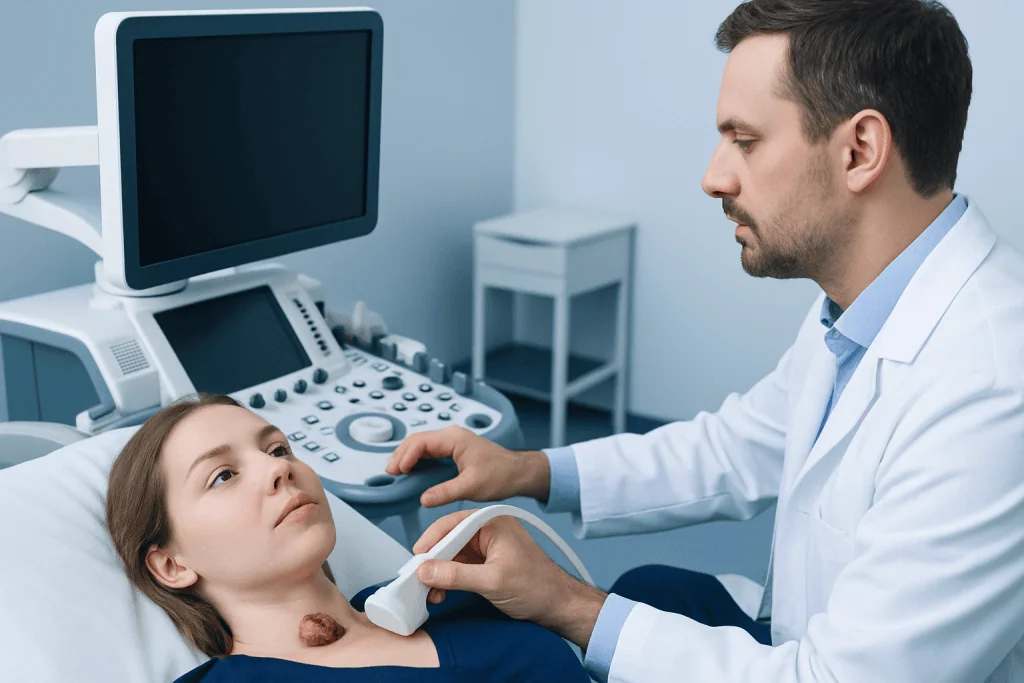
Diagnosis usually begins with a medical history, discussion of symptoms, and a physical examination when appropriate. For a suspected ovarian mass, pelvic ultrasound is commonly the first imaging test. Ultrasound can show whether a mass is cystic, solid, or mixed, and it may reveal features such as fat, calcification, or a characteristic internal nodule that can suggest a dermoid cyst.
CT or MRI may be used when ultrasound does not provide enough detail, when the mass is large, or when clinicians need to evaluate its relationship to surrounding structures. These scans can identify fat and calcifications particularly well. Imaging can often strongly suggest a mature teratoma, but it cannot always establish the final diagnosis with complete certainty.
Blood tests may be considered in some circumstances, especially if imaging raises concern for a different type of ovarian tumor. Tumor marker tests are not used alone to diagnose a teratoma because results can be influenced by many noncancerous conditions. If the mass is removed, a pathologist examines the tissue under a microscope to confirm its type and check for rare concerning changes.
Treatment Options and Follow-Up
Management is individualized. A clinician considers the cyst’s size, imaging appearance, symptoms, growth over time, age, menopausal status, pregnancy status, and reproductive goals. For a small growth with typical benign features and no symptoms, planned observation with repeat imaging may be appropriate for some patients.
Surgery may be advised when a teratoma causes symptoms, becomes large, has uncertain imaging features, grows during follow-up, or may create a meaningful risk of torsion or rupture. When possible, surgeons often aim to remove the cyst while preserving healthy ovarian tissue, particularly for people who may wish to become pregnant in the future. The best surgical approach depends on the individual findings and may involve minimally invasive surgery or, in selected cases, an open operation.
Although benign mature teratomas usually have an excellent outlook after appropriate treatment, follow-up recommendations vary. A clinician may advise repeat imaging if an ovary is preserved, if a cyst is being monitored, or if there is a history of teratomas in both ovaries. Rarely, a mature teratoma can undergo malignant transformation, which is one reason why new symptoms or changing imaging features should not be ignored.
Acibadem International’s multidisciplinary specialists and JCI-accredited hospitals can assess ovarian and other suspected teratomas for international patients, coordinating imaging, gynecology, surgery, and pathology when needed.
When to Seek Medical Care
It is sensible to arrange a non-urgent medical appointment for persistent pelvic pain, a feeling of pressure or fullness in the lower abdomen, unexplained bloating, or a new finding on an imaging scan. People with a known ovarian cyst should follow the monitoring plan provided by their gynecologist and ask about symptoms that may indicate a change.
Urgent medical care is important for sudden severe pelvic or abdominal pain, especially when it occurs on one side or is accompanied by nausea, vomiting, fainting, fever, or a rapid worsening in how a person feels. These symptoms can occur with ovarian torsion, cyst rupture, or other urgent abdominal conditions. They do not prove that a teratoma is present, but they need prompt assessment.
People who are pregnant, postmenopausal, or have a personal history of cancer should discuss any newly detected pelvic mass with an appropriate specialist. A careful evaluation can clarify the likely cause and support timely, informed decisions without assuming the worst.
Frequently asked questions
Is a tumor with hair and teeth cancer?
Usually, no. A tumor with hair or tooth-like material is often a mature teratoma, and most ovarian mature teratomas are benign. Imaging and, if surgery is needed, pathology testing help confirm the diagnosis and rule out uncommon concerning features.
How can hair and teeth grow inside a tumor?
Teratomas arise from germ cells, which can develop into several kinds of body tissue. A mature teratoma may form skin, hair follicles, fat, bone, or tooth-like calcified material. This is a developmental feature of the tumor and is not related to anything the person swallowed or ate.
Can a dermoid cyst affect fertility?
A dermoid cyst does not necessarily cause infertility. If treatment is required, clinicians often try to remove the cyst and preserve as much healthy ovarian tissue as possible. Fertility considerations should be discussed with a gynecologist before treatment, particularly when both ovaries are affected or surgery is planned.
Do all ovarian teratomas need surgery?
No. Some small, typical-looking, symptom-free mature teratomas can be monitored with follow-up imaging in carefully selected patients. Surgery may be recommended for symptoms, larger size, growth, uncertain features, or concern about complications such as torsion.
Can a dermoid cyst go away on its own?
Dermoid cysts generally do not disappear on their own in the same way some functional ovarian cysts can. They may remain stable for a long time, and some can grow slowly. A clinician can advise whether observation or removal is more suitable.
What does ovarian torsion feel like?
Ovarian torsion often causes sudden, severe pain on one side of the lower abdomen or pelvis. Nausea and vomiting are common, and the pain may come and go or become persistent. Anyone with these symptoms should seek urgent medical attention.
References
- American College of Obstetricians and Gynecologists
- American Cancer Society
- National Cancer Institute
- Merck Manual Consumer Version
- Radiological Society of North America
This article is for general information only and is not a substitute for professional medical advice. Please consult a qualified doctor about your individual situation.
Hair transplant in Turkey — costs, graft counts & a free assessment
JCI-accredited · board-certified surgeons · reply within 24h
Add us as a Preferred Source to see more of our trusted health content across Google Search, AI Overviews and Discover.