Turf Burn: What Patients Need to Know

Turf burn is usually a superficial friction abrasion, but it can sometimes be deep and painful. Immediate first aid includes gentle cleaning, removing debris, applying a suitable dressing, and keeping the area moist and protected.
Key Takeaways
- Turf burn is usually a superficial friction abrasion, but it can sometimes be deep and painful.
- Immediate first aid includes gentle cleaning, removing debris, applying a suitable dressing, and keeping the area moist and protected.
- Watch for infection signs such as spreading redness, swelling, pus, fever, or worsening pain.
- Medical attention is important for large, deep, contaminated, or slow-healing wounds.
- Protective clothing, proper wound care, and safe return-to-play habits can help prevent complications.
Turf burn is a friction injury that happens when skin scrapes against artificial turf, often causing redness, pain, and a raw abrasion. Most cases improve with prompt cleaning, protective dressing, and monitoring for infection, but deeper injuries may need medical care.
Overview
Turf burn is a skin abrasion caused by friction, most often when a person slides or falls on artificial turf. The outer layers of skin are scraped away, leaving a red, tender, sometimes oozing area that may feel hot or sting sharply. In mild cases, it resembles a scrape; in deeper cases, it can involve a larger patch of skin and take longer to heal.
Although turf burn is common in athletes, it is not limited to sports. Anyone who has forceful contact with synthetic playing surfaces can develop it. The injury matters because damaged skin loses part of its normal protective barrier, making careful cleaning and wound care important.
Many people think of turf burn as a minor nuisance, but its impact depends on depth, size, location, and contamination. A small superficial abrasion on the thigh may heal quickly, while a larger wound on the knee, elbow, or hip may be more painful, vulnerable to infection, and likely to interfere with movement or training.
What Turf Burn Looks and Feels Like
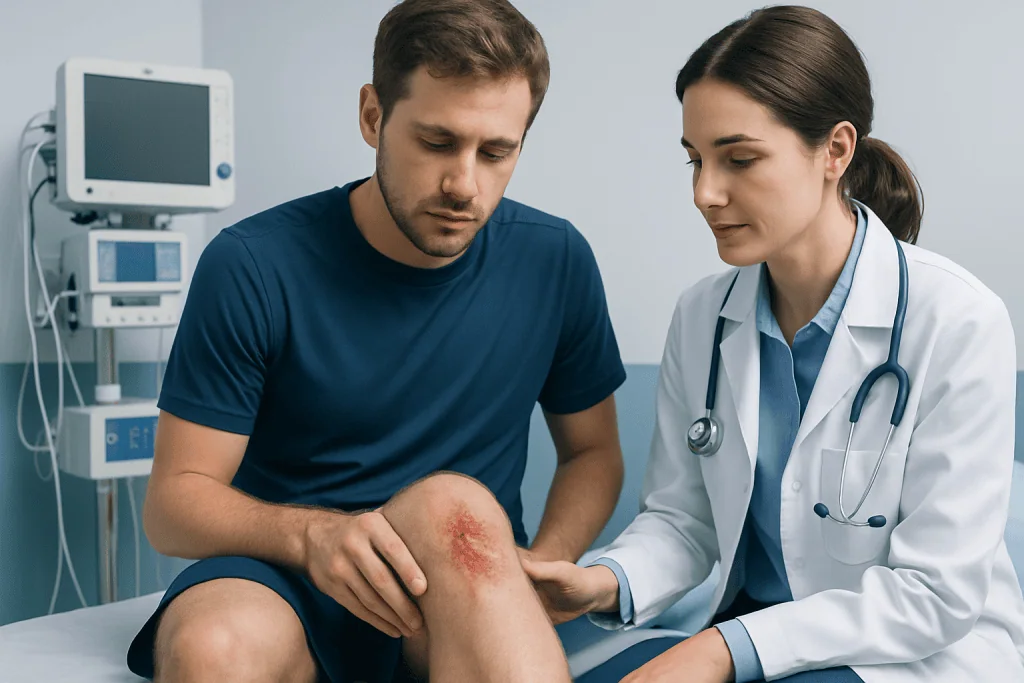
Turf burn usually appears as a patch of scraped skin with redness and surface loss. The area may look shiny, moist, or raw. Some wounds bleed slightly at first, while others ooze clear or yellowish fluid as they begin to heal. Dark specks from rubber infill, dirt, or fibers may be visible in the wound.
The most common symptom is a burning or stinging pain, especially during washing, sweating, or movement. Tenderness can last several days. If the abrasion is over a joint such as the knee or elbow, bending the area may pull on the healing skin and increase discomfort.
Other common features include:
- Redness around the abrasion
- Warmth and mild swelling
- Scab formation as healing progresses
- Temporary sensitivity to clothing or touch
- Itching later in the healing process
If redness spreads, pain worsens instead of improving, or the wound develops pus or a strong odor, this may suggest infection rather than normal healing.
Why Turf Burn Happens and Who Is at Higher Risk
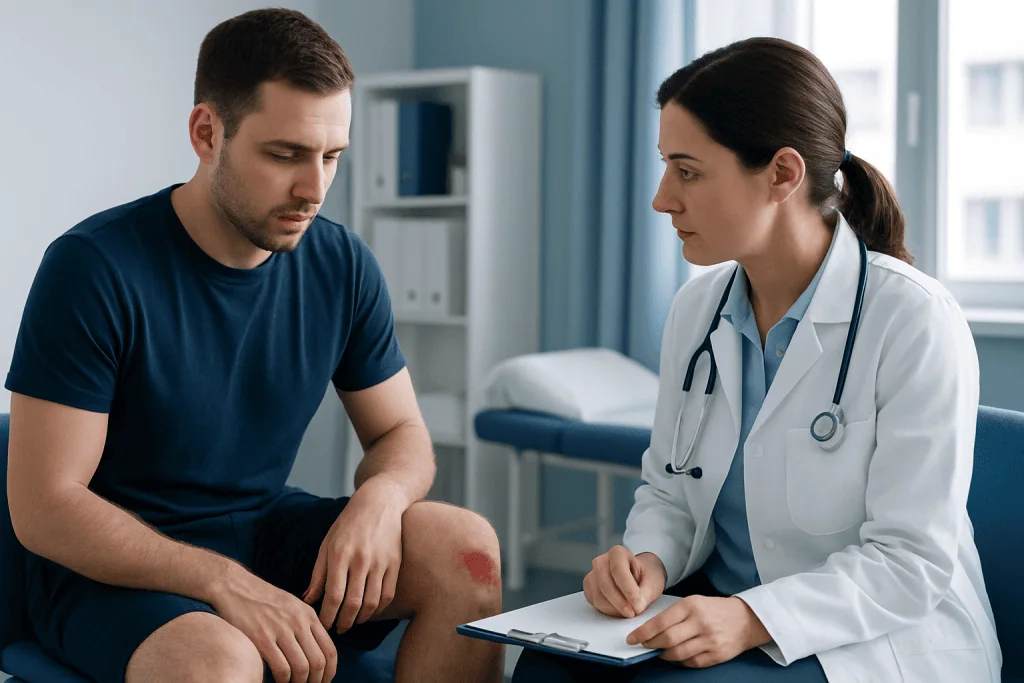
Turf burn happens when skin rubs against a rough surface with enough force to create friction and remove layers of skin. Artificial turf can increase this risk because of its texture and the speed of play. Sliding tackles, falls, dives, and contact with dry exposed skin all make abrasions more likely.
Sports such as soccer, American football, rugby, baseball, and field hockey commonly involve movements that lead to turf burn. Risk may also rise in warm weather, when shorts or short sleeves leave more skin uncovered, or when the surface is dry and friction is higher.
Some factors can make healing slower or complications more likely. These include diabetes, poor circulation, eczema or other skin barrier problems, immune suppression, and previous skin infections such as cellulitis. Repeated scraping in the same area can also delay recovery because the skin is injured again before it has fully repaired itself.
First Aid and Home Care
Early care is important because turf burn is both a skin injury and a contamination risk. The wound should be gently rinsed with clean running water or saline to remove dirt, rubber particles, and fibers. Mild soap can be used on the surrounding skin, but harsh scrubbing should be avoided because it can damage healthy tissue and increase pain.
After cleaning, the area should be patted dry and covered with a non-stick dressing. Many clinicians recommend keeping abrasions slightly moist rather than letting them dry out completely, because this can support healing and reduce sticking to the dressing. If pain is significant, a clinician may advise simple pain-relief measures or a review for more advanced wound care.
Dressings should be changed as instructed or whenever they become wet, dirty, or loose. Before each change, the wound should be checked for increasing redness, swelling, discharge, or a bad smell. Picking at scabs, returning to play too early, or exposing the wound to repeated friction can reopen the injury.
People should also make sure their tetanus vaccination is up to date, especially if the abrasion is deep or contaminated. A doctor or urgent care clinician can advise whether a booster is needed.
How Doctors Diagnose Turf Burn and Assess Severity
Turf burn is usually diagnosed through a physical examination and a description of how the injury happened. In most cases, no imaging or laboratory tests are needed. The clinician assesses the size, depth, location, and cleanliness of the abrasion and looks for signs that the wound extends beyond a simple superficial scrape.
An important part of assessment is distinguishing uncomplicated turf burn from deeper soft-tissue injury, embedded debris, or infection. For example, severe pain out of proportion to the visible abrasion, inability to move a nearby joint, or persistent swelling may suggest additional injury. If there is concern about a deeper problem, further evaluation may be recommended.
If the skin becomes increasingly red, warm, swollen, or tender after the first day or two, the clinician may consider a skin infection. When redness spreads beyond the wound or streaking appears, doctors may assess for skin infection and decide whether prescription treatment is necessary.
Treatment Options and Healing Time
Most turf burns heal with conservative treatment: cleaning, dressing, protecting the area, and watching for infection. Small superficial abrasions may improve within several days, while larger or deeper wounds can take longer. Healing time also depends on whether the person continues sports activity, how much friction the area gets, and whether there are underlying health conditions.
If debris is deeply embedded, a healthcare professional may need to clean the wound more thoroughly. If there are clear signs of bacterial infection, a doctor may prescribe antibiotic treatment. Significant pain, delayed healing, or repeated reopening may justify review by a clinician experienced in skin and soft-tissue injuries.
Some cases need more than simple first aid. Large abrasions over joints, wounds with tissue loss, or injuries that leave a dark crust, severe swelling, or persistent drainage may require specialist input. If there is uncertainty about how deeply the skin is damaged, a doctor may evaluate whether dermatology care or a dedicated wound service would be helpful.
Prevention, Return to Activity, and Skin Protection
Prevention starts with reducing skin-to-surface friction. Long sleeves, sliding shorts, knee covers, and other sport-specific protective clothing can lower the chance of direct abrasion. Well-fitted equipment and field-appropriate technique may also help, especially in sports that involve diving or sliding.
Skin should be fully covered with an appropriate dressing before returning to practice or competition if the abrasion has not completely healed. Open wounds should not be exposed to turf, because repeat friction can delay healing and increase infection risk. A clinician can help decide when activity can safely resume, especially for larger injuries.
Good general skin care also matters. Clean skin, prompt showering after play, avoiding shared towels, and checking any abrasion at the end of the day can reduce complications. People with recurring abrasions or slow healing may benefit from professional advice on skin protection, dressing choice, and injury prevention.
Near the end of recovery, the skin may remain pink or sensitive for a short time even after the surface has closed. This is often part of normal healing. At Acibadem International, multidisciplinary specialists in JCI-accredited hospitals evaluate and treat wound and skin injuries for international patients when additional assessment is needed.
When to Seek Medical Care
Medical care is advisable if turf burn is large, deep, heavily contaminated, or located on the face, hands, genitals, or over a major joint. A clinician should also review the injury if there is severe pain, ongoing bleeding, reduced movement, or concern that dirt or rubber cannot be fully removed.
Prompt assessment is also important if signs of infection appear. These include spreading redness, increasing warmth, swelling, pus, a foul odor, fever, red streaks, or pain that worsens after the first 24 to 48 hours instead of gradually improving.
People with diabetes, poor circulation, weakened immunity, or chronic skin disease should have a lower threshold for seeking care because they may be more likely to develop delayed healing or complications. If there is any uncertainty about tetanus protection, a healthcare professional can advise on vaccination.
Frequently asked questions
Is turf burn the same as a regular scrape?
Turf burn is a type of abrasion, so it is similar to a scrape. The difference is that it is specifically caused by friction against artificial turf and may contain rubber or surface debris that needs careful cleaning.
How long does turf burn take to heal?
Small superficial turf burns may improve within a few days, while larger or deeper abrasions can take longer. Healing depends on the size of the wound, how well it is protected, and whether it is irritated again during sports or daily activity.
Should a turf burn be kept dry or covered?
In general, turf burn should be kept clean and covered with a suitable non-stick dressing. Many abrasions heal better when protected and slightly moist rather than left open to dry out and crack.
Can turf burn get infected?
Yes. Because the skin barrier is broken, bacteria can enter the wound, especially if dirt or turf particles remain in the abrasion. Increasing redness, pus, swelling, fever, or worsening pain should be assessed by a doctor.
Can someone play sports with turf burn?
This depends on the size, depth, and location of the injury. Returning too soon can reopen the abrasion, increase pain, and slow healing, so the wound should be well protected and reviewed by a clinician if there is doubt.
Do all turf burns need antibiotics?
No. Antibiotics are not routinely needed for an uncomplicated abrasion. They may be considered if there are clear signs of bacterial infection or if a clinician believes the risk of infection is high.
This article is for general information only and is not a substitute for professional medical advice. Please consult a qualified doctor about your individual situation.
Explore treatments in Turkey — costs, top hospitals & a free quote
JCI-accredited · board-certified surgeons · reply within 24h
Add us as a Preferred Source to see more of our trusted health content across Google Search, AI Overviews and Discover.

More from the Health Library

Chafing: What Patients Need to Know

Kcal Brown Rice: A Complete Medical Overview

Meal Plan for Weight Loss: A Complete Medical Overview

Subfalcine Herniation: A Complete Medical Overview

Mantra: A Complete Medical Overview

How many steps is a mile? The Numbers, Explained by Clinicians
Aesthetic Plastic & Reconstructive Surgery Specialists at Acibadem

Dr. Münür Selçuk Kendir
Aesthetic Plastic & Reconstructive Surgery
Dr. Mustafa Mert Okumuş (m)
Aesthetic Plastic & Reconstructive Surgery
Dr. Mutluhan Temizsoy
Aesthetic Plastic & Reconstructive Surgery
Dr. Nargız Ibrahımlı
Aesthetic Plastic & Reconstructive Surgery