Tympanic Thermometer: A Complete Medical Overview

A tympanic thermometer measures infrared heat from the eardrum area to estimate body temperature. It gives quick results, but proper positioning is essential for accurate readings.
Key Takeaways
- A tympanic thermometer measures infrared heat from the eardrum area to estimate body temperature.
- It gives quick results, but proper positioning is essential for accurate readings.
- Earwax, small ear canals, poor probe placement, and active ear problems can affect accuracy.
- It is useful for many adults and children, but may be less reliable in very young infants.
- Repeated high readings or fever with concerning symptoms should be assessed by a healthcare professional.
A tympanic thermometer is an ear thermometer that estimates body temperature by detecting heat from the eardrum area. It can be fast and reliable, but accuracy depends on correct placement, ear anatomy, age, and whether the ear canal is blocked by wax or affected by infection.
Overview: What a Tympanic Thermometer Is
A tympanic thermometer is a medical device that measures body temperature inside the ear canal. It works by detecting infrared heat coming from the tympanic membrane, also called the eardrum, and nearby tissues. Because the eardrum shares blood supply pathways with the temperature-regulating center of the brain, ear temperature can provide a useful estimate of core body temperature.
Many people choose a tympanic thermometer because it is fast, convenient, and generally easy to use. Results usually appear within seconds, which can be especially helpful when checking a sleeping child or an adult who feels unwell. In healthcare settings and at home, it is commonly used as an alternative to oral, rectal, forehead, or underarm thermometers.
Even so, an ear thermometer is not automatically accurate in every situation. Readings can vary if the probe is not aimed correctly, if the ear canal is very small or curved, or if earwax is present. Understanding how the device works and when it may be less reliable helps people use it more confidently and interpret results more appropriately.
How a Tympanic Thermometer Works
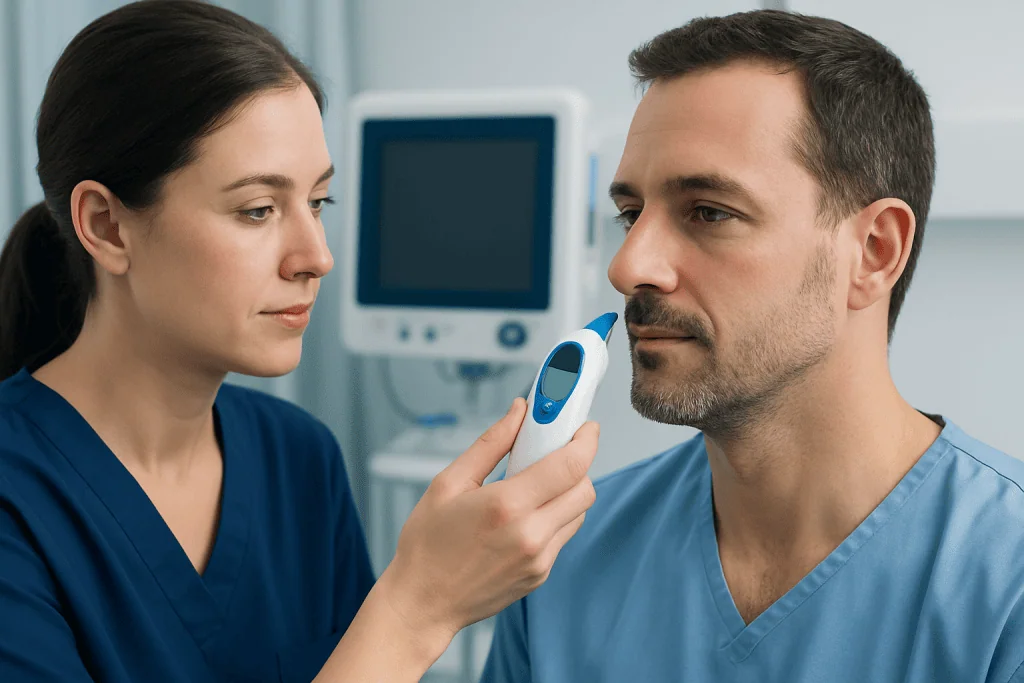
The device contains a sensor that detects infrared energy, which is a form of heat naturally emitted by the body. When the probe is placed gently in the ear canal, it collects heat signals from the eardrum and surrounding structures. The thermometer then converts that information into a temperature reading shown on the screen.
This method differs from oral or underarm measurement because it does not rely on a thermometer warming up gradually. Instead, it reads radiant heat almost immediately. That is why tympanic thermometers are often described as quick and practical, particularly in children who may not tolerate other methods for long.
Most ear thermometers use disposable probe covers to help keep the sensor clean and reduce the spread of germs. A clean lens matters because dirt, wax, or damage to the sensor area can interfere with the measurement. Following the manufacturer’s instructions is important, since small differences in device design can affect how it should be inserted and read.
Accuracy: When It Is Reliable and What Can Affect It

A tympanic thermometer can be accurate when it is used correctly and in the right person. In older infants, children, and adults, it often provides a dependable estimate of body temperature. However, no thermometer is perfect in every setting, and ear readings should always be interpreted along with symptoms and the person’s overall condition.
Several factors can make an ear reading less reliable. The most common issue is technique. If the probe does not seal well in the ear canal or is not directed toward the eardrum, the thermometer may measure the canal wall instead of the warmer eardrum area. This can lead to readings that are lower than the true body temperature.
Other factors that may affect a reading include:
- Excess earwax blocking the ear canal
- A very small or unusually shaped ear canal
- Use in very young infants, especially under 3 months
- Recent lying on one ear, which may temporarily warm that side
- Use right after bathing or coming in from cold weather
- Ear pain, inflammation, or active ear infection
If a reading seems inconsistent with how a person feels, repeating the measurement carefully or confirming with another approved method may help. In some cases, clinicians may use additional tests or ear examination, particularly if there are symptoms involving the ear itself or concern for fever of unclear cause.
How to Use a Tympanic Thermometer Correctly
Correct technique is the most important step in getting a useful result. Before measuring, the thermometer should be clean, have a fresh probe cover if required, and be used according to the instructions for that model. The person should sit still for a moment, especially after coming indoors from a very hot or cold environment.
For adults and older children, the outer ear is usually pulled gently up and back to help straighten the ear canal. For younger children, the direction may be slightly down and back, depending on age and the device instructions. The probe is then inserted gently so it points toward the eardrum, not straight at the side of the canal. The measurement is taken once the device is positioned properly.
Helpful practical tips include:
- Measure in the same ear when monitoring trends over time
- Avoid taking a reading immediately after exercise or a hot bath
- Wait if the child has been lying on one ear for a long period
- Do not force the probe into the ear
- Clean the device as directed and replace probe covers as recommended
If repeated measurements in the same ear differ significantly, it can mean the placement changed between attempts. Taking two careful readings and using the more consistent result is often more helpful than relying on a rushed single measurement.
Who May Benefit Most and When Another Method May Be Better
A tympanic thermometer is often a good option for school-age children, teenagers, and adults because it is quick and causes minimal discomfort. It can also be useful in busy households where temperatures need to be checked more than once, or when a person cannot easily keep an oral thermometer in place.
For some groups, another method may be preferred. In very young infants, healthcare professionals often recommend methods that have been studied more extensively in this age group. Ear thermometers can be harder to position correctly when the ear canal is very small, so results may be less dependable than in older children and adults.
There are also situations where an ear thermometer may not be ideal, such as after ear surgery, with severe ear pain, or if there is drainage from the ear. In those settings, medical advice is appropriate before relying on the affected ear for measurement. If there are ongoing ENT symptoms, a specialist may evaluate the ear directly and consider tests such as hearing test or ENT check-up when clinically appropriate.
Understanding the Reading: Normal, Fever, and Follow-Up
Normal body temperature is not one fixed number. It naturally varies by age, time of day, activity, and the method used to measure it. Ear temperature may read slightly differently from oral or underarm temperature, so it is best not to compare methods too strictly without guidance. What matters most is the trend over time and whether symptoms suggest illness.
A higher-than-usual reading may indicate fever, but the meaning depends on the person’s age and clinical picture. A mild elevation in temperature can occur with viral infections, after vaccination, or during other temporary conditions. Fever itself is a symptom, not a diagnosis, and should be considered alongside signs such as cough, sore throat, ear pain, breathing difficulty, rash, vomiting, or unusual tiredness.
If fever persists, recurs often, or is accompanied by symptoms involving the ear, nose, or throat, a clinician may look for causes such as viral illness, bacterial infection, or inflammation. Depending on the findings, they may assess related conditions including sinusitis or recommend further evaluation and supportive care. Acibadem International’s multidisciplinary specialists and JCI-accredited hospitals diagnose and treat ENT and general medical conditions for international patients.
Care, Cleaning, and Safe Everyday Use
Keeping the thermometer clean helps preserve accuracy and supports hygiene. The lens or sensor area should be cleaned only in the way recommended by the manufacturer, as rough wiping or unsuitable cleaning products may damage delicate components. Disposable probe covers should be changed as directed, especially if the thermometer is being used for more than one person.
Storage also matters. The device should be kept in a clean, dry place and protected from extreme temperatures. If the thermometer has been stored in a very cold or very warm room, it may need time to return to normal room temperature before use. Low battery power can also affect performance in some devices, so batteries should be replaced when needed.
At home, a tympanic thermometer is best used as part of general symptom monitoring rather than as the only measure of illness severity. Rest, hydration, and observation of symptoms remain important. Parents and caregivers should avoid repeated checking every few minutes, which can increase anxiety without improving care, unless a doctor has advised close monitoring.
When to Seek Medical Care
Medical care is appropriate if a tympanic thermometer shows fever and the person appears seriously unwell, has trouble breathing, is difficult to wake, seems confused, or shows signs of dehydration. Infants, older adults, pregnant individuals, and people with weakened immune systems may need earlier assessment because fever can have different implications in these groups.
It is also wise to seek medical advice if there is persistent ear pain, fluid or blood from the ear, noticeable hearing changes, or fever that does not improve as expected. Ear-related symptoms may point to conditions that need direct examination rather than repeated home temperature checks alone. In some cases, an ENT specialist may recommend evaluation and treatment such as ear surgery when structural ear problems are present, although this is not needed for most routine fevers.
If there is any doubt about whether a reading is accurate, or if symptoms and temperature do not seem to match, a qualified healthcare professional can advise on the best next step. Prompt assessment is especially important for very young infants, severe headache with fever, stiff neck, new rash, or worsening symptoms after an initial period of improvement.
Frequently asked questions
What is a tympanic thermometer?
A tympanic thermometer is an ear thermometer that measures infrared heat from the eardrum area. It provides a quick estimate of body temperature and is commonly used at home and in clinics.
Is a tympanic thermometer accurate?
It can be accurate when used correctly, especially in older infants, children, and adults. Accuracy may be reduced by poor positioning, earwax, very small ear canals, or active ear problems.
How should a tympanic thermometer be used?
The probe should be placed gently into the ear canal and aimed toward the eardrum according to the device instructions. Using a clean probe cover and positioning the ear properly can improve the reliability of the reading.
Can earwax affect a tympanic thermometer reading?
Yes. Excess earwax can block the sensor’s view of the eardrum area and may lead to an inaccurate reading, often lower than expected. If this is suspected, a clinician can advise whether another measurement method is better.
Is a tympanic thermometer suitable for babies?
It may be used in some infants depending on age and device guidance, but results can be less reliable in very young babies because the ear canal is small. For newborns and young infants, parents should follow their doctor’s advice on the preferred method of temperature measurement.
Which is better: a tympanic thermometer or a forehead thermometer?
Each has advantages. A tympanic thermometer can be very quick and useful when placed correctly, while a forehead thermometer may be easier to use in some children or when ear conditions are present. The best choice depends on age, symptoms, and how reliably the device can be used.
References
- World Health Organization
- American Academy of Pediatrics
- Centers for Disease Control and Prevention
- National Institutes of Health
- U.S. Food and Drug Administration
This article is for general information only and is not a substitute for professional medical advice. Please consult a qualified doctor about your individual situation.
Explore treatments in Turkey — costs, top hospitals & a free quote
JCI-accredited · board-certified surgeons · reply within 24h
Add us as a Preferred Source to see more of our trusted health content across Google Search, AI Overviews and Discover.

More from the Health Library

Autonomic Dysfunction: A Complete Medical Overview

Body Mass Index: A Complete Medical Overview

Inside Ear: An Evidence-Based Guide for Patients

Raw Chicken: A Complete Medical Overview

Sway Back Posture: What Patients Need to Know